Vegetable · Cucurbitaceae
Cucumber
Cucumis sativus
Give it full sun, warm soil, and steady water, and the bristly vine hangs heavy with fruit faster than it can be picked.
Full sun
Every 2–4 days
59–95°F · 15–35°C
50–70 days
Overview
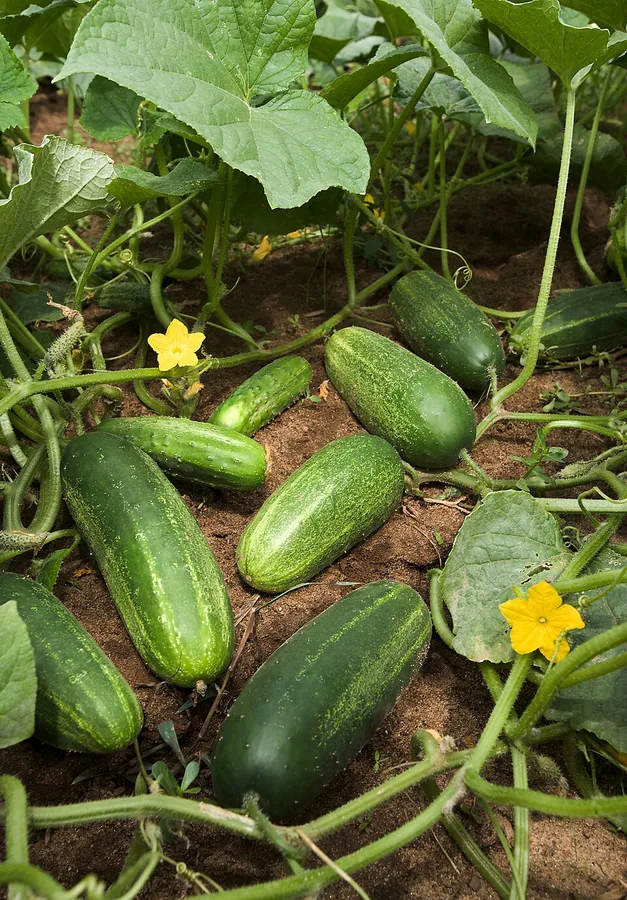
Cucumber is a warm-season vine in the gourd family, kin to melons and squash, sending out long, bristly green stems that lengthen fast once the weather settles. Broad, lobed leaves with a rough, sandpapery surface line those stems, and a few plants in warm soil and full sun cover a good stretch of ground with green. The vine trails low by nature, but slender curling tendrils grip a trellis and haul it upward, which saves space and keeps the fruit clean.
Two looks split the crop. Slicing types hang long, straight, and smooth-skinned in deep green, while pickling types stay short, blocky, and studded with small bumps and fine spines. A handful of newer varieties set fruit without bees, their cucumbers filling out evenly under row covers even when the season turns cool and wet.
Behind that quick green growth the vine wants only warmth, sun, and even water. Soil that lurches from bone dry to soaked leaves the fruit bitter and crooked, the cucumbers pinching and curling instead of filling out straight. Picked every day or two at the peak, the firm fruit comes off cleanly and the vine pushes out more right up to the first frost.
Care
The short version: full sun, warm and fertile soil rich in organic matter, and even moisture of about an inch a week, with frequent picking that keeps the firm, dark green fruit coming.
Light
Cucumber leans into full sun, six to eight hours a day, and that strong light deepens the green of the leaves and drives the fruit to set. In partial sun the foliage thins and pales, fewer cucumbers form, and shaded, damp leaves invite disease.
Water
The soil stays evenly moist, about an inch of water a week from rain or the hose, poured deep at the base where the roots run. More goes on while pale flowers open and small fruit begins to swell. A vine left to dry out and then drown answers with bitter, crooked cucumbers.
Soil
Cucumber roots reach into fertile, well-drained loam dark with organic matter, at a pH of 6.0 to 6.5. The vine craves a warm root zone, so a raised bed or a sheet of plastic mulch that heats the soil shows in stronger early growth.
Temperature
Cucumber holds its lush, green vigor as a warm-season crop between 59°F and 95°F (15°C to 35°C). The plump seed stays shut in soil colder than 50°F (10°C), refusing to split and sprout until the ground warms.
Humidity
Plain outdoor air suits the vine, so no moisture level needs chasing. Moving air over the leaves matters more than humidity, since the broad, overlapping foliage holds dampness that powdery mildew settles into as a dusty film.
Feeding
A balanced fertilizer such as 10-10-10 works into the bed before planting. As the vines lengthen and begin to run, a nitrogen side-dress keeps the leaves broad and green through a long stretch of fruiting.
Pruning
Cucumber needs little cutting back. On a trellis, the side shoots can be pinched where they branch to keep the tangle in check, and diseased or damaged leaves are stripped off promptly so spotting and blight do not creep across the canopy.
Size & spacing
The vine itself lifts only 8 to 18 inches (20 to 46 cm) off the ground, yet its trailing stems reach 3 to 8 feet (91 to 244 cm) across. Given that spread, or a trellis to climb, air slips between the leaves and the hanging fruit stays clean off the soil.
When to plant
Cucumber is built for heat and falls limp at the first touch of frost or cold soil. Hold off until frost has passed and the ground warms to at least 60°F (16°C), usually mid to late May, before the seed goes in or transplants are set. The fruit then swells along the vine from midsummer until the first frost.
Northern hemisphere
Southern hemisphere
Typical months for a temperate climate: start earlier in warm zones, later where spring frosts linger.
- Sow: 2-4 weeks before the last frost (late April in northern regions); use peat or paper pots because seedlings resent root disturbance
- Plant: After all danger of frost when soil has warmed to at least 16-21°C (60-70°F), typically mid to late May; seeds will not germinate in soil below 10°C (50°F)
- Harvest: Flowers in early-to-mid summer; harvest fruit from midsummer until first frost, picking every 1-2 days to keep vines productive
Hardiness
USDA hardiness zones: 2–11
Temperature: down to -46°C
Troubleshooting
Cucumber trouble reads most plainly on the leaves and the fruit, where heat, water, or a pest leaves a visible mark first. Match the look of what is in front of you below, and act before the change creeps farther down the vine.
Limp, drooping vines by day, then crumpling stems
Leaves that go slack and droop in the day without reviving, then whole stems folding over, mark bacterial wilt, carried in by cucumber beetles chewing the foliage. Cutting a wilted stem and pressing the moist cut faces together, then drawing them apart, pulls fine sticky strings of ooze between them. No cure exists, so the limp plant is pulled and destroyed, and the swollen stem bases are split open to check for the sawdust-like frass and round entry holes of a squash vine borer.
Fix:
- Remove and destroy infected plants; bacterial wilt cannot be cured
- Control cucumber beetles early in the season
- Use floating row covers on young plants, removing them at flowering for pollination
Floury white patches on yellowed, brittle leaves
A chalky white film dusting both sides of the leaves is powdery mildew, a fungus that takes hold with warm days, cool nights, and crowded vines. It surfaces first as pale patches on the older, shaded leaves and smears slightly under a fingertip before the leaf yellows and crisps. The worst leaves come off, wider spacing or a trellis opens the green up, and full sun leaves the fungus little footing.
Fix:
- Remove heavily infected leaves
- Improve air circulation by spacing or trellising
- Apply a labeled fungicide at first sign if pressure is high
Sharp bitterness in the skin and stem-end flesh
A sharp bitterness in the firm flesh traces to cucurbitacins, compounds the plant builds up under heat or drought stress. The bitter taste pools in the green skin and the stem end, so paring the skin away and trimming that end takes most of it with the peelings. Steady water through hot spells, a cooling layer of mulch, and a burpless or bitter-free variety keep the fruit mild.
Fix:
- Peel fruit and trim the stem end before eating
- Water consistently and mulch to even out soil moisture
Bent fruit that narrows and pinches near the tip
Fruit that curls or pinches tight at one end shows poor pollination, the look that follows cool, rainy days that keep the bees off the flowers. Each cucumber needs many bee visits to swell evenly, and a flower shorted on them sets a lopsided, waisted fruit. The misshapen ones are picked off so the vine fills the rest, sprays are kept off the open flowers, and nearby blooms draw the pollinators back.
Fix:
- Remove misshapen fruit so the vine redirects energy
- Avoid spraying insecticides while plants are flowering
- Maintain even watering
Toxicity
Cucumber carries nothing harmful in its fruit, and it is safe for people, pets, livestock, and birds alike, so a slice dropped in the garden is no worry. The one physical detail to feel for sits on the plant itself: fine, stiff prickly hairs stud the stems and leaves and can scratch sensitive skin at harvest.
Safe for
People · Cats · Dogs · Horses · Rabbits · Livestock · Birds
Cats None
Cucumber is safe for cats, and many will nibble a thin, watery slice without any trouble. The pale, crisp flesh is mostly water, so small pieces make a light treat.
Dogs None
Cucumber poses no risk to dogs, and the cool, crunchy slices make a good low-calorie snack. Bite-sized pieces keep a fast eater from gulping a whole green chunk.
Horses Safe
Horses take cucumber well, and a few crisp sliced rounds make a refreshing summer treat. Small amounts alongside their normal forage are best.
Rabbits Safe
Rabbits can have cucumber in moderation, though the watery flesh holds little fiber. A thin slice or two now and then is plenty beside their hay.
Livestock Safe
Cattle, goats, and sheep eat the firm fruit and the trimmed green vines safely. Surplus fruit is offered gradually so a sudden pile does not upset their digestion.
Birds Safe
Both pet birds and backyard hens peck at the wet flesh and the small pale seeds alike. It is a hydrating snack to share, with no part of the plant off limits.
People Safe
Cucumber is eaten raw, pickled, or sliced into salads, and every part of the firm green fruit is safe. The skin and stem end of a stressed fruit can taste bitter, but that is flavor, not danger.
Stems and leaves bear slightly prickly hairs that can irritate sensitive skin; gloves are optional when harvesting spiny-fruited varieties.
Varieties
Cucumbers divide by the shape and skin of their fruit, from long, smooth slicers to short, bumpy picklers, with a few compact and seedless types between. The names below are the ones seen most.
Marketmore 76
A classic slicer with long, dark green fruit that resists scab and cucumber mosaic virus.
Straight Eight
An heirloom slicer bearing straight, dark green fruit about 8 inches long.
Boston Pickling
A productive heirloom pickler with short, blocky fruit and a bumpy, spiny skin.
Spacemaster
A compact bush type with shortened vines that suits small gardens and containers.
Diva
A parthenocarpic, seedless variety that sets fruit without pollination and carries thin, non-bitter skin.
Companions
Cucumbers do well beside beans, corn, and quick radishes, and poorly next to potatoes or strongly aromatic sage that extension guides flag as bad neighbors.
Plant near
beans: Extension companion-planting guides list beans as a traditional cucumber companion; legumes fix nitrogen that benefits neighboring crops.
corn: Listed as a compatible companion in extension guides; tall corn can also serve as a windbreak and partial support.
radish: Traditional extension-listed companion; quick-maturing radishes use space efficiently between young cucumber plants.
How to propagate
Cucumbers rise from flat, pale, teardrop-shaped seeds, and that is nearly the only way they are started. The seed needs warm soil to swell and split, and the fine young roots need to stay undisturbed.
SeedEasy
Direct sow after the last frost once soil reaches at least 16°C (60°F), or start indoors 2-4 weeks before transplanting · Seeds germinate in 3-10 days in warm soil; transplants establish within 1-2 weeks
Cucumbers come up from flat, pale, pointed seeds, and that is nearly the only way gardeners start them. Once the last frost has passed and the soil has warmed to at least 60°F (16°C), the seed is set 0.5 to 1 inch (1.5 to 2.5 cm) deep in hills or rows, and a pale, hooked shoot breaks the surface in 3 to 10 days. For an earlier start, the seed sows indoors 2 to 4 weeks before transplanting in peat or paper pots, since the thin roots resent disturbance and the young plant needs a week or two to settle in.
Myths
Cucumbers raised beside squash or melons blend with them and spoil in flavor.
Cucumbers cannot cross with melons or squash, which are separate species, so a neighboring vine leaves no mark on how the fruit tastes. The off-flavor people notice is cucurbitacins the plant builds up under heat and drought stress. Even a cross between two cucumber varieties reaches only the flat seeds inside, never the green flesh of this season's fruit.
A cucumber gone bitter is rotten and dangerous to swallow.
A bitter cucumber is not rotten. The sharp taste is cucurbitacins concentrated in the green skin and the stem end of a stressed fruit. Paring off that skin and trimming the stem end carries most of the bitterness away with it.