Ornamental · Asteraceae
New England Aster
Symphyotrichum novae-angliae
In full sun and pinched by midsummer, the New England aster crowds its tall stems with purple, pink, and ruby daisies deep into fall.
Full sun
USDA 4–8
3–7 ft · 0.9–2.1 m
Overview
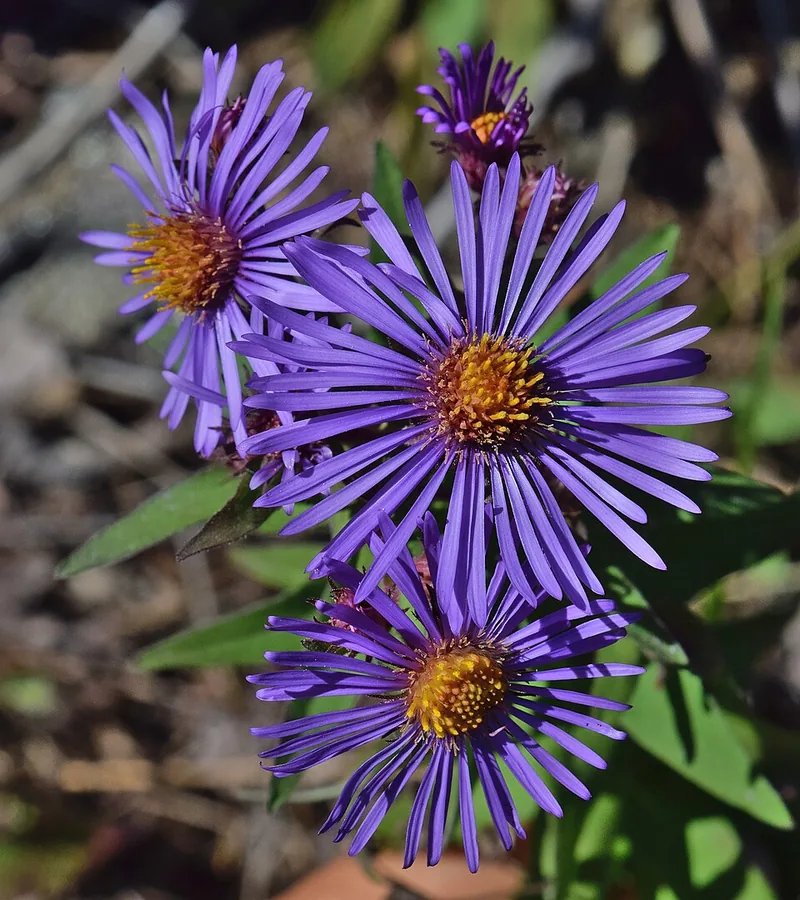
The New England aster carries dense clusters of small daisy-like flowers along the tops of its stems, each bloom a ring of narrow rays around a rounded center. The rays run through purple, pink, and ruby, and they open late, from summer's end through fall. It sits in the same family as the sunflower and the common daisy, and across its wild range those same rayed flowers turn roadsides and damp meadows violet through September.
The plant builds a tall, upright frame that fills out fast. Slender green stems climb from 3 to 7 feet (90 to 210 cm), clothed in leaves the whole way up, and the clump thickens outward each year to a broad, leafy stand. It is hardy to zone 4, and its roots grip heavy clay where finer-rooted perennials give out.
The flowers time their opening to the fall, arriving as monarchs pass south and bumble bee queens fatten for winter, which makes the plant one of the most important late-season nectar sources a garden holds. Each ray-fringed head sits open and flat, an easy landing pad for the insects it feeds. Cut to the ground in winter, it pushes fresh stems again every spring.
Care
The short version: full sun, rich soil kept steadily moist over good drainage, and a few pinches before mid-July so the tall, leafy stems stay upright. Its rayed flowers open in fall and feed pollinators when little else is left in bloom.
Light
In full sun the plant sets the most flowers and grows the thickest, straightest stems. It takes a little afternoon shade, but under heavier shade the stems stretch thin and pale, tip sideways, and open far fewer blooms.
Water
Keep the soil steadily moist, above all in dry spells, or the lowest leaves yellow, brown, and drop off the stem. The plant sinks its roots happily into rich, damp ground and even into clay, which suits a rain garden, though the drainage still has to run so aster wilt gains no hold.
Soil
Root it in rich, fertile soil dark with organic matter, from crumbly loam to dense clay. The one ground it will not stand is waterlogged, where the roots sit wet, so choose a spot that drains freely even while it holds moisture.
Temperature
This is a tough, cold-hardy plant that rides out -29°F to 95°F (-34°C to 35°C) and thrives across zones 4 through 8. The top growth blackens and dies to the crown each winter, then fresh green shoots push up from the base in spring.
Humidity
Plain outdoor humidity suits it, so there is no figure to hit. Moving air counts for far more, since still, damp air trapped among the crowded leaves is what lets the white film of powdery mildew settle on them.
Feeding
The plant asks little at the root. A single light feed of balanced or compost-based fertilizer across the growing season is enough. Hold back the nitrogen, which only draws up soft, floppy stems that bow over.
Pruning
The stems are pinched back several times before mid-July, which keeps them short, thick, and densely branched rather than tall and staking-prone. Once frost has blackened the leaves, the whole plant is cut down to the ground.
Size & spacing
The leafy stems stand 3 to 7 feet (90 to 210 cm) tall, and each clump broadens to 24 to 35 inches (60 to 90 cm) across. Given that full width, air threads between the stems and the leaf surfaces stay dry enough to shed mildew.
When to plant
This aster times its flowering to the fall. Plants set out in spring after the last frost or in early fall build leafy stems through the season, a pinch through early summer keeps those stems short and stout, and the daisy heads open from late August into October.
Northern hemisphere
Southern hemisphere
Typical months for a temperate climate: start earlier in warm zones, later where spring frosts linger.
- Sow: Late winter to early spring; seed germinates more reliably after cold stratification
- Plant: Spring after last frost, or fall
- Harvest: August to October
Hardiness
USDA hardiness zones: 4–8
Temperature: down to -34°C
Troubleshooting
Most of what goes wrong with an aster reads plainly on the plant itself: a dusty film on the leaves, or tall stems that lean and gape open. Both show up early on the foliage and stems, which leaves time to step in before the clump falls apart. Match the look below to its cause, then act while it still helps.
Leaves yellowing and stems slumping from the base upward
When the lowest leaves fade to yellow and the stems go limp and sag, the trouble is aster wilt, a soilborne fungus that thrives in wet, heavy clay that never dries. An affected plant cannot be saved, so it is lifted whole and destroyed. Loosening the drainage of that ground and moving the next asters to a drier spot keeps the collapse from repeating.
Fix:
- Remove and destroy severely affected plants
- Improve soil drainage
- Avoid replanting asters in the same spot
A chalky white bloom dusting the leaf surfaces
That flat, floury coating on the upper leaves is powdery mildew, a fungus that spreads where stems crowd together and the air hangs still, and it grows most visible late in summer. The dusted leaves are pulled away and discarded, and water is aimed low at the roots so the foliage stays dry. Opening the clump with more space and a pinch lets air slip between the leaves and keeps the film from forming.
Fix:
- Improve spacing and air circulation
- Remove and discard affected foliage
- Avoid overhead watering
Long stems bowing outward or cracking open
Set in rich soil or shade, the upright stems stretch past 90 cm (35 inches) and grow thin and top-heavy, so they bow outward or split along their length once rain loads the flower heads. Pinching the tips before mid-July forces a shorter, thicker, more branched stem that carries its own weight. Where the tall stems are kept, an early stake holds them straight, and a compact cultivar stays low and stout on its own.
Fix:
- Stake or support taller plants
- Pinch back stems before mid-July to reduce height
Toxicity
For a home with pets or children, the plant is reassuring. The New England aster is not toxic to cats, dogs, horses, or people, and the ASPCA lists asters as safe. A pet that eats a big mouthful of leaf or petal might get a mild, passing stomach upset, but there is nothing poisonous in it.
Safe for
People · Cats · Dogs · Horses · Rabbits · Livestock · Birds
Cats None
Cats are safe around it. A bite of leaf or petal may bring a little drool or a brief upset stomach, the kind any plant can cause, but nothing in the aster is poisonous.
Dogs None
Dogs face no toxin here. A dog that chews a few of the ray flowers or leaves may get a passing bout of mild stomach upset and nothing worse.
Horses None
Horses can graze near it unharmed. The plant carries nothing that poisons them, so a stray mouthful of stem or leaf is no cause for worry.
Rabbits Safe
Rabbits can browse the leafy stems safely. Asters turn up often on lists of plants that garden and wild rabbits eat without trouble.
Livestock Safe
Cattle, goats, and sheep can graze it with no risk of poisoning. The plant holds no compounds that would harm them.
Birds Safe
Birds are in no danger from it. Many pick at the fluffy seed heads through fall and winter, and the late flowers draw the insects they hunt.
People Safe
It is not poisonous to people. It is grown as a garden ornamental rather than a food, so there is no reason to eat it, though handling the stems and blooms poses no risk.
Varieties
Most gardeners choose a named cultivar for a particular flower color or a tighter shape. These three stand out.
Purple Dome
A compact, mounding form that piles up to about 2 feet of deep purple flowers and holds its rounded shape upright without pinching or staking.
September Ruby (Septemberrubin)
On taller stems it carries large flowers of deep ruby-red rays circling bright yellow centers.
Andenken an Alma Potschke
A vigorous plant smothered in blooms of bright rose-pink to salmon.
How to propagate
New England aster increases easily, either by splitting an established clump or by sowing its small seed.
DivisionEasy
Spring or early fall, every 2 to 3 years · One growing season
Division is the surest way to keep these asters going. The clumps are lifted and pulled apart every 2 to 3 years in spring or early fall, and each split-off piece roots in within a single growing season. It renews tired plants, holds the spread in check, and clears out the bare, dead crown that hollows the center of an old clump.
SeedEasy
Sow in late winter to spring; may self-seed in the garden · Blooms typically the second year from seed
Plants can be raised from the small seed sown in late winter to spring, and a cold spell beforehand sharply improves germination. The wait takes patience, since seedlings usually hold off flowering until their second year. The plant self-sows freely in the garden as well, though the seedlings can differ from the parent.
Myths
New England aster is toxic to cats and dogs like many fall flowers.
The ASPCA lists asters as non-toxic to cats, dogs, and horses. A pet that swallows a big mouthful of leaf or petal might get a mild, passing stomach upset, but nothing in the plant is poisonous.
This aster blooms all summer long.
The daisy-like flowers hold off until the end of the season, opening from roughly August into October. That late timing is exactly what makes it so valuable, feeding pollinators when little else is still in bloom.