Shrub · Hydrangeaceae
Hydrangea
Hydrangea macrophylla
Give it rich, moist soil and afternoon shade, and the hydrangea builds armfuls of dense, rounded bloom all summer.
Partial shade
Every 3–7 days
USDA 3–9
3–10 ft · 0.9–3 m
Overview
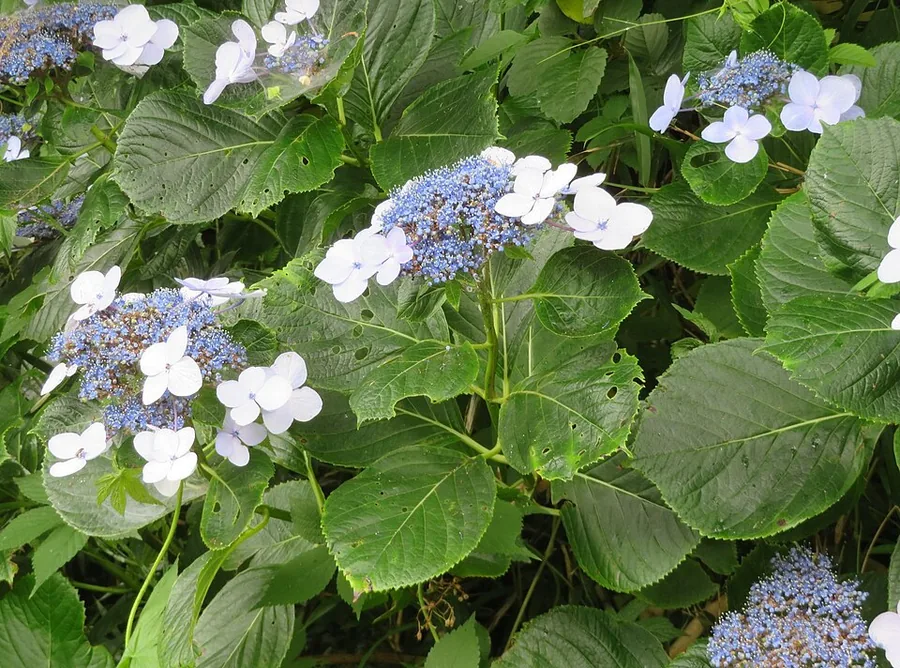
Up close, a hydrangea is a mass of broad, veined leaves and dense flower heads, the blooms gathered into rounded mopheads, flat lacecap plates, or tall tapering cones depending on the species. On the best known of them, the bigleaf, the florets read blue where the soil is acidic and pink where it is alkaline, so the same plant can carry two different casts of color. The shrubs grow fast and heavy with bloom, filling out to 3 to 10 feet (90 cm to 3 m) across the range.
The flower heads sit on wood, and that is where the plants divide. On some, the buds ride old wood formed the summer before, swelling on last year's stems, while on others they rise from new wood pushed out in the current season. That single structural fact governs when the plant is cut, whether a hard winter kills the buds outright, and which types hold up where late frosts bite. Choosing by the wood settles much of the care.
Beyond the color of the florets and the timing of the cut, the plant is undemanding. It wants steady moisture at the roots, shelter from the harshest afternoon sun on those broad leaves, and soil thick with organic matter. Given that, it stands for years as a long-lived perennial shrub, its framework of stems growing denser and fuller with age.
Care
The short version: set it in rich, moist, well-drained soil with morning sun and afternoon shade, water deeply about once a week, and prune to match whether your type blooms on old or new wood.
Light
Hydrangeas do best in partial shade, ideally morning sun with shade over the broad leaves through the hot afternoon. Bigleaf types, with the largest blades, scorch and wilt in full afternoon sun, while panicle types take far more of it. Deep shade, at the other extreme, thins the flower heads sharply.
Water
Keep the soil evenly moist, watering deeply about once a week and more often in heat or in a pot. The name itself points to the thirst, and the wide, thin-textured leaves of bigleaf types are the first to droop when the roots go dry. A layer of mulch holds that moisture and keeps the roots cool.
Soil
Plant in rich, moist, well-drained soil dark with organic matter. A pH of 5.0 to 6.5 on the acidic side suits them, and on bigleaf and mountain types that same acidity turns the florets toward blue.
Temperature
These are hardy shrubs, standing from about -20°F to 95°F (-29°C to 35°C) in the tougher species. A late spring frost is the real danger, since it can blacken and kill the formed buds on old-wood types and cost a season of bloom.
Humidity
Ordinary outdoor humidity suits hydrangeas, so there is no target to reach. Air movement over the leaves matters more than the number, because crowded, still, humid air settles leaf spot and powdery mildew onto the blades.
Feeding
A balanced 10-10-10 fertilizer applied a few times from spring through mid summer is plenty. Go easy, since too much nitrogen swells the leaves and holds back the flower heads.
Pruning
Time the cuts to the bloom wood. Prune old-wood bloomers like bigleaf, oakleaf, and mountain right after they flower and no later than August 1, and prune new-wood bloomers like panicle and smooth in late winter or early spring before the new shoots push.
Repotting
Hydrangeas are rarely repotted, since most live in the ground for good. If you grow one in a container, move it up a size when roots circle the pot, grow out of the drainage holes, or water runs straight through without soaking in.
Size & spacing
Depending on the species, hydrangeas reach 3 to 10 feet (90 cm to 3 m) tall and spread 3 to 6 feet (90 to 180 cm) wide. Give each shrub room to fill out so air moves freely between the leaves and branches and disease stays at bay.
When to plant
Hydrangeas are hardy across zones 3 to 9, so the main timing questions are when to plant and when to prune. Set new shrubs out in spring or fall while the weather is mild, watch for bloom from late spring through summer, and let the bloom-wood type tell you when to make the cut.
Northern hemisphere
Southern hemisphere
Typical months for a temperate climate: start earlier in warm zones, later where spring frosts linger.
- Plant: Spring or fall
- Harvest: Late spring through summer; some reblooming types again in late summer
Hardiness
USDA hardiness zones: 3–9
Temperature: down to -40°C
Troubleshooting
Most hydrangea troubles show up right on the plant: broad leaves and heavy heads that wilt in the heat, stems full of leaves but empty of flowers, or foliage stamped with spots or drained to yellow. Match what you see below to its likely cause, then act before it sets the plant back.
Soft, sagging leaves and nodding bloom heads in hot sun
In the heat of the afternoon the broad leaves go limp and the heavy flower heads nod toward the ground, a picture of thirst and sun stress together. Bigleaf types, with the largest leaves, sag first under hot direct light, then lift their blades and blooms again as evening cools and the soil takes up water. Move the shrub to morning sun with afternoon shade, soak it deeply, and spread mulch over the root zone to hold the moisture steady.
Fix:
- Water deeply to keep soil evenly moist
- Mulch to conserve moisture and cool the roots
- Site bigleaf hydrangeas where they get morning sun and afternoon shade
A healthy plant that refuses to bloom
A shrub thick with green leaves but bare of a single flower head usually traces back to pruning at the wrong time. Old-wood bloomers form next year's buds as swellings on the stems soon after this year's flowers fade, so a fall or spring cut lops those buds off with the wood. A hard winter or a late frost can blacken and kill the same buds, and deep shade or heavy nitrogen turns the plant's energy into leaves instead of blooms. Learn whether the wood carries this year's buds or next year's, then cut to match.
Fix:
- Prune old-wood bloomers only right after flowering
- Protect old-wood types from late frosts
- Reduce shade and avoid heavy nitrogen feeding
Tan-centered blotches or a chalky white dust on the leaf surface
Look closely and two fungal patterns stand out on the leaf surface. Cercospora and other leaf spots print small marks ringed in purple with dry tan centers, while powdery mildew dusts the blades with a pale white coating where plants crowd together in still air. Neither ruins a healthy shrub, though damp, close air feeds both. Strip off the marked and fallen leaves, water low at the base to keep the surfaces dry, and thin the branches so air moves between the leaves.
Fix:
- Remove and dispose of affected and fallen leaves
- Use drip or soaker irrigation to keep foliage dry
- Improve air circulation and apply a labeled fungicide if needed
Washed-out yellow leaves netted with green veins
When a leaf pales to yellow while its network of veins stays a sharp green, the pattern is iron chlorosis. It sets in where the soil turns too alkaline for the plant to draw iron up into the blades, and it strikes the youngest, newest leaves first. Test the soil and ease the pH toward the slightly acidic range hydrangeas prefer, work organic matter in to loosen and drain it, and add iron only once a test confirms the shortfall.
Fix:
- Test and adjust soil pH toward slightly acidic
- Improve drainage and add organic matter
- Apply iron if a deficiency is confirmed
Toxicity
For all their beauty up close, hydrangeas are toxic, and the danger runs through the parts you most want to touch. The leaves, buds, and flowers all contain cyanogenic glycosides, which can poison cats, dogs, horses, and grazing animals, and no part of the plant is safe to eat. Keep clippings and fallen blooms away from pets and out of paddocks, and wash up after pruning.
Toxic to
Cats · Dogs · Horses · Rabbits · Livestock · Birds · People
Cats Mild
A cat that bites into a leaf or a soft petal usually meets vomiting and diarrhea, then a quiet, low-energy spell. The sharply bitter taste of the foliage tends to turn a cat away before enough goes down to cause real harm.
Dogs Mild
Dogs gnaw the woody stems and leaves more than most pets, and it leaves them with an upset stomach, loose stools, and a flat, subdued mood. A determined chewer that tears off a large mouthful raises the small risk of cyanide trouble and is worth watching.
Horses Mild
A horse that pulls at hydrangea foliage can develop colic-like stomach upset, diarrhea, and dullness. Keep the cut stems and prunings well out of reach of paddocks.
Rabbits Toxic
The same cyanogenic glycosides run through every part of the plant, and a rabbit's small body has little margin against them. Expect digestive distress and weakness, so keep the leaves, buds, and trimmings out of their space entirely.
Livestock Toxic
Cattle, goats, and sheep can strip enough leaves and stems to take in a genuinely harmful dose of the cyanogenic compound. Drooling, diarrhea, and labored breathing are the warning signs that call for a vet.
Birds Caution
The leaves and buds hold the same toxin that affects mammals, so pet and backyard birds should not peck at them. Any nibbling at the foliage or buds is reason to step in.
People Caution
No part of a hydrangea, from the leaves to the buds to the showy flowers, is meant to be eaten, and swallowing any of it can bring on stomach upset. Keep curious children away from the blooms and wash your hands after handling cut stems.
Keep clippings and fallen flowers away from pets and grazing animals; cyanide poisoning is uncommon but possible with very large ingestions.
Helpline numbers

United States
ASPCA Animal Poison Control: (888) 426-4435 (fee applies)
Poison Control: (800) 222-1222



Canada
Poison Centres: 1-844-764-7669
Varieties
Several hydrangea species share the name yet look strikingly different in the shape of their heads, the cut of their leaves, and when they bloom. These are the main ones worth telling apart by sight.
Bigleaf (Hydrangea macrophylla)
This is the shrub of rounded mophead balls and flat lacecap rings whose florets read blue in acidic soil and pink in alkaline, flowering mostly on old wood apart from the reblooming Endless Summer types that bloom on both old and new growth.
Oakleaf (Hydrangea quercifolia)
A native marked by large, deeply lobed oak-shaped leaves and upright white cone-shaped panicles that flush pink with age before the foliage burns to rich bronze in fall, all borne on old wood.
Panicle 'Limelight' (Hydrangea paniculata)
The toughest of the group, standing full sun and hard cold as it lifts long white-to-pink cone-shaped panicles on new wood, which is why it is cut back in late winter.
Smooth 'Annabelle' (Hydrangea arborescens)
A native that carries enormous rounded white globe-shaped flower heads on new wood, a habit that leaves it forgiving to prune and reliable to rebloom.
Mountain (Hydrangea serrata)
A finer-boned relative of the bigleaf with smaller, narrower lacecap flowers and leaves, prized for buds and stems that hold through harder winters.
How to propagate
Hydrangeas are easy to multiply at home, and two simple, beginner-friendly routes will give you a new plant.
Stem cuttingsEasy
Late spring to summer · Several weeks to root
The simplest way to raise more hydrangeas is a soft green stem cutting snipped in late spring or summer. Held in warm, humid air, it pushes white roots over several weeks into a plant identical to the one it came from.
LayeringEasy
Spring to summer · One season to root
Layering is simpler still where a low, supple branch can be bent to the ground. Pin it against the soil in spring or summer, leave it a full season while roots form along the buried stem, then cut it free as its own plant.
Myths
One trimming season, late winter or fall, fits each hydrangea the same.
Pruning has to follow where the buds sit on the wood. Old-wood bloomers like bigleaf, oakleaf, and mountain carry next year's buds on this year's stems soon after flowering, so a cut from fall through early spring takes the flowers with the wood. New-wood bloomers like panicle and smooth are cut back in late winter or early spring. The wood tells you when to cut, so read it before you start.
Any hydrangea's pink flower heads can be recolored blue with a change in soil pH.
The color shift lives in the florets of only a couple of species. Only bigleaf and mountain hydrangeas turn their florets blue in acidic soil and pink in alkaline, driven by soil pH and aluminum. The white heads of panicle and oakleaf types, and other white-flowered forms, keep their color whatever the soil holds.