Shrub · Caprifoliaceae
Beautybush
Kolkwitzia amabilis
An easy, arching shrub hung with pink, bell-shaped flowers along every spring stem.
Full sun
Every 7–14 days
USDA 4–8
6–10 ft · 1.8–3 m
Overview
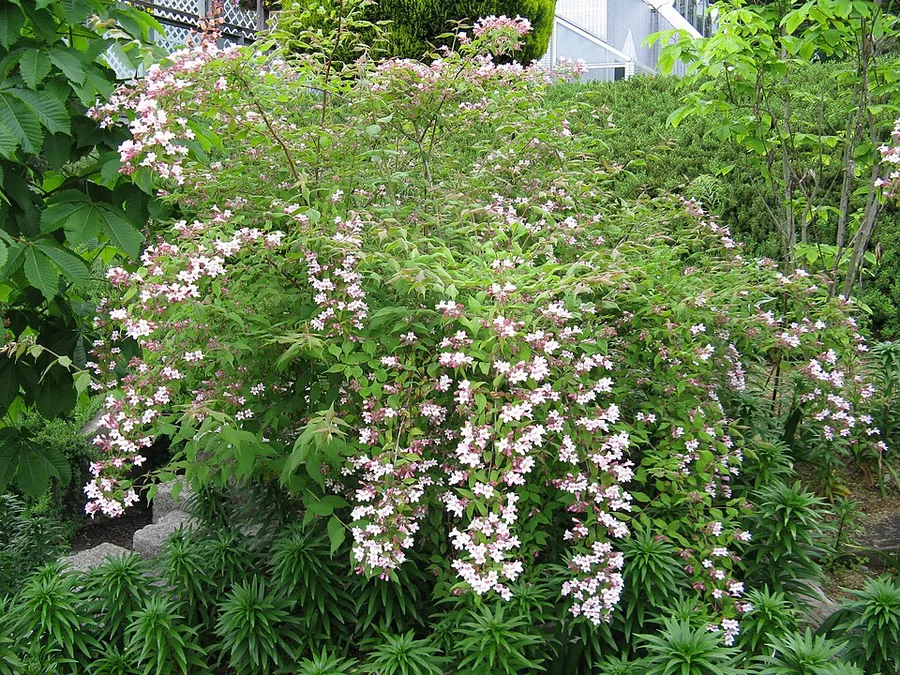
In mid spring the long, arching, vase-shaped branches of beautybush bow under hundreds of small, soft pink bells, and a close look shows a yellow throat marking the mouth of each flower. Once the petals drop, the same stems shed thin curls of peeling bark that keep the bare framework worth a look through winter. The shrub belongs to the honeysuckle family and grew wild in China before gardeners carried it west.
Up close the plant is all slender, flexible wood, and it is built to take hardship. The stems shrug off clay and drought and stay sound through cold to -29°F (-34°C), with no real pest or disease problems marking the leaves or wood. Deer leave the twiggy growth alone, which helps where browsing chews up other shrubs.
Given room, the wood arches out into a broad, fountaining mound rather than a stiff upright clump. A mature shrub measures 6 to 10 feet (1.8 to 3 m) tall and just as wide, the outermost stems curving down to nearly brush the ground. That loose, open spray of branches needs space to spread, and the plant asks little beyond a well-timed prune.
Care
The short version: full sun and average, well-drained soil suit the arching wood, with water through the first season to drive deep roots, then little beyond a prune taken right after the pink bells fade.
Light
Beautybush hangs the most flowers along its stems in full sun, meaning six or more hours of direct light a day. It still leafs out and grows in partial shade, but every hour of shade thins the pink bells.
Water
Water it regularly through its first growing season so the roots drive deep beneath the arching crown. Once settled it carries itself and takes both drought and heavy clay in stride, so a thorough soak every 7 to 14 days in a dry spell is plenty.
Soil
Average, well-drained ground is all the roots ask for. They take hold in clay, loam, or sand and tolerate a wide pH band from 5.5 to 8.0, acid through alkaline, so most garden soils suit the plant without fuss.
Temperature
Hardy across USDA zones 4 to 8, the bare winter stems endure cold down to -29°F (-34°C), and the summer foliage holds up to heat as high as 100°F (38°C).
Humidity
Outdoor humidity leaves this shrub untroubled, so there is no level to manage. The leaves and stems carry on the same through muggy summers and dry ones.
Feeding
A low-maintenance shrub, it draws little from the soil. A balanced general-purpose fertilizer or a topdressing of compost worked in around the base in spring is all it wants, and many gardens skip even that.
Pruning
Timing decides the show, because beautybush sets its buds on old wood. Prune right after the pink bells fade, cutting some of the oldest, gray stems out at the base to keep the spray of branches open. Avoid late-winter or early-spring cuts, which strip the year-old wood of its flower buds.
Repotting
This is a landscape shrub that rarely needs repotting. A young plant raised in a container moves up when roots circle the pot or the soil dries out fast, and then it goes into open ground where the stems can arch freely.
Size & spacing
A full-grown beautybush stands 6 to 10 feet (1.8 to 3 m) tall and spreads just as wide, the slender stems curving outward in a broad fountain. Allow that much room from the start so the arching branches have space to bow without crowding.
When to plant
Beautybush goes in during spring or fall, while the weather is mild and the roots can settle before heat or hard cold arrives. The pink bells open in mid to late spring, around April into May, strung along the previous year's wood.
Northern hemisphere
Southern hemisphere
Typical months for a temperate climate: start earlier in warm zones, later where spring frosts linger.
- Plant: Spring or fall
- Harvest: Mid to late spring (April to May)
Hardiness
USDA hardiness zones: 4–8
Temperature: down to -34°C
Troubleshooting
This shrub shows gardeners few faults, and most of what does appear on the stems or flowers traces back to pruning at the wrong moment. Match what you see on the plant below, and the fix is usually a matter of timing.
Few or no flowers in spring
When the arching stems stay green and bare through spring, the cause usually sits in the pruning, because beautybush carries its buds on old wood. A cut in late winter or early spring lops off the year-old wood and the swelling buds along it. Shade thins the flowers too, so a stem that gets full sun and a blade kept away until the blooms drop will pink up again.
Fix:
- Prune only immediately after flowering ends
- Relocate or thin surrounding plants to provide more direct sun
A dense, twiggy shrub that looks unkempt with age
Year after year the slender stems pile in on each other until the core knots into a crowded thicket of gray, twiggy wood that barely flowers. Renewal pruning loosens that tangle. Cutting a share of the oldest, thickest canes flush to the ground after bloom clears the interior and pushes up smooth new shoots that carry the next flush of buds.
Fix:
- Remove a portion of the oldest stems at ground level after flowering
- Thin congested growth to open the form
Toxicity
Beautybush is a safe shrub to grow around pets, livestock, or children. From its pink bells to its leaves, slender stems, and dry seed capsules, it carries no known poison and stays off the ASPCA's toxic list. It is grown for the look of it rather than for eating.
Safe for
People · Cats · Dogs · Horses · Rabbits · Livestock · Birds
Cats Safe
A cat that bats at the soft pink bells or mouths a leaf meets no toxin, since beautybush stays off the ASPCA toxic list. A large mouthful of foliage might bring brief stomach upset, but nothing poisonous is at work.
Dogs Safe
A dog pushing through the arching, twiggy stems or chewing a green leaf runs no real risk from this shrub. A greedy nibble of foliage brings, at most, mild and passing tummy trouble.
Horses Safe
Nothing in the leaves, stems, or bells of beautybush is known to harm a grazing horse. It grows as an ornamental rather than feed, so it tends to draw little notice.
Rabbits Safe
Rabbits, wild or kept, can crop the small green leaves without harm. Deer and rabbits both tend to pass the twiggy shrub by anyway.
Livestock Safe
Cattle, goats, and sheep meet no toxic principle in this shrub if they reach a stray, arching branch along a fence line. It is an ornamental, not a feed plant.
Birds Safe
Birds slip safely among the slender, arching branches and shelter in the twiggy growth. The dry, capsule-like fruit that follows the flowers holds nothing toxic.
People Safe
From its pink bells to its peeling bark and dry seed capsules, beautybush carries no known toxin and poses no concern to a gardener or a child. It is grown for its looks, not for eating.
No special handling precautions noted; routine garden hygiene (wash hands after pruning) is sufficient.
Varieties
The wild species already puts on a fine show, but two named selections sharpen either the color of the flowers or the turn of the foliage. Both are worth seeking out.
Pink Cloud
This selection opens clear pink flowers a touch larger than the wild form, set so thickly along the stems that the bells crowd into a solid wash of color.
Dream Catcher ('Maradco')
Its foliage unfurls in coppery tones, warms through yellow and golden chartreuse over summer, then deepens to orange and gold as the year turns.
How to propagate
More beautybush can come from cuttings of the green stems, from suckers split off an old clump, or from the dry seed capsules, and the route chosen mostly sets how long the wait will be.
Stem cuttingsModerate
Late spring to early summer using softwood cuttings · Several weeks to root; one or more seasons to establish
Softwood cuttings root most reliably, taken from the supple, green-skinned shoots of late spring and early summer while they still bend without snapping. Pale roots break from the cut ends over several weeks. A rooted piece then spends a season or more in the ground before it thickens into a settled plant.
DivisionModerate
Dormant season · One growing season
An older clump throws up suckers and basal shoots at the crown, each a short stem with its own roots, ready to lift and replant. The dormant season, when the bare stems are leafless and resting, is the time to split them. Each division takes about a growing season to root in.
SeedModerate
After collecting ripe capsules · Multiple years to reach flowering size
Seed is the slow route, gathered from the dry, bristly, capsule-like fruits once they ripen and brown on the stems. Sown out, the tiny seedlings inch along for several years before they reach flowering size. That long wait is why most growers turn to cuttings instead.
Myths
Beautybush should be cut back hard in late winter like many summer-blooming shrubs.
The hard late-winter cut belongs to shrubs that flower on fresh green growth, and beautybush works the other way. Its buds sit on year-old wood, so a late-winter or early-spring cut takes off the very stems that carry the swelling pink bells. Let the flowers fade on the wood first, then prune.