Shrub · Caprifoliaceae
Glossy Abelia
Abelia × grandiflora
Hand it sun and crumbly, free-draining soil, and glossy abelia spills small blossoms from late spring to frost with barely a request.
Full sun
Every 5–10 days
USDA 6–9
2–8 ft · 0.8–2.4 m
Overview
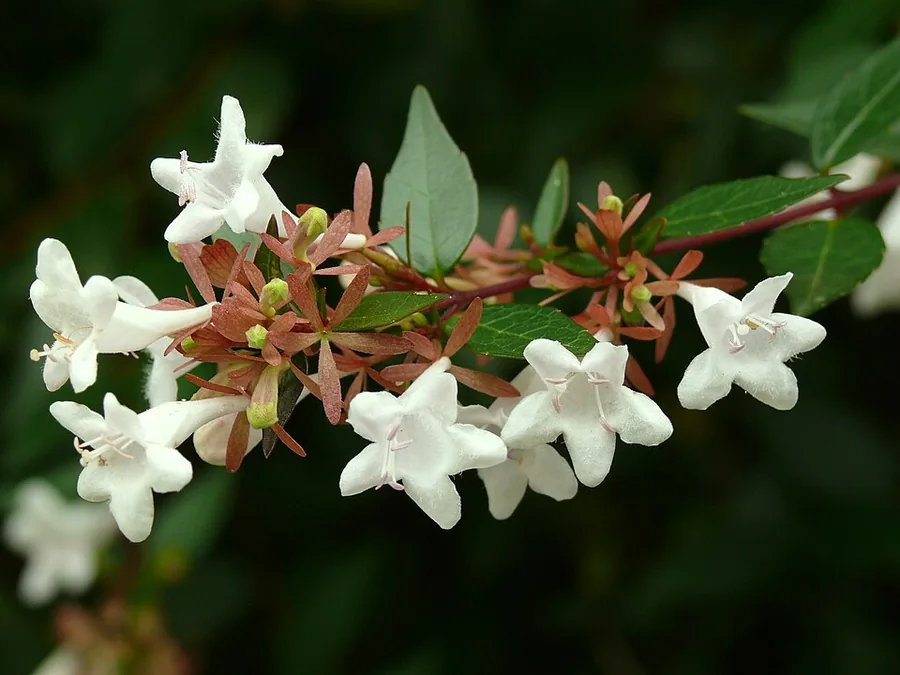
Glossy abelia is a sturdy, low-fuss shrub built around slender, arching canes that sway and lend a bed a soft, fountaining shape. From late spring to the first frost it strings tiny, faintly scented bells along those stems. Its name traces to the foliage: small leaves that hold a lacquered, light-catching glossy sheen across much of the year.
Set this one in USDA zones 6 to 9, where it basks in full sun yet pardons a stretch of partial shade. At a measured, moderate clip it climbs to somewhere between 2.5 to 8 feet (76 to 244 cm) tall, the canes fanning out to a spread near 6 feet. Once the roots take hold it brushes off dry weather and asks for little.
For a first-time grower, abelia gives back far more than it takes. Flowers open on new wood, so one spring trim leaves it shapely and full of bloom. Many of the named forms finish the season in color, the leaves warming through orange and red before the cold settles in.
Care
The short version: full sun to a little shade, crumbly soil that sheds water yet keeps some richness, a drink while it roots and through dry spells, and one trim as winter loosens into spring.
Light
Abelia thrives under full sun, where the blooms come thickest and the canes stay full and close-knit. Partial sun and even partial shade are within reach, though the flowering and the autumn color both fade as the light thins. Pick a bright, open patch with sky overhead.
Water
While the roots are still reaching down, hold the soil damp, then taper off as the shrub finds its feet. Settled in, abelia turns drought tolerant and wants a drink only every 5 to 10 days, a touch more when the ground bakes. A long, soaking pour through dry weather draws out the fullest bloom.
Soil
Give it moist, well-drained loam, clay, or sand with a handful of organic matter folded in. A pH spanning 5.5 to 7.5 suits most beds, so the ground seldom needs tinkering. The one line it will not cross: salty soils, which it cannot stand.
Temperature
This shrub rides a broad weather swing, roughly -9°F to 95°F (-23°C to 35°C). That window lines up with USDA zones 6 to 9 and lets it weather both baking summers and a sharp winter freeze. Where the cold runs deepest, a tucked-away corner eases it through.
Humidity
Plain outdoor air is moisture enough for abelia, so no reading needs chasing. What counts is moving air, since stagnant, soggy pockets around packed shrubs are exactly where gray mold gathers. Leave each plant space to draw a breath.
Feeding
Lay down a single yearly meal of balanced slow-release fertilizer, or spread compost over the roots in early spring. That one seasonal feeding fuels the whole long bloom. Skip the heavy nitrogen, which only pushes out the soft, sappy growth that aphids favor.
Pruning
Flowers form on new wood, so reach for the shears in late winter or early spring before the buds stir. An overgrown plant takes a hard rejuvenation cut clear down to about 12 inches (30 cm) above the soil once spring growth shows. Steer clear of cutting from late fall into mid-winter, which lays the stems bare to cold harm.
Repotting
Out in the garden, abelia is rarely repotted and would sooner stay put in open ground. Grown in a pot, shift it up a size when roots coil the inside or snake out the drainage holes. Water that pours straight through with little soaking in is another tell that it has filled its container.
Size & spacing
Mature canes rise 2.5 to 8 feet (76 to 244 cm) tall and fan to a spread of 3 to 6 feet (91 to 183 cm). Leave each shrub elbow room to broaden so air slips freely between the stems, which keeps gray mold from settling in when the weather turns wet.
When to plant
Slip abelia into the ground during the year's gentler windows. Set it out in spring or fall once hard frost has let go, giving the roots a foothold before the press of summer heat or winter chill. Then the blossoms unspool from late spring to frost, a long, easy parade for so small an effort.
Northern hemisphere
Southern hemisphere
Typical months for a temperate climate: start earlier in warm zones, later where spring frosts linger.
- Plant: Spring or fall after danger of hard frost has passed.
- Harvest: Late spring through fall (roughly May until frost).
Hardiness
USDA hardiness zones: 6–9
Temperature: down to -23°C
Troubleshooting
Glossy abelia carries on with hardly a stumble, and the rare snags it hits show their signs plainly on the leaves and stems. Trace nearly all of them back to a biting winter, dank and crowded air, or a rush of tender new shoots. Find the picture that matches yours below, then act while the problem is still small.
Blackened stem tips and a bare spring after hard frost
Brown, brittle canes that snap with no green inside point to winter dieback, the bite of cold on a shrub planted near the chilly edge of its range. Wood already weakened by a late-fall or mid-winter cut suffers the deepest. Drag a thumbnail across the bark in spring, and where it scrapes up dry brown tissue, trim that lifeless cane down to firm wood or right to the soil as buds swell. New shoots carry the flowers, so the season's blooms still arrive on schedule.
Fix:
- Prune dead stems back to live wood or to the ground when spring growth begins
- Since it blooms on new wood, plants flower the same season after spring cutback
Furry gray patches creeping over blooms and tender shoots
A felted gray-brown bloom across spent flowers and young stems is the signature of Botrytis, a mold that settles into still, packed, moisture-heavy pockets of the shrub. Look closely and the faded petals wear a dusty fuzz where the spores gather. Snip away every marred flower and shoot, then thin the dense interior so air can drift through the branches again.
Fix:
- Remove and discard affected blooms and stems
- Improve air circulation by thinning and spacing plants
Crumpled shoot tips wearing a glossy, tacky coat
When fresh growth puckers and a glistening film clings to the leaves, aphids have moved onto the soft tips for a spell. Turn a curled leaf over and you will find dense knots of pinhead-sized, pear-shaped insects with the sticky honeydew pooled beneath them. Blast them off with a firm jet of water, and follow up with insecticidal soap for any holdouts. This shrub fends off trouble by nature, so the visit seldom turns serious.
Fix:
- Dislodge aphids with a strong spray of water
- Treat persistent infestations with insecticidal soap
Toxicity
A relief for homes with pets and small children: glossy abelia is non-toxic. Its name sits nowhere on ASPCA toxic-plant references, and it counts as safe around cats and dogs. A big mouthful of leaves might leave any animal with a mildly upset stomach, yet nothing about this shrub asks for caution.
Safe for
People · Cats · Dogs · Horses · Rabbits · Livestock · Birds
Cats Safe
A cat can wind through the arching stems or mouth a glossy leaf and walk away unharmed, since the shrub carries nothing toxic to felines.
Dogs Safe
A dog nosing or chewing at the foliage runs no risk here; this is a safe shrub to plant along a yard a dog roams.
Horses Safe
Horses grazing past the branches or along a fence line where abelia grows have no poisoning to fear from it.
Rabbits Safe
Rabbits can sit beside the plant without harm, though any leafy green is best kept to a modest share of their diet.
Livestock Safe
Goats, sheep, and cattle can browse near the shrub with no danger of poisoning from its leaves or stems.
Birds Safe
Backyard poultry and pet birds can share the garden with abelia and come to no harm from it.
People Safe
This shrub belongs in a garden where small children dig and explore, posing no danger to curious hands and mouths.
No special handling required; large quantities of any plant material may cause mild stomach upset.
Varieties
A handful of named abelias each twist the flower color, leaf pattern, or silhouette in their own direction. These are the ones to recognize before you settle on one.
Rose Creek
A tidy, dome-shaped grower whose pink-blushed blossoms sit atop wiry red stems.
Kaleidoscope
Foliage streaked gold and green through summer that flares to molten orange-red as autumn sets in.
Edward Goucher
A cousin hybrid whose lavender-pink blooms dangle from long, gently bowed branches.
Prostrata
A flat, sprawling grower that presses close to the soil and drifts outward as a loose carpet.
How to propagate
Among shrubs, abelia ranks with the simplest to multiply, and one parent can hand you a clutch of new plants from cuttings snipped across the warm season.
Stem cuttingsEasy
Take softwood or semi-hardwood cuttings in late spring through summer. · Roughly 35 to 70 days to root depending on temperature.
Few shrubs strike from cuttings as willingly as abelia. Snip softwood or semi-hardwood pieces across late spring and summer, and a snug warmth around 80°F to 86°F (27°C to 30°C) coaxes roots out in roughly 35 to 50 days. Where the air sits cooler the wait stretches toward 70 days, so hold the cuttings warm and let them take their time for a clean strike.
Myths
Glossy abelia is poisonous to dogs and cats.
No ASPCA toxic-plant reference names abelia, and the shrub is treated as non-toxic for both cats and dogs alike. A greedy mouthful could stir up mild stomach upset, the same as any leaf would. Plant it freely where pets wander and play.
You must prune abelia in fall to keep its size in check.
Fresh growth is where the flowers form, which sets the pruning window in late winter or early spring. A cut taken from late fall through mid-winter only leaves the stems exposed to cold damage. Hold the shears until buds break in spring, and the form stays neat while the blooms stay full.