Shrub · Hydrangeaceae
Slender Deutzia
Deutzia gracilis
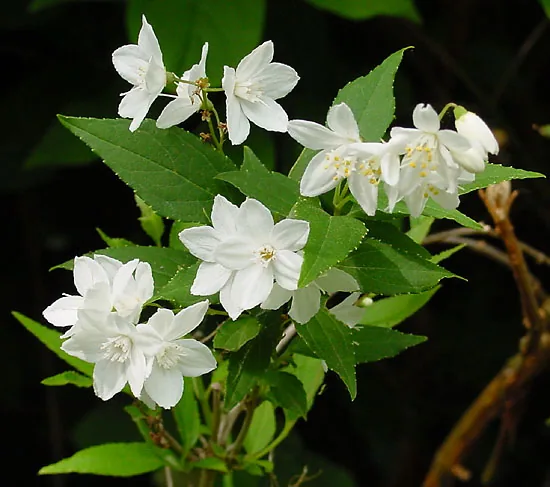
A low, arching shrub whose slim stems vanish under small white spring flowers.
Full sun
Every 5–10 days
USDA 5–8
2–5 ft · 0.6–1.5 m
Overview
Slender deutzia is a low shrub from Japan whose thin, arching stems bend outward in a loose, fountain-like spray. Each spring those stems all but disappear beneath a dense scatter of small white flowers, set so thickly they read as a pale cloud over the green. The shrub belongs to the hydrangea family and keeps a compact frame, reaching only 2 to 5 feet (61 to 152 cm) tall and roughly the same across, so the whole arching mound stays low and rounded.
Up close the plant is plain in the off-season and striking in bloom. The stems stay slim and supple enough to arch under the weight of the flowers, and the green leaves run along them in a simple, even line. The shrub takes cold to -20°F (-29°C) and grows in clay, loam, or sand across a soil range from acidic to alkaline, asking only for sun and good drainage, which is part of its easy name.
The flowering itself is short and concentrated, the white blossoms holding about 10 to 14 days in mid to late spring before they drop and the shrub returns to a quiet green mound. On some cultivars the leaves shift to a deep burgundy fall color or carry a bright lime cast, adding color to stems that otherwise stay plain. The flowers are the whole spectacle, brief and dense before the green takes over again.
Care
The short version: grow it in full sun to part shade in any well-drained soil, water it through dry spells, and prune it only right after the white flowers fade so you keep next spring's buds on the stems.
Light
Deutzia opens the most white flowers in full sun, though it still leafs out and blooms in partial sun or partial shade. Where summers run hot, a little afternoon shade keeps the green leaves from bleaching to a washed-out pale, so some shelter holds their color in the warmest regions.
Water
Keep the soil consistently moist but well drained, watering often while a young shrub roots in and through any dry spell. Let the surface dry a little between waterings rather than staying soggy. Once settled, the plant gets by on a drink every 5 to 10 days in dry weather.
Soil
The roots take hold in clay, loam, or sand without trouble. What the shrub wants is moist, well-drained ground, and it grows across a wide pH of 6.0 to 8.0, from acidic to alkaline.
Temperature
Slender deutzia is hardy through USDA zones 5 to 8 and takes cold to about -20°F (-29°C) without dieback. It also stands summer heat near 100°F (38°C), though the leaves keep their green better with some afternoon shade in hot climates.
Humidity
Ordinary outdoor air suits the shrub, so there is no level to track. Air moving through the stems matters more, since crowded, damp leaves are the ones that pick up the odd spot.
Feeding
Deutzia is a light feeder. A balanced slow-release shrub fertilizer or a layer of compost in early spring carries it through the year. Too much nitrogen pushes soft, sappy shoots that aphids cluster on.
Pruning
Deutzia blooms on old wood, so the buds for next spring sit on this year's stems. Prune right after the flowers fade, thinning up to one-third of the oldest stems to keep the arching habit open and graceful. A late-summer or fall cut takes the buds with it.
Repotting
Deutzia rarely needs repotting and roots best in open ground. A potted one needs moving up only when the roots circle the pot or push out the drainage holes, or when water runs straight through the rootball without soaking in.
Size & spacing
The stems arch into a mound 2 to 5 feet (61 to 152 cm) tall and about as wide. Set each plant roughly that far apart so the arching stems have room to spread and air can pass between them.
When to plant
Plant deutzia in spring or fall, when mild weather lets the roots settle before heat or hard frost. The small white flowers open in a short window in mid to late spring, roughly March to May, lasting only a couple of weeks on the stems. Pruning is the one timed task, and it follows the flowers rather than coming before them.
Northern hemisphere
Southern hemisphere
Typical months for a temperate climate: start earlier in warm zones, later where spring frosts linger.
- Plant: Spring or fall
- Harvest: Mid-to-late spring (March to May), blooming for about 10 to 14 days
Hardiness
USDA hardiness zones: 5–8
Temperature: down to -29°C
Troubleshooting
Deutzia stays close to trouble-free, and most of what marks the plant is cosmetic and shows on the leaves. A few pests work the soft new growth in spring, and strong sun can drain the color from exposed foliage. The descriptions below match each visible mark to its cause.
Tacky, glistening shoot tips packed with minute bugs
The tiny, soft-bodied insects packed onto the freshest shoot tips are aphids, green, black, or gray, clustering on the new spring growth where the sap runs sweetest. They coat the stems in sticky honeydew and curl the soft young leaves. A hard jet of water washes the colonies off, and lady beetles and lacewings finish the rest.
Fix:
- Spray colonies off with a strong jet of water
- Apply insecticidal soap or horticultural oil to affected growth if populations are heavy
- Encourage natural predators such as lady beetles and lacewings
Threadlike blanched tunnels weaving beneath the leaf surface
The pale, serpentine lines winding across a leaf are the mines of leaf miner larvae, feeding inside the leaf between its upper and lower skin where no spray reaches. Picking off and binning the most heavily traced leaves cuts the numbers. On a healthy deutzia the marks stay skin-deep and rarely call for more.
Fix:
- Remove and destroy mined leaves to reduce the population
- Tolerate light damage, which is mostly cosmetic on an otherwise vigorous shrub
Papery whitened foliage on the sunniest branches
Leaves on the most exposed stems that fade from green to a washed pale or near-white in hot, bright weather show foliage bleaching, the heat breaking down the green chlorophyll. The color loss looks worse than it is, and the leaves recover. In hot-summer regions, afternoon shade and evenly moist soil hold the green.
Fix:
- Provide afternoon shade in hot-summer climates
- Keep soil evenly moist to reduce heat stress
Ink-dark flecks and blotches marking the leaf blades
Discrete dark spots and blotches scattered over the leaves in damp weather mark leaf spot disease, a fungal nuisance that rarely runs deep on this shrub. Stripping off the spotted leaves and thinning crowded stems lets air move between the branches. Watering at the base rather than over the leaves keeps them dry, and the spotting usually clears.
Fix:
- Remove and dispose of affected leaves
- Improve air circulation by thinning crowded stems
- Avoid overhead watering
Toxicity
Slender deutzia is non-toxic across the board. The ASPCA lists it safe for dogs, cats, and horses, and NC State Extension finds no toxicity in any part of the plant. Neither its leaves nor its white flowers carry a hazard to a curious pet or child.
Safe for
People · Cats · Dogs · Horses · Rabbits · Livestock · Birds
Cats None
A cat that mouths one of the small green leaves comes away unscathed; the ASPCA records the shrub as non-toxic to felines.
Dogs None
The shrub is just as safe for dogs. A mouthful of leaves will not poison them, though swallowing a lot of any plant can still leave a dog with a mild, passing stomach upset.
Horses None
A horse cropping the arching stems over a fence takes no harm, since no equine toxicity has ever been recorded for this shrub.
Rabbits Safe
Rabbits can browse the leaves and stems without harm, since none of its parts carry a toxin.
Livestock Safe
Cattle, goats, and sheep grazing nearby are in no danger from this plant.
Birds Safe
The shrub poses no poisoning risk to birds that perch in its stems or peck at its foliage and spent flowers.
People Safe
Slender deutzia is not toxic to people, so it suits gardens where children play. It is grown for its white flowers, not for eating, so there is no reason to put any part of it on a plate.
No special handling precautions are needed; the plant is non-toxic.
Varieties
A few named cultivars change the look of the plain species, mostly in the color of the leaves or the tightness of the mound. These are the ones most often grown.
Nikko
A dwarf, dense mound only 1 to 2 feet tall that spreads as a groundcover, its green leaves deepening to burgundy in fall.
Chardonnay Pearls
A compact form with lime-yellow foliage and small pearl-like buds that open to white flowers.
Pink Minor
A compact form whose pink buds unfurl into white flowers washed with a blush of pink.
How to propagate
Making more deutzia is simple, whether a slim summer cutting roots in a pot or a low, arching stem roots itself where it touches the soil.
Stem cuttingsEasy
Summer · Several weeks to root; transplantable the following season
The easiest way to raise more deutzia is from a softwood cutting, a slim length of new growth taken in summer that roots with little fuss. It puts out roots over several weeks, then sits undisturbed until the following season, when it is ready to move to a permanent spot.
LayeringEasy
Spring to summer · One growing season or more
Layering uses the shrub's own low, arching stems. From spring through summer, a stem bent down to where it touches the soil roots at that point of contact. The new plant takes a full growing season or more to root firmly enough to cut free and lift.
Myths
Those clouds of white flowers supposedly hide a poison, so deutzia should never grow where pets wander.
The ASPCA lists slender deutzia as non-toxic to dogs, cats, and horses, and NC State Extension reports the same. No leaf, stem, or white flower on the plant carries a toxin, so it can grow freely around pets and children.
Deutzia's arching stems can be clipped in any season without costing a single bloom.
The flower buds form on old wood, on stems already a year old, so a cut in late summer, fall, or just before bloom strips them away. Pruning belongs to the moment right after the white flowers fade, which leaves next spring's buds on the stems.