Ornamental · Asteraceae
Gerbera Daisy
Gerbera jamesonii
Give it full sun, sharp drainage, and a dry crown, and the gerbera daisy lifts bright blooms from spring to fall.
Full sun
Every 3–7 days
45–75°F · 7–24°C
120–150 days
Overview
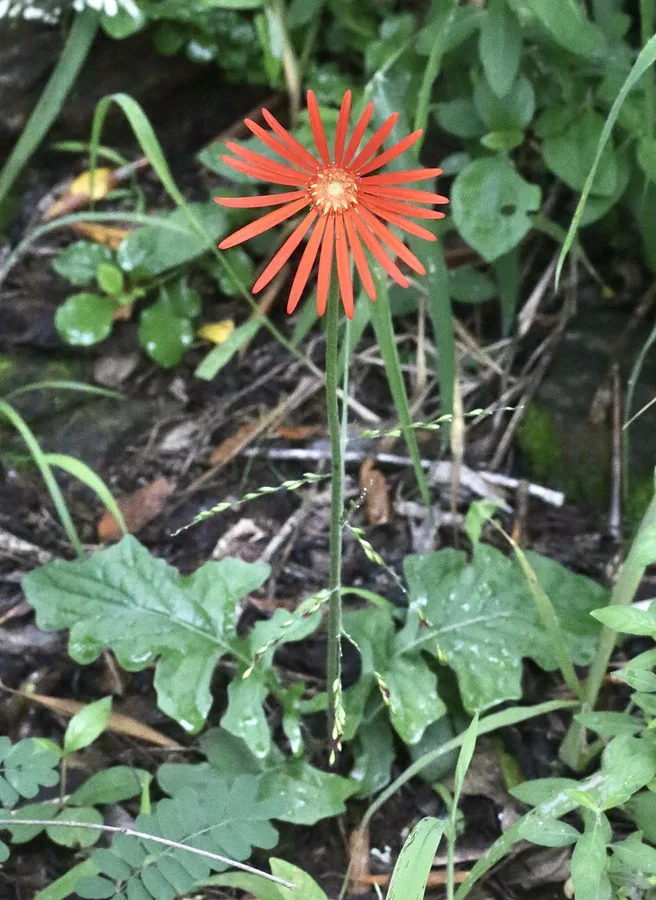
The gerbera daisy opens some of the boldest color in the garden, its flower a wide, flat disc ringed with slender rays in reds, pinks, oranges, yellows, and clean white. Each bloom rides a tall, bare stem well above the leaves, and the plant hails from South Africa, where it grows as a tender perennial in the same family as sunflowers and asters. Outside the mild zones it is grown as a bright annual or kept in a pot.
Below the flowers, the plant forms from a low crown pressed close to the soil, and that crown is its weak point, since it rots the moment it sits wet. The remedy is rich, fast-draining soil and watering that lets the crown dry between drinks. Once that low center of the plant stays sound, the rest holds up well.
Given full sun, a little space, and a weekly deadheading, it keeps lifting fresh flower heads on long, clean stalks for months on end. Those same straight, sturdy stems, each capped by a single broad bloom, are what make it one of the finest cut flowers a home garden can grow.
Care
The short version: full sun with light afternoon shade in the heat, rich sharply drained soil, even moisture that leaves the low crown dry and high, and regular deadheading to keep the broad flower heads coming.
Light
The broad flower heads open fullest in full sun, six or more hours of direct light a day. A little afternoon shade suits it where summers are hot, while deep shade stretches the leaves and stems leggy and leaves few flowers.
Water
Keep the soil evenly moist but never soggy, letting that low crown dry between waterings. Pour water at the base early in the day rather than overhead, since a wet crown and damp leaves are where rot and disease begin.
Soil
Root it in rich, well-drained loam worked full of organic matter. It leans acidic, near a pH of 5.5 to 6.5, and sharp drainage around the crown is the single most important thing it needs.
Temperature
It holds its form and color between 45°F to 75°F (7°C to 24°C) and will not survive frost. Heat above that range can stall the flower heads, so a little shade eases it through the hottest weeks of summer.
Humidity
Ordinary humidity suits it, so there is no number to hit. Air moving over the leaves matters more, because still, crowded air lets powdery mildew film the foliage.
Feeding
Feed every two weeks through the growing season with a balanced liquid fertilizer, or a controlled-release feed applied 2 to 3 times across the year. Watch for iron and manganese shortfalls, which drain the color from the newest leaves, and correct them as they show.
Pruning
Care past deadheading is next to nothing. Snap off each spent flower head as it browns and the plant pushes up fresh ones, often for months.
Repotting
Set a potted gerbera into fresh mix every 1 to 2 years, or sooner when roots circle the pot, flowering thins, or the soil dries fast. Seat the crown right at the surface every time, never sunk below.
Size & spacing
The plant stays low and compact, its leaves and flower stems reaching 6 to 18 inches (15 to 46 cm) tall over a spread of 9 to 15 inches (23 to 38 cm). Give each one room and moving air to keep the foliage clean.
When to plant
The gerbera daisy is a warm-season plant with no tolerance for frost, its soft crown and stems quick to blacken in a freeze. Start seed indoors in late winter, set plants out once the spring cold has passed and the soil has warmed, and the flowers hold from late spring through autumn.
Northern hemisphere
Southern hemisphere
Typical months for a temperate climate: start earlier in warm zones, later where spring frosts linger.
- Sow: 8 to 10 weeks before the last spring frost
- Plant: after the last spring frost when soil has warmed
- Harvest: late spring through autumn
Hardiness
USDA hardiness zones: 8–10
Temperature: down to -12°C
Troubleshooting
Most gerbera trouble traces to water lingering around that low crown, with pests a distant second. The crown at the soil line and the leaves are where the first marks appear. Match what you see below and act early.
Soft brown rot at the soil line and a plant folded over
When the tissue at the soil line turns soft and brown and the whole plant folds over, that is crown and root rot, the most common way a gerbera daisy is lost. It sets in where the soil stays too wet or the crown was sunk too deep, and the plant wilts limp even as the ground stays dark with water. Lift the affected plants, reset each crown so it rides level with the soil surface, and pour water at the base early in the day so the roots can dry.
Fix:
- Remove affected plants
- Improve drainage with raised beds or containers
- Replant with the crown level at the soil surface
- Water at the base early in the day
A chalky white film dusting the leaves and stems
A chalky white film that dusts the leaves and stems is powdery mildew, a fungus that takes hold where the air hangs humid and the plants press too close. The coating smears off under a fingertip, and the green leaf beneath it can pale to yellow. Open the planting so air moves through it, keep the foliage dry, and save a fungicide for the rare time the film spreads out of hand.
Fix:
- Improve air circulation
- Avoid wetting foliage
- Apply an appropriate fungicide if severe
Pinprick yellow speckling, fine webbing, or warped new leaves
Leaves flecked with pinprick yellow speckling, strung with fine webbing, or pushing out warped new growth are hosting sap-sucking pests such as spider mites, aphids, thrips, and whiteflies. Tip a leaf and study its underside, where the insects cluster in tiny bodies and mites leave a faint silk. Rinse the leaves clean, coat them with insecticidal soap or neem oil, and repeat on the label schedule until no speckling remains.
Fix:
- Rinse foliage
- Apply insecticidal soap or neem oil
- Repeat applications as directed
Toxicity
For a home with pets or children, the gerbera daisy is non-toxic across the board, petal, leaf, and stem alike. The ASPCA lists it as safe for cats, dogs, and horses, and no toxin threatens other animals or a child who handles the flowers.
Safe for
People · Cats · Dogs · Horses · Rabbits · Livestock · Birds
Cats None
Cats are safe near it. The ASPCA lists the gerbera daisy as non-toxic, so a nibble at a petal or leaf does no harm.
Dogs None
Dogs are safe too. The plant holds no toxins, though a dog that swallows a big mouthful of any foliage may feel briefly off.
Horses None
Horses can graze beside it untroubled. The ASPCA lists the gerbera daisy as non-toxic to them.
Rabbits Safe
Rabbits are safe among the blooms and leaves, with no toxin in petal or stem.
Livestock Safe
Livestock grazing near it run no poisoning risk, since the plant carries nothing toxic.
Birds Safe
Pet and backyard birds are safe around the foliage and flowers, which hold no toxins.
People Safe
People are safe with it, so a child can cup the bright flower heads in bare hands without harm.
Varieties
The gerbera daisy blooms in a huge run of colors, and a few named selections stand out for the exact look of their flower heads. These are worth seeking by name.
Mardi Gras
Mardi Gras opens several bright ray-petal colors across a single plant.
Rainbow
Rainbow spreads a wide sweep of flower colors over low, compact plants.
Green Kermit
Green Kermit shows doubled petals ringing a vivid green eye.
How to propagate
The gerbera daisy multiplies two ways: by splitting an established clump at the crown, or by seed. Both take some patience, and neither is hard.
DivisionModerate
Early spring or after flowering · Several weeks to a few months
Ease a mature clump from the ground in early spring or once the flowers have faded, then pull it into sections and set each crown level with the soil surface. Every section needs a stretch of a few weeks to a couple of months to root down and grow on its own.
SeedModerate
Start indoors 8 to 10 weeks before last frost · Several months to first bloom
Scatter seed on the surface of a warm indoor tray 8 to 10 weeks before the last frost, leaving it uncovered since the seed needs light to break dormancy. Hold it warm and evenly moist, and a seedling then spends several months building up before it lifts its first bloom.
Myths
Gerbera daisies are toxic to cats and dogs like many other daisies.
The flower is mistaken for its rougher relatives. The ASPCA lists Gerbera jamesonii as non-toxic to cats, dogs, and horses, and it is not the daisy cousin that causes the trouble.
Gerbera daisies like to be kept constantly soggy.
Standing wet is what rots them. Soil that never dries drives crown and root rot into the base, so the plant wants well-drained ground and a crown left to dry between waterings.