Tree · Cupressaceae
Emerald Green Arborvitae
Thuja occidentalis
Sun-fed and kept moist, its tight pyramid of bright green foliage holds firm against deer and snow for decades.
Full sun
Every 5–10 days
USDA 3–7
12–14 ft · 3.7–4.3 m
Overview
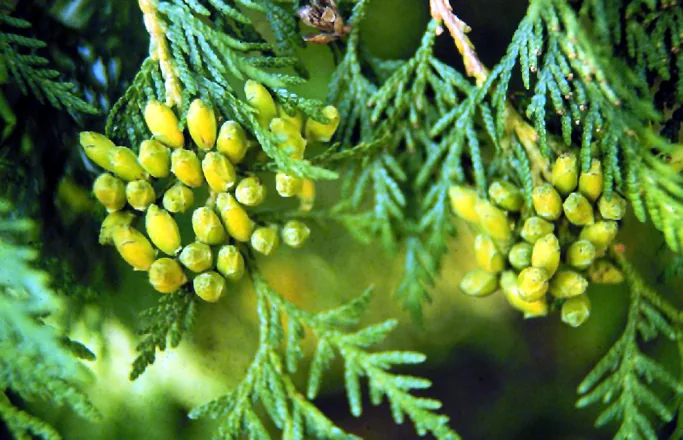
Emerald Green Arborvitae rises as a slim green spire, a column of foliage drawn to a narrow point. It is a 'Smaragd' selection of the eastern white cedar, Thuja occidentalis, and its sprays of flat, scale-like foliage pack so tightly that the surface reads as a single sheet of bright green rather than separate leaves. A mature plant lifts that bright green pyramid to about 12 to 14 feet (3.7 to 4.3 m) tall while holding a slender 3 to 4 feet (91 to 122 cm) across.
Up close the color is the thing. The foliage stays a clear, even green through every season, the tight habit holding its shape rather than thinning or sprawling. The growth is slow and steady, so the form fills in gradually and densely. It endures cold to -40°F (-40°C) and roots into many soils, clay included, where the ground drains, while drought and waterlogged soil are the two conditions that mar its look.
The foliage carries the marks of its trials right on its surface. Deer leave a ragged, chewed edge, heavy snow can splay the close-set stems outward, and a dry, windy site dulls the green to a scorched brown. Set it well and ready it for winter, and the foliage keeps its dense, even green for years.
Care
The short version: full sun to light shade, soil kept evenly moist but never waterlogged, and a deep drink in fall before the ground freezes. Shelter the foliage from deer and harsh winter wind, and tie up multi-stem plants ahead of the snow.
Light
In full sun the foliage grows densest and deepest in color, the scale-like sprays packing close into a solid green face, and it takes partial shade without much complaint. Where light runs thin the foliage opens and bare gaps show through the green.
Water
The soil stays best consistently moist and well drained, with a deep watering every 5 to 10 days in dry spells to hold the green firm. The plant has no tolerance for drought or dry, windy exposure, so a thorough fall soak before the ground freezes keeps the foliage from drying to brown over winter.
Soil
It roots into moist, fertile, well-drained loam and grips even clay where water moves through. The pH range is wide, from 6.0 to 8.0, spanning ground from slightly acidic to alkaline.
Temperature
The green holds through extreme cold. The plant lives from -40°F to 100°F (-40°C to 38°C), the range that keeps its foliage standing as a hedge across the far north.
Humidity
Average outdoor humidity suits the foliage, so there is no number to track. Airflow and steady soil moisture keep the green healthy far more than the air's dampness.
Feeding
One feeding in spring with a balanced, slow-release evergreen fertilizer keeps the foliage well fed. A single seasonal application suits this slow, dense grower.
Pruning
A light shearing in late spring or early summer shapes the green face of a hedge. Cuts stay clear of bare old wood, which will not green back over, and multi-stem plants are tied or wrapped before winter so snow and ice cannot splay the close-set stems.
Repotting
As a landscape plant, it is rarely repotted. In a container, roots circling the root ball, stunted new growth, or water running straight through show it has outgrown the pot.
Size & spacing
A mature plant lifts its narrow green pyramid 12 to 14 feet (3.7 to 4.3 m) tall on a slim 3 to 4 feet (91 to 122 cm) base. For an unbroken green wall, plants sit close enough that the slender crowns merge as they fill in.
When to plant
This evergreen carries its green year-round, with no sowing season and no harvest to mark. New plants go out in spring or early fall, when warm soil lets the roots take hold, and the heat of high summer and the deep of winter are best avoided.
Northern hemisphere
Southern hemisphere
Typical months for a temperate climate: start earlier in warm zones, later where spring frosts linger.
- Plant: spring or early fall
- Harvest: Non-flowering; grown for evergreen foliage
Hardiness
USDA hardiness zones: 3–7
Temperature: down to -40°C
Troubleshooting
Most arborvitae trouble traces to winter or to a few familiar pests, and the foliage shows it plainly. Browning needles, stripped branches, and splayed stems each read as a different cause, so look closely at the plant before acting. Match the marks below and step in early.
Ragged, naked lower limbs when the snow melts
Bare, ragged lower branches in winter are the signature of deer browsing, with Emerald Green high on their cold-season menu. The chewed foliage leaves a torn line up to about deer height, often with tracks and droppings nearby, while rabbits clip the lowest green. Fencing or netting young plants before the snow keeps deer from hollowing the green out of a hedge once other food runs short.
Fix:
- Install fencing or netting around plants
- Apply deer repellents and reapply after rain
- Wrap plants with burlap over winter
Camouflaged brown sacks hung across chewed sprays
The little spindle-shaped sacks hanging from bare branches are bagworms, the worst defoliator the plant meets. Each bag runs 1 to 2 inches long and is shaggy with bits of foliage stuck on as camouflage, and the bags twitch as the larvae feed in early summer. The bags pull off through fall and winter to clear next year's eggs, and Bt knocks back young larvae in late spring before a heavy run strips the green and kills the plant.
Fix:
- Handpick and destroy bags in fall and winter to remove overwintering eggs
- Apply Bacillus thuringiensis (Bt) to young larvae in late spring or early summer
- Use labeled insecticide for larger infestations
Brown-tinged, fading sprays above sodden roots
In waterlogged soil root rot takes hold and the green fades to brown as the plant declines. At the root ball the roots are dark, soft, and mushy instead of firm and white. Better drainage, less water, and replanting of severe cases in free-draining ground are the remedies, and keeping this tree out of low spots that pool water is the surest safeguard for the foliage.
Fix:
- Improve drainage around the root zone
- Avoid overwatering
- Replace severely affected plants in well-drained sites
Crisped bronze sprays facing the winter wind
Foliage gone bronze and dry on the sun and wind side is winter burn, where the scale-like sprays lose water faster than frozen roots can replace it on an exposed site. The brown shows late winter to early spring, and while 'Smaragd' keeps its green better than the plain species, a harsh spot still scorches it. A deep fall soak before the ground freezes, a burlap screen on exposed sites, and pruning of the dead brown once new green returns set it right, while a faint plain winter bronzing is normal and greens back on its own.
Fix:
- Water deeply in fall before ground freezes
- Wrap or screen with burlap on exposed sites
- Prune out dead brown areas in spring once new growth resumes
Trunks flopped outward or snapped beneath heavy snow
Under heavy snow and ice the close-set stems of a multi-stem plant pry apart, the leaders bowing outward or cracking open. Unwrapped specimens with several trunks splay the worst. Snow brushed off gently after storms, stems bound with soft material, and multi-stem plants wrapped before winter hold the form, and a single-leader plant keeps its narrow shape far better in snowy country.
Fix:
- Gently brush snow off branches after storms
- Tie stems together with soft material
- Stake or cable weakened leaders
Peppered yellow flecks and gauzy webs in summer drought
In hot, dry weather spider mites leave the foliage finely stippled and yellowing, with a faint webbing strung across the green. A branch tapped over white paper drops the tiny crawling specks that confirm them. A strong water jet washes them off, horticultural oil or a miticide follows if they linger, and steady soil moisture matters, since stressed, dry foliage draws mites in.
Fix:
- Spray foliage with strong water jet to dislodge mites
- Apply horticultural oil or miticide
- Maintain adequate soil moisture to reduce stress
Toxicity
Emerald Green is a low-risk plant in a home with animals. Its scale-like foliage holds thujone oils that can mildly upset the stomach if a pet eats a good amount, though most animals turn from the bitter taste. The real concern is concentrated thuja essential oil, far more dangerous than the green foliage on the plant.
Toxic to
Cats · Dogs · Horses · Rabbits · Livestock · People
Safe for
Birds
Cats Mild
A nibble of the green foliage usually passes with little fuss, but a cat that eats much may drool, vomit, or go off its food. Cats are the most sensitive of the household pets here, and concentrated thuja essential oil is far more dangerous than the foliage, so oil products belong well out of reach.
Dogs Mild
A dog that chews the foliage may drool or have an upset stomach for a while, though small tastes rarely cause more. The essential oil is the real hazard, not the odd mouthful of green clippings.
Horses Mild
The thujone oils in the foliage can irritate a horse's stomach if it grazes the branches, bringing on mild colic or a dull appetite. Most horses leave the bitter green alone, so trouble appears only when little else is on offer.
Rabbits Mild
Rabbits should not be fed arborvitae, since the aromatic oils in the foliage can unsettle a small digestive system. A stray nibble is unlikely to harm, but it has no place in their diet.
Livestock Mild
Cattle, goats, and sheep generally pass over the bitter foliage and come to no harm. Eaten in quantity, the thujone can mildly upset the gut, so prunings stay out of the pasture.
People Caution
No part of this tree is meant to be eaten, and the thujone in the foliage can irritate the stomach and skin. Children should not chew the scale-like leaves, and gloves help when the sap leaves the skin itchy during shearing.
Birds Safe
Backyard and wild birds shelter and nest within the dense green foliage without trouble, and the plant poses no real risk to them.
Keep clippings and any thuja essential oil products away from pets; the concentrated oil is the main concern.
Helpline numbers

United States
ASPCA Animal Poison Control: (888) 426-4435 (fee applies)
Poison Control: (800) 222-1222



Canada
Poison Centres: 1-844-764-7669
Varieties
Arborvitae takes many forms, from tall green columns to small rounded globes. These are the cultivars worth knowing by their shape and color when choosing one for a spot.
'Green Giant'
A much larger, faster hybrid that lifts to 40 to 60 feet at 3 to 4 feet a year, its green foliage shrugging off the deer and disease that plague the deer-favored 'Emerald Green'.
'Techny' (Mission)
A broad, dense pyramid of deep green that keeps its winter color and takes hard cold in stride.
'North Pole'
A very narrow, columnar selection, a tight green spire for vertical screens where space is short.
'Holmstrup'
A slow, compact, narrowly pyramidal cultivar holding rich green foliage right through winter.
'Hetz's Midget'
A dwarf globe of only about 3 to 4 feet tall and wide, rounded into a ball rather than a cone.
'Danica'
A compact dwarf globe, a small rounded mound of green grown as a foundation accent.
How to propagate
Named cultivars like this one grow from cuttings rather than seed, so each new plant repeats the parent's foliage and form. Layering is a slower route when only one or two are wanted.
Stem cuttingsModerate
Late summer to fall (semi-hardwood) or late winter (hardwood) · 6 to 12 weeks to root
Cuttings keep a named cultivar's foliage true to its parent, which seed cannot. Semi-hardwood cuttings come in late summer or fall, hardwood ones in late winter, dipped in rooting hormone to lift the odds, with roots forming in 6 to 12 weeks.
LayeringModerate
Spring · One growing season
A low branch pinned to the ground in spring roots in place over a single growing season. The method works, though cuttings remain the standard way to bulk up cultivars.
Myths
The scaly foliage of any arborvitae, Emerald Green's included, holds no appeal for deer.
Not at all. Emerald Green is among the plants deer browse most often and most severely, chewing its green hardest in winter once other food is gone. Only the hybrid 'Green Giant' is genuinely deer-resistant, so it is the one to plant where deer pressure runs high.