Tree · Fabaceae
Eastern Redbud
Cercis canadensis
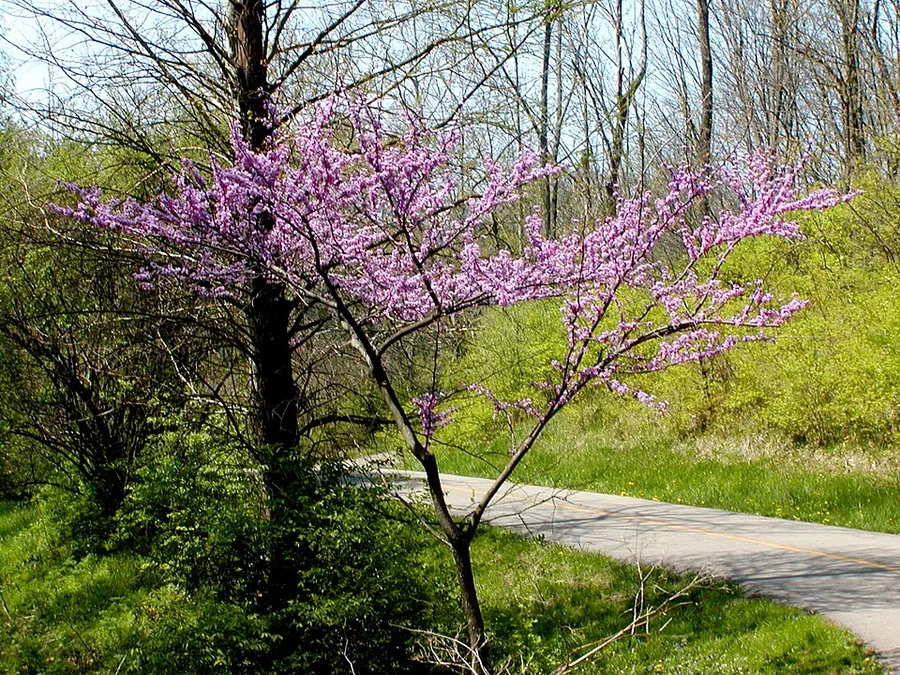
Before any leaf shows, rose-pink blossoms cling straight to the naked branches, dotting the spring woods with color.
Full sun
Every 7–14 days
USDA 4–9
20–30 ft · 6.1–9.1 m
Overview
Eastern redbud draws the eye in early spring, the moment rose-pink to magenta blossoms erupt directly from the bare branches and even the trunk itself, well ahead of any foliage. Each tiny bloom carries the unmistakable shape of a pea flower, a clue that the tree sits in the legume family alongside peas and beans, and the same kinship explains the flat seed pods that dangle later in the year.
Once the petals drop, broad heart-shaped leaves unroll and fill out a softly rounded crown. The trunk stays compact, lifting only 20 to 30 feet (6 to 9 m) off the ground, slim enough to slip into a yard where a hulking shade tree would feel cramped. The leaves take light gracefully too, from full sun down to deep shade, which suits the tree to a woodland edge or the dappled space beneath taller neighbors.
This is a tough and forgiving tree once its roots dig in, holding strong across zones 4 through 9. Two things deserve your watchfulness: its dislike of having its roots disturbed, and a handful of fungal diseases that prey on a tree under strain. Keep the bark sound and the canopy healthy, and it gives back far more than it takes.
Care
The short version: site it in full sun to part shade in average, free-draining soil, water it faithfully through its early years, and reach for the pruners only once the blooms have finished. It bends to most soils and laughs off bitter cold, yet it loathes a waterlogged spot and resents being dug up once it has rooted.
Light
Redbud takes light in stride, growing under anything from full sun to full shade. Its richest flowering and tightest crown come in full sun to part shade, which makes a woodland edge, lit for part of the day, an ideal home.
Water
Water on a regular rhythm to hold the soil evenly moist through the first year or two as the roots establish. A grown tree rides out brief dry spells, yet a drawn-out drought defeats it, and it grows sullen in sodden, waterlogged earth. Soak it deeply any time a dry stretch outlasts a few weeks.
Soil
The tree settles happily into loam, clay, or sand provided the drainage is good, and it tolerates a broad pH band from 5.5 to 8.0. Plain, medium-moisture ground serves it well. The one thing it will not endure is earth that stays sopping.
Temperature
Redbud is honestly hardy, weathering winters as low as -29°F (-34°C) and summer highs reaching 95°F (35°C). That deep cold tolerance is precisely what carries it across so broad a swath of the country.
Humidity
Plain outdoor air gives it everything it wants, so no reading needs watching. Moving air counts for more than damp air, since stagnant, packed-in conditions are what invite leaf spot and other fungal mischief.
Feeding
Feed it in early spring as new growth resumes, using a balanced slow-release tree fertilizer. The benefit reaches past mere size, because a properly nourished tree stands up far better to canker and wilt.
Pruning
Cut in late spring, just once flowering ends, clearing away dead, broken, or cankered wood and tidying the shape. Take out any cankered or wilting limb the instant it shows to check the spread of disease. Keep lawn weedkillers at a distance, as redbud reacts badly to herbicide drift.
Repotting
Redbud rarely lives in a pot and almost never needs repotting. Should you keep a young one contained, look out for roots winding around or pushing through, water rushing straight out the bottom, or sparse new shoots, each a sign it craves more room or a place in open ground.
Size & spacing
Count on a grown tree of 20 to 30 feet (6 to 9 m) in height, topped by a wide, spreading crown of 25 to 35 feet (7.5 to 10.5 m). Leave that much clear space around it, since the canopy reaches wide and the tree objects to being moved once it is planted.
When to plant
Plant a young redbud out in early spring, while it is still small and simple to settle into its forever spot, because it dislikes any later move. Wait through the year and the following spring repays you, the naked branches breaking open with pink bloom from March through May, well before the rest of the garden stirs.
Northern hemisphere
Southern hemisphere
Typical months for a temperate climate: start earlier in warm zones, later where spring frosts linger.
- Plant: early spring while young, in a permanent protected site (does not transplant well)
- Harvest: early spring (March to May), pea-like rose-pink to magenta flowers on bare branches and trunk before leaves emerge
Hardiness
USDA hardiness zones: 4–9
Temperature: down to -34°C
Troubleshooting
Nearly every redbud problem comes down to fungus exploiting a tree that is stressed or wounded. Learn to read a dangerous canker or wilt apart from cosmetic leaf marks and you will know exactly when to reach in and when to leave the tree be. Compare what you observe with the cases below, then act quickly on the ones that truly count.
Sunken dark patches on the bark above a dying limb
Look closely at the bark and you will see sunken dark brown to black lesions marking where Botryosphaeria canker entered through a wound or weakened spot, then ringed the limb so everything above it withers. Slice the branch off well below that stained patch, burning or binning the wood, and wipe the blades between cuts. A strong tree fed and watered well shrugs the fungus off.
Fix:
- Prune out and destroy all dead, dying, and cankered branches well below the lesion
- Disinfect pruning tools between cuts
- Improve vigor with proper watering, mulching, and correct fertilization
Shrunken, droopy leaves clustered on a single side
When Verticillium wilt rises from the roots and plugs the water-carrying wood, the foliage on one flank turns small and limp while the other side still looks fine. Pare back the bark on a drooping limb and dark streaks trace through the pale wood. Nothing cures it, so feed and water for strength, clear out the dead wood, and never set a susceptible tree back into that ground. The cultivar 'Forest Pansy' suffers worst of all.
Fix:
- Prune out dead wood and dispose of it
- Improve host vigor with light mulching and watering during dry periods of more than a few weeks
- Fertilize when appropriate and manage other stresses
Dark freckles and blotches scattered over the foliage
Those brown to black specks and irregular blotches across the leaf blades are fungal leaf spot and anthracnose, which spread once the foliage sits damp and the air hangs still inside a packed canopy. They mar the surface but seldom harm a settled tree. Sweep up the fallen leaves to destroy them, keep the foliage dry, and the marks pass.
Fix:
- Rake up and destroy fallen infected leaves
- Improve air circulation and avoid overhead wetting of foliage
- Maintain tree vigor with proper watering and fertilization
Toxicity
Reassuring news for pet owners and parents: eastern redbud is safe through and through. It sits nowhere on the ASPCA toxic list, no part of it poses a genuine threat to animals, and the blooms and tender young pods are eaten by people who scatter them into salads. Not a single piece of this tree needs cordoning off.
Safe for
People · Cats · Dogs · Horses · Rabbits · Livestock · Birds
Cats None
With redbud off the ASPCA toxic list, a cat that mouths a heart-shaped leaf or bats down a spent pink flower comes to no harm.
Dogs None
Nothing in the tree is poisonous, so a dog gnawing a pod or two stays fine, though wolfing down a handful of those flat papery pods may leave it briefly loose.
Horses Safe
Grazing horses face no threat from redbud, and the leafy growth is now and then nibbled with no ill effect.
Rabbits Safe
Both the soft foliage and the pink blooms are harmless to rabbits, who often clip the tender young leaves out in the wild.
Livestock Safe
Cattle, goats, and sheep may chew the leaves and pods without any risk at all.
Birds Safe
Birds peck the ripe seeds and flit among the early flowers, every bit of it harmless.
People Safe
The rosy spring blossoms and the slender young pods can be eaten, and both find their way into salads and fritters.
No special handling required for pet safety; as with any plant, discourage pets from gorging on fallen pods, which can cause mild non-specific stomach upset from the bulk.
Varieties
Apart from the wild form, growers have picked out redbuds for leaf color, bloom strength, and a smaller frame. Below are the named selections you are most apt to spot at a nursery.
'Forest Pansy'
Each unfurling leaf glows a deep scarlet purple before drifting gradually toward green, a striking color that comes at the cost of being the variety most prone to verticillium wilt.
'Appalachian Red'
No redbud blooms more intensely than this, its flowers a fierce magenta verging on neon pink.
'The Rising Sun'
Young leaves push out in apricot and gold, mellowing afterward to lime and green, so at any moment the canopy shows several shades together.
'Hearts of Gold'
Its leaves carry a golden-yellow cast, the result of a lucky discovery in a Greensboro, North Carolina garden back in 2002.
'Ace of Hearts'
Small heart-shaped leaves clothe this compact dwarf, sized to tuck into a snug corner that a standard redbud would overwhelm.
How to propagate
Seed and grafting carry most redbud propagation, given how poorly the tree takes to being moved once grown and how grudgingly cuttings put down roots. Speed is off the table with every approach, so patience counts for more than any green-thumb knack.
SeedModerate
Collect mature pods in fall; sow after pretreatment · 1-2 years to a transplantable seedling
Pick the ripened pods once fall arrives, then nick or rub the hard seed coat open and follow with a stretch of cold, damp storage, because skipping that pairing leaves the seed reluctant to germinate. After it does break ground, allow 1 to 2 years of growth before the young seedling is sturdy enough to lift and shift.
GraftingDemanding
Late winter to spring (budding in summer) · 1-2 seasons
Since cultivars such as 'Forest Pansy' refuse to breed true from seed, propagators bud or graft them onto seedling rootstock. That work spans late winter through spring, with summer reserved for budding, and the graft union needs a season or two to knit firmly. It calls for a practiced touch and suits experienced growers best.
Stem cuttingsDemanding
Early summer from softwood · Several months to a season
Snip softwood cuttings in early summer for the attempt, but temper your hopes, as redbud roots sparingly and inconsistently this way. The few cuttings that do strike still want several months to a full season to settle their roots, which is why seed and grafting usually win out.
Myths
Eastern redbud pods and seeds are dangerously poisonous to dogs and cats.
Eastern redbud appears nowhere on the ASPCA toxic list and is regarded as safe for both cats and dogs. People readily eat the flowers and young pods themselves, which means the tree is not the poisonous legume some gardeners fear and does not belong among the genuinely hazardous ones.