Ornamental · Asteraceae
Cornflower
Centaurea cyanus
Set into full sun and lean soil, cornflower lifts true-blue double buttons on slim stems all summer.
Full sun
Every 7–14 days
USDA 2–11
1–3 ft · 0.3–0.9 m
Overview
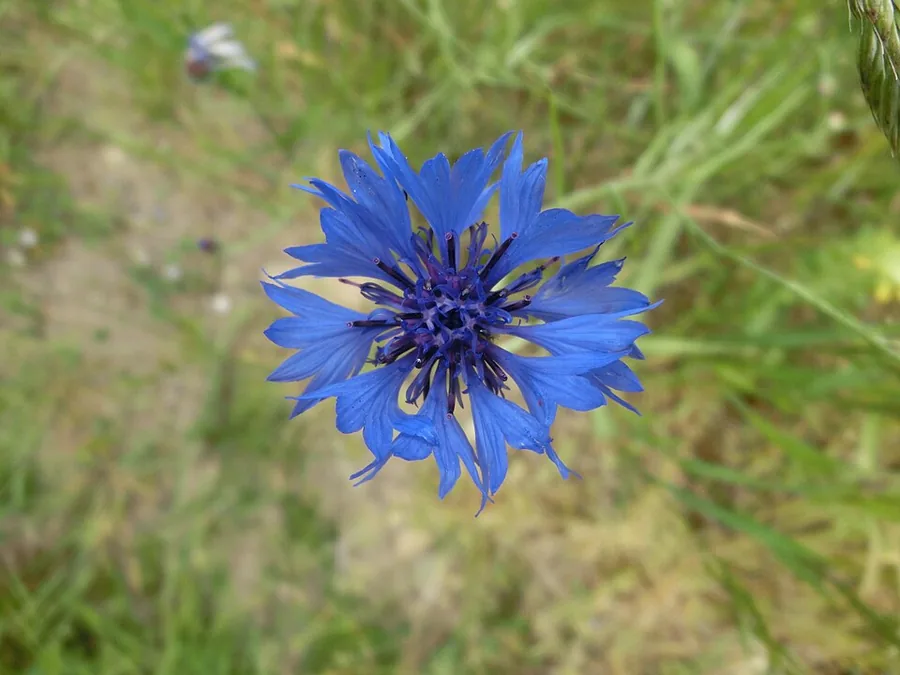
Cornflower, also called bachelor's button, is a cool-season hardy annual in the daisy family, and its flower is its whole signature. The heads open as tight double buttons in a true, saturated blue that few other plants reach, ringed by thin petals that are edible and carry a mild spicy-sweet taste. The plant itself asks for little more than sun and open ground.
Up close it is a slender, airy thing rather than a solid mass. It pushes thin stems and narrow foliage from poor, dry soil that would stall heavier plants, holds through cold to USDA zone 2, and drops so much seed that one sowing tends to return year after year. With room, those slim stems lift into a loose, open clump from 1 to 3 feet tall.
The slimness is also its weakness: in shade or rich ground the thin stems soften and bow under the weight of the heads. In strong sun and lean soil the stems stiffen and stand straighter while the blue saturates deeper. Deadheading the spent heads keeps fresh buttons forming for weeks before the plant turns its energy to seed.
Care
The short version: cornflower wants full sun and average, well-drained soil on the lean side to keep its slim stems firm. Water once the top half dries out, leave off the fertilizer, and snip the faded heads to keep new blue buttons opening.
Light
Cornflower wants full sun, a good 6 or more hours a day, to keep its slim stems firm and well filled with buds. It takes a little light shade, but in too much shade the thin stems stretch pale and weak, then lean and flop rather than standing tall.
Water
Give it medium, even moisture as it roots in, letting the top half of the soil dry between waterings, which works out to roughly every 7 to 14 days. Once established, the plant rides out drought and low water. What it cannot take is wet, soggy ground around its base.
Soil
Average, well-drained loam is plenty, and this is a plant that genuinely does best in poor soil. Its roots adapt across a wide pH range from 6.0 to 8.0, so most garden beds carry it with no special preparation.
Humidity
Ordinary outdoor air suits the foliage fine, so there is no number to chase. Good airflow matters more, since still, crowded growth invites the orange rust pustules and the rots that spot and soften this plant.
Feeding
Cornflower needs little to no feeding and often does best with none. A light balanced fertilizer at planting is the most it wants, since rich ground only swells the stems into soft, watery growth that bows over.
Pruning
Deadheading the spent heads keeps new blue buttons forming and reins in the plant's free self-seeding. A clump grown leggy and bare mid-season can be cut back, and it often answers with a fresh flush of stems and buds.
Size & spacing
The slim plants reach 1 to 3 feet (30 to 91 cm) tall and spread 12 to 24 inches (30 to 61 cm) wide. Give each that much room so air threads between the stems and neighboring growth braces the thin stalks.
When to plant
Cornflower takes hold in cool weather. Sow it indoors 6 to 8 weeks before the last spring frost, or scatter seed straight into the ground around that frost date. In mild-winter regions a fall sowing brings the heads on sooner, with the blue buttons opening from late spring into summer, roughly May to July.
Northern hemisphere
Southern hemisphere
Typical months for a temperate climate: start earlier in warm zones, later where spring frosts linger.
- Sow: 6 to 8 weeks before the last spring frost
- Plant: Direct sow at the last spring frost date, or in fall in mild-winter climates
- Harvest: Blooms late spring into summer, roughly May to July
Hardiness
USDA hardiness zones: 2–11
Temperature: down to -46°C
Troubleshooting
Cornflower stays largely sound, and its troubles show plainly on the plant itself. Slim stems bowing low point to too little sun, a sticky glaze on the foliage means pests have settled in, and limp growth over wet soil signals rot at the roots. Match what you see on the plant below and step in early.
Limp foliage, soft brown stem bases, or rust on the leaves
Foliage that hangs limp over still-damp soil, or a stem base gone soft, brown, and mushy at the ground, shows root and stem rot working through tissue kept too wet. Scattered orange, powdery pustules raised across the leaf surface are the signature of rust instead. Rotted tissue collapses past saving, so the plant has to be pulled, the drainage opened up, and water aimed at the soil rather than over the leaves.
Fix:
- Improve soil drainage
- Avoid overhead watering and overwatering
- Remove and discard affected plants
Slender stems bowing low and the plant sprawling
When the thin stems bend and the whole plant lies down in a loose tangle, the trouble is usually too little light, so a cornflower in shade or a packed bed leans low while one in full sun holds its stems upright. Rich or wet ground deepens the bend by drawing up soft, watery growth that cannot carry its own flower heads. Moving it into the sun, cutting back the feeding, and threading a few twiggy stakes through the tall stems lifts them straight again.
Fix:
- Grow in full sun
- Provide light support or grow-through staking for tall plants
- Avoid over-fertilizing
A glaze of stickiness and tiny insects on the leaves
A shiny, tacky film over the foliage and small soft-bodied insects packed along the stems and the undersides of the leaves mark an aphid colony, with plump mealybugs sometimes mixed in. Their feeding crumples and twists the youngest growth and coats the surfaces in a sticky honeydew. A hard jet of water knocks the clusters loose, insecticidal soap clears a thick crust of them, and ladybugs pick off the stragglers.
Fix:
- Spray plants with a strong jet of water to dislodge pests
- Apply insecticidal soap if infestation is heavy
- Encourage natural predators such as ladybugs
Toxicity
There is nothing in this plant to fear. Every part of cornflower is listed as non-toxic to pets, livestock, and people, and the thin petals are edible, with a gentle spicy-sweet flavor. It can grow freely around cats, dogs, horses, and curious children.
Safe for
People · Cats · Dogs · Horses · Rabbits · Livestock · Birds
Cats None
A cat that bites into a leaf or a flower head takes no harm, since cornflower tissue holds no toxic compounds.
Dogs None
A dog can crush a stem in its mouth or brush the foliage with no ill effect, because nothing in the plant is poisonous.
Horses None
Cornflower is listed as non-toxic to horses, so a torn mouthful of leaf and bloom does no harm while grazing.
Rabbits Safe
Rabbits can chew the leaves and the petals freely, as the soft tissue carries no toxins.
Livestock Safe
Cattle, goats, and sheep cropping the plant in pasture take no risk from cornflower.
Birds Safe
The seeds and flowers are safe for birds, and finches pry at the dried, spent heads for the seed inside.
People Safe
The petals are edible, tender and thin, with a mild spicy-sweet taste that scatters well over a salad or steeps into tea.
Varieties
Beyond the famous blue, cornflower opens in a small range of petal colors. These are the forms most often grown.
Blue cornflower
The classic form opens dense, intense blue double buttons, the deep saturated color that gave the plant its name.
Pink and lavender forms
These selections trade the wild blue for petals washed in pink, lavender, or purple.
White cornflower
A pure white form whose pale, colorless heads soften a planting or fill a gap in a mixed-color patch.
How to propagate
Cornflower is among the easiest flowers to raise from seed, and the dried heads it leaves behind sow the next generation on their own.
SeedEasy
Start indoors 6 to 8 weeks before the last frost, or direct sow at the last spring frost; fall sowing works in mild-winter climates · Germinates and establishes within a few weeks; reseeds readily in the garden
Cornflower is a cool-season hardy annual that grows best from seed sown straight into the ground. Sow it indoors 6 to 8 weeks before the last frost, or scatter the seed at the last frost date, and in mild-winter areas a fall sowing takes hold as well. The seedlings push up and root in within a few weeks, and the dried heads left standing reseed themselves freely, dropping seed that returns the planting on its own next year.
Myths
Cornflower is poisonous to pets like cats and dogs.
Centaurea cyanus is listed as non-toxic to cats, dogs, and horses, and the thin petals are edible for people too. No part of the plant carries a toxin, so a bitten leaf or a crushed flower head poses no danger to a curious pet or child.
All Centaurea are noxious invasive weeds that should never be planted.
A handful of coarser relatives like knapweed and star thistle do spread in the wild, but the annual ornamental cornflower stays a slim, well-mannered garden plant. Snipping off the fading heads holds its self-seeding in check.