Ornamental · Asteraceae
Chrysanthemum
Chrysanthemum × morifolium
Keep nipping the tender tips through summer while the plant drinks in bright sun and even watering, and the low green dome packs itself into a cushion of daisy-form bloom by fall.
Full sun
Every 2–4 days
USDA 5–9
1–3 ft · 0.3–0.9 m
Overview
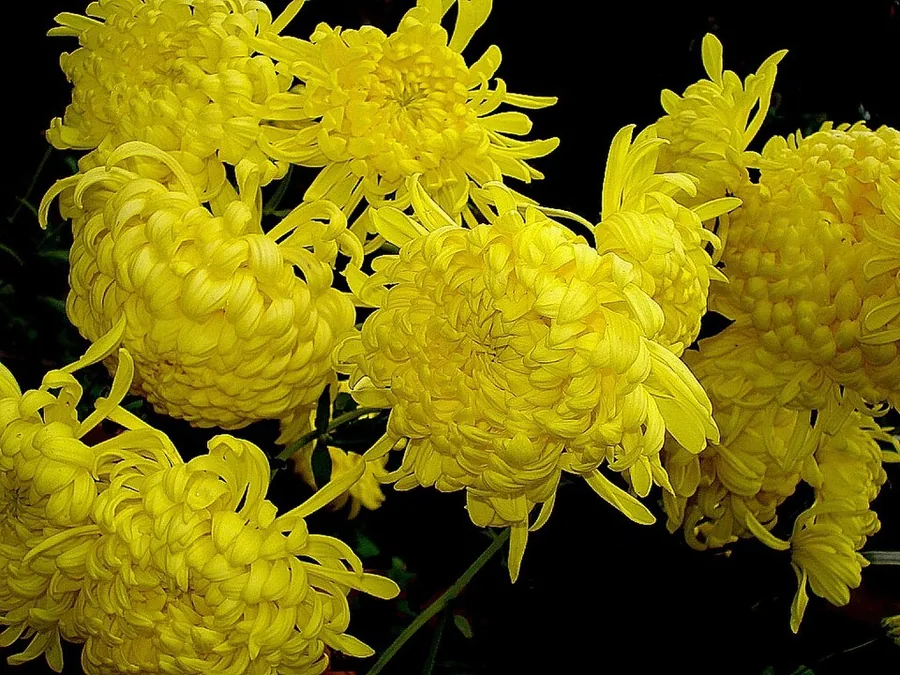
Picture autumn and the chrysanthemum is the flower that surfaces for most people. A member of the daisy clan, it heaps its blooms into a domed pile in just about any warm tone, running rust, gold, pink, and on to deep red. The bulk of them arrive at the bed as garden mums, sitting low in a cushion form that smothers its lobed leaves in daisy-form heads as daylight shrinks.
An easy plant, the mum, and it holds that label provided two demands get met. The first is bright sun paired with unbroken moisture, the second a tip-pinching done across spring and summer so growth knits in low and domed instead of stretching skyward. Neglect the pinch and the stems shoot up gaunt and spindly, bearing only a thin scatter of flowers near their crowns.
A single snag catches plenty of gardeners out. Those autumn cushions sold in bud are driven for one rapid, packed display rather than for sturdy roots, which is why so many simply fail to leaf out after the cold. Sink them into spring ground that drains well and the clumps come back wider and denser; carry home a flowering cushion at season's end and the odds favor one year of growth only.
Care
The short version: open sun, a fertile bed that drains yet stays evenly damp, a weekly feeding right across the growing stretch, and steady tip-pinching that you halt near 100 days ahead of bloom.
Light
Give the plant 6 or more hours of direct sun daily, with open full sun the ideal. Park it in heavy shade and the stems elongate, tilting after the light, the tidy dome slumps and sprawls, and the count of daisy-form heads that open drops sharply.
Water
A thirsty grower, the mum runs on steady, even moisture, above all as buds fatten and petals unfurl. Allow its roots to parch and growth stalls or quits outright. Pour at soil level, leave the foliage untouched and dry, and work the bed so it drains freely enough that roots are never left standing in wet.
Soil
Plant into a rich, free-draining bed loaded with organic matter and held at even moisture. A broad pH window suits the mum, anything from 6.0 to 8.0, so nearly any patch will serve once the water moves through cleanly.
Temperature
Built for a wide weather range, the garden mum holds in the soil down near -20°F (-29°C) and shrugs off heat up toward 90°F (32°C) through summer. Its graver cold-season threat is sodden, heaving earth, not the chill by itself.
Humidity
Run-of-the-mill outdoor moisture in the air covers the plant's needs, leaving no number to aim at. Of greater weight is moving air around the leaves, because dead, clammy air pooled around a packed dome is precisely what hands mildew its foothold.
Feeding
Count the mum a hungry feeder, due a weekly serving of dissolved balanced plant food across the whole growing stretch. Shut the feeding down as flower buds set, because more food beyond that stage drives foliage and stem at the expense of blossom.
Pruning
With this plant the pinch is everything. Kick off once the dome reaches roughly 6 inches tall, taking the top half-inch to inch of tender new growth, and return to it every 4 weeks up until about 100 days before bloom. Once a hard frost browns the plant, shear the stems down to 3 to 4 inches off the soil.
Size & spacing
Expect a height of 1 to 3 feet (30 to 91 cm) and a domed spread of 12 to 24 inches (30 to 61 cm). Place the plants 18 to 30 inches apart so the breeze threads between the foliage and mildew gets a poorer grip.
When to plant
This plant takes its cue from autumn's lengthening nights, breaking its buds then and holding daisy-form heads from fall straight through to a killing freeze. Clumps planted in early spring bulk up into the broadest, toughest mounds, while ones dropped in during fall deliver a cushion of color on the spot. Whichever way it goes, how you pinch the tender tips across spring and summer settles the low, leaf-packed shape the plant wears once it flowers.
Northern hemisphere
Southern hemisphere
Typical months for a temperate climate: start earlier in warm zones, later where spring frosts linger.
- Sow: Not typically started from seed; propagated from spring cuttings or division.
- Plant: Fall or early spring; spring planting yields fuller plants for fall display.
- Harvest: Fall until freezing temperatures.
Hardiness
USDA hardiness zones: 5–9
Temperature: down to -29°C
Troubleshooting
Nearly every mum complaint reveals itself in the plant's habit and foliage, not in chance misfortune. Run-up stems, a crown lost to winter, a pale coating on the leaf, and a handful of sap-suckers account for almost the whole list. Find the matching look in the entries below and correct the underlying cause rather than the surface symptom.
A plant looking full at season's end that fails to reappear by spring
What kills a mum over the cold stretch is usually frost heaving and a waterlogged bed, lifting the crown clear of the ground or rotting it in place. Plants set out late in autumn suffer most, their roots never anchored. Trim the stems to 3 to 4 inches once a hard frost hits, spread a loose, breathable mulch across them, sort out the drainage, and wherever possible move planting to early spring so roots claim a whole season to grip.
Fix:
- After hard frost, cut stems to 3-4 in and apply a light, airy mulch
- Improve drainage to reduce standing winter moisture
- Plant in early spring to allow full root establishment
A chalky pale dust spreading over the foliage
That floury white skin on the leaf is powdery mildew, a fungal growth settling in wherever foliage stays damp and the air around a packed mound goes motionless. Open the stand up to let air move and aim the water low at soil level so leaf surfaces dry off. Strip the most heavily dusted leaves and throw them in the trash, never onto a compost heap.
Fix:
- Improve spacing and air circulation
- Water at the base and keep foliage dry
- Remove and discard affected leaves
Warped, dotted leaves that feel sticky under a finger
Crumpled foliage, a peppering of fine pale dots, and a gummy coat together flag aphids, thrips, or spider mites working the leaf undersides. Knock them clear with a hard burst from the hose and scan the tender shoots regularly to catch the following batch in time. A vigorous, unstressed plant backed by a standing crew of natural predators keeps the trouble from building.
Fix:
- Spray foliage with a strong stream of water
- Inspect undersides regularly and treat infestations early
- Encourage beneficial insects
Lanky, lolling stems holding next to no bloom
When a mum shoots up lean and lofty, the rounded cushion gone and scarcely a flower showing, the cause is nearly always a missed pinching routine, with thin light deepening the trouble. Start snipping the upper inch of fresh growth as soon as the plant clears about 6 inches tall, then come back on a 4 week cycle. Resite it where it catches 6 or more hours of direct sun, allowing each one 18 to 30 inches of breathing space.
Fix:
- Pinch off the top 1/2 to 1 in of growth starting at about 6 in tall, repeating roughly every 4 weeks until the regional cutoff
- Relocate to a site with 6 or more hours of direct sun
- Space plants 18 to 30 in apart
Toxicity
Toxicity runs through this plant, so position it where pets and small children will not reach it. Tucked inside the lobed foliage and daisy-form heads sit pyrethrins and sesquiterpene lactones, compounds that sicken the gut in cats, dogs, and horses while triggering slobber and a tipsy gait. Those same chemicals inflame skin on people, so glove your hands before working or cutting the stems.
Toxic to
Cats · Dogs · Horses · Rabbits · Livestock · Birds · People
Cats Mild
Let a cat gnaw the lobed foliage or a daisy-form head and it will likely salivate, throw up, then pass watery droppings. A larger helping can throw its balance off, and the plant's sap sometimes leaves a reddened patch on the lip and muzzle.
Dogs Mild
In dogs the pyrethrins bring on the same salivation, a queasy gut, and loose stools. Should a dog get down a sizable portion, it can grow shaky and listless across roughly a day.
Horses Mild
A horse cropping the foliage usually starts to slobber and shows a churned-up gut. Look for a listless, unsteady animal after one has worked over a sizable stand of the plant.
Rabbits Caution
Those bitter, skin-stinging oils rule the plant out around rabbits too, so site it well away from a hutch or exercise pen. A rabbit that gets a mouthful tends to pass loose droppings and go still and off its feed.
Livestock Caution
Cows, sheep, and goats generally turn from the sharp-tasting foliage, yet a famished one that swallows some may slobber and pass loose dung. Wall the planting away from pasture as a precaution.
Birds Caution
Birds take the pyrethrins badly, so set the containers well clear of caged companion birds and the patches where yard fowl peck about. Any sign of beak-work on foliage or bloom means the plant has to go elsewhere.
People Caution
No part belongs on a plate, and for a person the genuine hazard lands on the skin. Handling stem and lobed leaf can flush a sensitive set of hands into itchy redness, so glove up and rinse off once finished.
Contact with foliage can cause dermatitis in sensitive individuals; wash hands after handling.
Helpline numbers

United States
ASPCA Animal Poison Control: (888) 426-4435 (fee applies)
Poison Control: (800) 222-1222



Canada
Poison Centres: 1-844-764-7669
Varieties
Whatever the tag reads, mums break down into a small set of genuine groups, and reading each one's shape and growth tells you straight away if a plant is built for the long haul or for a single flush. The distinctions below are the ones that pay to recognize by form.
Florist's chrysanthemum
Forced under glass to throw oversized, brilliant heads on long cutting stems, these carry little of the garden hardiness a bedding type holds.
Hardy garden mum
Squat, dome-formed mounds selected to sheet over with autumn color while standing a stronger chance of pushing growth again come the following season.
Rubellum Group (old-fashioned mum)
Sturdier old-stock plants, looser and more open in habit, kept for the trait of reappearing each season even through hard-frozen zones.
How to propagate
Forget seed with mums. The way in is either to break apart a clump you already own or to strike its tender spring shoots into root. Neither is hard, and each delivers a true duplicate of a plant whose shade and shape have already won you over.
DivisionEasy
Early spring as new growth appears, about 3-4 weeks after the last killing frost. · One growing season
Dig up the entire clump during early spring as soon as fresh shoots poke through, somewhere around 3 to 4 weeks after the final killing frost. Save the strong, rooted shoots ringing the outside and discard the spent, woody heart that no longer puts out growth. Pull a clump apart this way every year or two so it stays thriving, then allow each separated piece its own full season to root in.
Stem cuttingsEasy
Spring, from healthy new shoots. · A few weeks to root
Through spring, slice tender young shoots off a vigorous plant and press them into damp rooting medium kept away from strong light. Within a handful of weeks they put down roots and develop into true duplicates of the plant they came from.
Myths
Any fall-bought mum will return every season no matter the source.
A cushion already in full flower at purchase time has poured its strength into those daisy-form heads, not into root, so it frequently dies back over the cold months with no spring regrowth. A spring start over sharp-draining ground brings a far higher share through alive. A lot of growers just treat the autumn plants as one-season color and buy new mounds each year.
A mum blooms perfectly fine with no pinching at all.
Untouched, the stems stretch upward thin and sparse, and the flower count drops off. Nipping the soft tips across the spring and into early summer is the act that fills the plant out into the low, rounded cushion buried in autumn bloom. Halt the pinching near the 100-day mark ahead of the show and allow the buds to form.