Ornamental · Caryophyllaceae
Carnation
Dianthus caryophyllus
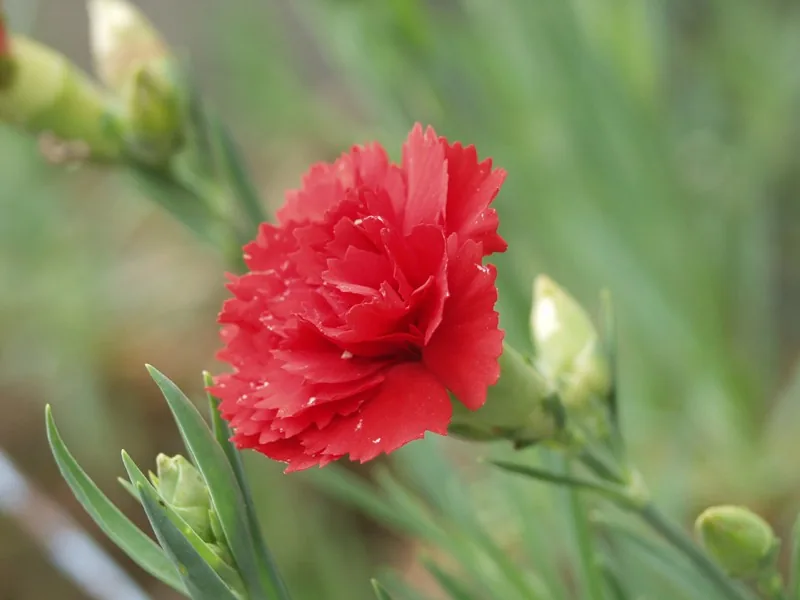
Hand it cool air, full sun, and sharp drainage, and the carnation answers with ruffled, clove-scented bloom.
Full sun
USDA 4–9
0–4 ft · 0.2–1.2 m
Overview
Carnations and the garden pinks beside them sit within the dianthus group, grown across centuries for their ruffled, clove-scented flowers. Their form ranges from squat cushions only a few inches high to long-stemmed border types built for cutting, so one shape fits the front of a bed and another fits the vase.
At their core these are cool-weather plants, content in full sun with their roots set in gritty, fast-draining soil. They tip toward alkaline ground, holding a pH anywhere from 6.0 to 8.0, a leaning that marks them out from most of their neighbors in the border.
Growing them is easy, but they are short-lived, petering out after a few seasons unless you keep raising replacements. Feed with a light touch and hold their crowns dry, and they give back weeks of fragrant bloom from late spring on into summer.
Care
The short version: full sun, cool air, and gritty, well-drained soil leaning neutral to alkaline. Hold the soil evenly moist yet never soggy, feed only lightly, and snip off spent blooms to keep fresh flowers opening.
Light
Carnations call for full sun, six hours a day or better, to flower fully and hold themselves upright instead of sprawling. A touch of afternoon shade is welcome where summers turn hot, and it helps them ride out the heat they would rather avoid.
Water
Hold the soil evenly moist but never soggy, and water through any long dry run. Sitting in wet ground is the quickest path to crown rot, so let the surface dry between waterings and keep the crown itself on the drier side.
Soil
Set them in gritty, well-drained loam with a little organic matter mixed through. Carnations are uncommon in their taste for neutral to slightly alkaline ground, a pH of 6.0 to 8.0, and sharp drainage matters more to them than rich feeding.
Humidity
Plain outdoor air is all they need, so there is no figure to fuss over. Airflow matters more than humidity, because crowded, damp foliage is exactly what lets rust take hold.
Feeding
Give only a light feeding across the growing season and hold back from doing more. Too much fertilizer builds a floppy, gappy plant with weak stems in place of extra flowers.
Pruning
Snip off spent blooms to keep fresh ones forming, and pinch the growing tips early to drive bushier growth. Once the main flush is done, shear the mat-forming pinks back for a light scattering of repeat bloom.
Size & spacing
Forms run from low cushions near 6 inches (15 cm) tall to border types stretching to 4 feet (120 cm), with a spread of 6 to 30 inches (15 to 76 cm). Give each plant elbow room so air slips through freely and rust stays away.
When to plant
Carnations track the cooler end of the year. Sow seed indoors in late winter, move plants outside in spring once hard frost is behind you, and watch for fragrant bloom from late spring through summer, drawn out longer the more you deadhead.
Northern hemisphere
Southern hemisphere
Typical months for a temperate climate: start earlier in warm zones, later where spring frosts linger.
- Sow: Late winter to early spring, about 8 weeks before last frost
- Plant: Spring after danger of hard frost; mat-forming pinks can also be set out in early spring
- Harvest: Late spring through summer (roughly May to July), prolonged by deadheading
Hardiness
USDA hardiness zones: 4–9
Temperature: down to -34°C
Troubleshooting
Most of what goes wrong with a carnation begins down at the roots or up in the heat. Keep an eye on the crown, the lower stems, and the fresh growth, and you can act before a small fault widens. Match what you find below, then move while it still does some good.
Blackened, slimy stem base and a toppling plant
When the base of the stem turns dark and soft and the whole plant folds over, you are looking at crown or root rot, the result of soil that never dries out, often after a soggy winter. A crown that has gone soft and black will not recover, so lift the plant and throw it away. Sort out the drainage and cut back on water before anything new goes in.
Fix:
- Remove and discard severely affected plants
- Improve soil drainage
- Reduce watering and avoid wet, soggy soil
Rusty orange specks dotting the leaves and stems
Those raised orange dots are rust, a fungus that moves in when the foliage sits wet and the air goes still. Strip off the speckled leaves the moment you spot them, open up the spacing between plants, and direct the hose at the soil so the leaves stay dry.
Fix:
- Remove and discard affected foliage
- Improve air circulation by spacing plants
- Avoid overhead watering to keep foliage dry
Leaves going yellow and the plant flagging in midsummer heat
Heat is the carnation's weak point, so a plant that goes pale and limp during a hot stretch is usually under heat stress, not fending off a bug or a disease. Shade it from the afternoon sun, hold the soil at an even moisture through the worst days, and pick heat-tolerant pinks such as the cheddar types if your garden runs hot.
Fix:
- Provide afternoon shade in hot regions
- Maintain even soil moisture during heat
- Choose heat-tolerant pinks such as cheddar pinks in warm climates
Twisted new shoots packed with tiny insects
The little soft-bodied specks bunched along the buds and stems are aphids, and that tacky coating they leave is honeydew. Knock them loose with a hard spray of water, snip away any shoots that are badly overrun, and reach for insecticidal soap if they return. Ease off the feeding too, because the soft new growth they crave is what pulls them in.
Fix:
- Spray plants with a strong stream of water
- Remove heavily infested shoots
- Use insecticidal soap if needed
Toxicity
Carnations rate as only mildly toxic, which makes them a low-risk plant to have around. A nibbling cat or dog may end up with a passing stomach upset and the sap can raise a mild skin rash, but the petals are edible enough to serve as a garnish for people. Stop pets from grazing the foliage and there is very little to worry about.
Toxic to
Cats · Dogs · Horses · Rabbits · Livestock · Birds
Safe for
People
Cats Mild
A cat that takes a bite of the leaves or petals might drool, throw up, or have a short run of diarrhea, and rubbing against the sap can raise a faint rash. None of it is serious, and it usually settles on its own.
Dogs Mild
A dog responds in roughly the same fashion: a bit of vomiting or soft stool after a chew, with the odd patch of mild skin irritation from the sap. There is no real danger here, but a check-in with the vet makes sense if it lingers.
Horses Caution
No case of poisoning in horses has been recorded, yet the same mild irritant could turn the stomach. Keeping them from grazing on it is the safe call.
Rabbits Caution
Rabbits have not been shown to suffer any harm, but the plant is no part of their diet either, so it is better kept out of their reach.
Livestock Caution
Cattle, goats, and sheep have no recorded poisoning from carnations, though the irritant compound could still bring on mild stomach upset if they crop a stand of it.
Birds Caution
Carnations carry no warning as a bird hazard, but because so little is known about their effect on birds, keeping pet birds clear of the foliage is the prudent move.
People Petals safe
The petals are edible and show up as a garnish, so the plant holds no real danger for people. The one exception is the sap, which can leave sensitive skin slightly irritated, so rinse your hands after a long stint of handling.
Sap may cause mild skin irritation in sensitive people; wash hands after handling.
Helpline numbers

United States
ASPCA Animal Poison Control: (888) 426-4435 (fee applies)

United Kingdom
Animal PoisonLine: 01202 509000 (fee applies)

Australia
Animal Poisons Helpline: 1300 869 738
Varieties
Carnations and pinks turn up in hundreds of forms, from tall florist stems to low, fragrant carpets. A handful are worth learning by name.
Clarion
A border carnation whose clear yellow double flowers ride high on stiff upright stems, set against gray-silver foliage.
Bath's Pink
A low, mat-forming cheddar pink with fragrant, fringed soft-pink blooms that takes heat, humidity, and drought in stride better than most dianthus.
Firewitch
A cheddar pink known for single flowers in a vivid magenta, paired with blue-gray foliage, a strong scent, and genuine cold hardiness.
How to propagate
Since carnations do not last long, keeping a fresh supply coming pays off, whether you divide a tired clump or root a few cuttings.
Stem cuttingsModerate
Take terminal cuttings in early summer · Several weeks to root
Named cultivars will not come true from seed, so cuttings are how you reproduce them faithfully. Clip a healthy shoot tip in early summer, set it in moist mix, and after several weeks it roots into a plant matching its parent.
DivisionEasy
Early spring as new growth begins · One growing season
These are short-lived plants, so dividing the clumps every few years keeps a patch alive. Dig and split them in early spring as new growth pushes up, and the divisions take hold across a single growing season.
Myths
Carnations are tough plants that thrive in hot summer climates.
The truth runs the opposite way. These plants crave cool air and falter in high heat, which makes them an iffy choice for hot southern beds. Reach for heat-tolerant pinks like the cheddar types if your summers run warm.
Feed carnations heavily and you'll get the best blooms.
Heap on the fertilizer and what you grow is tall, floppy stems and bare gaps, not extra flowers. A light hand at feeding gives you the sturdiest growth and the best bloom.