Tree · Fagaceae
Bur Oak
Quercus macrocarpa
Bur oak is a broad-crowned, deep-rooted shade tree with corky branches and the fringed, mossy acorn caps that name it.
Full sun
Every 7–14 days
USDA 3–8
60–80 ft · 18.3–24.4 m
Overview
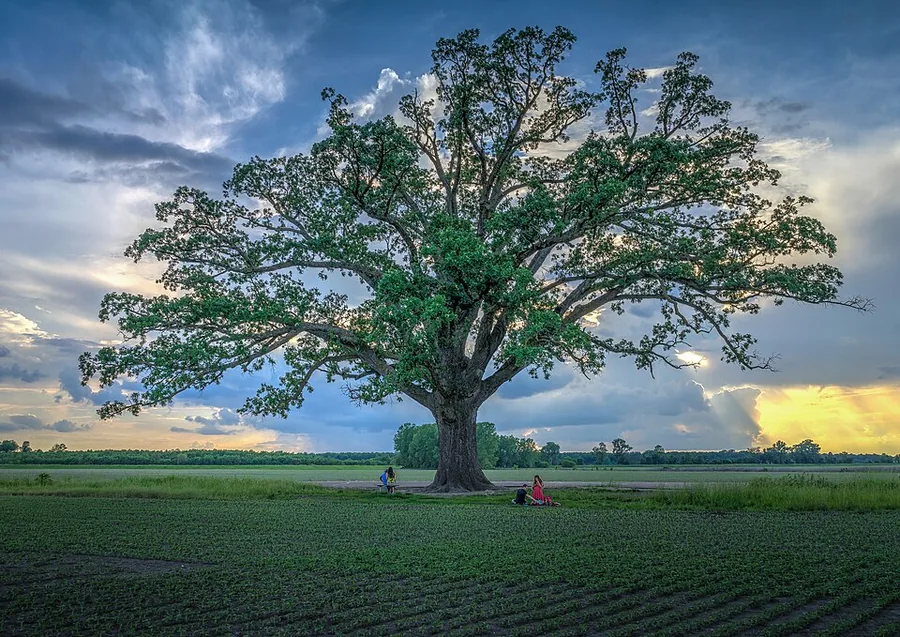
Bur oak is one of the most rugged trees in North America, a slow grower whose trunk and limbs thicken over centuries into a massive frame that reaches 60 to 80 feet (18 to 24 m) tall and spreads just as wide. It sits in the white oak group, and the same toughness shows in how it stands up to bitter winters down to -40°F (-40°C), to dry upland ground, and to the dense clay of a city lot.
The acorns are the showpiece up close, the largest of any native oak and now and then a full 1.5 inches across, each nut seated in a deep cup whose rim breaks into a soft, shaggy fringe that looks for all the world like moss. That fringed cap is what earns the tree its second name, mossycup oak. In April the flowers hang as slim yellow-green catkins, easy to overlook against the new leaves, and the acorns swell and color up to ripeness in that same fall.
Picture a tree built to spread, carried on a broad full-sun crown and stout, often corky-ridged limbs. Set it well clear of houses, foundations, and power lines, and once its roots reach deep it carries on with almost no help.
Care
The short version: Bur oak wants open ground under full sun and takes almost any draining soil. A young tree needs steady water across its first few years, and once its roots run deep it carries on with little further care.
Light
Bur oak wants full sun, six or more hours a day, which is what fills out the broad, rounded crown of heavy lateral limbs the species is known for. It will take some light shade when young, but a tree grown in real shade ends up thin and open, its branches reaching and leaning toward the light.
Water
Water a young tree regularly through its first few years while it pushes roots deep into the ground, then step back. An established bur oak is very drought tolerant, drawing on that deep root system to ride out long dry spells, and wants water only in a severe drought.
Soil
Few trees are less particular about the ground they root in. It does best in moist, well-drained loam but takes heavy clay, dry sites, and even alkaline soil, which is why it keeps its dense crown in tough city spots.
Temperature
This is a cold-hardy tree to the core, comfortable across -40°F to 100°F (-40°C to 38°C) and hardy through USDA zones 3 to 8. Few extremes of heat or cold in its range trouble its wood or its leaves.
Humidity
Outdoor humidity is never a concern for a bur oak. It grows across damp bottomlands and dry prairie edges alike, so there is no level to manage.
Feeding
An established bur oak rarely needs feeding and pulls what it needs through its wide, deep root run. If the soil is genuinely poor, a balanced slow-release fertilizer in spring is plenty.
Pruning
Prune only in late winter while the tree is bare and dormant, taking out dead, damaged, or crossing branches from the heavy framework. Avoid all cutting from April through October, when sap-feeding beetles can carry oak wilt into a fresh wound.
Repotting
none
Size & spacing
Plan for a tree that reaches 60 to 80 feet (18 to 24 m) tall and throws its crown just as wide at maturity. Site it well clear of buildings, foundations, and utility lines so that broad, spreading head and its wide roots have room.
When to plant
Bur oak is planted, not sown on a schedule like a vegetable. Container or balled-and-burlapped stock goes in the ground in spring, and fresh acorns can be pushed into the soil in fall. The slim catkins come and go unnoticed in April, and the acorns swell and drop that same autumn.
Northern hemisphere
Southern hemisphere
Typical months for a temperate climate: start earlier in warm zones, later where spring frosts linger.
- Plant: Plant balled-and-burlapped or container stock in spring; sow acorns outdoors in fall
- Harvest: Yellowish-green inconspicuous catkins in April; acorns mature in fall of the same year
Hardiness
USDA hardiness zones: 3–8
Temperature: down to -40°C
Troubleshooting
A healthy bur oak rarely gives trouble, and most of what shows on its leaves and twigs is only cosmetic. The one problem worth taking seriously is oak wilt, so it pays to know the look of a fading crown and the timing rules that keep it out. Match what you see below before you act.
Crown leaves browning inward from the margins and dropping fast
This is oak wilt, a fungus that plugs the tree's water channels so the leaves brown from their edges inward and the upper crown thins first. Because a bur oak belongs to the white oak group, it usually declines slowly over seasons rather than dying in one, and drought or root damage can scorch the leaves to look much the same. Keep the wood unpruned and unwounded between April and October, when the spore-spreading beetles fly, and have a certified arborist confirm it through a lab culture of the sapwood.
Fix:
- Avoid wounding or pruning oaks April through October
- Contact a certified arborist or extension diagnostic lab for confirmation
- Sever root grafts between adjacent oaks where feasible
- Remove and properly dispose of severely infected trees to limit spread
Hard bumps, balls, or growths on leaves and twigs
These are galls, round or knobby swellings the tree grows around the eggs of gall wasps or mites, sealing each developing insect inside a protective shell. They look strange clustered on the foliage and twigs but almost never harm a healthy oak, so the usual answer is to leave them in place. A few heavily galled twigs can be snipped off if their look bothers you, while steady watering keeps the tree vigorous without any spray.
Fix:
- Tolerate galls in most cases as they rarely harm tree health
- Prune out and dispose of heavily galled twigs if desired
- Maintain tree vigor with proper watering
Toxicity
This is a valued shade tree, but its acorns, buds, and young leaves are not safe to eat. They hold tannins that upset the stomachs of cats and dogs, choke or block the gut when a whole acorn goes down, and cause serious kidney damage in horses and livestock that graze a lot of them. Rake up the fall drop of nuts and leaves where pets and stock can reach it, and remember that people do not eat raw acorns either.
Toxic to
Cats · Dogs · Horses · Rabbits · Livestock · Birds · People
Cats Mild
A cat that chews a leaf or a fallen acorn tends to vomit, lose its appetite, and run loose stools. A whole acorn, hard and rounded, is also a real choking and gut-blockage risk for so small an animal.
Dogs Mild
Dogs are the most likely to crunch acorns off the ground, which brings on drooling, an upset stomach, and diarrhea. The bigger danger is a swallowed acorn lodging in the gut, so watch for repeated vomiting or a tender belly.
Horses Severe
Horses suffer the worst of it. Grazing heavily on buds, young leaves, or fallen acorns brings on colic and a stubborn constipation that later turns bloody, plus a listless, dull manner and dark-stained urine, while the tannins scar the kidneys.
Rabbits Toxic
Rabbits do not belong near oak. The tannins in leaves, buds, and acorns are too harsh for their gut, and even a small nibble can leave one off its food and lethargic.
Livestock Severe
Sheep, goats, and cattle can founder the same way, gorging on a heavy fill of leaves, buds, and acorns just as fall forage grows scarce. Kidney damage and weakness set in, a severe case can kill, and grazing stock belongs fenced well clear of any oak dropping its nuts.
Birds Caution
Many wild birds shell and eat acorns with no trouble, but the same tannins can bother pet birds and poultry, and a whole hard acorn is far too big for most to handle safely. Offer none to caged birds, and keep watch over backyard flocks under a tree.
People Caution
People do not eat raw acorns, and a mouthful is bitter and rough on the stomach because of the tannins. Traditional acorn foods are leached for hours first, so treat anything off the tree as not for snacking and keep young children from putting them in their mouths.
Rake up and dispose of fallen acorns and leaves where pets and livestock can access them.
Helpline numbers

United States
ASPCA Animal Poison Control: (888) 426-4435 (fee applies)
Poison Control: (800) 222-1222



Canada
Poison Centres: 1-844-764-7669
Varieties
Bur oak is mostly grown as the straight species, but it crosses in the wild. The two forms below differ in their leaves and acorns.
Quercus macrocarpa (species)
The straight species carries the largest acorns of any North American oak, up to 1.5 inches across, each oval nut set in a deep cup whose rim frays into a soft mossy fringe, the feature that gives the tree both of its names, bur oak and mossycup oak.
Quercus × schuettei
Quercus x schuettei is a natural cross between bur oak and swamp white oak that turns up where the two grow side by side, its leaves and acorns shaped partway between the broad-lobed parent and its narrower neighbor.
How to propagate
The simplest way to get a bur oak is to plant one of its big acorns, and the white oak group makes that easy, since the seed sprouts fast with little fuss.
SeedModerate
Collect ripe acorns in fall and sow promptly outdoors or stratify before spring sowing · Acorns germinate within a few weeks; seedlings rapidly develop a deep taproot, making later transplanting difficult
Bur oak grows easily from seed when you start with fresh, plump acorns. Gather the ripe nuts as they fall and sow them straight into the ground that autumn, since white oak acorns carry almost no dormancy and split open with a root within a few weeks. Acorns from far northern trees do better after 30 to 60 days of cold, moist storage at 32°F to 41°F (0°C to 5°C) before a spring sowing. Plant the acorn right where you want the tree, because the seedling drives a single deep taproot straight down almost at once and resists being moved after that.
Myths
Deer and squirrels gorge on fallen acorns unharmed, so the nuts pose no threat to cats, dogs, or grazing stock.
Deer, squirrels, and jays are built to handle the tannins in acorns, buds, and oak leaves, but cats and dogs get an upset stomach from them, and horses and livestock can suffer serious kidney damage when they eat a lot. What feeds wildlife can poison your animals, so rake up the drop and keep stock off it.