Houseplant · Arecaceae
Bamboo Palm
Chamaedorea seifrizii
Feed it bright indirect light and clean water, and the bamboo palm answers with soft, feathery green fronds.
Medium indirect
61–81°F · 16–27°C
USDA 10–11
3–10 ft · 0.9–3 m
Overview
The bamboo palm takes its name from its slender, jointed canes, which carry the look of bamboo while belonging firmly to the palm family. It grows as a clump in the forests of Mexico and Central America, rising in the broken, dappled shade cast by taller trees overhead. That low-light start is exactly why it forgives so much indoors, settling into the medium light most rooms already have.
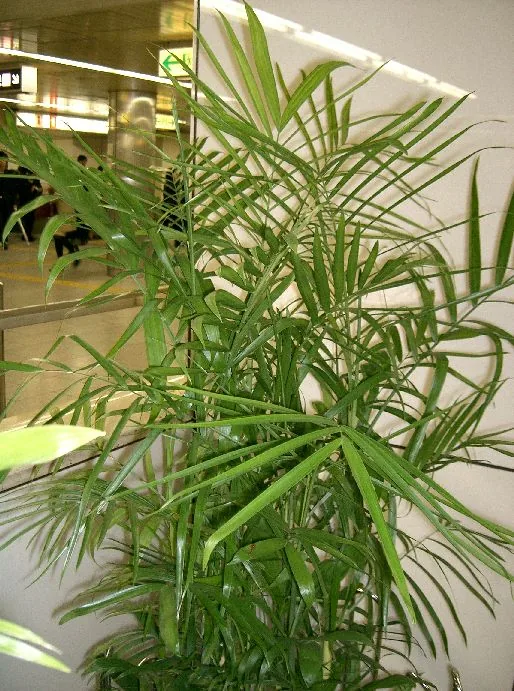
Up close, the draw is the foliage itself. Thin canes climb in a tight cluster and arch over into fronds lined with narrow leaflets, layering a soft, feathery wall of green. It grows slowly and keeps to a workable size indoors, stretching anywhere from 3 to 10 feet (91 cm to 3 m) across many years, not a single season.
It wants little more than steady moisture, a bit of humidity, and water free of fluoride and built-up salts. Get that combination right and the worst the leaves usually show is a scatter of brown tips. This is a truly beginner-friendly palm, which is why it turns up again and again on lists of low-fuss indoor greenery.
Care
The short version: medium, indirect light set back from any harsh afternoon sun. Hold the mix lightly moist and never sodden, pour distilled water or rainwater to spare those leaflet tips, and give it a couple of light feedings through the warm months.
Light
Set it in medium, indirect light, the soft kind found a few feet back from a bright window. It shrugs off low light and partial shade better than most palms, but spare it the direct afternoon sun, which scorches and bleaches the slender leaflets.
Water
Hold the mix lightly moist, never sodden, soaking it well once the surface dries and pouring off whatever gathers in the saucer. Water left standing rots the roots and the base of the canes. The leaflet tips react badly to fluoride and salts, so lean on distilled water or rainwater whenever you can.
Soil
Pot it into a well-drained mix that grips a little moisture without turning to muck. Drainage is what counts most, since the roots will rot away in dense, waterlogged soil.
Temperature
It thrives in plain room warmth, somewhere around 61°F to 81°F (16°C to 27°C). Hold it above the low 60s through winter and keep it clear of cold drafts and frosty windowpanes.
Humidity
Ordinary household air suits it well enough, though it tilts toward moderate to high and rewards the extra. Dry winter air is the usual cause of browned tips, so cluster it near other plants or move it back from any heat vent.
Feeding
Through the warm growing stretch, offer a slow-release palm fertilizer that lets its nitrogen, potassium, and magnesium seep out gradually. Two or three gentle feedings spread over spring and summer cover it, and piling on more only scorches the tips.
Pruning
Cut off dead or battered fronds and any used-up canes flush at the base. Every stem rises from a single central tip, so leave the crown and growing point untouched, or you finish off that entire cane.
Repotting
Move it up every 2 to 3 years, or sooner if roots wind around the pot or shove through the drainage holes and the soil drains dry in a flash. Step up just one pot size, since this palm takes being a touch root-snug in stride.
Size & spacing
Indoors it rises slowly to between 3 and 10 feet (91 cm to 3 m) tall, the clump fanning out 3 to 6 feet (91 to 183 cm) wide. Leave it space so air slips between the canes and the arching fronds aren't pressed flat against a wall.
Troubleshooting
A settled bamboo palm largely looks after itself, so when something does slip it usually shows up on the foliage first. Crisp brown tips and dull, speckled leaflets are the two complaints you'll run into most, and each one reads clearly once you know the signs. Find the matching symptom below, then chase the cause instead of just snipping off the marred leaves.
Pale, dust-flecked leaflets strung with faint silk
Warm, parched air is what draws in spider mites, and they leave behind a fine pinprick speckling across the narrow leaflets along with thin strands of webbing. Turn a frond over to catch the tiny crawling dots, or knock one against a sheet of white paper and watch the specks drop. Blast the foliage clean under running water, bump up the moisture in the air around it, and keep treating with insecticidal soap or horticultural oil until none are left.
Fix:
- Rinse foliage with a strong stream of water, including undersides
- Raise humidity around the plant
- Treat with insecticidal soap or horticultural oil, repeating as directed
Crisp brown tips and dried edges along the leaflets
Those brittle brown tips come almost entirely from salt and fluoride piling up out of tap water, not from how you water. The dryness creeps in at the ends of the older, lower leaflets while the middle of the frond holds its green, and a chalky white crust often forms on the soil top or around the rim. Pour distilled water or rainwater through the pot to wash the salts out, keep using it from then on, and back off the feeding.
Fix:
- Flush the pot thoroughly with distilled water or rainwater to leach salts
- Switch to distilled water or rainwater for routine watering
- Raise local humidity and avoid placing near heat vents
- Reduce fertilizer rate and frequency
Toxicity
Welcome news if pets or small children share the space: the bamboo palm is safe to have around. The ASPCA marks it as non-toxic to cats, dogs, and horses, and no part of the plant carries poison for other creatures either. A stray frond that gets chewed might stir up a little stomach upset from its fiber, but it won't poison a soul.
Safe for
People · Cats · Dogs · Horses · Rabbits · Livestock · Birds
Cats None
Listed by the ASPCA as non-toxic to cats, so a stolen mouthful of frond holds no poison. A cat that really tears into the stringy leaflets could bring them back up, but that's the coarse fiber at work, not anything toxic in the leaf.
Dogs None
The same non-toxic listing keeps dogs covered as well. About the most a chewed-up frond will do is leave a stomach briefly unsettled from all the fiber it carries.
Horses None
Nothing in the plant threatens horses, and it sits on the safe list for them. The leaflets are so narrow and small that they rarely tempt a horse to bother anyway.
Rabbits None
A rabbit finds no poison in the fronds. The tough, fibrous leaves don't read as food, so most rabbits sniff and move on rather than chew them down.
Livestock None
Grazing animals run no risk of poisoning from this palm. It lives indoors as a tropical and seldom reaches a pasture, and even a stray fallen leaf holds no toxins.
Birds None
A pet bird can clamber through the arching fronds safely, since nothing in the plant harms them. A pecked leaf tip causes no trouble.
People None
There's no poisoning danger here for a child or an adult. The plant isn't food, but a leaflet that ends up in a little mouth does no harm.
How to propagate
You can build more bamboo palms by splitting an established clump or by sowing fresh seed, though neither moves quickly. Each one calls for patience far more than any special touch.
DivisionModerate
Spring to early summer during active growth · Several weeks to a few months to root and resume growth
Since the palm builds itself up as a clump of canes, you can pull an established plant apart by teasing off the basal suckers that have already grown their own roots. Tackle it in spring or early summer while growth is moving, then allow each piece several weeks to a few months to anchor in and start growing again.
SeedModerate
When fresh ripe seed is available; warm conditions · Germination is slow and may take several weeks to months
Seed is an option whenever fresh, ripe seed comes to hand. Press it into a warm, damp, well-drained mix and settle in for a wait, because sprouting comes slowly and unevenly and can stretch across several weeks to months.
Myths
That houseplant labeled bamboo palm must be a true bamboo.
Not bamboo in the slightest. The thin, jointed canes mimic the look almost perfectly, yet this is a clumping palm sitting in the family Arecaceae. True bamboos are members of the grass family and share no relation.
Anything sold as bamboo palm has to be one and the same species.
The label lands on a handful of different palms. Chamaedorea seifrizii, the parlor palm Chamaedorea elegans, and the areca palm Dypsis lutescens are all called by it, but each is its own plant with its own way of growing.