Houseplant · Asphodelaceae
Aloe Vera
Aloe vera
Hand it a sun-washed sill, sharp grit, and long dry spells, and this plump-leaved succulent wants little more.
Bright indirect
50–86°F · 10–30°C
USDA 9–11
12–24 in · 30–60 cm
Overview
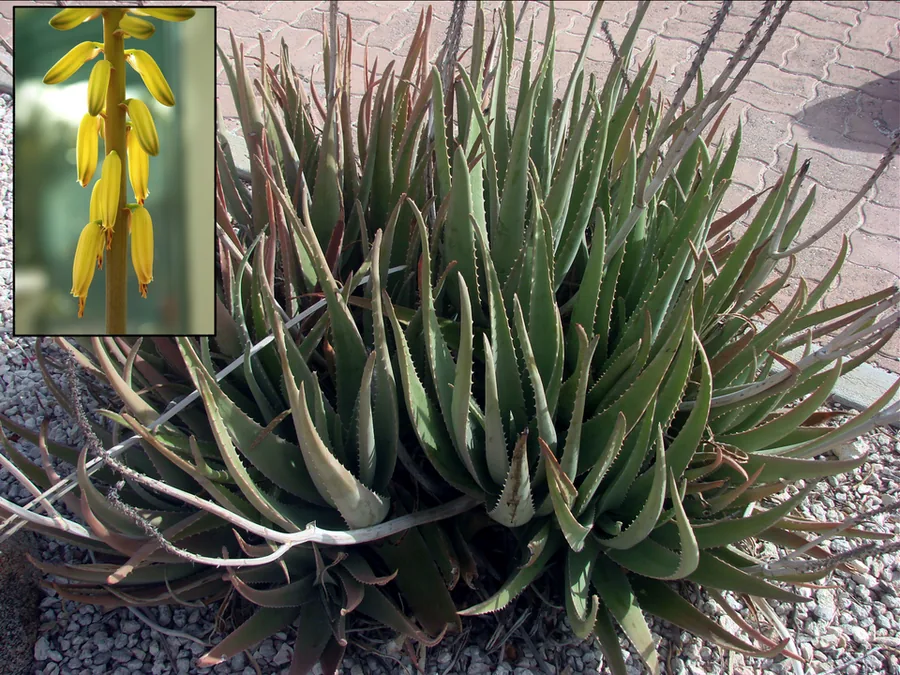
Aloe vera is the fleshy-leaved survivor of the windowsill. Each blade swells thick with a clear gel, the trait behind its old nicknames burn plant and first-aid plant, and that same water-packed flesh is what carries it through a forgotten watering. Born of parched ground, it banks its own moisture and simply waits out the dry stretches.
Few houseplants forgive so much. Park it where sun pours in, root it in a coarse mix that drains fast, and let the pot bake dry between drinks. The single thing it cannot abide is soggy roots, and that sodden misery is what finishes off most indoor aloes.
This is a slow-building perennial that hangs on for years, ringing its base with clustering pups you can lift and grow into separate plants. Out in warm climates, a settled, mature specimen may even throw up a tall stalk crowned with tubular yellow to orange blooms.
Care
The short version: strong light, a coarse fast-draining mix, and one thorough soak only after the soil has baked dry. Go light on the feed, keep it warm, and never leave it standing in a saucer of water.
Light
Aloe craves strong light, the kind a sunny window or a perch with several hours of direct sun supplies. Once eased into it the plant can stand full sun, but a sudden plunge into harsh rays scorches the blades, while too little light leaves it pale, stretched, and floppy.
Water
Here is the step that undoes most growers. Wait until the mix is bone dry to the bottom, then drench it until water spills from the holes, and leave it alone until it dries out again. A saucer of standing water or a pot kept damp is exactly what rots the roots and crown.
Soil
Set it in a coarse cactus or succulent mix that sheds water in seconds, never a heavy potting soil that clings to moisture. Aloe leans toward the alkaline, a pH around 7.0 to 8.5, the range most bagged cactus mixes already land in.
Temperature
Plain indoor warmth keeps it content, somewhere between 50°F to 86°F (10°C to 30°C). Frost will finish it, so any plant vacationing outdoors needs to come back inside before the chill sets in.
Humidity
Parched air bothers it not at all, since this is a low-humidity desert dweller. No target percentage to chase, and no reason ever to mist it.
Feeding
Aloe asks for next to no food. A weak balanced houseplant fertilizer now and then across spring and summer covers it, and forgetting the bottle altogether costs the plant little.
Pruning
Hardly any work is called for. Trim off withered or dead lower leaves flush at the base with a clean knife, and clip away a finished flower stalk once the blooms have faded.
Repotting
Move it on every 2 to 3 years, or earlier when pups jam the pot and roots snake out the drainage holes. Step up a single pot size into fresh coarse mix in a container that drains freely.
Size & spacing
Indoors it climbs to roughly 12 to 24 inches (30 to 60 cm) tall and fans out 12 to 35 inches (30 to 90 cm) across as the rosette clumps. Choose a pot broad enough to hold the pups it keeps sending up.
Troubleshooting
Nearly every aloe complaint comes down to water, light, or the pot it sits in. The leaves keep the record, so read them and the culprit usually shows itself. Find the match below and treat the root cause rather than the surface sign.
Soft, mushy leaves browning at the base
When the lower leaves go limp and slick, fading to a glassy brown near the crown, you are looking at root and crown rot. It comes from soil held wet too long, which smothers the roots until the tissue turns to mush. Set down the watering can, ease the plant out of its pot, slice away every soft root and slimy leaf with a clean blade, and settle it back into fresh gritty mix in a container that lets water escape.
Fix:
- Stop watering and let the soil dry out
- Remove the plant, cut away rotted roots and mushy leaves with a clean blade
- Repot into fresh gritty succulent mix in a pot with drainage holes
Thin, curling, or wrinkled leaves
A healthy leaf is fat and taut with stored moisture, so when those leaves slim down and crease along their length, the reserves have emptied out. That is plain drought stress, and the rebound is quick once you act. Pour water through until it streams from the drainage holes, let the leaves swell again, then hold off until the soil has gone fully dry once more.
Fix:
- Water thoroughly until it drains from the bottom
- Resume a regular deep-but-infrequent watering schedule
Reddish-brown or scorched patches on the leaves
Rusty red blotches and bleached, papery patches are sunburn, not an infection. A plant carried straight from a shaded sill into raw outdoor glare scorches on the faces turned toward the fiercest rays. Pull it back into bright indirect light to recover, and on the next move walk it up to harder sun across a week or two so the leaves can thicken their defenses.
Fix:
- Move the plant to bright indirect light
- Acclimate gradually to stronger sun over one to two weeks
Toxicity
Aloe sits in a curious spot: kind to people, harmful to pets. The clear core gel finds its way into burn salves and lotions, while the bitter yellow latex tucked beneath the leaf skin holds saponins and anthraquinones like aloin that scour the gut. With the ASPCA flagging it as toxic to cats, dogs, and horses, set it somewhere no pet or small child can reach in to chew.
Toxic to
Cats · Dogs · Horses · Rabbits · Livestock · Birds · People
Cats Moderate
Bite into the fleshy leaves and a cat tends to throw up and pass watery stools, sometimes refusing dinner and slumping into a dull, sluggish heap. Quivering muscles or a rusty tinge in the urine mark a heavier mouthful.
Dogs Moderate
The picture in a dog mirrors the cat: stomach upset, loose stools, and a deflated, listless mood. A larger chew can set the legs trembling and stain the urine a reddish shade.
Horses Moderate
That bitter latex acts as a purge in a horse, bringing on runny manure, a flat and joyless bearing, and a turned-down feed bucket. A bigger helping of the leaves can leave the muscles shaking.
Rabbits Toxic
The very anthraquinones that loosen other animals slam into a rabbit's delicate digestion. Set the pot somewhere a rabbit can never reach, because it cannot nibble these leaves the way it crops ordinary greens.
Livestock Toxic
Cows, goats, and sheep grazing the leaves swallow the purging latex and soon scour hard and messily. Wall it off from any paddock where grazing animals roam.
Birds Toxic
Aloin moving through a bird's tiny frame acts as a fierce purge, so a poking parrot or a pecking hen must stay clear of the foliage entirely.
People Caution
That clear core gel shows up across many household products, yet the yellow latex hiding under the rind is a rough laxative that knots the belly and belongs nowhere near a mouth. Store whole leaves out of a child's reach, since one bite hands over both the gel and the latex.
This is a medicinal-for-people, toxic-to-pets plant; the inner gel differs from the toxic latex, but pets chewing whole leaves ingest both.
Helpline numbers

United States
ASPCA Animal Poison Control: (888) 426-4435 (fee applies)
Poison Control: (800) 222-1222



Canada
Poison Centres: 1-844-764-7669
Varieties
Nearly all aloe sold under the name aloe vera is one and the same, yet a pair of forms surface often enough to be worth recognizing on sight.
Aloe vera 'Chinensis'
Look for denser cream flecking scattered over the blades and a looser, lower-spreading rosette instead of the stiff upright stack.
Aloe vera var. barbadensis
Recognize the workhorse medicinal aloe by its broad, gel-swollen leaves, the very ones harvested on commercial farms for countless skin care lines.
How to propagate
Aloe multiplies almost on its own, chiefly through the ring of offsets it gathers at its foot. Splitting a crowded clump works too, and seed is possible, though seed asks for far more patience.
Offsets & pupsEasy
Spring to summer during active growth · 4 to 8 weeks to root and establish
The simplest path to more plants is the cluster of small pups huddled at the mother's base. Tease them off in spring or summer while growth is running, leave each cut face to dry into a callus over a day or two, then nestle the pups one by one into gritty mix. Count on 4 to 8 weeks for fresh roots to grip and the plant to settle.
DivisionEasy
At repotting in spring · 4 to 8 weeks
At a spring repot, a tight clump that has pushed up several rooted crowns will come apart in the hands, and each crown can go into its own pot. As with the pups, give these splits 4 to 8 weeks to anchor themselves.
SeedModerate
Spring, warm conditions · Several months to a year
Seed is the patient route and seldom pays off. Scatter it across gritty mix in spring, hold the warmth steady, and brace for a wait of several months to a year before anything resembles a plant. Pups deliver the same result in a fraction of the time.
Myths
Aloe gel is good for people, so the whole plant is safe for pets to chew.
The translucent gel folks rub on skin and the sour yellow latex lying just below the rind are not the same substance at all. Crunch a whole leaf and an animal takes in both layers, and that latex carries saponins and anthraquinones such as aloin that set off retching and loose stools. The ASPCA lists aloe as toxic to cats, dogs, and horses, so park it somewhere paws and noses cannot follow.