Ornamental · Violaceae
Viola
Viola cornuta
A low, tufted mound covers itself in small, edible flowers in nearly every color from fall right through spring.
Full sun
39–70°F · 4–21°C
USDA 6–11
6–10 in · 15–25 cm
Overview
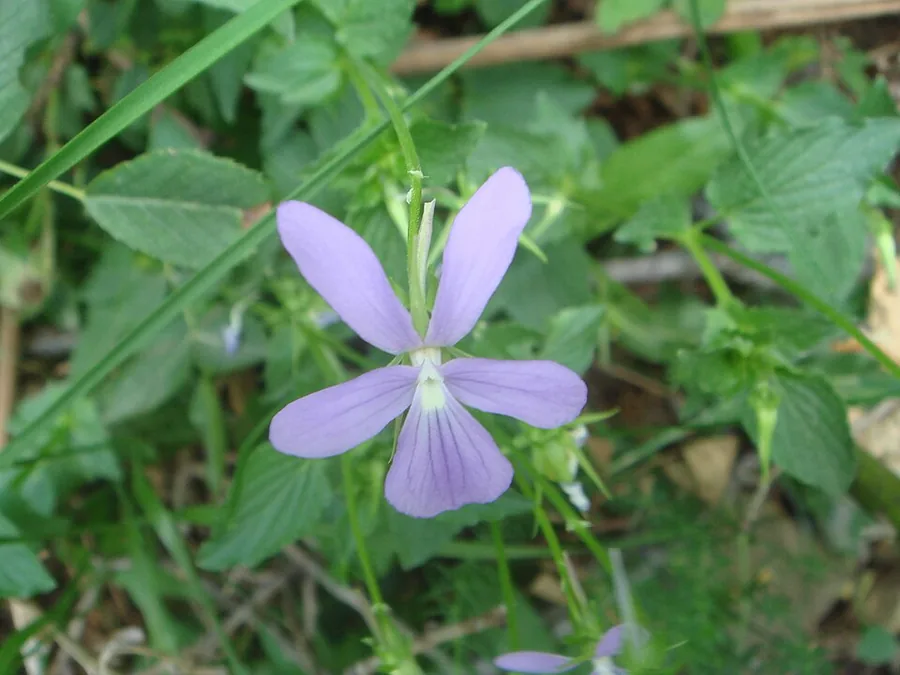
Seen up close, a viola forms a low, tufted mound only 6 to 10 inches (15 to 25 cm) tall, its short stems crowded with small flower faces. The blooms appear in nearly every color, set so close together that the plant reads as a dense cushion rather than scattered spots. Each flower stays small, yet they gather thickly over the low foliage.
The name viola spans a range of close relatives, and their flowers differ in size and marking. The bedding violas carry masses of the smallest blooms, the pansies of the same genus open far larger faces, and the wild Johnny-jump-up shows a tricolor of purple, yellow, and white on each little flower. All keep the same low, tufted shape, and all crowd their color into cool weather before summer thins them.
The color runs from deep to pale across the group. 'Etain' opens soft creamy-yellow flowers rimmed with lavender at the edge, while the smaller kinds scatter rich tones across the mound. The flowers are edible, small enough to sit whole on a plate, and they hold their shape and color as a fresh garnish.
Care
The short version: set this low, tufted mound in full sun to part shade, keep the rich, well-drained soil moist, feed lightly once a month, and pull off the faded flower faces to keep fresh ones opening in cool weather.
Light
The mound colors up best in full sun through the cool months, and it holds up under partial sun or partial shade. When heat builds, afternoon shade keeps the foliage and flowers from fading.
Water
The tufted crown wants soil kept consistently moist but never waterlogged. Standing wet turns the roots and crown mushy with rot, so water evenly and let the excess drain from around the base.
Soil
The roots reach into moist, fertile, well-drained soil worked with organic matter. Waterlogged, airless ground rots them, so drainage matters as much as moisture.
Temperature
The plant holds its color between 39°F to 70°F (4°C to 21°C). Light frost leaves the low mound intact, but summer heat draws the stems long and thin and pales the flowers.
Humidity
Ordinary outdoor air suits the foliage, so no set level applies. Airflow counts for more, since still, damp air over crowded leaves breeds the gray fuzz of downy mildew.
Feeding
A light feed once a month through the growing season, with a balanced fertilizer, keeps the flowers coming. Too much nitrogen swells the leaves and buries the blooms.
Pruning
Pinching off the spent, shriveled flowers keeps fresh faces opening across the mound. The Johnny-jump-up types drop seed and sprout on their own, so a few flowers left to ripen bring volunteers.
Size & spacing
The whole plant stays a low cushion, 6 to 10 inches (15 to 25 cm) tall and 8 to 12 inches (20 to 30 cm) across. That small footprint sits neatly at a bed edge, in a window box, or in a pot.
When to plant
The small flowers open in the cool ends of the year, not the heat of summer. Seed starts indoors in late winter or outdoors in late summer, plants go out in early spring or fall while the air is cool, and the flower faces cover the mound through spring and fall, lasting over winter in the mild zones 6 through 11.
Northern hemisphere
Southern hemisphere
Typical months for a temperate climate: start earlier in warm zones, later where spring frosts linger.
- Sow: 8 to 10 weeks before transplanting out in cool weather
- Plant: Early spring or fall while temperatures are cool
- Harvest: Spring and fall in cool weather; may persist over winter in mild climates and declines in summer heat
Hardiness
USDA hardiness zones: 6–11
Temperature: down to -23°C
Troubleshooting
Trouble shows first on the leaves and flowers, in chewed edges, discolored patches, or a wilting mound. Most of it traces to soggy soil or summer heat. Look closely at what the plant shows, then match it below.
The mound wilts and flops over a blackened base
In soggy soil, crown and root rot softens the plant from below and it flops almost overnight. Lifted, the roots come away mushy and discolored and the crown shows a dark, rotted patch at the soil line. The plant will not recover, so pull it, fix the drainage, and cut back the water before replanting.
Fix:
- Remove and discard affected plants
- Improve drainage before replanting
- Reduce watering frequency
Ragged holes in leaves or twisted, curling shoots
Two pests work the cool, damp weather. Slugs rasp ragged holes through the leaves and flowers overnight and leave glistening slime trails. Aphids cluster soft and green on the tender shoots, twisting the buds as they feed. Pick off the slugs or set traps, wash the aphids off with a sharp jet of water, and reach for insecticidal soap only when the clusters thicken.
Fix:
- Hand-pick slugs or use traps and barriers
- Knock aphids off with a strong spray of water
- Apply insecticidal soap to heavy aphid infestations
Yellow blotches above, gray-purple fuzz beneath
This is downy mildew, which grows in cool, wet, humid air. Turned over, an affected leaf shows a grayish to purple fuzz spreading beneath the yellow blotches on top. Strip the marked leaves, open the mound so air moves through, and water low in the morning to keep the foliage dry.
Fix:
- Remove and discard infected foliage
- Improve air circulation and reduce leaf wetness
- Avoid overhead watering
Stems stretch long and flowers thin in summer heat
As a cool-season plant, the viola answers summer heat by stretching its short stems long and opening fewer flowers. A light shear with deadheading can force a last scatter of blooms, and afternoon shade with steady moisture slows the decline. In most gardens the tired mound comes out for summer annuals, with fresh violas set in come fall.
Fix:
- Deadhead and shear lightly to encourage rebloom
- Provide afternoon shade and consistent moisture
- Replace with summer annuals once spent
Toxicity
Every part of this plant is safe to handle and taste. The ASPCA lists it as non-toxic to cats, dogs, and horses, and the small flowers are edible for people, set whole onto plates and cakes. Nothing here stings, irritates, or poisons.
Safe for
People · Cats · Dogs · Horses · Rabbits · Livestock · Birds
Cats None
Safe around cats. A leaf or flower chewed off the mound causes no poisoning.
Dogs None
Safe around dogs. The plant is non-toxic, so a bitten stem or bloom does no harm.
Horses None
Listed non-toxic to horses, so a mouthful grazed near a planting is harmless.
Rabbits Safe
Rabbits can strip the leaves and flowers with no ill effect.
Livestock Safe
Cattle, goats, and sheep can crop the plant with no risk.
Birds Safe
Backyard birds and poultry can peck at the leaves and flowers safely.
People Safe
The flowers are edible, set whole on plates and cakes, so the whole plant is safe for people, children included.
Varieties
The named violas differ mostly in the size and coloring of their flowers. A few series and old forms stand out by their look.
'Sorbet' series
A compact, free-flowering bedding viola whose small blooms open early and in a wide spread of colors, and it takes cold well.
'Penny' series
A small-flowered viola that keeps its faces coming evenly and steadily right through spring and fall.
Johnny-jump-up (Viola tricolor)
A small tricolor flower of purple, yellow, and white that scatters seed and springs up on its own around the garden.
'Etain'
A fragrant, more perennial viola with soft creamy-yellow flowers rimmed in lavender at the petal edge.
How to propagate
New plants come from the fine seed, from split clumps of the tufted crown, or from short cuttings of the non-flowering shoots.
SeedEasy
Sow indoors 8 to 10 weeks before transplanting in cool weather, or direct sow in late summer for fall and spring bloom · 6 to 10 weeks to transplant size
The fine seed is the usual start. Sown indoors 8 to 10 weeks before the plants move out into cool weather, it needs 6 to 10 weeks to grow to transplant size, or it can go straight into the ground in late summer for fall and spring flowers. The Johnny-jump-up types scatter their own seed and come up freely once settled.
DivisionEasy
Spring or fall · A few weeks
The tufted perennial crown pulls apart cleanly in spring or fall. Lift a clump, tease it into sections, and replant them, and each piece takes hold within a few weeks.
Stem cuttingsModerate
Spring or early summer · 3 to 4 weeks to root
Short cuttings take a steadier hand. Snip tip or basal cuttings from the non-flowering shoots in spring or early summer, and they strike roots in about 3 to 4 weeks.
Myths
Violas and pansies are the same plant.
They share a genus and a family look, but the flowers set them apart. Violas, the Viola cornuta types, cover themselves in many small faces and take a little more heat, while pansies open a few far larger blooms. Violas read as a dense cushion of small color, pansies as scattered large faces.
Viola flowers are not safe to eat.
The small blooms are edible and sit whole on plates and cakes as a garnish. The whole plant is listed non-toxic across the board. Both the flowers and the plant are safe to grow and to taste.