Tree · Rutaceae
Tangerine
Citrus reticulata
Fragrant white bloom in spring, then deep red-orange fruit that slips its skin, given full sun, steady water, and cover from frost.
Full sun
Every 7–14 days
USDA 9–11
12–15 ft · 3.7–4.6 m
Overview
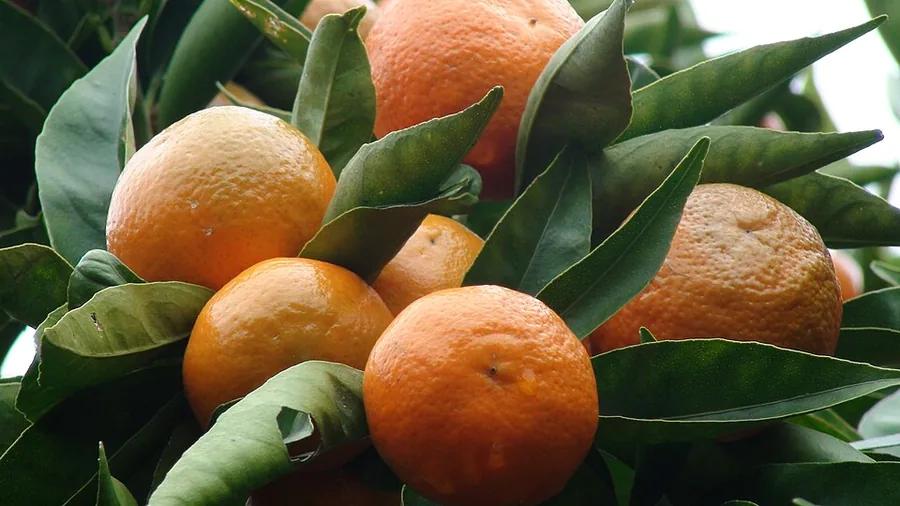
A tangerine is a kind of mandarin, and the fruit is the giveaway: a deep red-orange rind that slips loose from the segments at a touch. That skin colors up through the cool months, when little else is fruiting. Before the fruit, small white flowers open in spring and carry a sweet scent across the tree.
The plant grows as a subtropical tree carrying a full canopy of deep green foliage. In colder places that same tree sits in a large pot and shifts under cover when frost nears. Its ease in a container means the green crown and the red-orange fruit can appear far from any grove.
Up close the tree tells you how it is doing. Deep green leaves and a canopy full of growth mean it is fed and watered well, and it holds that form for years as a long-lived perennial. Pale, yellow-cast leaves, a sticky film, or dropped fruit mark the usual troubles: soggy roots, hungry soil, or a hard freeze.
Care
The short version: full sun, sandy soil that drains freely and runs slightly acidic, and steady water that never leaves the roots sitting wet. Feed a citrus fertilizer through the growing season, and cover the tree against frost.
Light
In full sun, 6 to 8 hours a day, a tangerine fills out its densest canopy and sets its sweetest fruit. Under a little partial sun it still grows, but the leaves space out, the shoots stretch long, and the crop thins.
Water
Give a new tree water about twice a week and an established one weekly to every two weeks, less when the air turns cool or wet. The top inch of soil should feel dry before the next watering. Left in soggy ground, the roots suffer, so the drainage has to move water off.
Soil
Root it in sandy, well-drained loam on the slightly acidic side, at a pH of 5.5 to 6.5. In that band the leaves can pull iron, manganese, and zinc from the soil and stay deep green, while the loose, gritty texture lets water drain past the roots.
Temperature
The tree stands a broad range, from about 39°F (4°C) up to 100°F (38°C). A freeze is what marks it, since the leaves scorch and the tender twigs die back, so a warm, sheltered spot keeps the foliage whole.
Humidity
Average air, around 40% to 60%, keeps the leaves in good condition. Outdoors the tree needs nothing added, and an indoor one wants only a little more moisture in the dry rooms of winter.
Feeding
A balanced citrus fertilizer with iron, manganese, and zinc, worked in from spring through fall, roughly February to October, is what holds the foliage a deep, even green. Short on those micronutrients, the leaves fade to yellow between their veins.
Pruning
The tree needs little cutting. Clear out dead, damaged, or crossing wood, and pull the rootstock suckers that shoot up below the graft. A light thinning after harvest is enough, since hard cutting only strips away the wood that would carry fruit.
Repotting
A container tree moves up to a larger pot every 2 to 3 years, or sooner once the roots wind around the inside of the pot, water runs straight through, or the growth slows. Fresh mix and more room let the roots spread and the canopy fill again.
Size & spacing
Left to grow, a tangerine reaches about 12 to 15 feet (3.7 to 4.5 m) tall, with a spread nearly as broad as it is high. It needs that much space to open out, or a large pot to hold the frame smaller.
When to plant
A tangerine moves with the warmth and buckles under a hard frost. Set young trees out in spring once the cold lets go, then watch the small white flowers open, sweet-scented, as the air warms. The fruit colors up and ripens from late fall into winter.
Northern hemisphere
Southern hemisphere
Typical months for a temperate climate: start earlier in warm zones, later where spring frosts linger.
- Plant: Spring, after all danger of frost has passed
- Harvest: Fragrant white flowers in spring; fruit ripens late fall to winter (about November to January)
Hardiness
USDA hardiness zones: 9–11
Temperature: down to -7°C
Troubleshooting
A tangerine wears its troubles where you can see them, across the leaves and the fruit. A yellow cast, a sticky sheen, or fruit on the ground each reads as a different problem. Match the look below to the tree in front of you.
Bare twigs and fallen leaves after a freeze
After a freeze the leaves drop and the twig tips die back, the mark of cold injury, and tender mandarins show it before the tougher satsuma types. New shoots trace the living wood, so it pays to wait for them before cutting. A cover and a little heat through a freeze keep the twigs and foliage intact.
Fix:
- Prune out dead wood only after new growth shows extent of damage
- Protect with covers or heat during freezes
Yellow leaves veined in green
The leaf blade fades to yellow while the veins stay a sharp green, the plain look of a tree short on iron, manganese, or zinc. It shows up when the soil slips past the 5.5 to 6.5 pH range and locks those nutrients out of reach. A citrus fertilizer with chelated micronutrients, a corrected pH, and freer drainage bring the green back.
Fix:
- Apply a citrus fertilizer with chelated micronutrients
- Correct overly acidic or alkaline soil
- Improve drainage
A sticky sheen, black film, or speckled leaves
The leaves turn tacky and a sooty black film spreads over them, the signature of sap-sucking pests like scale, mealybugs, or spider mites. The insects tap the sap and leave a sticky honeydew that the black mold settles onto, while mites instead fleck the leaves with fine pale stippling and thin webbing. A wash of water lifts a light case, and horticultural or neem oil clears a heavier one.
Fix:
- Spray horticultural or neem oil per label
- Wash off light infestations with water
Small fruit dropping to the ground
Small young fruit lets go and collects under the tree, some of it the tree's own natural thinning and much more of it from thirst. This is premature fruit drop, wound in with the tree's habit of a heavy crop one year and a light one the next. Deep, even watering and a ring of mulch help the tree keep more of what it set.
Fix:
- Provide steady, deep irrigation
- Mulch to conserve moisture
Toxicity
The ripe flesh, sweet and segmented inside its skin, is safe for people to eat. The trouble sits in the peel, leaves, and stems, where citrus oils and psoralens collect and can upset cats, dogs, and horses. Keep the oily rind, the foliage, and the prunings away from pets.
Toxic to
Cats · Dogs · Horses · Rabbits · Livestock · Birds
Safe for
People
Cats Mild
A cat that bites into the peel, leaves, or seeds may drool, vomit, or pass loose stools, and the oils can leave the skin red and irritated. The segments inside do no harm, though the sour taste keeps most cats away.
Dogs Mild
A dog that chews the rind or a leaf tends toward a churning stomach, loose stools, and a dull, flat mood. A peeled segment is harmless, but the bitter oils worked into the rind are not.
Horses Mild
The oils and psoralens in the leaves and the peel can set a horse drooling, off its feed, and loose in the gut. Keep the trimmed prunings and the peelings out of the paddock.
Rabbits Caution
The oily peel and the leaves sit badly with a rabbit's delicate gut and belong out of reach. A thin sliver of the bare flesh, once in a while, is as far as it should go.
Livestock Caution
Goats, sheep, and cattle may mouth fallen fruit, but the peel and the leaves turn the stomach in any amount. Gather the prunings rather than leave the herd to crop them.
Birds Caution
A small piece of the peeled flesh suits most pet birds, yet the oil-laden peel and leaves belong off the plate. Leave out the rind and the seeds.
People Safe
The ripe fruit, sweet and juicy in its segments, is safe to eat every day. Only the bitter peel and the leaves hold the strong oils, so the table carries no risk.
Keep peels, leaves, and seeds away from pets, where the irritating essential oils are most concentrated.
Helpline numbers

United States
ASPCA Animal Poison Control: (888) 426-4435 (fee applies)

United Kingdom
Animal PoisonLine: 01202 509000 (fee applies)

Australia
Animal Poisons Helpline: 1300 869 738
Varieties
Many mandarins reach the market as tangerines, though a few names come up again and again. These are the ones worth knowing.
Dancy
The old Florida tangerine, its deep red-orange skin loose enough to slip off in the hand, coloring up from December into January.
Clementine
A small mandarin with sweet, nearly seedless flesh under a skin that lifts away with the lightest pull.
Owari Satsuma
A seedless, early-ripening mandarin, and the hardiest of the group against cold.
Sunburst
A Florida-bred mandarin hybrid, its fruit coloring early enough to stand in for the true tangerines.
How to propagate
A tangerine can be raised three ways, and they are far from equal. Grafting is the grower's choice, seed is the slow gamble, and air-layering falls between the two.
GraftingModerate
Spring to summer · Bears fruit in about 2 to 3 years
Grafting is the standard start, the chosen variety bound onto a rootstock in spring or summer where the two knit together. The graft holds the fruit true to type and draws disease and cold tolerance up from the roots, and the tree usually carries fruit within 2 to 3 years.
SeedEasy
Spring · Several years to first fruit
A seed sown in spring sprouts readily, but the seedling seldom mirrors the parent and lingers in a long juvenile stage. Several years pass before it sets its first fruit.
Air layeringModerate
Warm growing season · Several months to root
Air-layering through the warm growing season roots a stem into a clone of its own, a process of several months. The new plant grows on its own roots, without the disease and cold tolerance a rootstock would have carried.
Myths
A tangerine is its own botanical species, set apart from the mandarin.
The deep red-orange, loose-skinned fruit is simply one look of the mandarin, all of them the single species Citrus reticulata. The name itself traces to the port of Tangier. So a tangerine is a kind of mandarin, not a species standing apart.
Every part of a citrus is poisonous, so the fruit itself is dangerous to pets.
The sweet flesh inside the skin is fine. The ASPCA ties citrus toxicity to the essential oils and psoralens held in the peel, leaves, and seeds, and the result is only mild stomach upset. It is the oily rind and the foliage to keep from pets, not the segments.