Tree · Rutaceae
Calamondin Orange
Citrus × microcarpa
A pot-sized citrus hung with fragrant white blooms and small sour orange fruit at once, all year on a sunny sill.
Full sun
Every 5–10 days
55–86°F · 13–30°C
USDA 10–11
Overview
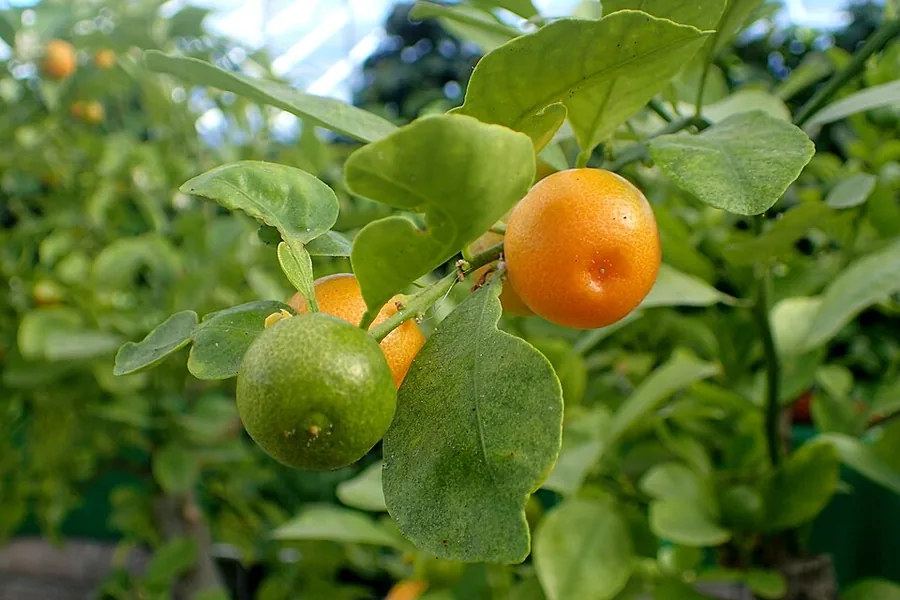
The calamondin carries small, leathery leaves of a deep glossy green, set close along slender branches that bend under what they hold. It is a compact hybrid, usually read as a kumquat crossed with a mandarin, and it shows flower and fruit on the same twig at the same time. In a bright window the branches wear fragrant white blooms and small sour oranges together for much of the year, the round fruit ripening from green to a glowing orange.
In the warmth of zones 10 and 11 it builds into a small tree, but in a pot it stays a dense, twiggy plant of dark foliage and bright fruit that comes under cover before frost. Its branches knit into a rounded crown, close enough to read each leaf and each small globe of fruit up close. The wood takes hard pruning, so the crown can be held tight without losing its show of fruit.
The fruit itself is small, round, and bracingly tart, a thin-skinned orange globe no bigger than a large marble, its juice sharp enough for marmalade and a squeeze over food rather than for eating whole. Strong light, even moisture, and a steady citrus feed keep the leaves glossy and the small fruit coming, so the plant always carries both scent and color.
Care
The short version: the brightest light it can get, ideally full sun, keeps the leaves glossy, the soil stays evenly moist in the growing months and drier in winter, a citrus fertilizer goes on monthly from late winter into fall, and the plant holds in a warm, draft-free spot.
Light
Full sun keeps the leaves a hard, glossy green and pulls flower and fruit out along the twigs, so the brightest window in the house, a south-facing one for choice, suits it best. It holds in bright indirect light or partial shade, but the foliage thins and dulls and the fruit grows sparse where the light runs weak.
Water
The soil stays evenly moist through the growing season, the top inch or so left to dry between waterings, then kept drier in winter. A settled plant rides out a short dry spell with no more than a slight droop of the leaves, but a long one drops the small developing fruit before it can swell.
Soil
A rich, well-drained mix holds the roots best, a loose all-purpose potting blend in a container or a sandy to clay loam in the ground. A pH of 6.0 to 7.0 keeps the fine roots feeding and the leaf blades a full, even green.
Temperature
The plant runs best from about 55°F to 86°F (13°C to 30°C) and frost ruins it. Cold drafts and the dry blast of a hot vent both stress the canopy and can strip the leaves in a sudden fall.
Humidity
Air at 40% to 60% humidity keeps the leaves supple and unmarked, an easy range outdoors and in many homes. Dry winter air draws spider mites onto the leaf undersides, so a humidifier or an occasional misting earns its place once the heating runs.
Feeding
A balanced citrus fertilizer with micronutrients goes on monthly from about February to October. The iron, zinc, and manganese in it hold the new leaves a deep green and keep them from yellowing between the veins on a heavy-feeding citrus.
Pruning
Light pruning shapes the twiggy crown and clears out dead, weak, or crossing wood. Suckers below the graft union, the rough shoots that rise from the rootstock, draw on the plant and come off, and free trimming holds a container specimen tight and dense.
Repotting
The plant moves up a pot every 2 to 3 years in spring, before the white roots circle the inside or push through the drainage holes. Water that runs straight through, or leaves that wilt fast, show the roots have filled the pot.
Size & spacing
Grown out, it reaches 6 to 20 feet (1.8 to 6 m) tall with a spread of 6 to 10 feet (1.8 to 3 m) of dense, leafy crown, though a pot and steady pruning keep it far smaller. An in-ground tree needs room for that full spread so air can pass between the branches.
Troubleshooting
Most calamondin trouble reads first in the leaves, in their color, their shine, or a film or webbing across them, and most of it traces to light, water, or a pest. Looking closely at the leaves catches the cause before the whole canopy thins and falls. The signs below match the common problems.
Leaves yellow and let go soon after coming indoors
When a calamondin leaves bright outdoor sun for a dim, warm room, its glossy leaves pale to yellow and release from the twigs in the first days or weeks, the look of shock leaf drop. A bright window restores the light the canopy lost. Steady warmth clear of vents and drafts keeps the remaining leaves firm rather than crisping or curling. The soil surface should dry before each watering. A humidifier or a fine misting puts moisture back on the foliage, and small bright shoots break from the bare wood once the plant settles.
Fix:
- Place in the brightest available window (a sunny southern exposure)
- Keep temperatures stable and away from heat vents or cold drafts
- Mist or use a humidifier
- Let soil surface dry before watering
Leaf blades pale to yellow while the veins stay green
The deep glossy green of the leaves washes out to a sickly yellow when chlorosis sets in, the mark of a hungry plant or roots left sitting wet. On the newest leaves the fine vein network stays green while the blade between turns yellow, a sign of a micronutrient gap, whereas an even pallor over the whole leaf points to a nitrogen shortfall. A balanced citrus fertilizer carrying micronutrients refills the color, and freer drainage with a slightly acidic soil brings the rich green back to the blades.
Fix:
- Apply a balanced citrus fertilizer containing micronutrients
- Improve drainage and avoid waterlogging
- Correct soil pH toward slightly acidic
A tacky glaze, a black film, or fine threads on the leaves
A glassy, sticky film over the leaves and a dull black crust on top of it betray scale or mealybugs, the scale showing as small raised brown bumps along the stems and the mealybugs as soft white cottony tufts in the leaf joints. Fine silken threads on the undersides, with the blades stippled in tiny pale dots, mark spider mites that take hold in dry indoor air. Wiping the foliage clean and treating with horticultural oil or insecticidal soap strips them off, higher humidity sets the mites back, and keeping the plant apart from others guards the rest until the leaves gleam clean again.
Fix:
- Wipe off pests and treat with horticultural oil or insecticidal soap
- Raise humidity to discourage spider mites
- Isolate the plant from other houseplants until controlled
Toxicity
The small sour fruit is good to eat, but the glossy leaves and the thin peel are not for animals. The leaves, peel, and fruit hold essential oils and psoralens, the same aromatic oils you can smell when a leaf is bruised, that upset an animal's stomach and can make skin touchy in sunlight. Keep pets and livestock off the foliage and the trimmings, and wash your hands after handling it.
Toxic to
Cats · Dogs · Horses · Rabbits · Livestock · Birds
Safe for
People
Cats Mild
A cat that bites into the glossy leaves or the thin orange peel may drool, vomit, or pass loose stools, and it often turns quiet and leaves its food. The oils worked into the leaf and peel can also leave its skin reacting to sunlight.
Dogs Mild
A dog that chews the leathery foliage or the small fruit usually gets an upset stomach, with vomiting or diarrhea and a drop in energy. The same citrus oils pressed in the peel can leave its skin prone to a sun rash.
Horses Mild
The aromatic oils and psoralens held in the leaves and peel unsettle a horse's gut and can leave it dull and out of sorts. Clippings and dropped fruit are best swept out of the paddock.
Rabbits Caution
The same sharp citrus oils in the leaves and thin peel make them a poor mouthful for rabbits, so the plant is best kept well out of their reach.
Livestock Caution
Goats, sheep, and cattle are likely to react to the oils in the foliage as other animals do, so a fence and clean disposal of the trimmings keep them off the leaves and fruit.
Birds Caution
The essential oils packed into the leaves and peel are best treated as off limits for pet birds, even though a thin sliver of the ripe orange flesh is sometimes offered.
People Fruit safe
The small, sour, deep-orange fruit is safe for people to eat and prized in the kitchen. Hands want a wash after pruning, since the oils in the leaves and the thin peel can irritate skin and leave it touchy in the sun.
Leaves, peel, and fruit contain irritant citrus oils; wash hands after pruning or handling fruit and keep fallen leaves and peels away from pets.
Helpline numbers

United States
ASPCA Animal Poison Control: (888) 426-4435 (fee applies)
Poison Control: (800) 222-1222



Canada
Poison Centres: 1-844-764-7669
Varieties
Only a couple of forms reach homes and garden centers, and the difference between them is written in the leaves.
Variegata (variegated calamondin)
Its leaves are brushed and streaked in green and creamy white, and the small young fruit comes banded in green-and-white stripes that thin and vanish as the skin colors to orange.
Standard calamondin
The standard form wears plain, even, glossy-green leaves, the look most people picture in an ornamental indoor citrus.
How to propagate
A calamondin can be raised at home from cuttings or from seed, though the quickest, most reliable plants come grafted from a nursery.
Stem cuttingsModerate
Late spring to summer · About 6 to 10 weeks to root
Lengths of firm green stem taken in late spring or summer, their cut ends dusted with rooting hormone and held warm and humid under cover, push pale roots from the base in about 6 to 10 weeks and grow into plants identical to the parent.
SeedModerate
Spring · Several weeks to germinate; years to bear fruit
Fresh seed pressed into the mix in spring sends up thin green shoots within a few weeks. Calamondin seed is often polyembryonic, so several look-alike seedlings rise fairly true to type from one seed, though they thicken slowly and take years before the first fruit forms.
GraftingDemanding
Spring to summer · Several weeks for the union to take
Most nursery plants are grafted in spring or summer onto a sturdy rootstock, the cut faces callusing and fusing into one stem over several weeks. It is the most exacting method to manage at home, yet it delivers faster growth and earlier fruit.
Myths
Calamondin fruit is poisonous to people.
The little orange fruit is sharply sour but fully edible, its juice and thin peel turned into marmalade, juice, and a tart seasoning. The bite is acid on the tongue, not poison. The real caution is for pets, since the oils in the leaves and peel can irritate them.
Calamondin is a true orange species.
For all its small round orange fruit, this is a hybrid, Citrus x microcarpa, usually read as a kumquat crossed with a mandarin. It is not a true orange, and that crossed parentage shows in how tart the flesh runs.