Tree · Rutaceae
Blood Orange
Citrus × sinensis
Give it full sun and cold winter nights, and the blood orange ripens flesh the color of garnet.
Full sun
Every 7–14 days
USDA 9–11
8–30 ft · 2.4–9.1 m
Overview
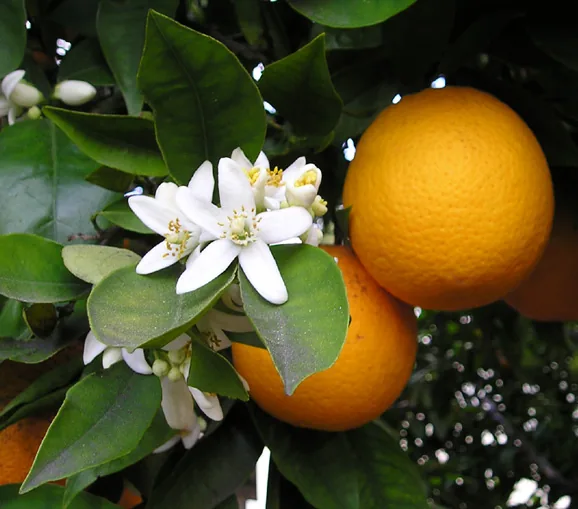
Cut a blood orange across the middle and the inside is the whole story: segments that bleed from streaked orange into a deep, wine-dark garnet, stained through by anthocyanins, the same pigments that flood a ripe berry. The fruit hangs on an evergreen tree clad in glossy, leathery leaves, and in season the branches carry both sweet fruit and a memory of bloom. It sits squarely in the citrus family.
The color is no accident of the skin but of the flesh within. It deepens to red only when warm days drop into cold winter nights, so a tree grown where the air stays mild and even ripens fruit that is paler and barely streaked. That is why the darkest, most saturated flesh comes from groves like those near Mount Etna in Sicily, where night after cold night drives the pigment further in.
Beyond that crimson interior the tree is ordinary citrus in its needs. It asks for full sun, free-draining soil, and shelter from hard frost, and it answers steady care more than fussing. A grafted tree spends a few years thickening its trunk and filling its canopy, and once settled it sets fruit for decades.
Care
The short version: full sun, free-draining soil, and steady but careful watering that never leaves the roots sitting in wet ground. Feeding runs through the growing season, the tree is sheltered from frost, and cold winter nights drive the pigment that stains the flesh garnet.
Light
The tree drinks full sun, and the more it gets the better, since sunlight loads both the crop and the sugar packed into each segment. It bears a little partial shade, but a shaded canopy opens fewer of its white blossoms and sets fewer oranges.
Water
A young tree wants a deep soak about twice a week for the first month while its roots take hold, then less as they push out into the soil. An established tree mostly draws water in dry spells, and waterlogging is the one thing to avoid, since saturated ground rots the citrus roots.
Soil
Set the tree in well-drained loam, silt, or sandy soil loose enough that water drains straight through rather than pooling. A slightly acidic pH of 5.5 to 6.5 suits it, though that quick drainage counts for more than the exact figure.
Temperature
The tree endures a broad span, from about 41°F to 100°F (5°C to 38°C), but a hard freeze blackens the leaves and twig tips. The cold nights themselves are no enemy at fruiting time, since they are what drive the red deep into the flesh.
Humidity
Average humidity of 40% to 60% keeps the glossy leaves in good order, so most climates within its range raise no trouble. Air moving freely around the canopy counts for more than meeting any precise number.
Feeding
A balanced citrus fertilizer such as 8-8-8 with micronutrients carries the tree through the growing season, roughly February to October. Feedings spread across spring and into fall keep the new shoots coming steadily rather than in a rush.
Pruning
The tree needs little cutting. Dead, damaged, or crossing branches come out, along with any suckers below the graft union, and the work waits until after the fruit ripens, since the flowers form on new wood.
Repotting
A container-grown tree wants a wider pot every 2 to 3 years. Roots winding around the inside of the pot, roots threading out of the drainage holes, or growth that has stalled all show the roots have run out of room.
Size & spacing
In open ground the tree can stand 8 to 30 feet (2.4 to 9 m) tall, its rounded canopy spreading 8 to 15 feet (2.4 to 4.5 m) across. That much room lets sun reach every leaf and air slip between the branches.
When to plant
The blood orange keeps a winter clock. Young trees go into the ground in spring once frost has passed, small fragrant white flowers open across the canopy later that spring, and the fruit hangs ripening from winter into early spring, its flesh staining red only after a long run of cold nights.
Northern hemisphere
Southern hemisphere
Typical months for a temperate climate: start earlier in warm zones, later where spring frosts linger.
- Plant: Spring, after danger of frost has passed
- Harvest: Fragrant white flowers in spring; blood oranges ripen winter to early spring (about December to April), developing deepest flesh color after cool nights
Hardiness
USDA hardiness zones: 9–11
Temperature: down to -7°C
Troubleshooting
Most blood orange trouble shows up first on the leaves and fruit, traced back to insects, cold, or one grave disease. Reading those early marks gives a chance to save the tree, or at least to slow the damage. The signs below match what you see, and action before it spreads is what counts.
Blotchy yellow leaves and crooked, green-bottomed fruit
Leaves marked with uneven yellow blotches, and fruit that hangs lopsided with a stubbornly green base and a bitter taste, are the look of citrus greening, the disease also called Huanglongbing. The Asian citrus psyllid, an insect barely the size of a sesame seed, carries it from tree to tree, and no cure exists once a tree shows it. The infected tree has to be pulled and destroyed, fresh planting limited to certified disease-free stock, and the psyllid held off before it ever lands.
Fix:
- Remove and destroy infected trees
- Control the Asian citrus psyllid vector
- Plant certified disease-free stock
Limp leaves falling and twig tips browning after cold
Leaves gone limp and water-soaked, then browning and dropping, with the slim twig tips withering above, are the mark of freeze damage. A hard frost bursts the cells, so the foliage darkens and lets go while the ends of the twigs die back. A cover during the freeze and the warmest spot available reduce the harm. The bare wood is left uncut until spring growth shows, since those stripped twigs often break into fresh green leaves once warmth returns.
Fix:
- Provide cold protection during freezes
- Prune out dead wood only after new growth resumes in spring
Black sooty film dulling the leaves and fruit
A dull black film, like soot smudged across the glossy leaf surface and the fruit skin, is sooty mold. It roots in the sticky, shining honeydew dribbled by aphids, whiteflies, scale, or mealybugs. The black layer barely touches the tree and wipes away to reveal clean green beneath, yet it marks sap-feeding insects at work out of sight. Horticultural oil clears those insects, a rinse strips the film, and the mold fades with no honeydew left to feed it.
Fix:
- Control the honeydew-producing insects with horticultural oil
- Rinse foliage to remove mold
Toxicity
The deep red flesh is a kitchen favorite, but the rest of the tree is not for animals. The bitter peel, the leathery leaves, and the seeds carry essential oils and psoralens that upset a pet's stomach and can sting the skin. Cats, dogs, horses, and grazing animals belong away from the rind, foliage, and prunings.
Toxic to
Cats · Dogs · Horses · Rabbits · Livestock · Birds
Safe for
People
Cats Mild
A cat that bites into the oily peel or a glossy leaf may drool, vomit, or pass loose stools and turn sluggish for a while. The volatile oils pressed in the rind can also leave the skin red and itchy where they touch.
Dogs Mild
A dog that swallows the bitter rind or a leaf usually gets an upset stomach, vomiting, or diarrhea, the oils stinging the digestive lining. The same oils can redden and irritate the skin on contact.
Horses Mild
The ASPCA lists sweet orange as toxic to horses, the pungent peel oils and psoralens churning the gut. Fallen peels and pruned twigs are kept out of the paddock so a grazing horse cannot mouth them.
Rabbits Caution
The peel and the leathery leaves hold the same sharp oils, so neither is a safe nibble for a rabbit. A small piece of the soft flesh now and then is fine, but the rind and foliage are not.
Livestock Caution
Goats, sheep, and cattle take a little of the juicy pulp without harm, but a fill of bitter peel and tough leaves stirs up digestive trouble. They are kept from browsing the tree or chewing its trimmings.
Birds Caution
A scrap of the bright, juicy flesh suits many birds, while the oil-soaked peel and the spongy white pith are best kept off the menu.
People Flesh safe
The deep red, juicy flesh is a kitchen favorite and perfectly safe to eat. Working through a heap of peel can leave sensitive skin tingling in sunlight, owing to the psoralens held in the fragrant oil.
The fleshy fruit pulp is edible, but keep peels, leaves, seeds, and concentrated peel oils away from pets.
Helpline numbers

United States
ASPCA Animal Poison Control: (888) 426-4435 (fee applies)
Poison Control: (800) 222-1222



Canada
Poison Centres: 1-844-764-7669
Varieties
Three blood orange cultivars turn up again and again, each with its own depth of color, sweetness, and season. These are the ones worth knowing by name.
Moro
Moro shows the deepest and most dependable flesh of the three, a dense crimson that darkens to burgundy, built on the highest anthocyanin content and carrying a berry note close to raspberry.
Tarocco
Tarocco, Italy's most widely grown blood orange, bears sweet, low-acid fruit with almost no seeds and flesh that streaks from plain orange through to red.
Sanguinello
Sanguinello, a late-season Spanish cultivar, carries few seeds and a softer, moderate red blush, and its fruit clings firm and sound on the branch long after ripening.
How to propagate
The blood orange is raised almost entirely by grafting, which reproduces a chosen tree down to the color of its flesh. Seed works in a pinch, but it asks for years of patience and offers no promises.
GraftingDemanding
Spring to summer when the bark slips · 1 to 2 years to a sellable tree; about 3 to 5 years to fruiting
Almost every blood orange begins as a graft, a single bud of the chosen cultivar slipped beneath the loosened bark of a rootstock in spring or summer, when that bark peels back cleanly. The union fixes the fruit true to type and draws on the rootstock's cold and disease tolerance. The work asks a steady hand, and the wait stretches 1 to 2 years to a tree worth selling and 3 to 5 years before it fruits.
SeedModerate
Spring · Several years; many seedlings come true due to nucellar embryony but are slow to fruit
A seed pressed into warm spring soil sprouts easily enough, though nurseries pass it by. Through a quirk called nucellar embryony many citrus seeds come true to the parent, yet the seedling pushes up stiff, thorny juvenile shoots and takes several years to fruit. What grows is a slow, unpredictable tree rather than a quick twin of the one that dropped the seed.
Myths
Blood oranges are a man-made cross or a genetically modified fruit.
The crimson is pure pigment. It comes from anthocyanins, the same compounds that flood color into berries and red cabbage. A blood orange is just a pigmented form of the ordinary sweet orange, Citrus x sinensis, one that turned up on its own with no lab and no crossbreeding behind it.
Blood oranges need a hot tropical climate to turn red.
The truth runs cold. The flesh stains red only when warm days drop into cold nights, so the richest, darkest color rises in places with chilly winters, like the slopes around Mount Etna in Sicily, never under unbroken tropical heat.