Ornamental · Poaceae
Tall Fescue
Festuca arundinacea
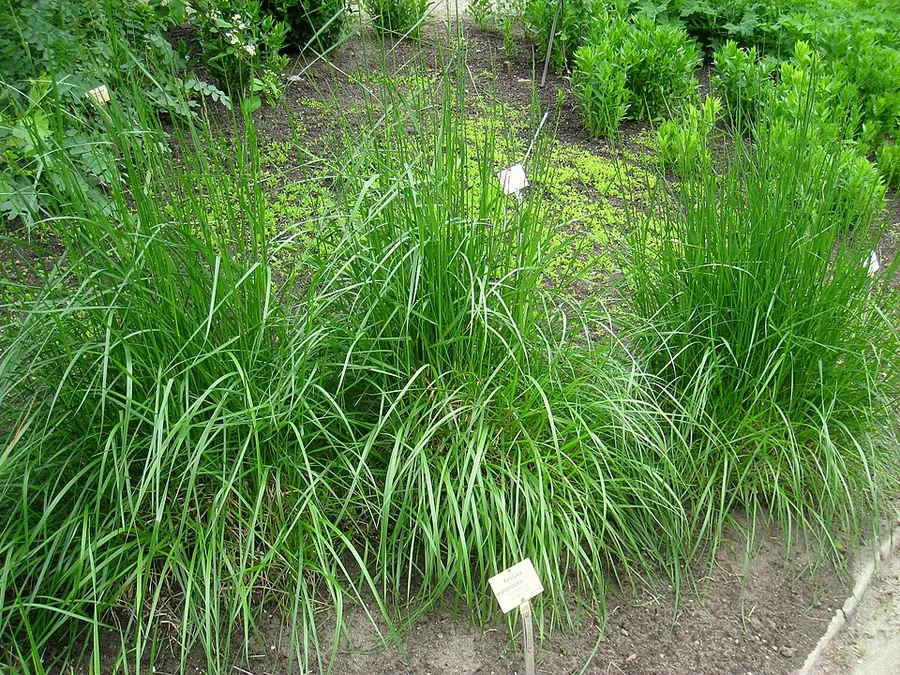
Upright blades in dense green tufts, tall fescue holds its color through heat and cold on deep, far-reaching roots.
Full sun
Every 5–10 days
61–75°F · 16–24°C
60–90 days
Overview
Tall fescue grows as a cool-season bunch grass, throwing up narrow green blades in tight, upright tufts rather than a creeping mat. Underneath, a deep and far-reaching root mass anchors each clump and draws water from well below the surface, which is why the foliage keeps its green color into fall and winter while warm-season grasses fade to brown. Those same roots let it stand in shade, in heavy clay, and in lean soil where finer grasses thin out.
Look closely and the plant reveals its clumping habit: each crown pushes out its own tuft of blades and only short rhizomes, so the clumps sit as separate rosettes instead of knitting into one another. Where the tufts crowd together the stand reads as a solid green sheet, but any opening between them stays visible until it is reseeded. At full density the blades interlace into a thick, wear-hardened surface.
The blades themselves carry the real story of texture. Old forage strains show wide, coarse, light-green blades that feel rough to the touch, while modern turf types grow finer, denser, and a deeper green. Hidden inside much of the older grass is a fungal endophyte, invisible in the leaf but potent enough to make toxins that harm grazing horses and cattle, so pasture is planted from endophyte-free or novel-endophyte cultivars while a turf lawn stays safe for pets and people.
Care
The short version: full sun to part shade, blades kept mowed at 3 to 4 inches, watered deeply but seldom, fed mostly in fall, and thin tufts overseeded each fall to close the green surface.
Light
The blades color up fullest in full sun, yet tall fescue keeps more of its green in shade than most lawn grasses, holding on through partial sun and partial shade. In a shaded spot the leaves stretch upward, and a taller mowing height lets them gather the dim light and stay dense.
Water
Tall fescue drinks deeply but seldom, its long roots pulling moisture from far down rather than sipping at the surface. About an inch a week during active growth keeps the blades a fresh green, and when watering stops those roots hold the plant through drought and let the leaves fade into dormancy. The top half of the soil dries between waterings.
Soil
The roots take hold in almost any well-drained soil, gripping clay and lean ground better than other cool-season grasses manage. The blades stay healthy across a pH of 5.5 to 7.5, the band that fits most lawn soils.
Temperature
Cool air brings out the strongest, greenest growth, roughly 61°F to 75°F (16°C to 24°C). The blades freshen and deepen through fall and winter, then dull and brown at the edges when summer heat climbs past that range.
Humidity
Plain outdoor humidity is all the blades need, so no number applies. The one danger is a run of muggy nights, when warm, damp air clings to the leaves and lets brown patch mark them.
Feeding
Feeding falls mostly in fall, a nitrogen turf fertilizer at about 2 to 3 pounds of nitrogen per 1,000 square feet a year, split between fall and spring. Summer nitrogen stays light, since a flush of soft green growth in the heat only invites brown patch onto the blades.
Pruning
Mowing holds the blades at 2.5 to 4 inches, lifted to the top of that range in summer and shade so more leaf feeds deeper roots and fewer lesions take hold. No more than a third of the blade height comes off at a pass, keeping the cut edges clean.
Repotting
none
Size & spacing
Kept mowed, the blades stand about 3 to 4 inches (8 to 10 cm) tall, and each clump broadens to roughly 6 to 12 inches (15 to 30 cm) of leaf. The tufts never fuse on their own, so overseeding threads new blades through the gaps.
When to plant
Tall fescue rises from seed, and the calendar decides how well the young blades take hold. Late summer into early fall, with warm soil under cooling air, brings the strongest, most even stand of new tufts, and early spring runs a close second. Because the separate clumps never merge on their own, thin patches are overseeded each fall to keep the green unbroken.
Northern hemisphere
Southern hemisphere
Typical months for a temperate climate: start earlier in warm zones, later where spring frosts linger.
- Plant: Sow seed in late summer to early fall (best) or early spring; tall fescue germinates in about 7-12 days. Overseed thin or bare areas each fall because this bunch-type grass does not spread to fill gaps.
- Harvest: Grown for turf, not bloom; stays green in fall and winter when warm-season grasses are dormant.
Hardiness
USDA hardiness zones: 4–7
Temperature: down to -34°C
Troubleshooting
Trouble in a tall fescue stand tends to read right off the blades: thin gaps between tufts, coarse pale clumps that clash with the fine grass around them, or a brown, drought-struck cast in summer. Catching the change in color or texture early keeps it from spreading. Match what the grass shows below.
Separate tufts with bare gaps between them
Tall fescue is a bunch-type grass whose crowns push out short rhizomes only, so each tuft stands on its own and no runner reaches across bare soil to close it. Once heat, foot traffic, or disease strips out a patch, the open ground between clumps stays and slowly widens. Overseeding the thin spots each fall, with the seed kept moist until it roots, threads fresh blades back into the gap.
Fix:
- Overseed thin and bare areas with turf-type tall fescue in early fall
- Loosen or lightly till the bare soil and ensure good seed-to-soil contact
- Keep newly seeded areas consistently moist until established
- Mow at the higher end of the range to thicken stand
Round brown patches spreading across the blades
The circles of blighted leaf are brown patch, the fungus Rhizoctonia solani, which takes hold once nights hold above 68°F (20°C) and the air hangs damp. Excess nitrogen and blades left wet overnight let it run. Watering early so the leaves dry fast, easing off summer feeding, and, on a valued lawn, a labeled fungicide hold the marked patches back.
Fix:
- Water early in the day so foliage dries quickly, and avoid evening watering
- Reduce nitrogen fertilizer during hot weather
- Improve air movement and drainage
- Apply a labeled turf fungicide on high-value lawns if needed
Blades browning and thinning in the summer heat
As a cool-season grass, tall fescue slows in prolonged heat and drought and can let its blades fade into summer dormancy even over deep roots. Deep, infrequent watering to reach the lower roots, a higher summer cut, and the return of fall rain bring the green back to the leaf. Any tuft that thins for good is overseeded in fall.
Fix:
- Irrigate deeply and infrequently to wet the deep root zone
- Raise mowing height in summer
- Overseed in fall to recover thinned areas
Wide pale clumps clashing with fine blades
Those broad, light-green tufts are old forage-type tall fescue such as Kentucky 31, whose blades are far wider and coarser than the fine leaves of a modern turf cultivar. The texture will never match, so the clumps are dug out or spot-treated, then the openings reseeded with a turf-type tall fescue so every blade reads the same.
Fix:
- Dig or spot-treat the coarse clumps
- Reseed the spots with a turf-type tall fescue to match texture
Toxicity
The green blades of a turf-type tall fescue lawn are safe for cats, dogs, rabbits, birds, and people, and the grass is absent from the ASPCA toxic-plant lists. The hazard hides in endophyte-infected pasture fescue, where a fungus threaded through the leaf tissue makes toxins that cause fescue toxicosis in grazing horses and livestock. Pregnant mares stay off infected pasture, and grazing animals feed on clean forage cultivars.
Toxic to
Horses · Livestock
Safe for
People · Cats · Dogs · Rabbits · Birds
Horses Caution
The blades are safe, but the endophyte fungus threaded through infected pasture fescue is not. A pregnant mare grazing those leaves can carry her foal too long and then meet a thickened placenta, a hard foaling, and no milk at birth. Mares are kept off endophyte-infected fescue well before foaling.
Livestock Caution
Cattle and other grazers thrive on clean fescue blades, but endophyte-infected pasture brings on fescue toxicosis. The signs run to slow weight gain, poor tolerance of heat, and fescue foot, a lameness that grips the hooves and lower legs. Leaves of endophyte-free or novel-endophyte cultivars carry none of it.
Cats None
The green blades of a turf-type tall fescue lawn are safe for cats. A cat that chews a few may cough them back up once, as happens with any grass, but the leaf itself holds nothing toxic.
Dogs None
Tall fescue blades are not toxic to dogs. A dog that nibbles the leaves gets, at most, a brief stomach upset that settles on its own.
Rabbits None
Tall fescue is a safe grass for rabbits to crop. The blade carries no toxin, and rabbits are not among the animals harmed by the endophyte that troubles large grazing stock.
Birds None
Birds crop a tall fescue lawn with no harm. Neither the blades nor the seed is toxic, and backyard hens work through the leaves without trouble.
People None
The blades of a tall fescue lawn are safe around children and adults. This is a turf and forage grass, not a food crop, so the leaves are not eaten, and brushing against them or chewing a stray blade carries no risk.
A turf-type tall fescue lawn is safe for cats, dogs, and children. Do not graze pregnant mares or cattle on endophyte-infected (E+) tall fescue pasture; pregnant mares should be removed from E+ tall fescue well before foaling. Use endophyte-free or novel/friendly-endophyte forage cultivars for livestock.
Helpline numbers

United States
ASPCA Animal Poison Control: (888) 426-4435 (fee applies)

United Kingdom
Animal PoisonLine: 01202 509000 (fee applies)

Australia
Animal Poisons Helpline: 1300 869 738
Varieties
The cultivars of tall fescue split by the look and feel of their blades, from the wide, coarse old forage grasses to the fine, dark modern turf types. The names below mark that range.
Kentucky 31 (K-31)
The old forage and utility grass, its wide, coarse blades planted almost everywhere, and because it usually hides the toxic endophyte, a poor choice for horse pasture.
Rebel
One of the first true turf types, growing a finer, denser, and darker green blade than the coarse old K-31.
Falcon
A turf-type cultivar whose fine leaves turn up throughout modern fine-textured lawn blends.
How to propagate
Tall fescue is raised from seed, both to lay down a new stand of blades and to thicken the green surface of an old one through fall overseeding.
SeedEasy
Late summer to early fall is best; early spring is the second option. · Germinates in about 7-12 days; establishes a usable stand within a couple of months.
New blades of tall fescue almost always start from seed, and the late summer to early fall window raises the fullest young stand, with early spring behind it. Seed breaks ground in about 7 to 12 days and thickens into a usable stand within a couple of months. Since the separate clumps never creep to cover open soil, thin patches are overseeded each fall to keep the green closed.
DivisionModerate
Cool weather of spring or fall · Several weeks
A grown clump of blades can be split apart in the cool weather of spring or fall, its divisions taking several weeks to root and stand up on their own. The method works on a small scale, though seeding and fall overseeding cover real ground far better.
Myths
The blades of tall fescue are toxic to animals.
The toxin is not in the leaf itself but in a fungus woven through it. That endophyte, Epichloe coenophiala, makes the ergot alkaloids behind fescue toxicosis, and breeders have released endophyte-free and friendly-endophyte cultivars that grow the same blades without the poison. A turf-type tall fescue lawn is safe for pets and people, and clean forage cultivars are safe for grazing stock.