Herb · Asteraceae
Stevia
Stevia rebaudiana
Green leaves that hide a no-calorie sweetener, sweet the instant you chew one.
Full sun
Every 2–4 days
50–90°F · 10–32°C
90–110 days
Overview
Stevia is a tender herb whose plain green leaves hold a startling secret. Native to the Paraguayan highlands, it has been chewed and cooked for its sweetness for generations. Packed inside each leaf are steviol glycosides, compounds many times sweeter than sugar and free of calories. Bite a fresh leaf and the sweetness floods your tongue at once.
The plant itself grows low and densely bushy, rarely taller than 18 to 30 inches (45 to 75 cm), a rounded mound of green stems and leaves. In warm regions it lives on as a perennial, but its soft growth is frost-tender, blackening at the first freeze, so many gardeners grow it as a warm-season annual or shelter a potted plant indoors. It forms the same tidy green clump in a bed or a pot.
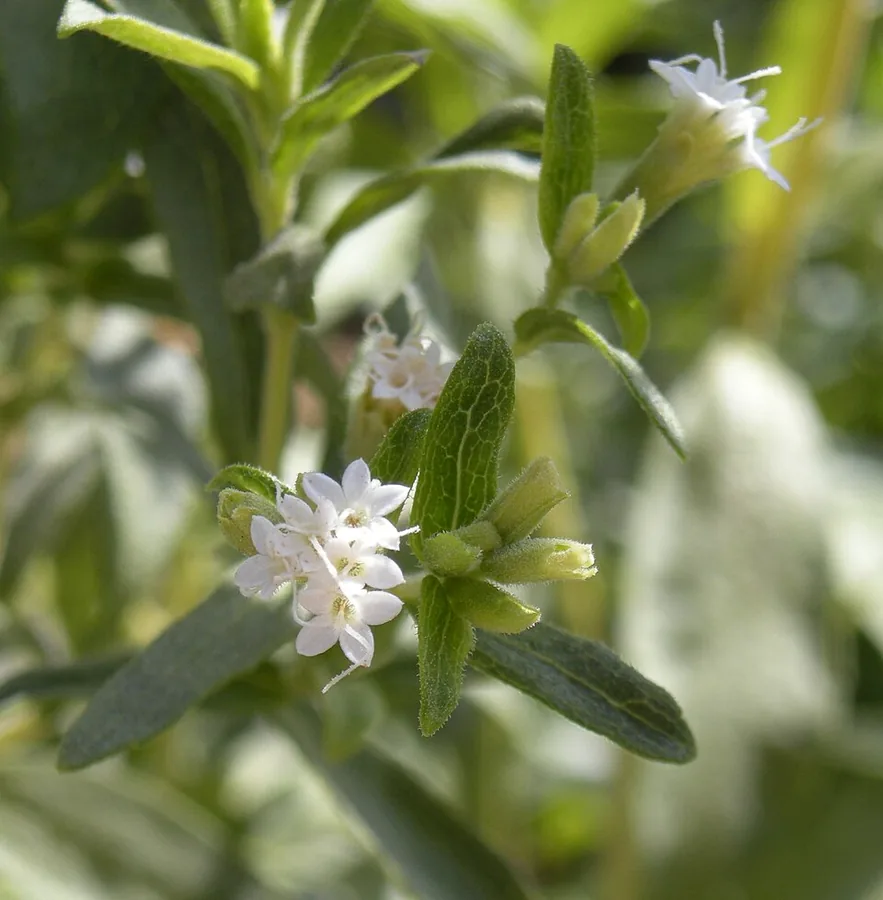
Up close, the newest growth shows as tender, soft-tipped shoots, and it is these tips that get pinched to force a fuller, leafier plant. Left alone, the stems end in clusters of small white flowers, and once those open the leaves lose their sweet edge. Pinched and kept from bloom, the plant stays a thick green cushion of sweet leaves all season.
Care
The short version: stevia wants full sun and steady moisture in well-drained soil, with the soft tips and white flower buds pinched off often to keep the green leaves thick and sweet.
Light
Stevia wants full sun, six or more hours a day, which packs the stems with dense, green leaves. A little afternoon shade is fine in hot summers. Starved of light, the shoots stretch thin and leggy, with longer gaps between the leaves.
Water
Its shallow roots dry out fast, so the soil should stay evenly moist, dark and damp but never sodden. A drink every 2 to 4 days keeps it right, more when the heat climbs or the plant sits in a pot. A blanket of mulch holds that dampness at the surface.
Soil
Stevia roots into a well-drained loam rich in organic matter, dark, crumbly, and open enough to let water slip straight through. It takes a wide pH from 6.0 to 7.5, so most ordinary garden soil will do.
Temperature
Stevia holds its green through the warm range of 50°F to 90°F (10°C to 32°C). Cold undoes it: the soft foliage is frost-tender, and a freeze leaves it black and limp, so potted plants belong indoors before the first frost.
Humidity
Ordinary humidity, 40% to 70%, keeps the leaves plump and fresh, and that suits most rooms and gardens. Airflow counts for more than the exact figure, since leaves packed tight and damp are where pests and rot take hold.
Feeding
A balanced, low-nitrogen organic fertilizer once a month through spring and summer keeps the leaves coming. Hold the nitrogen back on purpose, because a heavy feed swells the foliage but thins out the sweetness inside each leaf.
Pruning
Pinching out the soft growing tips forces the plant into a thick, well-branched dome of leaves. The flower buds get pinched away too, as soon as they form at the stem ends, since the leaves carry the most sweetness and grow thickest before those white blooms open.
Repotting
A fresh pot once a year, plus another each time it winters indoors, gives the roots room in a slightly larger container of new mix. The signs are easy to read: roots winding around the pot, growth at a standstill, and soil that dries to a crust soon after watering.
Size & spacing
A full-grown plant makes a mound 18 to 30 inches (45 to 75 cm) tall and 12 to 24 inches (30 to 60 cm) across. Set plants that far apart so air slips between the leafy mounds and the foliage dries quickly.
When to plant
Stevia is all soft, frost-tender growth, so it waits for warmth. Seeds or cuttings get their start under cover in late winter, the young green shoots going outside only once the cold has passed and the soil has warmed. The leaves are then picked through summer, right up until frost blackens the plant.
Northern hemisphere
Southern hemisphere
Typical months for a temperate climate: start earlier in warm zones, later where spring frosts linger.
- Sow: 8-10 weeks before the last spring frost
- Plant: after all danger of frost has passed and soil has warmed to at least 50°F (10°C)
- Harvest: Harvest leaves through summer; pinch flowers as leaves are sweetest before bloom. Main leaf harvest before flowering in late summer/early fall.
Hardiness
USDA hardiness zones: 9–11
Temperature: down to -7°C
Troubleshooting
Nearly every stevia problem shows on the plant in plain sight, mostly on the leaves, whether from pests, sodden roots, or the first white buds of bloom. Look closely and the early marks stand out, well before the harvest is spoiled. Match the look of the damage below, then act.
Wilting in wet soil with dark, mushy roots
A plant gone limp while its soil stays soaked is rotting at the roots, the classic mark of root rot in waterlogged ground. Pulled up, the roots come up brown, soft, and rotten, past any saving. Cutting the water at once, opening up the drainage or moving to a fast-draining mix, and keeping the pot clear of standing water are what turn it around.
Fix:
- Reduce watering immediately
- Improve soil drainage or repot into well-drained mix
- Remove and discard severely affected plants
Blackened, limp foliage after a freezing night
A stand of green turned black and drooping overnight is the unmistakable look of frost on frost-tender stevia. One freeze is enough to collapse the soft tissue. Potted plants carried inside ahead of the cold escape it, and a frost-struck plant, cut back and wintered indoors, can green up again next year.
Fix:
- Move container plants indoors before frost
- Cut back damaged growth and overwinter the plant indoors
Curled, sticky leaves with insects packed underneath
Leaves that curl, glisten with stickiness, and yellow at the edges are hosting aphids or whiteflies, soft little sap-feeders crowded on the undersides beneath a shiny glaze of honeydew. A hard jet of water knocks the crowd loose, and insecticidal soap finishes the ones that return. Any leaf buried under them is best pulled off.
Fix:
- Spray plants with a strong jet of water to dislodge insects
- Apply insecticidal soap to affected foliage
- Remove and destroy heavily infested leaves
Ragged holes eaten low in the leaves
Leaves chewed into ragged, open holes near the ground, laced with a drying silver shine, point straight to slugs and snails. These soft night-feeders work in the dark and in wet weather, so a torch-lit hunt after sunset turns them up for hand-picking. Raking off the mulch and litter close by strips away the cool, damp place they hide by day.
Fix:
- Hand-pick slugs in the evening
- Remove debris and mulch that harbor them
- Use slug traps or barriers around plants
Sweetness fading as small white buds form
Small white buds swelling at the stem tips, with the leaves growing slower and less sweet, mean the plant has turned to flowering and is feeding the blooms instead. Pinching those buds off as they appear holds the change back. The main harvest, taken before the white flowers open, carries the fullest sweetness.
Fix:
- Pinch out flower buds as they form
- Harvest leaves before full bloom
Toxicity
For all the sweetness locked in its leaves, stevia is one of the gentlest plants to keep. The green leaf is an edible, no-calorie sweetener used in kitchens worldwide, and no part of it poisons cats, dogs, or the other animals nearby. A leaf nibbled by a curious pet does no harm.
Safe for
People · Cats · Dogs · Horses · Rabbits · Livestock · Birds
Cats None
A cat can chew stevia's green leaves without harm, since the plant never appears on the ASPCA toxic list. A small taste does nothing. Only a whole mouthful of leaves might bring on a brief, passing bout of belly upset.
Dogs None
The green leaves hold no toxin for dogs. Should one wolf down a big mouthful, the worst that follows is a little short-lived gas or a loose stool.
Horses Safe
Horses come to no harm from an odd green sprig. Its leaf carries the very sweetener people stir into food and drink, and nothing in it troubles them.
Rabbits Safe
Rabbits can nibble the sweet green leaves safely, an occasional treat they take to readily. Keep the amount small so hay and fresh greens still fill most of the diet.
Livestock Safe
Goats, sheep, and cattle strip the leafy stems with no ill effect. The plant is raised as an edible crop, so its foliage holds nothing to harm a grazing animal.
Birds Safe
Hens and pet birds can peck at the leaves freely. There is no toxin in the green tissue, only a strangely sweet taste.
People Safe
People chew stevia's green leaves on purpose, fresh or dried, for the no-calorie sweetener locked inside. Everyone at home can eat them safely.
Leaves are edible and used as a natural sweetener; no special handling precautions are required.
Varieties
Stevia usually comes labeled just as stevia, though a couple of named selections stand apart, one for leaves that taste even sweeter and another for a neat, pot-sized shape.
Sweet Sugar Leaf
Its green leaves carry an especially high steviol glycoside load, so a single leaf tastes intensely sweet on the tongue.
Candy
A small, tightly branched cultivar that keeps a compact, pot-sized shape while still loading up with sweet leaves.
How to propagate
More plants come from seed or from cuttings, and the two could hardly look more different in practice. Seed is slow and patchy, while a cutting roots fast and grows into the exact green twin of its parent.
SeedDemanding
Start indoors 8-10 weeks before the last spring frost · Germination in 1-3 weeks, but often poor and erratic
Raising stevia from seed is the slow, frustrating way. It goes under cover a good 8 to 10 weeks ahead of the last frost, then sprouts thinly and unevenly across 1 to 3 weeks, with many seeds never showing at all. Because so few come up, most growers set the seed aside for cuttings.
Stem cuttingsModerate
Spring through summer from healthy non-flowering shoots · Roots in 2-4 weeks
Cuttings are the sure route. A soft green tip snipped from a healthy, non-flowering shoot anytime from spring through summer, pushed into moist media, puts out roots in about 2 to 4 weeks and grows into a copy of its parent.
Myths
Stevia leaves are supposed to taste bitter picked fresh.
One fresh leaf on the tongue tells a different story, clean and sharply sweet with no bitter note at all. That sweetness runs highest before the small white flowers appear, so the main crop is best gathered while those buds stay tight green knots.
Stevia is a hardy perennial that stands through winter outdoors.
In warm regions it does carry on as a perennial, but its soft green growth is frost-tender and blackens the moment frost strikes. Where the cold reaches it, gardeners raise it fresh each year as an annual or shelter one in a pot indoors to hold it over the winter.