Ornamental · Plantaginaceae
Spike Speedwell
Veronica spicata
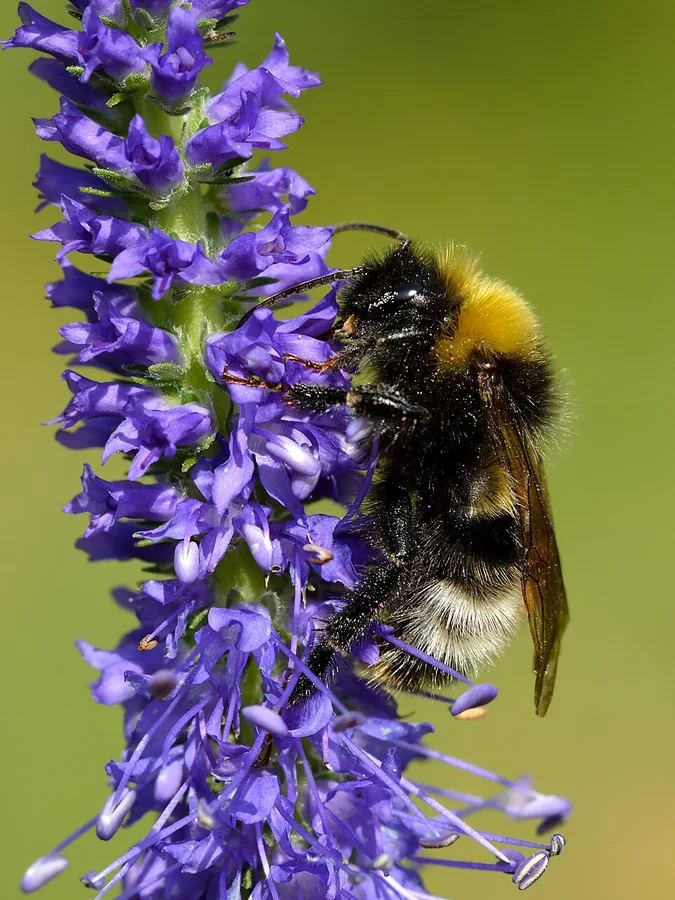
Slim, upright spikes packed with tiny blue flowers stand above a low, tidy clump.
Full sun
Every 5–10 days
USDA 3–8
2–3 ft · 0.6–0.9 m
Overview
Spike speedwell shows its character in the flower: slim, upright spikes crowded with many small blossoms in blue, pink, or white, rising from early summer. The spikes taper toward the tip and stand well clear of the plant. It belongs to the plantain family, and the bloom holds from June into August. The plant is hardy from zones 3 to 8.
Below the flowers, speedwell gathers into a low, tidy clump roughly 2 to 3 feet (61 to 91 cm) tall and nearly as wide, its stems rising in a close, upright stand. The roots sit shallow, close beneath the surface. Deer and rabbits tend to leave the clump untouched.
As each spike finishes, the spent flower heads can be sheared away, and fresh spikes often follow in a second flush come fall. Through the season the plant renews from a low basal rosette at its base, and a clump split every few years keeps its close, upright form.
Care
The short version: speedwell wants full sun, moist but sharply drained soil, and steady water that never turns soggy. Shear the finished spikes to bring fresh ones, and split the clump every few years to keep it full.
Light
Speedwell fills out its spikes best in full sun, at 6 or more hours of direct light a day. In light or partial shade the stems draw up long and the spikes come thin and sparse, losing the dense, upright look.
Water
Speedwell holds its form on steady, even moisture, kept between dry and wet. An established clump takes a short dry spell, but its shallow roots shrink from a long drought. Soil left soggy, above all in winter, rots those roots to a soft brown.
Soil
Speedwell roots into average to rich loam or silt that stays moist yet drains freely, at a pH of 6.0 to 7.5. Winter drainage counts for the most, since cold, heavy, wet clay leaves the shallow roots waterlogged and soft.
Temperature
Speedwell stands hard cold, holding down to -40°F (-40°C) and up to about 86°F (30°C). That range carries the clump through winter across zones 3 to 8, to return upright the next season.
Humidity
Plain outdoor air suits speedwell, so no humidity figure applies. Moving air around the close-set stems keeps them dry, while still air over wet soil settles trouble into the roots.
Feeding
Speedwell feeds lightly. A single balanced feed or a spring topdressing of compost keeps the spikes coming, while too much pushes soft stems that bend and flop instead of standing straight.
Pruning
Shear or snip the spent spikes as they finish to draw out fresh ones, and cut the whole plant down to its low basal rosette after the main flush for a chance at a fall repeat. The old stems are cut away in late winter or early spring.
Repotting
As a garden perennial, speedwell is split rather than potted. Dividing the clump every 3 to 4 years keeps its stems dense and upright, worth doing once the center opens up bare or the spikes thin out.
Size & spacing
A grown clump reaches 2 to 3 feet (61 to 91 cm) tall and spreads about 24 to 30 inches (61 to 76 cm) across, its stems standing close and upright. Set plants near that width apart so each clump can round out and air can pass between the stems.
When to plant
Speedwell moves through the temperate year in a steady sequence. Seed goes in indoors a few weeks before the last frost, plants set out once the spring soil warms, and the slender spikes rise and open from June through August.
Northern hemisphere
Southern hemisphere
Typical months for a temperate climate: start earlier in warm zones, later where spring frosts linger.
- Sow: 6 to 8 weeks before last spring frost
- Plant: After last spring frost once soil has warmed
- Harvest: June to August (late spring to mid-summer)
Hardiness
USDA hardiness zones: 3–8
Temperature: down to -40°C
Troubleshooting
Speedwell rarely falters, and the signs it shows point to one of two causes: soil kept too wet or a spot too shaded. The look of the plant tells the story, and the early signals appear below.
Wilting, yellow tops above soft, blackened roots
When the stems wilt and the tops yellow while the roots go soft, brown, and black, the plant has root rot, driven by wet, poorly drained soil rather than by dryness. Winter presses hardest, as cold ground stays sodden around the shallow roots. Lift the crown to see the roots, move the plant to a sharply drained spot, and throw out any clump gone soft and mushy.
Fix:
- Reduce watering and improve drainage
- Move or replant into a sharply drained, raised, or amended site
- Remove and discard severely rotted plants
Sparse spikes on soft, overstretched stems
Few spikes rising on soft, drawn-out stems mark a plant kept too shaded, and old finished spikes left standing hold back new ones. Move it into full sun for 6 or more hours a day, then shear the spent spikes so fresh, upright ones can push through.
Fix:
- Site in full sun (6 or more hours of direct sun)
- Deadhead or shear spent spikes to promote rebloom
- Cut back to the basal rosette after the main flush
Toxicity
Speedwell is not considered toxic. Neither the extension references nor the ASPCA toxic plant list flags any part of it, so cats, dogs, and grazing animals are safe near its leaves and spikes. Eating a large amount of any plant can bring a brief, mild stomach upset, and speedwell is no different.
Safe for
People · Cats · Dogs · Horses · Rabbits · Livestock · Birds
Cats None
A cat is safe among speedwell's leaves and spikes, which hold no toxic compounds on record. A chewed leaf might bring a brief, mild stomach upset at most, and only from a good mouthful.
Dogs None
A dog is safe nosing through speedwell, since it carries no toxicity warning and stays off the ASPCA list. A chewed stem or leaf calls only for a watchful eye.
Horses Safe
Speedwell holds no known toxins, so a horse grazing its stems and spikes comes to no harm.
Rabbits Safe
Rabbits usually pass speedwell by, and a bite from its foliage does them no harm.
Livestock Safe
Cattle, goats, and sheep can crop the leaves and stems of speedwell safely, since none of its parts are toxic to them.
Birds Safe
Birds work speedwell's spikes for nectar and pollen and come to no harm from any part of the plant.
People Safe
Speedwell is safe to touch and to keep around children. It grows no edible part, so nothing on it is meant to be eaten, though a nibbled leaf brings no more than a possible mild stomach upset.
No special handling precautions; generally considered safe around pets and people.
Varieties
The named cultivars of spike speedwell are told apart by the color of their spikes and the shape of the plant. These are the ones seen most often.
Icicle
Icicle raises spikes of clean white flowers at the front of a border.
Rosea
Rosea sets soft pink flowers along its spikes in place of the usual blue.
Royal Candles (Glory)
Royal Candles, also called Glory, stands compact and dense, its spikes a deep violet-blue.
Red Fox (Rotfuchs)
Red Fox, or Rotfuchs, carries spikes in warm rosy-red to deep pink.
How to propagate
Speedwell multiplies readily: a clump pulled apart, seed sown thin, or a cutting rooted in summer all produce new plants.
DivisionEasy
Early spring as shoots emerge, or early fall · One growing season
Pulling a clump apart is the surest way to more speedwell. In early spring as the shoots push up, or in early fall, lift the whole clump, tease it into rooted pieces, and set them back in the soil. Each piece takes hold over a single growing season.
SeedModerate
Indoors 6 to 8 weeks before last frost, or outdoors in early spring · Germinates in about 14 to 21 days; flowers later that season or the next
Seed is the slower path. Sow it indoors 6 to 8 weeks before the last frost, or outdoors in early spring, setting the seed on moist mix and leaving it uncovered, since light triggers it to sprout. Seedlings show in 14 to 21 days and flower later that season or the next.
Stem cuttingsModerate
Late spring to early summer · A few weeks to root
A cutting roots readily in late spring or early summer. Cut a 4 to 6 inch length from a stem tip, strip the lower leaves, and stand it in a well-drained mix, where roots form over a few weeks.
Myths
The flowers and leaves of speedwell poison cats and dogs.
The plant carries no such danger. NC State Extension records no toxicity warning for spike speedwell, and it is absent from the ASPCA toxic plant list, marking it safe around pets. A large mouthful of any plant can still bring a brief, passing stomach upset, and speedwell is no exception.
Speedwell wants soil kept constantly wet.
It takes up moisture but cannot stand in it. Soggy, poorly drained ground turns the shallow roots soft with rot, while an established plant bears some drought. Steady water over sharp drainage keeps the roots firm and the stems upright.