Ornamental · Saxifragaceae
Rodgersia
Rodgersia aesculifolia
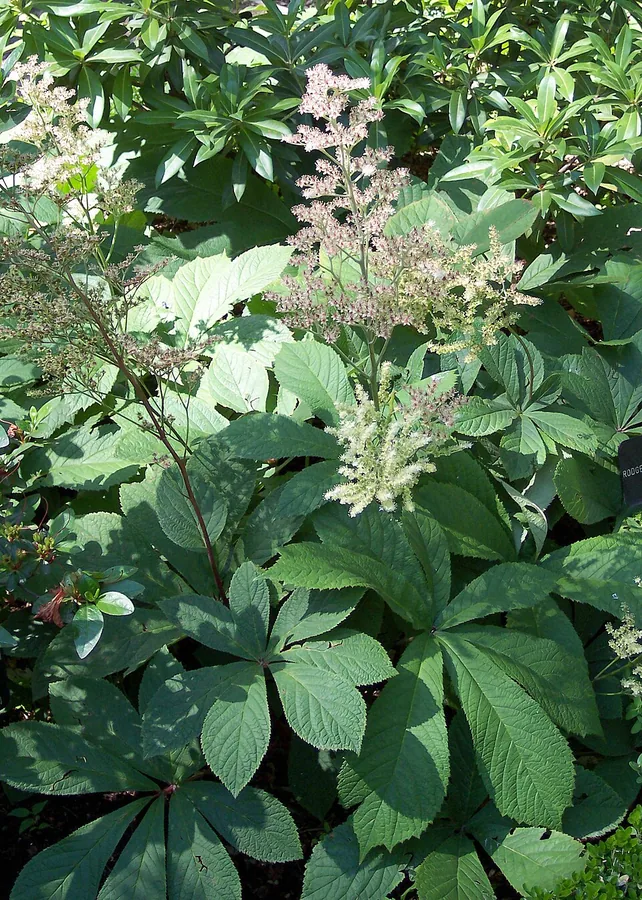
Broad, hand-cut leaves with a coarse surface fan out low, and feathery flower plumes rise tall above them.
Partial shade
USDA 5–7
3–5 ft · 0.9–1.5 m
Overview
Each rodgersia leaf splays into deep, finger-like divisions, cut in the pattern of a horse chestnut and broad enough to span a wide reach. The surface is large and faintly coarse to the touch, carried on stout stalks. Above the foliage, summer sends up tall, branched flower plumes as feathery as an astilbe's.
The plant grows as a broad, low mound of these big leaves, wider than it is tall, and holds that coarse-textured foliage close over damp, shaded ground. It takes to bog gardens, pond edges, streamside hollows, and the cool north side of a house. The clump is hardy and long-lived, thickening in place year after year.
Let the soil dry and the change shows first at the leaf edges, where the margins crisp and turn brown against the green. Kept with cool, moist roots, the leaves stay broad and whole. Little else marks the plant through the season.
Care
The short version: rodgersia wants part to full shade and rich, humusy soil held moist to wet, it should never dry out, and it takes compost through the growing season.
Light
Rodgersia colors and holds best in part to full shade, deeper still where the sun is strong. Direct afternoon light burns thin brown scorch marks along the leaf edges.
Water
The leaves stay full and unblemished only over soil kept moist to wet and never dry, the reason rodgersia thrives at bog gardens and pond and stream banks. Once the ground dries, the margins brown within days and the smooth outline breaks.
Soil
The roots run through rich, humusy soil dark with organic matter and heavy with held water. That soil stays moist to wet but not stagnant, so a little drainage or flow keeps it from souring into muck.
Temperature
The clump is fully hardy, holding through winter cold near -20°F (-29°C) and summer heat up to about 75°F (24°C). Its broad leaves keep their form in cool, temperate air far better than in hot, dry heat.
Humidity
No humidity figure matters here, since plain outdoor air suits the leaves. What keeps them firm and green is moisture at the roots, not the air around them.
Feeding
Worked into the rich soil, compost or a balanced fertilizer through the growing season feeds the broad leaves. A yearly organic mulch darkens the ground, feeds the crown, and holds damp against the roots.
Pruning
Once the flower plumes fade to brown, the spent stalks cut away cleanly. Any tattered or browned leaf comes off through the season, leaving the fresh green foliage behind.
Size & spacing
The mature clump swells to about 3 to 5 feet (91 to 152 cm) tall and the same across, a solid dome of overlapping leaves. Give it the full 3 to 5 feet (91 to 152 cm) so each broad blade can open without folding against the next.
When to plant
Set into the ground in spring after frost, in a cool, moist, shaded spot, rodgersia unfurls its leaves and then lifts flower plumes from June to August. The clump grows broader and denser over the seasons that follow.
Northern hemisphere
Southern hemisphere
Typical months for a temperate climate: start earlier in warm zones, later where spring frosts linger.
- Sow: Sow seed in late winter to early spring; seed may need cool stratification.
- Plant: Plant outdoors in spring after frost in a moist, partly shaded site.
- Harvest: Blooms June to August with branched, astilbe-like panicles.
Hardiness
USDA hardiness zones: 5–7
Temperature: down to -29°C
Troubleshooting
Rodgersia stays mostly clean and whole, and the signs of trouble read on the leaves themselves. Browned margins, chewed holes, or a pale dusty coating are the usual marks. Match what shows on the foliage below.
Brown, scorched rims along the leaves
The dry brown rims are leaf scorch, burned in by parched soil or hard sun on the blades. Rodgersia keeps its leaves whole only over cool, damp roots. Wet the soil, draw the plant into deeper shade, and spread mulch over the crown to hold the damp.
Fix:
- Keep soil consistently moist
- Provide partial to full shade
- Mulch to conserve moisture
Ragged holes eaten across the leaves
The torn, irregular holes are slugs and snails at work, rasping through the broad blades overnight in the damp shade and leaving glistening slime trails behind. Lift them away once darkness falls, put down bait or a copper ring, and clear the litter they shelter under by day.
Fix:
- Hand-pick at night
- Use slug baits or barriers
- Reduce excess debris around plants
A chalky white bloom over the leaves
The chalky white coating filming the leaves is powdery mildew, thickest on crowded clumps or ones gone dry. Take off the worst-marked leaves, open the clump so air threads through, and hold even moisture in the soil so the plant never dries out.
Fix:
- Improve air circulation
- Avoid drought stress
- Remove affected foliage
Toxicity
Rodgersia is not known to be toxic. It is missing from the ASPCA list of plants that harm cats and dogs, and no poisoning is reported in other animals or people. The plant is safe around pets and children.
Safe for
People · Cats · Dogs · Horses · Rabbits · Livestock · Birds
Cats Safe
Rodgersia is not toxic to cats, so a torn leaf does no real harm. A cat that chews the coarse foliage may get a mild, brief upset stomach, no worse.
Dogs Safe
Rodgersia carries no poison known to reach dogs. A dog that swallows a mouthful of the rough, fibrous leaf may feel a short tummy ache.
Horses Safe
Rodgersia has no record of poisoning horses, which can graze beside its leaves safely.
Rabbits Safe
Rodgersia will not poison rabbits, and the big, coarse-surfaced leaves hold little appeal, so most rabbits leave them alone.
Livestock Safe
Rodgersia holds no toxin for cattle, sheep, or goats, which can graze a damp pasture or pond edge grown with it.
Birds Safe
Rodgersia poses no danger to garden birds or poultry, whether they pick at the broad leaves or forage the wet soil beneath them.
People Safe
Rodgersia is a foliage and flower plant, not a food crop, and it carries no poisoning risk for people, so children stay safe beside it.
Varieties
Only a couple of rodgersia types are grown, set apart by the shape and color of their leaves and flowers. Two stand out.
Rodgersia pinnata 'Superba'
A featherleaf form whose young leaves come up flushed bronze-purple and fade to green, over which rose-pink to red flowers open through summer.
Rodgersia podophylla
Bold palmate leaves split into 5 lobes, at times 7, spreading up to 16 inches across and deepening to bronze-red by fall.
How to propagate
Rodgersia multiplies from the clump itself, split into rooted pieces, and it grows from seed as well.
DivisionModerate
Divide thick rhizomes in spring or early fall. · One to two growing seasons
New plants come straight from the clump. In spring or early fall, work an established crown loose and cut the thick rhizomes into sections, each keeping a bud and a knot of roots. Bedded into rich, moist soil, the sections take one to two growing seasons to fill out. Seed grows on as well, and a settled clump widens by itself as the rhizomes creep out through the soil.
Myths
Rodgersia grows submerged in standing water like a true aquatic.
Rodgersia leans hard toward wet ground, its roots at home in the moist to wet soil of pond and stream margins, yet it never grows underwater. The soil should stay reliably moist and never sink into stagnant, waterlogged mud.