Ornamental · Papaveraceae
Corn Poppy
Papaver rhoeas
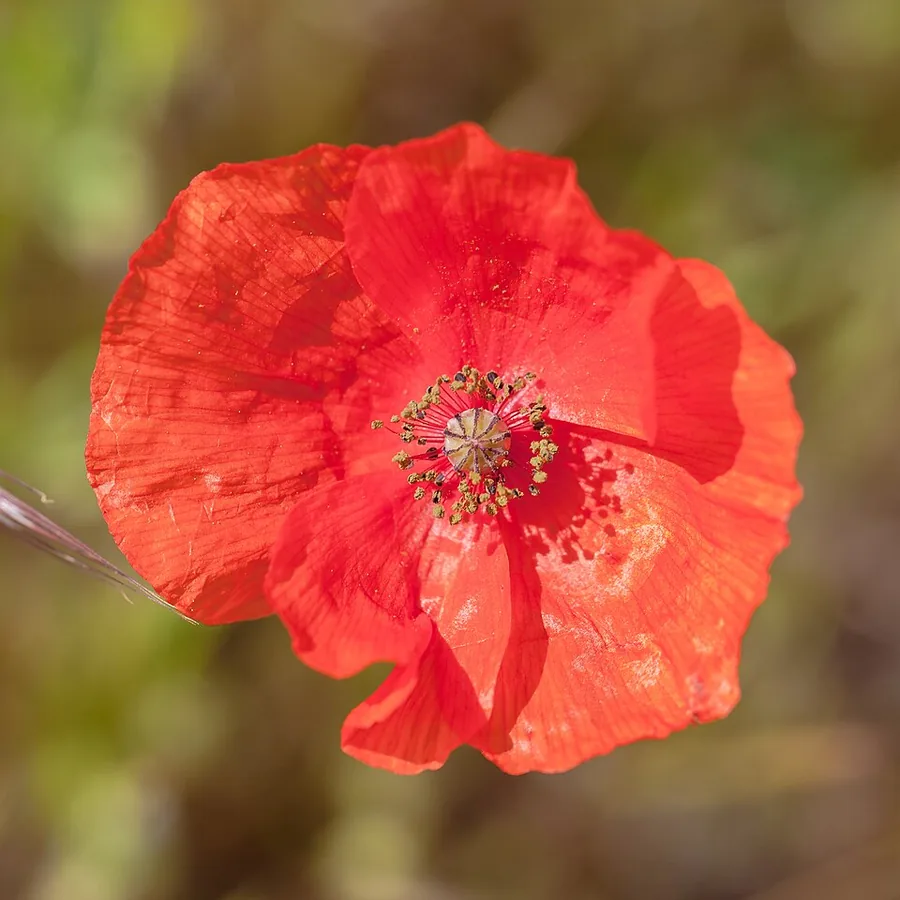
Silky, tissue-thin scarlet petals cup open on slender, hairy stems, and a milky sap runs through every part.
Full sun
Every 5–10 days
30–75°F · -1–24°C
60–90 days
Overview
Seen up close, the corn poppy is built around one striking bloom. A single flower opens as a shallow bowl of papery scarlet petals, thin and lightly crumpled, with the silky sheen and the deep red that colored the fields of Flanders. The whole plant is small, just 9 to 18 inches (23 to 46 cm) tall, so the flower dominates it.
The stems match that delicacy. They rise slender and hairy, and each one carries a single cupped flower that lasts only a day or two before the petals fall and the next bud opens. As the bloom moves from late spring into mid-summer, the stem tips firm up into small, dry, papery seed capsules.
Break any part and it shows its nature: a milky latex, white to yellowish, beads up at the wound. In the wild form, a dark blotch marks the base of each petal, a small inky patch at the center of all that red. The named strains soften and recolor the flower, but the basic shape stays the same, a thin-petaled bowl on a fine, upright stem.
Care
The short version: the corn poppy is a small, wiry plant carrying tissue-thin scarlet bowls of bloom, and it wants full sun, light even moisture, and sharp drainage, with seed sown in place since it will not be moved.
Light
Full sun brings out the plant's best form. In full sun the stems stand firm and the scarlet bowls open wide and hold longest. A little afternoon shade is fine in heat, but in deep shade the stems stretch weak and floppy and the flowers grow scarce.
Water
The roots want light, even moisture, with the top half of the soil left to dry before the next watering, about every 5 to 10 days. A long dry spell thins the fine foliage, while waterlogged ground turns the roots soft and brown, worst of all over winter.
Soil
The plant sinks its roots into well-drained loam worked with a little compost, though plain garden soil will do where water drains freely. It settles across a pH of 6.0 to 7.5. What the roots cannot abide is standing water, so drainage counts far more than richness.
Temperature
This is a cool-weather plant through and through, holding its form between 30°F to 75°F (-1°C to 24°C). The seed sprouts and the foliage grows best in the cool of spring or fall, and once summer heat sets in, the papery flowers finish fast.
Humidity
Dry air keeps the foliage clean, and no set level applies. Moving air dries the leaves, since a still, damp, crowded canopy is where the powdery white and gray molds take hold.
Feeding
The plant asks for almost nothing at the roots. A light feeding of balanced fertilizer or compost at sowing is plenty, and rich ground needs less. Overfeed it and the plant runs to leafy green and skips the bloom.
Pruning
Pinching off the spent, dropping flowers keeps fresh bowls opening for longer. Cutting away the swelling seed capsules before they ripen holds back the flood of volunteer seedlings that would follow.
Repotting
There are no roots to repot. The plant is sown where it stands and grows there for its one season, resenting any disturbance and never settling into a pot for the long term.
Size & spacing
The plant stays small and fine, 9 to 18 inches (23 to 46 cm) tall on wiry stems. Set or thin the plants to about 6 to 12 inches (15 to 30 cm) apart, which lets air pass between the leaves and dries them quickly.
When to plant
The tissue-paper flowers arrive on their own schedule. Seed sown in late fall in mild regions, or early spring in colder ones, gives way to the first cupped scarlet blooms from late spring into mid-summer, about 60 to 90 days later. After that the color gives way to dry, papery pods.
Northern hemisphere
Southern hemisphere
Typical months for a temperate climate: start earlier in warm zones, later where spring frosts linger.
- Sow: Not recommended; seedlings resent transplanting. Sow seed directly in place.
- Plant: Direct-sow in late fall in mild/southern regions or early spring in northern regions; seed needs light, cover no more than 1/8 inch.
- Harvest: Late spring to mid-summer (June to August)
Hardiness
USDA hardiness zones: 3–10
Temperature: down to -40°C
Troubleshooting
The plant shows trouble plainly on its leaves, stems, and roots. Wet soil and still, damp air are behind most of it, and the signs are easy to read up close. Match the look of the affected part below.
Yellow, wilting leaves over soft brown roots
Leaves fading to yellow and stems folding over point to root rot. Under the soil the roots have gone soft and brown, sitting in ground that stays wet, most often through winter or after heavy watering. Drier, better-drained soil and the removal of the mushy, failing plants stop the rot before it reaches the rest.
Fix:
- Improve drainage and stop supplemental watering
- Remove and discard severely affected plants
- Avoid replanting poppies in the same poorly drained spot
Gray fuzz coating browning flowers and leaves
A grayish, fuzzy coat spreading over browning petals and leaves is botrytis, the gray mold that grows in cool, damp, crowded air. It clings to the softening, decaying parts during wet weather. Cutting those parts away, spreading the plants apart, and keeping the foliage dry clears the fuzz.
Fix:
- Remove and destroy affected plant parts
- Increase air circulation through spacing and thinning
- Avoid overhead watering
A chalky white dust across the leaf tops
A chalky white dust across the upper leaf surfaces is powdery mildew, a film that forms in humid, still air. A finger drawn across it lifts part of the coating away. Thinner planting, the loss of the worst-coated leaves, and freer air movement clear the surfaces again.
Fix:
- Improve air circulation
- Remove heavily infected foliage
- Avoid overcrowding plantings
Unplanted seedlings scattered through the bed
Fine seed shed from ripe capsules turns corn poppy into a busy self-seeder, and small unplanted seedlings scatter through the bed near last year's stems. Snipping the capsules away before they dry and split, then lifting the stray seedlings, keeps their numbers down.
Fix:
- Remove seed pods before they mature and shed seed
- Pull unwanted volunteer seedlings
Toxicity
That milky sap is the thing to respect. White to yellowish, it runs through the stems, leaves, and green pods and carries opium-type alkaloids, which make the living plant toxic to cats, dogs, horses, and other animals, and unfit for people to eat. The small dried seeds used in baking are safe, but the fresh sap and green seed heads are not for pets or children.
Toxic to
Cats · Dogs · Horses · Rabbits · Livestock · Birds · People
Cats Toxic
A cat that bites the sap-filled stems or pods takes in opium-type alkaloids and turns drowsy and unsteady on its feet, often drooling with no interest in food. A large mouthful can slow the breathing into deep sedation.
Dogs Toxic
A dog chewing the leaves or the green pods drools, goes off its food, and grows sleepy and wobbly. The more of the sappy tissue it swallows, the harder the alkaloids press on the nervous system, dulling the breathing.
Horses Toxic
A horse cropping the plant takes the narcotic sap into its system and turns sedated and clumsy, with colic-like pain in the belly. Since the alkaloids act on the nervous system, even a single mouthful is worth stopping.
Rabbits Toxic
A rabbit is no safer from the sap's opium-type alkaloids than a cat or dog, and its small body has almost no room to spare. The stems, the milky sap, and the pods all belong far from a rabbit.
Livestock Toxic
Cattle, sheep, and goats that graze the plant grow drowsy and stagger, drooling as the gut and breathing slow. The bitter foliage puts most of them off, so the ones at risk are hungry or unfamiliar with it.
Birds Toxic
The narcotic sap and its alkaloids soak every green part, so pet birds and poultry should not tear at the leaves or pods. Cut stems and dropped capsules belong nowhere near cages or runs.
People Caution
The milky sap in the stems and unripe pods holds opium-type alkaloids that can bring drowsiness and a churning stomach, so the fresh plant is not food. The small dried seeds used in baking are safe, but the sap and the green seed heads are not for children.
All parts contain a white to yellowish latex and alkaloids; keep cut stems, seed pods, and plant debris away from pets.
Helpline numbers

United States
ASPCA Animal Poison Control: (888) 426-4435 (fee applies)
Poison Control: (800) 222-1222



Canada
Poison Centres: 1-844-764-7669
Varieties
The wild flower is pure scarlet with a dark eye, but the named strains repaint it. These three show how far the color and petal form can shift.
Shirley Series
A seed strain in both single and double bowls, colored across red, pink, white, and edged picotee, and missing the dark basal blotch that centers the wild flower.
American Legion
A single flower of clear scarlet-red, the classic red form chosen for remembrance plantings.
Falling in Love
Semi-double to double blooms in bicolor and pastel washes of pink, salmon, and white.
How to propagate
The corn poppy starts as fine seed pressed onto bare soil, and it grows only where it is sown, since the seedlings will not survive being lifted.
SeedEasy
Direct-sow in late fall in mild/southern climates or early spring in northern climates · Germinates in about 7 to 28 days depending on soil temperature; blooms the same season
Corn poppy grows from fine seed pressed onto the surface where it will bloom, since the seedlings resent transplanting and rarely take to a move. The sowing falls in late fall where winters are mild or early spring further north. Because the seed needs light to sprout, it lies just under the surface with no more than 1/8 inch of soil over it, kept evenly moist. The seedlings break through in about 7 to 28 days as the soil warms, and the plants flower that same season.
Myths
Corn poppy is the same as the opium poppy that yields narcotics.
They only look like relatives. Corn poppy is Papaver rhoeas, a separate species from the opium poppy, Papaver somniferum. Its sap carries isoquinoline alkaloids such as rhoeadine, not the heavy morphine of that other plant. Kin in the same family, but a different flower.
Poppies are safe around pets because they are ordinary garden flowers.
A pretty, familiar flower can still be dangerous. Poppy is toxic to cats and dogs, and the opium-type alkaloids in its sap can leave a pet drooling, sedated, and unsteady after a single bite of leaf or pod.