Herb · Lamiaceae
Oregano
Origanum vulgare
Give it sun, lean soil, and a dry root run, and oregano all but grows itself.
Full sun
Every 7–10 days
80–90 days
USDA 5–10
Overview
Oregano is a hardy perennial herb from the mint family, native to the warm, rocky hills of the Mediterranean. That sun-baked, stony ground shapes its needs: it wants heat, strong light, and soil that drains fast. The leaner and harder its life, the more sharply the flavor packs into the small leaves.
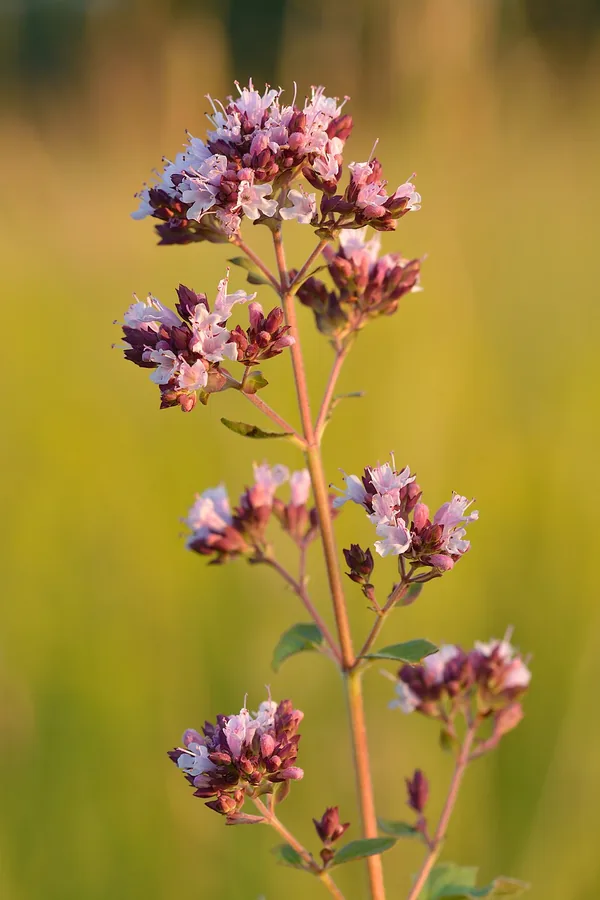
Its small leaves ride on slim stems that grow woody at the base with age, and in summer the plant lifts up clusters of tiny flowers, white on some types and soft pink on others, that call in bees and other pollinators. Left uncut, the stems knit together into a low, bushy mat that spreads outward and holds through the years.
For all that presence, oregano asks little. It rides out drought once its roots take hold, wants no rich feeding, and rarely draws pests to its pungent foliage. The two things it cannot bear are soggy roots and deep shade, so it belongs where the sun falls full and the water runs quickly away.
Care
The short version: full sun, lean and sharply drained soil, and a deep drink only once the top half has dried out. Feed it lightly if at all, pinch the small-leaved stems often to keep them bushy, and the plant holds for years.
Light
Oregano wants full sun, ideally 6 or more hours a day, and that light concentrates the oils that give the small leaves their sharp, warm bite. In a little partial shade the stems stretch looser and the leaves come out paler in flavor.
Water
Once its roots take hold, oregano is drought tolerant and far happier dry than wet. It takes a deep soak, then waits until the top half of the soil has dried before the next, usually every 7 to 10 days. Wet, heavy ground is the fastest way to blacken and rot the roots.
Soil
Give it well-drained sandy or loamy soil and hold back the rich amendments, since lean, gritty ground sharpens the flavor in the leaves. A pH anywhere from 6.0 to 7.5 suits it. Above all, the water needs to drain away fast.
Temperature
Oregano weathers a wide range, from about 30°F to 84°F (-1°C to 29°C), and within its hardiness zones the tough roots push out new growth again after winter. A hard frost blackens and drops the top growth, but the plant sends up fresh stems in spring.
Humidity
It favors low humidity, around 30% to 50%, in keeping with its dry Mediterranean home. Damp, still air settles on the foliage and invites mildew and pests, so it wants room and moving air around its leaves.
Feeding
This is a light feeder that colors up best on poor soil. A single light dose of balanced fertilizer such as 5-10-5 in spring is plenty, and too much nitrogen only swells soft, watery leaves that carry less flavor.
Pruning
Pinch and harvest often, cutting the small-leaved stems just above a leaf node to keep the plant dense and bushy rather than leggy. Cut back any hardened, bare stems, and nip off the flower buds before they open when you want the leaves at their most flavorful.
Repotting
Potted oregano needs a larger home only every 2 to 3 years, once the roots circle or poke pale from the drainage holes, the new leaves come in smaller, or the soil dries almost the moment it is watered. Set it into a fresh, gritty, free-draining mix.
Size & spacing
A mature plant stands about 12 to 24 inches (30 to 60 cm) tall and spreads its low mat to roughly the same width. Give each one 12 to 24 inches (30 to 60 cm) of room so air threads through the leaves and the foliage stays dry.
When to plant
Oregano is a tough perennial, hardy through zones 5 through 10, though its young seedlings still want warmth to take hold. The fine seeds start indoors 6 to 8 weeks before the last frost, plants go out once the cold lifts, and the small leaves come in through summer, picked just before the flowers open when their flavor runs deepest.
Northern hemisphere
Southern hemisphere
Typical months for a temperate climate: start earlier in warm zones, later where spring frosts linger.
- Sow: 6-8 weeks before last spring frost
- Plant: spring after danger of frost has passed
- Harvest: Small white to pink flowers in summer; harvest leaves before flowering for best flavor.
Hardiness
USDA hardiness zones: 5–10
Temperature: down to -29°C
Troubleshooting
Oregano keeps its dense, leafy look with very little asked of it, and most of its troubles trace to too much water or too little light. The first signs show in the color and texture of the leaves, stems, or roots. Match what you see below and step in before it spreads.
A drooping plant over dark, mushy roots
A plant that sags even in damp soil is almost always sitting over root rot, the work of overwatering or ground that holds water too long. Slide it from the soil and read the roots, which should be firm and bone white rather than blackened and slick to the touch. Cut away the soft, dark tissue, resettle it in gritty, fast-draining soil, and let the watering fall right off.
Fix:
- Remove affected plant material
- Replant in well-drained soil or amend with grit
- Reduce watering frequency
Long, hardened stems stripped nearly bare
Stems that stretch long and turn woody and bare low down, carrying only a scatter of leaves at their tips, have gone unclipped too long in light that runs thin, and heavy nitrogen pushes the same soft, reaching growth. A cut back to just above a leaf node wakes the dormant buds below into dense, leafy regrowth. Full sun and a lighter feeding hand hold that fuller shape.
Fix:
- Cut back stems above a leaf node to encourage bushy regrowth
- Move to a full-sun location
- Reduce fertilizer
Speckled, fading leaves veiled in fine webbing
Leaves gone pale and sandy with a fine, silvery webbing slung across their undersides are the mark of spider mites, which crowd in during hot, dry stretches and on indoor plants. Small soft-bodied clusters bunched on the tender new shoots are aphids instead. A hard spray of water strips them off, insecticidal soap finishes the stragglers, and moving air keeps them from resettling.
Fix:
- Rinse foliage with a strong spray of water
- Apply insecticidal soap to affected leaves
- Increase air circulation and reduce dustiness
Leaves thinning in flavor as the buds swell
As the small buds swell and oregano turns toward bloom, it draws its strength up into the flowers and the leaves lose their flavor. Nipping those buds off before they open holds the punch in the foliage. Leaves picked right as the plant nears flowering hold the most concentrated flavor of all.
Fix:
- Pinch off flower buds before they open
- Harvest leaves just before flowering
Toxicity
For people, the small green leaves are a safe kitchen herb to cook with freely. For pets the picture changes: the ASPCA lists oregano as toxic to cats and dogs, because the essential oils held in the foliage irritate the gut and can cause mild vomiting or diarrhea if an animal eats a lot. The clear, concentrated oregano oil is the bigger hazard, so keep it out of reach of every animal.
Toxic to
Cats · Dogs · Horses · Rabbits · Livestock · Birds
Safe for
People
Cats Mild
A single nibbled leaf seldom causes trouble, but a cat that chews through a mouthful of the pungent foliage may drool, vomit, or pass loose stools. The clear, concentrated essential oil holds the real danger, so it stays out of reach.
Dogs Mild
A dog that crops off a real mouthful of the leafy stems can end up with an upset stomach, some vomiting, and diarrhea. A stray pinch from a plate is harmless, while the bottled oil is concentrated and belongs out of reach.
Horses Caution
The aromatic oils packed into the small leaves can unsettle a horse's gut much as they do a cat's or dog's, so the foliage is best kept from the feed. A brief taste cropped at pasture is unlikely to do harm.
Rabbits Caution
The strong, oil-rich leaves can disturb a rabbit's delicate digestion, so only the smallest scrap is wise, if any. Soft stools or a rabbit turning from its food are the signs to watch for.
Livestock Caution
Grazing animals tend to pass over the sharply scented, pungent foliage on their own, and a single mouthful is no worry. A large amount of the leaves can bring on mild stomach upset.
Birds Caution
Small pet birds react sharply to the concentrated oils drawn from the leaves, so the essential oil stays well away from them. A little fresh leaf now and then is generally fine in moderation.
People Safe
The dried and fresh green leaves are a kitchen staple, safe to eat in any amount used in cooking. Only the concentrated essential oil, potent and pressed from the plant, needs care and dilution.
Normal culinary amounts of fresh or dried leaf are generally not a concern; concentrated oregano essential oil is the bigger hazard to pets.
Helpline numbers

United States
ASPCA Animal Poison Control: (888) 426-4435 (fee applies)

United Kingdom
Animal PoisonLine: 01202 509000 (fee applies)

Australia
Animal Poisons Helpline: 1300 869 738
Varieties
Most oregano falls into two types, and the surest way to tell them apart is by the color of their flowers and the punch of their leaves. These are the two worth knowing.
Greek oregano (Origanum vulgare subsp. hirtum)
Its small white flowers sit above the most pungent leaves, the type most cooks reach for when they want bold flavor.
Common oregano / wild marjoram (Origanum vulgare subsp. vulgare)
Topped with soft pink flowers that draw in bees, this type is pretty to look at, though its paler-tasting leaves often fall flat in the kitchen.
How to propagate
Oregano multiplies with ease, and the method sets the flavor of the leaves you end up with. Splitting or rooting a plant you already like copies it leaf for leaf, while seed leaves the taste to chance.
DivisionEasy
Early spring or fall · 2 to 4 weeks
Division carries the parent's exact flavor into each new piece. In early spring or fall, an established clump is lifted from the soil and pulled apart into rooted sections, each a knot of pale roots and leafy stems, then replanted. The fresh divisions take hold within 2 to 4 weeks.
Stem cuttingsEasy
Late spring to summer · 2 to 4 weeks
From late spring into summer, soft green shoots without flowers are snipped from a plant of trusted flavor. Stood in a moist, well-drained mix, the cut stems push out fine white roots in 2 to 4 weeks. Like division, each one grows into an exact copy of the parent.
SeedModerate
Start indoors 6-8 weeks before last frost · 2 to 3 weeks to germinate
The fine, dust-like seeds are started indoors 6 to 8 weeks before the last frost and break the surface in about 2 to 3 weeks. Their flavor is the gamble, since seed-grown plants come up variable and often pale-tasting, so for dependable pungency, division or cuttings win out over a seed packet.
Myths
Oregano is safe for pets because it is a common kitchen herb.
The same small green leaves that season your food are not safe for pets to graze on. The ASPCA lists oregano as toxic to cats and dogs, because the essential oils held in the leaves irritate the gut and can cause mild vomiting and diarrhea once a pet eats a lot. The clear, concentrated oil is the real hazard, so keep that bottle well out of reach.
Any oregano grown from seed will taste like the strong oregano used in cooking.
Common oregano raised from its tiny seeds often comes up with pale, mild leaves that lack the punch wanted for cooking, and the plants vary one to the next. For reliably pungent leaves, divide or take cuttings from a plant you already know tastes good.