Ornamental · Poaceae
Japanese Blood Grass
Imperata cylindrica 'Rubra'
Give it full sun and even moisture, and the slim blades stain blood-red from the tips down.
Full sun
Every 5–10 days
USDA 5–9
12–18 in · 30–46 cm
Overview
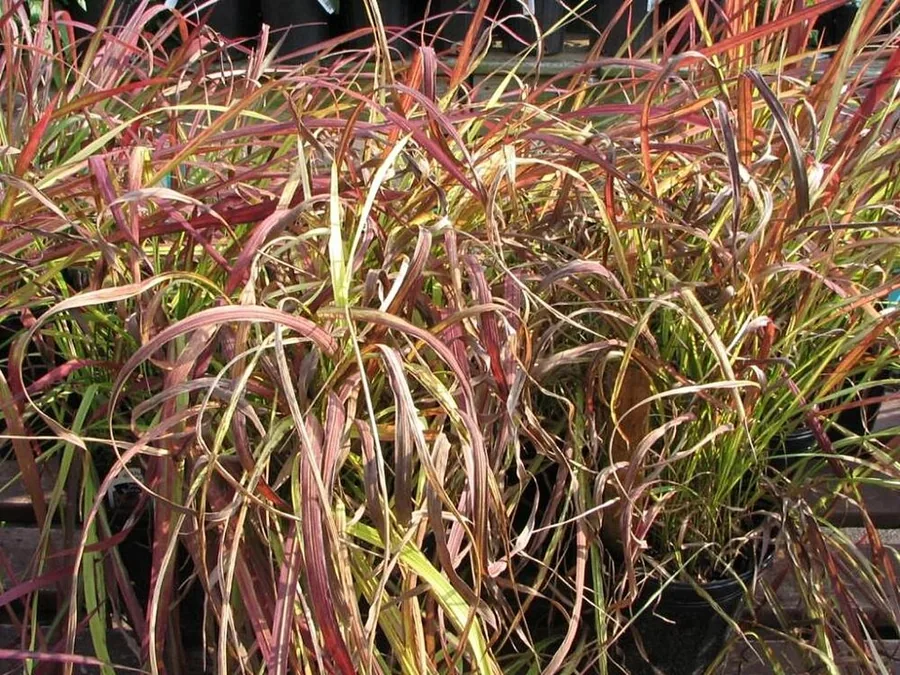
Japanese blood grass is grown for the color that runs through its leaves. Each blade is slim, upright, and stiff, green where it meets the crown and shading to a deep blood-red from the tip downward, so the upper half of the clump reads as pure red. When low sun strikes the leaves from behind, the thin blades turn translucent and seem lit from within, like red glass.
The blades gather into a compact tuft that rises only about knee-high, each leaf tapering to a fine point and standing more or less erect rather than arching over. The red deepens as the season runs on, and by autumn the whole clump can burn a rich crimson. It is a perennial that hardens off through winters as cold as -20°F (-29°C), dying back to bare crown before fresh red blades spear up again from the roots each spring.
One detail of its growth is worth watching closely. The red cultivar can revert to its wild green form, cogongrass, whose taller, all-green blades betray a federal noxious weed and one of the most destructive invasive grasses anywhere. The plant is harmless to touch and harmless to people and pets, but that green growth is the real concern, and the sections below cover it in full.
Care
The short version: full sun for the deepest red down the blades, soil kept evenly moist, and a cutback to the crown in late winter. Watch the clump for any green blades and pull them the moment they appear.
Light
Give it full sun and the red floods deepest down the blades. The leaves take a little shade, but past light shade the color drains toward green, which loses the very thing that makes the plant worth growing.
Water
Keep the soil evenly moist, watering roughly every 5 to 10 days as the weather dictates. A settled clump rides out a short dry spell, though even moisture keeps the blades their richest red and the tuft at its fullest.
Soil
It roots best in fertile, well drained loam that stays a little moist. A pH anywhere from 5.5 to 7.0 suits it, a span that takes in most ordinary garden ground.
Temperature
This is a tough, cold-hardy grass spanning a wide range, from a deep winter low of -20°F (-29°C) to summer highs near 100°F (38°C). The blades die back over winter and spear up red again from the roots each spring.
Humidity
Ordinary outdoor humidity is all the blades need, so there is no level to manage. The grass takes average garden air without complaint.
Feeding
A single feed of balanced general-purpose fertilizer in spring is plenty. There is no need to keep feeding through the season, since the clump thickens at a steady, moderate pace on its own.
Pruning
Cut the whole clump back to the crown in late winter, before new blades emerge. The one job to stay on top of is pulling any all-green blades the instant they show, since they mark a reversion to the invasive form.
Repotting
In a container, divide and refresh the clump every 2 to 3 years, or sooner if the roots fill the pot or the center of the tuft dies out. Splitting it keeps the blades vigorous and the red strong.
Size & spacing
The tuft of blades stands about 12 to 18 inches (30 to 46 cm) tall and spreads 12 to 24 inches (30 to 60 cm) wide. Give each plant that much room so the mound of red blades can fill out without crowding.
When to plant
Set Japanese blood grass out in spring once the last frost has passed, and the fine red blades knit into a clump over the first growing season. It rarely flowers in cultivation, so there is no plume or seedhead to wait on. Cut the clump back to the crown in late winter, and fresh red-tipped blades spear up as the weather warms.
Northern hemisphere
Southern hemisphere
Typical months for a temperate climate: start earlier in warm zones, later where spring frosts linger.
- Plant: spring after last frost
- Harvest: rarely flowers in cultivation
Hardiness
USDA hardiness zones: 5–9
Temperature: down to -29°C
Troubleshooting
Most of what shows in this grass is written in its blades: either the red draining toward a flat green, or, more seriously, taller green blades rising as the plant reverts to its invasive parent. Learn to read one from the other, because a pale clump is a quick fix and a green-blading one needs fast action. Match what the leaves show below and respond while it still matters.
Bright green blades thrusting through crimson foliage
Taller, wholly green blades rising among the red ones mark the plant reverting to cogongrass, the wild green form of the species and one of the worst invasive grasses anywhere. Dig out each green shoot the moment it shows, following the pale creeping rhizomes below and lifting them too, then bag the material and bin it. Keep it clear of the compost, and revisit the spot often, since the green growth spreads fast through the soil.
Fix:
- Dig out the green-reverting shoots immediately, including rhizomes
- Bag and destroy all removed material; do not compost
- Monitor the area repeatedly for regrowth
Prohibited or noxious-weed listed near you
The species is a federal noxious weed, so selling it or moving it across state lines is illegal, and many states ban even the ornamental red form. In its green cogongrass shape it packs into dense, fire-prone stands of stiff blades that crowd out native plants. Check your state's rules before planting or moving it, keep well clear of the southeastern US, and pull and destroy any plant growing where it is not allowed.
Fix:
- Verify local and state legality before planting or moving the plant
- Do not plant in or near the southeastern US
- Remove and destroy plants where prohibited
Washed-out color instead of deep red
Blades that look pale and washed-out rather than deep red almost always want more sun. In full sun the tips flood with the deepest blood-red, while a clump left in heavy shade holds a flat, dull green. A brighter, sunnier position and evenly moist soil draw the rich red back down the blades.
Fix:
- Relocate to a site with full sun for best red color
- Ensure soil stays evenly moist
Toxicity
The blades are safe to touch and safe to be near: Japanese blood grass is not poisonous to people or pets, and the ASPCA does not list it among toxic plants. A curious cat or dog that chews a leaf might bring up a little grass, and that is all. The real concern is not poison in the foliage but how easily those red blades can give way to invasive green ones, so read the section above on reversion and state law.
Safe for
People · Cats · Dogs · Horses · Rabbits · Livestock · Birds
Cats None
Cats are safe around the blades. A cat that chews on the slim leaves might bring up a little grass, which is the usual reaction to any plant and not poisoning.
Dogs None
Dogs face nothing toxic in the foliage. A mouthful of the blades causes mild, passing stomach upset at most.
Horses None
Horses are unharmed by the blades, which carry none of the toxins found in many ornamentals.
Rabbits None
Rabbits can nibble the narrow leaves without harm, since no part of the plant is toxic to them.
Livestock None
Grazing cattle, sheep, or goats find nothing poisonous in the slender blades.
Birds None
Birds come to no harm, with nothing in the leaves or seed to poison them.
People None
The blades are safe to handle and safe to have around children. The grass is not grown to eat, and the only thing to watch is pollen for anyone prone to hay fever.
Not chemically poisonous; pets that nibble grass may vomit or have mild stomach upset, and grass pollen can affect allergy-prone individuals. The real risk with this plant is invasiveness and legality, not toxicity.
Varieties
Two forms are worth knowing, and the color of the blades tells them apart at a glance.
Red Baron
This is the standard ornamental form, its narrow upright blades staining blood-red from the tips downward and turning translucent and fiery when low sun shines through them from behind.
Imperata cylindrica (species, cogongrass)
The wholly green wild form is a federal noxious weed and one of the worst invasive grasses on earth, packing into dense fire-prone stands of stiff blades, and the red cultivar can slip back into it.
How to propagate
This grass is multiplied one way, by pulling the dense clump of roots and blades apart, and the job is easy as long as you watch the new leaves for any green-reverting growth.
DivisionEasy
Spring · One growing season
Splitting the clump in spring is the only way to multiply this grass, since the cultivar rarely sets viable seed. Lift an established clump and pull the dense root mass apart into sections, then replant, and each piece settles in over a single growing season. Throw away any division whose blades come up green rather than red, since that green growth is the reverting invasive form.
Myths
The blood-red grass stands wholly safe and free of any bother.
The red form is genuinely non-toxic to pets, so that much is true. But the same blades can give way to taller green ones as it reverts to the aggressive green cogongrass, the species itself is a federal noxious weed, and its sale is banned or restricted in many states. The real danger is invasiveness and legality, not poison.