Ornamental · Asparagaceae
Hosta
Hosta
Give it shade, steady moisture, and rich soil, and the hosta spreads a low mound of broad, ribbed leaves in cool green and blue.
Partial shade
Every 3–7 days
USDA 3–9
0–3 ft · 0.1–0.9 m
Overview
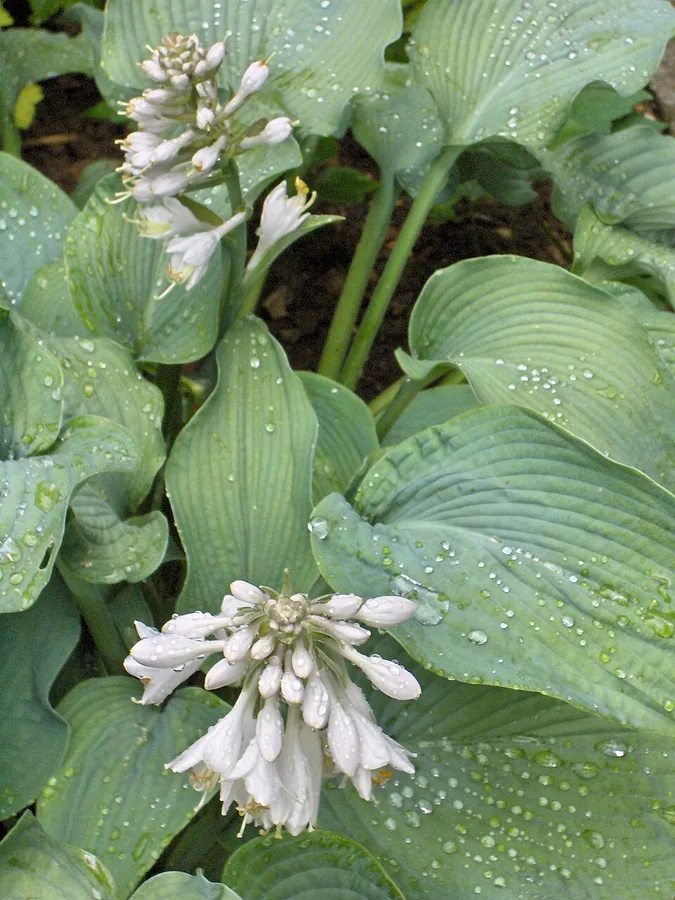
Hostas are grown for the leaf itself, a broad, sculptural blade that outshines the flower. Each spring they break the soil as tight, pointed spears, then unroll into overlapping mounds of foliage in deep greens, dusty blues, warm golds, and blades rimmed in crisp white. As long-lived perennials, they hold that leafy weight across a wide stretch of the country and ask for little once rooted.
The scale of the leaf runs from tiny to sweeping. A miniature carries little blades on a plant just 4 inches (10 cm) tall, while a giant unfurls broad, ribbed leaves across a mound 4 feet (122 cm) wide, some heart-shaped, some long and pointed, many stamped with deep parallel veins. Tall summer scapes lift pale, sometimes fragrant flowers above the foliage, yet the eye keeps returning to the bold, layered leaves and their quilted, colored surfaces.
Behind that lush look sits one plain need: shade and steady moisture. Set in rich, damp soil out of harsh afternoon sun, the leaves stay firm, plump, and richly colored for years. Two things mar them, the slugs that rasp ragged holes through the blades and a crown that turns soft and rots when the soil stays soggy.
Care
The short version: filtered or dappled shade, rich soil kept evenly moist with about an inch of water a week, and a mulch to hold that moisture in the ground while staying clear of the crown.
Light
Hostas hold their color in filtered or dappled shade rather than open sun or deep dark. The gold and yellow types warm to a richer tone under a little morning sun, while blue-leaved kinds keep their waxy, powder-blue bloom only in the deepest shade, where it does not scorch away.
Water
Give the leaves about an inch of water a week, deep and even, so the soil stays moist but never soggy and the blades stay firm rather than limp. A 2 to 4 inch (5 to 10 cm) mulch layer holds that moisture in the ground and carries the plant through dry spells.
Soil
Root them in rich, well-drained soil dark with organic matter, the kind that feeds their thirst for moisture and nutrients. A pH from 6.0 to 7.5 suits them, so most garden ground serves once compost is worked in.
Humidity
The open outdoor air carries all the moisture the leaves need, so no figure applies. What tells is airflow moving through the crowded clumps, which dries the broad blades and holds off the pests and rots that settle into stale, damp corners.
Feeding
A balanced garden fertilizer in spring, as the pointed leaves push out of the crown, feeds most hostas, and only where a soil test shows a need. Feeding stops by late July so the growth firms up and holds its winter hardiness.
Pruning
The spent flower scapes are cut away once the pale blooms brown, and yellowed leaves are trimmed off in late fall or early spring. Clearing that limp, dead foliage also strips out the damp cover slugs shelter under.
Size & spacing
Grown plants stand 4 to 36 inches (10 to 91 cm) tall and spread their leaves 6 to 48 inches (15 to 122 cm) wide by type. Spacing matched to each variety's eventual width lets the blades overlap into a full mound without crushing against a neighbor.
When to plant
Hostas are hardy perennials that push up fresh each year from the same crown, so timing is about planting rather than a harvest. New plants go in during spring once the soil warms and the pointed growing tips break through, or in early fall, and the tall flower scapes climb above the leaves through summer.
Northern hemisphere
Southern hemisphere
Typical months for a temperate climate: start earlier in warm zones, later where spring frosts linger.
- Sow: Seed is not recommended as cultivars do not come true; not typically started indoors
- Plant: Spring after the soil warms and growing tips emerge, or early fall
- Harvest: Flowers in summer on tall scapes above the foliage
Hardiness
USDA hardiness zones: 3–9
Temperature: down to -40°C
Troubleshooting
Nearly every hosta problem writes itself onto the leaf, whether it is a chewed hole, a scorched patch, or a streak of dead tissue, while a few reach the soft crown below. Match the mark on the blade to the notes here and step in early, before a small blemish spreads across the whole plant.
Wilted, yellowing leaves over a soft, collapsing crown
Leaves that droop and yellow above a soft, darkened crown reveal crown and root rot, the base gone mushy where water pooled or mulch lay piled against the stem. The rotted tissue turns slick and discolored to the touch. Raking the heaped mulch clear in spring and opening up the drainage dry the crown out, but tissue that has already softened will not knit back, so a collapsing plant is dug out and destroyed.
Fix:
- Remove excess mulch from around the crown in spring
- Improve drainage
- Remove and destroy badly affected plants
Brown wedges pinned between the leaf veins
Dark brown wedges of dead tissue, each one pinned tight between two raised veins, are the print of foliar nematodes traveling through a film of water on the wet leaf. The browning cannot cross the veins, so it dries into sharp, angular bands that stripe the blade by mid to late season. Pulling off and destroying the marked leaves clears the worst of it, watering low at the base keeps the pest off the foliage, and lifting out any heavily banded plant stops the spread.
Fix:
- Remove and destroy infested leaves
- Avoid overhead watering that spreads nematodes
- Remove and discard severely infested plants
Ragged holes torn low in the leaves with slime trails
Torn, ragged holes near the base of the leaves, edged with a dried silvery smear, are the handiwork of slugs and snails rasping away after dark. The trails catch the light as thin, glossy ribbons across the leaf surface. Lifting them off by hand at night into soapy water clears them, traps emptied each morning gather more, and a copper ring set around the crown turns them back. Drawing the mulch away from the crown strips out the cool, damp gap they press into by day.
Fix:
- Hand-pick at night and drown in soapy water
- Set traps and remove slugs each morning
- Use copper barriers to deter slugs
- Pull mulch back from the crown
Brown, scorched patches burned into the leaf surface
Dry brown patches and crisped tips are sunscald, where the leaf surface has been burned by more direct sun or less water than the tissue can hold. The scorch settles on the broad faces that catch the sun through hot, dry weather, browning first at the tip and edge. Moving the plant into deeper shade spares the leaves, extra water in the heat keeps them plump, and mulch holds the soil moist. The waxy blue-leaved types burn most easily and want the deepest shade.
Fix:
- Move or transplant the hosta to a shadier location
- Increase watering during heat
- Mulch to retain soil moisture
Toxicity
Hostas are toxic to animals. The fleshy leaves, stems, and roots all hold a natural compound called saponins, and the ASPCA lists the plant as poisonous to cats, dogs, and horses. Handling those leaves does people no harm, so the sensible care is to keep the foliage and trimmings well away from pets and grazing animals.
Toxic to
Cats · Dogs · Horses · Rabbits · Livestock · Birds
Safe for
People
Cats Mild
A cat that tears into a leaf drools first, then vomits, with loose stools and a flat, listless slump settling over it.
Dogs Mild
A dog that chews the thick foliage ends up with a churning stomach, so vomiting and diarrhea follow, along with a clear drop in its usual spark.
Horses Mild
The saponins turn a grazing horse's gut sour, bringing stomach upset, loose droppings, and a dull, heavy-headed manner.
Rabbits Toxic
The same saponins run through the leaves and make them a poor bite for rabbits, unsettling the gut and leaving them limp and sluggish, so the plant stays out of reach.
Livestock Toxic
Goats, sheep, and cattle that browse the broad leaves swallow the saponins and can slide into digestive distress, so a fence keeps them off the plantings.
Birds Caution
Little suggests birds peck at hosta, but the saponins soak through every part, so a curious pet bird is best kept from pulling at the leaves.
People Low
No part of the fleshy plant is eaten, and the saponins make chewing it a poor idea, though bare hands come to no harm on the leaves. The real caution is keeping pets and grazing animals off the foliage.
No special skin handling precautions are required for people, but keep plants and trimmings away from pets and grazing animals.
Helpline numbers

United States
ASPCA Animal Poison Control: (888) 426-4435 (fee applies)

United Kingdom
Animal PoisonLine: 01202 509000 (fee applies)

Australia
Animal Poisons Helpline: 1300 869 738
Varieties
Hostas run into the thousands, and the differences show first in the leaf, its size, its color, and the band around its edge. A few classics stand out for exactly those traits.
Sum and Substance
One of the largest hostas grown, its enormous leaves glow a chartreuse-gold and stand up to more sun than most.
Halcyon
Its leaves are heart-shaped and washed in a soft blue-gray that stays truest in deeper shade.
Blue Mouse Ears
A miniature whose thick, rounded blue-green leaves are so cupped and plump they really look like small mouse ears.
Patriot
Its dark green leaves are ringed by wide, crisp white margins that draw a bright band around every blade.
How to propagate
Hostas multiply from a single crown, and one method proves it every time: lift a mature clump and split its knot of eyes and roots into new plants.
DivisionEasy
Early spring as the eyes or growing tips emerge (can also divide in early fall) · One to two growing seasons to fill back in
Fresh hostas come from splitting a clump, and the moment shows in early spring as the pointed eyes push up through the soil, with early fall as a second chance. The whole clump is lifted and cut into sections, each carrying a few of those growing tips and a fist of pale roots, then set back at its original depth and watered in. Over one to two growing seasons the divisions knit their leaves back into full, overlapping mounds.
Myths
Hostas need full shade and will not grow where any sun reaches them.
Most hostas hold their best color in filtered or dappled shade, not deep dark. Gold and yellow types drink up 2 to 3 hours of morning sun to warm their leaves to full color, and only the waxy blue-leaved kinds truly want the deepest shade.
Hostas are completely harmless to pets.
Every part of a hosta, from the fleshy leaf to the root, is laced with saponins, and the ASPCA lists it as toxic to cats, dogs, and horses. A pet that swallows a mouthful can end up vomiting, with diarrhea and a low, listless mood.