Ornamental · Nyctaginaceae
Four O'clock
Mirabilis jalapa
Trumpet-shaped flowers that crowd a bushy plant in many shifting colors, opening at dusk and gone by morning.
Full sun
Every 3–7 days
50–86°F · 10–30°C
60–80 days
Overview
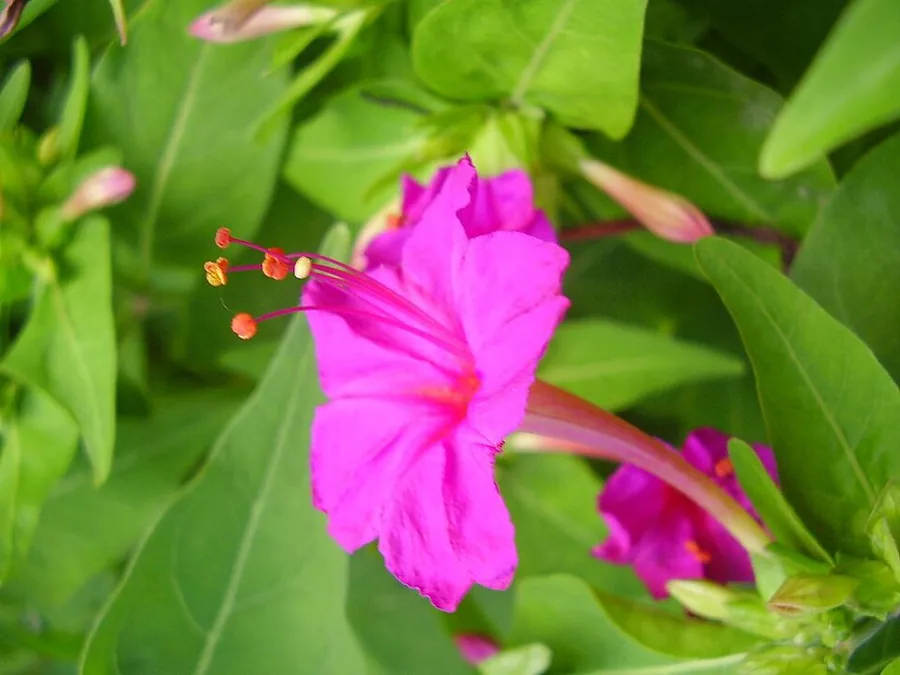
Four o'clock opens at the close of the day. The trumpet-shaped flowers stay furled through the heat and flare open in the late afternoon, each bloom a slim tube widening to a flat face, and the evening air around them turns sweet enough to pull in moths and hummingbirds. The colors are the surprise, since a single bushy plant can carry blooms in several colors at once, some of them striped or splashed across the same flower.
The plant builds into a rounded, leafy bush that reaches 1.5 to 4 feet (46 to 122 cm) tall, its many stems branching and crowding together. Below ground sit fleshy, tuberous roots, thick storage organs that keep the plant alive once hard frost blackens the top. Lift those swollen roots before winter and the same plant grows again year after year.
For all that leafy bulk, the stems stay soft and the plant pours its energy into seed. It drops a heavy load of dark seed and reseeds itself freely, scattering offspring around the parent. Those seeds and the roots are toxic, so it is worth knowing where the plant sheds them before it goes in near pets or children.
Care
The short version: four o'clock takes full sun, steady moisture in well-drained soil, and a light monthly feed. A pinch when young thickens the branching stems, and clearing the spent flowers before the seeds drop keeps the volunteers down.
Light
In full sun the plant holds a tight, rounded shape and packs in the flowers. Partial shade still draws blooms, but the lower light pulls the stems long and thin until they lean and flop under their own leafy weight.
Water
The soil should stay evenly moist through the season, more so in the heat of summer. Four o'clock favors dark, humus-rich ground that drains freely and shrugs off a passing wet spell, but its roots will not sit in waterlogged soil for long.
Soil
It roots best in well-drained, humus-rich loam, the kind of crumbly dark earth it likes, though it takes to nearly any soil. A pH of 6.0 to 7.5 keeps it growing, so most garden beds suit it as they are.
Temperature
Warmth drives it, roughly 50°F to 86°F (10°C to 30°C), and the bush fills out fast once the heat sets in. Frost turns the top growth limp and dark, which is why cool regions grow it for a single season.
Humidity
Plain outdoor air suits it, so there is no figure to chase. Spacing and airflow count for more, since a crowded clump of stems flops and traps damp against the bunched foliage.
Feeding
A balanced general-purpose fertilizer about once a month through the season keeps fresh buds forming. Heavy feeding, nitrogen above all, pushes out pale, soft, overlong stems that bend and snap under the leaves they carry.
Pruning
Little cutting is needed, but a pinch at the tips when young forces the stems to branch into a denser, more solid bush, and shortening leggy stems firms up the shape. Pulling spent plants before the seeds shed is what keeps the self-sowing down.
Size & spacing
A mature plant stands 1.5 to 4 feet (46 to 122 cm) tall and bushes out 12 to 24 inches (30 to 61 cm) across. Set them that far apart so the branching, multi-stemmed framework has room and air slips between the leaves.
When to plant
Four o'clock runs on heat and folds at frost. The seeds start indoors in late winter or go into warm ground after the last frost. From midsummer on, the flowers keep coming until the first hard cold of fall blackens the top growth.
Northern hemisphere
Southern hemisphere
Typical months for a temperate climate: start earlier in warm zones, later where spring frosts linger.
- Sow: 6 to 8 weeks before the last spring frost; soak seeds overnight to speed germination
- Plant: After all danger of frost has passed, about the same time as tomatoes
- Harvest: Summer through fall; flowers open in late afternoon or early evening and wilt by the following morning
Hardiness
USDA hardiness zones: 9–11
Temperature: down to -7°C
Troubleshooting
Four o'clock is forgiving, and the things that go wrong show on the plant itself rather than as pests or disease. Three are common. The soft stems bow and break, fresh seedlings crowd in around the parent, and the seeds are slow to crack open.
Seeds that sit and refuse to sprout
The seed wears a hard outer coat that keeps water from soaking in quickly, and cold soil stretches the wait even longer. Soaking the seeds overnight or nicking through that coat lets moisture reach the embryo sooner. Set about 1/4 inch deep in soil held near 68°F to 70°F (20°C to 21°C), the seeds break the surface in 5 to 7 days.
Fix:
- Soak seeds in water overnight or nick the seed coat before sowing
- Sow 1/4 inch deep and keep soil at about 68 to 70°F
Weak, brittle stems that flop over and snap
Four o'clock throws up soft, multi-branched stems faster than they can stiffen, so the weak, brittle stems sag under their own crowded growth. Extra nitrogen or a tight planting makes them softer still, until they lean over and break clean near the base. Pinching young plants forces a denser, sturdier bush, room around each one eases the load, and a stake holds the tallest stems upright.
Fix:
- Provide stakes or grow among supporting companions
- Pinch young plants to promote a bushier, sturdier habit
- Avoid over-fertilizing with high-nitrogen feeds
Volunteer seedlings popping up everywhere the next year
A single plant sheds a heavy load of seed onto the soil, and that vigorous self-seeding rings the parent with a fresh crowd of seedlings the next season. Snapping off the spent flowers before the seed forms stops it, and the small seedlings tug free easily while young. In colder spots the fat tuberous roots can be dug and stored over winter, which sidesteps the reseeding.
Fix:
- Deadhead spent flowers before seeds form
- Remove volunteer seedlings while young
- Dig and store tuberous roots over winter rather than allowing reseeding
Toxicity
Behind the pretty flowers sits real toxicity. The seeds and roots are toxic to cats, dogs, horses, rabbits, livestock, and birds, and they are unsafe for people too, causing stomach pain, nausea, vomiting, and diarrhea if eaten. The hard little seeds hold the most risk, and the fleshy roots can leave sensitive skin red and irritated, so plant it where pets and small children cannot reach the seedpods.
Toxic to
Cats · Dogs · Horses · Rabbits · Livestock · Birds · People
Cats Toxic
A cat that chews the seeds, roots, or foliage drools, turns away from its food, and vomits. The hard little seeds are the part most likely to cause trouble, so they belong out of reach.
Dogs Toxic
Dogs show much the same picture, drooling, with an upset stomach and diarrhea after eating any part of the plant. The diggers that unearth and gnaw the fleshy roots are most at risk.
Horses Toxic
In horses the alkaloids packed into the seeds and roots can leave the animal drooling and colicky, with diarrhea soon after. Keep the plant well clear of paddocks and turnout.
Rabbits Toxic
Rabbits should never nibble four o'clock, since the same toxins bring on a sore, churning gut. Trimmings do not belong in a hutch or run.
Livestock Toxic
Grazing animals such as goats, sheep, and cattle can take on stomach pain and diarrhea if they reach the leaves or root up the tubers. Fence the plant off from pasture.
Birds Toxic
For birds the seeds are the most dangerous part, and a single pecked seed or chewed leaf can bring vomiting and lasting gut upset. Treat the whole plant as off-limits.
People Caution
For people the seeds and roots are toxic if eaten and cause stomach pain, nausea, vomiting, and diarrhea, so keep the seeds away from small children who might mistake one for a treat. Handling the fleshy roots can also leave sensitive skin red and irritated, so wear gloves when you dig them.
Keep seeds and roots away from pets and children; wear gloves if you are sensitive when digging or handling tuberous roots.
Helpline numbers

United States
ASPCA Animal Poison Control: (888) 426-4435 (fee applies)
Poison Control: (800) 222-1222



Canada
Poison Centres: 1-844-764-7669
Varieties
Most four o'clocks are sold by color alone, but a few named selections stand apart for the look of their flowers or leaves.
'Broken Colors'
Each flower opens striped and splashed with contrasting colors, so one plant shows a spread of blooms where no two faces look quite alike.
'Limelight'
Sharp chartreuse leaves throw the neon pink flowers into high contrast, a color clash bright enough to read from across the garden.
'Marbles' series
A mixed strain whose bicolor blooms come streaked and splotched, the color pairings shifting from flower to flower across the planting.
How to propagate
Four o'clock multiplies with little trouble. Seed gives a full plant in the first summer, and the fleshy roots can be lifted before winter to bring a particular plant back.
SeedEasy
Sow indoors 6 to 8 weeks before last frost or direct sow outdoors after frost danger passes · Germinates in about 5 to 7 days at 68 to 70°F; blooms the first season
Seed is the easy route and fills out a full plant the first summer. Soak the hard-coated seeds overnight or nick through the coat, set them about 1/4 inch deep, and space the seedlings 12 to 24 inches apart. Start them indoors 6 to 8 weeks before the last frost, or sow straight into warm ground once frost has passed, and the shoots push up in about 5 to 7 days at 68°F to 70°F (20°C to 21°C).
DivisionModerate
Lift and divide tuberous roots in fall for winter storage, replanting in spring after frost · Stored tubers resprout in spring once replanted in warm soil
Where winters turn cold, a chosen plant lives on through its swollen roots, much as a dahlia does. Dig the fleshy, tuberous roots in fall before the first frost, shake the soil off the knobby clumps, and keep them somewhere cool, dry, and frost-free. Replant them in spring once the soil warms and new shoots rise for another season.
Myths
Four o'clock is edible or harmless because it is such a common garden flower.
A familiar bloom is not a harmless one. The seeds and roots are toxic if eaten and bring on stomach pain, nausea, vomiting, and diarrhea, and the fleshy roots can leave sensitive skin red and irritated. Keep the hard seeds away from children and pets, and wear gloves when you handle the roots.
The flowers always open right at four o'clock.
The hour on a clock has nothing to do with it. The blooms open in the late afternoon or early evening, cued by fading light rather than a fixed hour, then close limp and spent by the next morning. On a cool, overcast day the dimmer light can coax them open sooner.