Vegetable · Asteraceae
Cardoon
Cynara cardunculus
Give it a long season, rich soil, and a few weeks of blanching, and the cardoon turns its spiny stalks pale and tender as no market stalk ever is.
Full sun
Every 3–7 days
120–150 days
USDA 7–10
Overview
Cardoon is a giant silver thistle in the daisy family, the same species as the globe artichoke but grown for a different part. Rather than the tight green buds, the prize is the blanched leaf stalks and midribs, the thick pale ribs that run up the center of each leaf and cook tender with a faint artichoke taste. The plant carries the Mediterranean in its bones, a kitchen-garden fixture there for centuries.
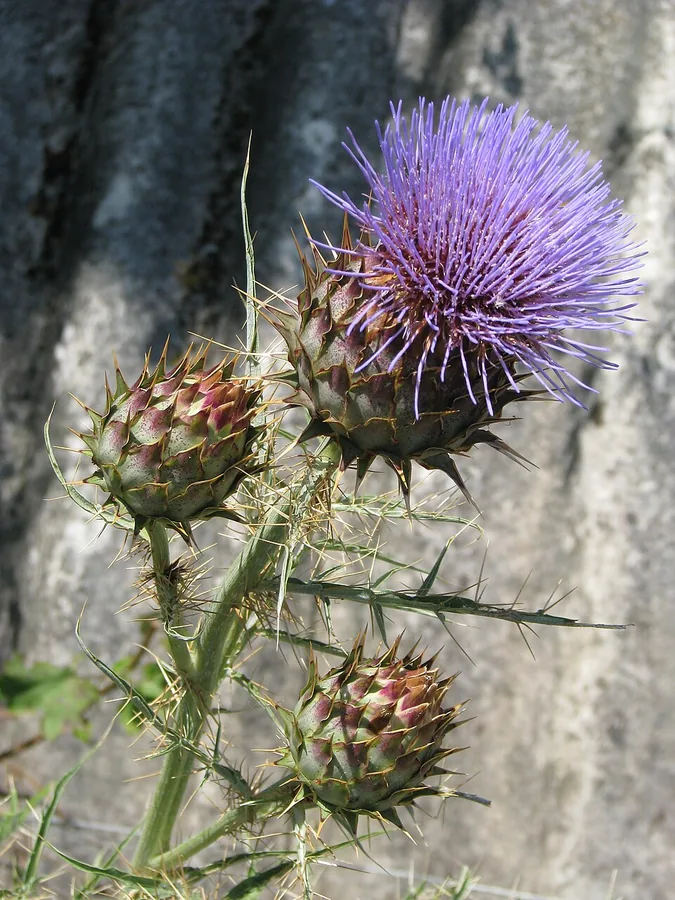
Up close it is a striking thing. A mature cardoon climbs 4 to nearly 4 to 6.5 feet (119 to 201 cm) and unfurls long, arching leaves so deeply cut they look almost shredded, their surfaces washed a dusty silver-green over stalks that bristle with spines. Even before a single stalk is cut, the silvered, jagged foliage on its prickly frame holds the eye, and full sun and steady feeding push it up fast.
The catch lives in the stalks themselves. Cardoon needs 120 to 150 days to build those heavy ribs, and left in the light they stay green, fibrous, and bitter. Wrapped away from the sun for a few weeks, the same stalks pale and soften into the tender, ivory ribs that make the plant worth growing, and skipping that step leaves them tough and woody instead.
Care
The short version: full sun, deep and steady moisture, and rich, well-drained soil, with heavy feeding through the season and a few weeks of blanching that turn the green stalks pale and tender before they are cut.
Light
Cardoon wants full sun, a spot that bathes the silvered leaves in direct light most of the day, which deepens that dusty sheen. A little partial shade is tolerated, but the stalks come in thinner and paler-green and the whole plant grows less vigorously without strong light.
Water
Give it deep, steady moisture through active growth, since dry spells leave the thick stalks stringy and tough inside. Watering every 3 to 7 days suits it, more in heat, but the ground should never stay soggy, because waterlogged soil rots the crown at the base.
Soil
Plant it in deep, fertile, well-drained loam worked full of compost or aged manure. A pH between 6.0 and 7.0 suits it, and loose, rich ground lets the heavy roots run and feeds the broad, silver-leaved top growth.
Temperature
Cardoon grows across a wide band, roughly 32°F to 86°F (0°C to 30°C), and takes real heat without scorching its leaves. A hard frost, though, blackens and collapses the stalks, which is why the crop comes off before deep cold sets in.
Humidity
Average outdoor humidity near 40% to 70% is all it asks. Airflow matters more than the number, since crowded, damp leaves draw aphids onto the undersides and a gray powdery mildew across the silver surfaces.
Feeding
This is a heavy feeder, and the bulk of those thick stalks depends on it. Work plenty of compost or aged manure into the bed at planting, then give a balanced fertilizer about once a month through spring and summer to keep the fast, broad-leaved growth coming.
Pruning
Strip off the old, damaged, or yellowing outer leaves as the season runs, since they fade and droop against the fresh silver. About 3 to 4 weeks before harvest, gather the stalks and blanch them under cardboard, paper, or soil, which turns the green ribs pale and tender and draws out the bitterness. Cut the flower stalks if you grow for stalks rather than the bloom.
Repotting
Cardoon is no container plant. It grows in the ground and is usually replanted from seed each year, so the only potting is shifting young seedlings into roomier cells before they head outside, keeping the fine roots from coiling.
Size & spacing
Plan for a big, spreading plant, 4 to nearly 4 to 6.5 feet (119 to 201 cm) tall with arching leaves reaching 3 to 4 feet (90 to 120 cm) across. Give each one that much room so air moves through the silvered foliage and disease stays down.
When to plant
Cardoon wants a long, warm, frost-free run to fill out its silvered frame and heavy stalks. The seeds start indoors in late winter, the plants go out once the cold has passed, then the stalks are wrapped and blanched for 3 to 4 weeks and harvested in fall before a hard frost blackens them.
Northern hemisphere
Southern hemisphere
Typical months for a temperate climate: start earlier in warm zones, later where spring frosts linger.
- Sow: 8-10 weeks before the last spring frost
- Plant: After danger of frost has passed in spring
- Harvest: Blanch stalks for about 3-4 weeks, then harvest leaf stalks/midribs in fall before hard frost
Hardiness
USDA hardiness zones: 7–10
Temperature: down to -18°C
Troubleshooting
Most cardoon trouble writes itself on the stalks or the crown, where a change in color or texture gives it away early. Read what the plant is showing and you can step in before it spreads. Match the look below, then act while it still helps.
The plant wilts and collapses with a soft, dark crown
When the crown and roots turn brown, soft, and slimy with a sour smell after a wet spell, the silvered top wilts and folds from crown or root rot in soggy ground. A plant gone this dark and mushy cannot be saved, so lift and destroy it. Fix the drainage and ease off the watering before replanting, since water pooling around the crown is what rots it from the base up.
Fix:
- Remove and destroy severely affected plants
- Improve drainage and reduce watering frequency
Tough, stringy, or hollow leaf stalks
Left unblanched, the stalks stay green and run with tough strings, turning bitter the longer they stand past their prime, and uneven watering only thickens the woody fibers inside. Tie and wrap them 3 to 4 weeks before cutting, hold the soil evenly moist through that stretch, and harvest as soon as they soften and pale. A stalk sliced crosswise tells the tale, since an overmature one is hollow at the core.
Fix:
- Blanch stalks for 3-4 weeks before harvest by tying and wrapping them
- Harvest at proper maturity before stalks toughen
- Maintain even soil moisture during stalk development
Sticky residue and curled new growth on the leaves
Tips that curl and a sticky, shining film mark aphids clustered in soft green colonies on the undersides and growing points, while a white, dusty bloom spreading over the silver in close, humid air is powdery mildew. A hard jet of water knocks the aphids loose, with insecticidal soap held back for stubborn ones. Opening the planting for airflow and pulling the worst coated leaves clears the rest.
Fix:
- Dislodge aphids with a strong spray of water
- Apply insecticidal soap if infestation is heavy
- Improve air circulation and remove badly mildewed leaves
Toxicity
On safety the verdict is easy: cardoon is an edible vegetable with no poison for pets, livestock, or people. The one real hazard is right there on the surface, since the leaves and stalks bristle with sharp spines and prickles that catch bare skin. Wear gloves when you handle or harvest it.
Safe for
People · Cats · Dogs · Horses · Rabbits · Livestock · Birds
Cats None
There's no poisoning risk here, since cardoon isn't on the ASPCA toxic list. The only thing to watch is the sharp spines along the leaves, which can prick a curious nose.
Dogs None
A dog can chew the foliage without harm, because nothing in the plant is poisonous. The bristling, prickly leaf edges usually turn them away long before that.
Horses Safe
Cardoon poses no toxic threat to horses. Most leave the spiny silver clump alone on their own.
Rabbits Safe
The plant is safe for rabbits to nibble, with no toxic compounds to worry about. The stiff, bristly leaves are the only real deterrent.
Livestock Safe
Cattle, goats, and sheep can graze it without poisoning. The dense, spine-armed stalks tend to keep them away rather than any toxin.
Birds Safe
Birds face no toxic danger from cardoon. Backyard flocks can peck at it freely.
People Safe
The blanched, pale stalks and midribs are a traditional vegetable, cooked and eaten with no harm. Just wear gloves at harvest, because the spines along the ribs can scratch.
The leaves and stalks bear sharp spines and prickles that can scratch or prick skin; wear gloves when handling and harvesting. This is a physical hazard, not a poisoning risk.
Varieties
Most cardoons sold are Italian heirlooms bred for thick, tender stalks, and each shows its own cast of color and form. These are the ones worth knowing by name.
Gigante di Romagna
A large Italian heirloom carrying thick, fleshy leaf stalks that swell broad and pale once blanched.
Bianco Avorio
An ivory-white stalk type whose midribs blanch to a smooth, tender, mild paleness.
Gobbo di Nizza Monferrato
The Piedmontese 'hunchback' cardoon, whose stalks bow and curve down into the soil, blanching themselves pale as they go.
How to propagate
Cardoon is usually grown fresh from seed each year, raised from seedlings into its full silvered frame. In mild climates an established crown can also be split to copy a plant you already like.
SeedModerate
Sow indoors 8-10 weeks before the last frost, then transplant out after frost · 120-150 days to reach harvestable maturity
Seed is the usual route into that silvered frame. Sow it indoors 8 to 10 weeks before the last frost and set the seedlings out once the cold has passed, since the plant needs a long 120 to 150 days to build its heavy stalks before harvest.
DivisionModerate
Spring, lifting offsets/suckers from the crown of an established plant · One growing season to establish
Where winters stay mild, offsets can be lifted from the crown of an established plant in spring and replanted. This copies a plant you already like and gives the new crown a full growing season to throw up its first arching, spiny leaves.
Myths
Cardoon and the globe artichoke are entirely different species.
They are two forms of one plant, Cynara cardunculus. The cardoon is grown for its blanched leaf stalks, the pale thick ribs, while the globe artichoke is the same species grown for the tight, scaly flower buds it forms before bloom.
Cardoon is a harmless garden ornamental everywhere.
In California and parts of Australia and Argentina it has escaped gardens and become an invasive noxious weed, its spiny silver clumps massing into dense stands across rangeland. Check whether it's a problem in your area before you plant it.