Shrub · Scrophulariaceae
Butterfly Bush
Buddleja davidii
Give it full sun and a hard spring cut, and the butterfly bush hangs heavy with long, tapering flower spikes all summer.
Full sun
Every 7–14 days
USDA 5–9
6–12 ft · 1.8–3.7 m
Overview
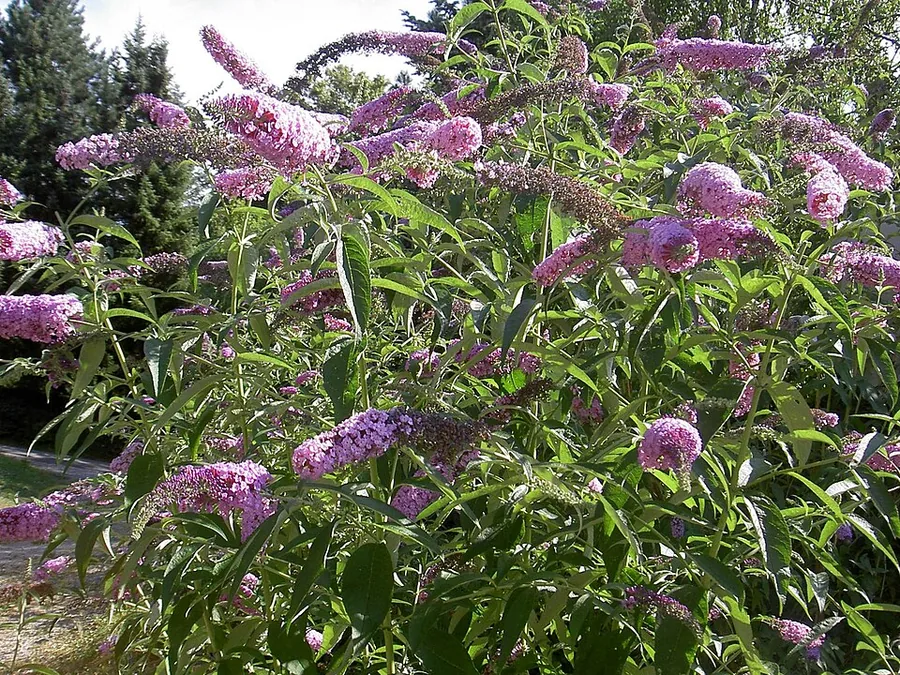
Few shrubs draw pollinators the way a butterfly bush in bloom does. The slender flower spikes taper to a point and arch slightly at the tip, opening from summer into early fall and crawling with butterflies, bees, and hummingbirds after the nectar. It grows fast in full sun, shrugs off dry spells once the roots take hold, and asks little in return.
Up close this is a big, loose shrub with long, arching stems that bow outward under their own weight. Plants reach 6 to 12 feet (1.8 to 3.7 m) tall and can spread even wider, and every spike forms on the current season's growth. That habit is the key to growing it well: cut it back hard each spring and it answers with strong fresh shoots and the largest spikes.
The plant has a real fault worth knowing before the spade goes in. The common species seeds itself with abandon and has escaped gardens to become a regulated noxious weed in states like Oregon and Washington. You can still grow it well by picking a low-seed cultivar and clipping the spent spikes before they ever set seed.
Care
The short version: full sun and average, well-drained soil, a deep watering only now and then once it has rooted in, a hard cut back in late winter, and deadheading through summer to keep the spikes coming and the seed in check.
Light
Butterfly bush wants full sun, ideally 6 or more hours a day. It hangs on in part shade, but the result is thin: the stems stretch leggy and bare and set far fewer of the long flower spikes that pull the pollinators in.
Water
Water new plants regularly through the first season so the roots settle, then ease off. Once established it is drought tolerant and needs only a moderate soak every 7 to 14 days. Keep the soil on the dry side rather than soggy, since wet feet rot the roots.
Soil
It takes nearly any average, well-drained soil and tolerates a wide pH from 6.0 to 8.0. The one thing it won't forgive is poor drainage, so fork grit or compost into heavy clay before planting.
Temperature
This is a tough, cold-hardy shrub that handles roughly -20°F to 100°F (-29°C to 38°C) across zones 5 to 9. At the colder end the woody stems often die back to the ground each winter, then the plant resprouts from the base in spring.
Humidity
Ordinary outdoor air suits it, so there's no humidity target to hit. Good airflow does more good than any number, helping keep mites and leaf problems off the foliage.
Feeding
Go light. One feeding in spring is plenty, and too much fertilizer pushes leafy growth at the expense of spikes. In decent soil it often needs nothing at all.
Pruning
Because every spike opens on new wood, cut the stems back hard in late winter or early spring, to within about a foot of the ground, for the strongest growth and the biggest flowers. Then deadhead the spent spikes through summer to keep new ones coming and to stop the plant from seeding itself around.
Repotting
Butterfly bush is a large shrub and rarely stays potted for long. If you do grow one in a container, repot only when roots circle the pot, push out of the drainage holes, or water runs straight through, all signs it has outgrown its home.
Size & spacing
Give this shrub real room. Plants reach 6 to 12 feet (1.8 to 3.7 m) tall and spread 4 to 15 feet (1.2 to 4.5 m) wide on their arching stems, so set them well apart and clear of paths and smaller plants they would shade out.
When to plant
Butterfly bush follows a plain yearly rhythm. Set new plants out in spring once the frost has passed, cut established shrubs back hard before growth wakes, and the flower spikes carry from summer into early fall.
Northern hemisphere
Southern hemisphere
Typical months for a temperate climate: start earlier in warm zones, later where spring frosts linger.
- Sow: Late winter to early spring (8-10 weeks before last frost) if growing sterile-permitting seed; species seeding is discouraged where invasive.
- Plant: Spring after last frost
- Harvest: Summer through early fall (June to September)
Hardiness
USDA hardiness zones: 5–9
Temperature: down to -29°C
Troubleshooting
A healthy butterfly bush meets few real troubles, and most trace back to wet feet, drought stress, or a skipped spring pruning. Match the look of the leaves or stems below to the cause and act before it sets the plant back.
Limp growth and dieback in waterlogged ground
When the soil stays wet, root rot sets in below the surface and turns the roots dark and soft, so the stems above go limp and starved no matter how much you pour on. Open up the drainage first and back off the water, then fork in plenty of coarse grit if the bed runs to dense clay. On sandy coastal ground nematodes leave the same wilted look, and any plant hit that hard is best dug out and replaced.
Fix:
- Improve drainage and stop overwatering
- Plant in well-drained soil; amend heavy clay before planting
- Remove and replace severely affected plants in infested ground
Pinpricked, bronze-tinged leaves veiled in webbing
Those faint pale dots, the bronze cast, and that gauzy webbing across the leaf are the work of spider mites, which move in when the plant has gone hot, dry, and thirsty. Hit the foliage with a hard jet of water to knock the mites off the undersides, then keep the roots watered through the dry stretch. If a stubborn few cling on, coat the leaves with insecticidal soap or horticultural oil.
Fix:
- Spray foliage with a strong jet of water to dislodge mites
- Keep plants adequately watered to reduce drought stress
- Apply insecticidal soap or horticultural oil to affected foliage if needed
Scarce spikes atop long, bare stems
Long, naked stems carrying only a handful of spikes point to too little light or wood that has grown too old. Put it where it gets at least 6 hours of direct sun, then take it back hard in late winter or early spring, because every spike forms on new wood. Pinch off the browning, faded spikes through summer and fresh ones keep pushing up.
Fix:
- Move or site in full sun
- Cut back hard in late winter or early spring since it blooms on new wood
- Deadhead spent spikes to encourage continued bloom
Toxicity
Good news for a pet owner: the butterfly bush is not poisonous to cats, dogs, horses, or people, and it stays off the ASPCA toxic-plant lists. The catch isn't toxicity but spread, since the common species seeds out into the wild and ranks as a regulated weed in some states. The sap can irritate skin, so wear gloves when you prune.
Safe for
People · Cats · Dogs · Horses · Rabbits · Livestock · Birds
Cats Safe
Butterfly bush stays off the ASPCA toxic list, so a cat that bites into a leaf takes no harm from it. Down a large mouthful of any plant and a little drooling or a queasy stomach can follow, but it clears on its own.
Dogs Safe
A dog can chew the foliage with no ill effect, since the shrub carries no toxin that touches them. The lone concern is the ordinary one for any plant, a mild stomach upset if a dog bolts down a large amount.
Horses Safe
Horses face no reported toxicity from this plant. The woody, bitter stems hold little appeal, so they usually graze past it for softer growth.
Rabbits Safe
A rabbit that tastes a leaf comes to no harm, because the plant holds no poison for them. Keep any leafy treat to a small bite so it doesn't edge out the hay and pellets.
Livestock Safe
Cattle, goats, and sheep can browse beside a butterfly bush with no poisoning risk, and the tough, woody stems seldom draw them over to begin with.
Birds Safe
The plant carries no toxic danger for birds. Its nectar pulls in butterflies and hummingbirds, while the seed it sheds is the part that carries it out into the wild where it isn't wanted.
People Safe
No part of the butterfly bush is meaningfully toxic to people, and nothing on the plant is grown to eat. The sap can sting sensitive skin, so put gloves on before any heavy pruning.
No special toxicity handling required; wear gloves if pruning to avoid skin irritation from sap.
Varieties
Butterfly bush comes in many cultivars, and the ones worth seeking either carry a standout spike color or set so little seed that they stay put. These are a few to know by name.
Black Knight
A long-standing favorite, named for its flower spikes of so deep a purple they read as almost black.
Lo & Behold 'Blue Chip'
A dwarf, tightly built form that produces so little viable seed it satisfies Oregon's seedless butterfly bush rules.
Miss Molly
An interspecific hybrid bearing deep red-purple spikes, confirmed as non-davidii and therefore outside Oregon's noxious weed regulation.
How to propagate
Butterfly bush multiplies readily, both from cuttings you take on purpose and from seed you usually want to head off.
Stem cuttingsEasy
Softwood cuttings in spring to early summer; hardwood cuttings during dormancy in late fall through early spring · Softwood cuttings root in about 2-5 weeks
Cuttings are the sure way to copy a butterfly bush, and they hand you the exact cultivar you cut from. Take soft green stem tips in spring or early summer, or firm woody pieces while the plant is dormant from late fall into early spring. Dip the cut end in rooting hormone, hold the soil evenly moist, and softwood cuttings strike roots in about 2 to 5 weeks.
SeedEasy
Self-seeds readily in the garden · One growing season to a small plant
Left unchecked the species drops seed in every direction, and a single stray grows into a small plant inside one season. That very ease is the trouble, since the wild species is invasive and regulated in parts of the country. Don't sow the straight species where it ranks as a noxious weed, and deadhead so it can't seed itself into the wild.
Myths
Butterfly bush is always a harmless choice for the butterfly garden.
The nectar in those long spikes feeds adult butterflies, but the plant gives their caterpillars no place to feed, so it covers only half their life. The harder problem is its seed: a single flower cluster casts over 40,000 seeds, and it has spread far enough into the wild to be a regulated noxious weed in Oregon and Washington. Plant a sterile or seedless cultivar, or a native nectar shrub, and cut off the faded spikes before they can scatter seed across the land.
Butterfly bush blooms on old wood, so you should never cut it back hard.
Every spike opens on new, current-season wood, which is exactly why a hard cut helps instead of hurting. Take the stems down close to the ground in late winter or early spring and the plant throws up strong fresh shoots tipped with bigger spikes. In the coldest zones it often dies back to the ground by itself anyway.