Ornamental · Campanulaceae
Balloon Flower
Platycodon grandiflorus
Set it once in full sun and sharp drainage, and the swollen buds split open into stars every summer for years.
Full sun
Every 5–10 days
USDA 3–8
12–30 in · 30–76 cm
Overview
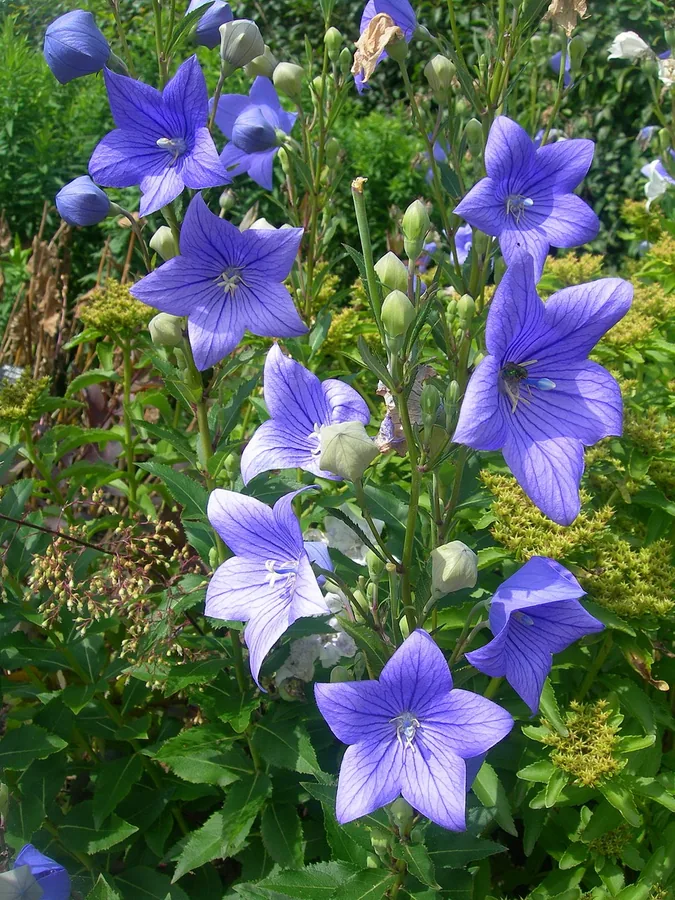
The name comes straight from the buds. Each one puffs up into a small inflated pod, taut and rounded, then cracks open along its seams into a wide, five-pointed star, most often a deep blue but also white and pink. It belongs to the bellflower family, hails from East Asia, and is a hardy perennial that returns year after year across zones 3 through 8.
Here is a perennial that asks for almost nothing: full sun, free-draining soil, and little fuss past that, sending up its starry flowers from June into August once it has settled. The taller forms carry one quirk worth noting, since their slim stems tend to flop without support, which is why many growers shear them back in late spring to hold them tight.
One trait throws off newcomers. Balloon flower is a slow waker, pushing new stems up weeks after the rest of the bed has greened, and the bare patch leads plenty of people to call it dead. Mark the spot, hold off the spade, and it surfaces on its own clock.
Care
The short version: full sun and light, well-drained soil, with steady moisture but no soggy roots. A light spring feed, a May cut back on the taller stems to tame the flopping, and beyond that this easy perennial mostly tends itself.
Light
Grow balloon flower in full sun for the firmest stems and the heaviest crop of stars. It puts up with partial shade, yet in dim light the stems stretch, thin out, and lean far more than they do out in the open.
Water
Hold the soil evenly moist but never sodden, watering about every 5 to 10 days once the top inch goes dry. Drainage is the one thing that truly matters, because roots left standing in wet ground rot fast.
Soil
Settle it into light, rich, well-drained loam that lets water slip through. A mildly acidic pH of 5.5 to 6.0 suits it, while ground that traps moisture is the quickest way to lose the plant.
Temperature
This is a truly cold-hardy perennial, weathering winters as low as -29°F (-34°C) and brushing off summer heat near 90°F (32°C). That span carries it through zones 3 through 8 with no cover.
Humidity
Plain outdoor air suits it, so there's no figure to chase. Moving air matters more than damp air, because still, wet conditions draw rot and slugs.
Feeding
A light touch is all it asks. Stir a bit of balanced fertilizer or compost into the soil in spring and stop there, since heavy feeding pushes soft, floppy stems in place of flowers.
Pruning
Snip off spent blooms to keep the stars opening, and shear the taller stems back by half in May to curb flopping and dodge the stakes. Leave the old stems standing over winter to flag where the late crowns will rise.
Repotting
Balloon flower rarely needs repotting, and it resents any disturbance to its roots. Shift a potted plant only when blooming slows or roots begin circling, and treat the brittle taproot gently.
Size & spacing
Plants stand 12 to 30 inches (30 to 76 cm) tall and reach 12 to 18 inches (30 to 46 cm) across, by cultivar. Allow each one that gap so air flows freely and the stems hold upright.
When to plant
Balloon flower keeps a late schedule. Sow seed indoors in late winter, move the young plants outside after the last frost once the ground warms, and the swollen buds crack open from June into August.
Northern hemisphere
Southern hemisphere
Typical months for a temperate climate: start earlier in warm zones, later where spring frosts linger.
- Sow: Late winter to early spring, about 6-8 weeks before last frost
- Plant: After last spring frost once soil has warmed
- Harvest: June to August
Hardiness
USDA hardiness zones: 3–8
Temperature: down to -40°C
Troubleshooting
Balloon flower holds up well on its own, and most of what goes wrong starts with too much water or chewing slugs rather than disease. Keep an eye on the roots and lower leaves, then match what you see to the entries below before acting.
Limp leaves and yellowing above mushy, rotting roots
Pull a failing plant from the ground and the roots come up soft, dark, and slick, sitting in soil that stays damp to the touch. That texture is the signature of root rot, and wet feet cause it far more often than any airborne disease. Open up the drainage, water less, and tuck the firm survivors back into loose, fast-draining loam.
Fix:
- Improve drainage and reduce watering
- Remove severely affected plants
- Replant in light, well-drained loam
Torn holes through leaf and petal with a glassy sheen
Look closely at the chewed edges and you'll spot a dried, silvery streak glinting across leaf and petal, the calling card of slugs and snails that feed once the light fades. Catch them with a flashlight after dark or just past a rain shower. Lift them off by hand, sweep out the damp litter where they shelter, and lay down iron-phosphate bait if the holes keep spreading.
Fix:
- Hand-pick slugs and snails in the evening
- Remove debris and mulch that shelters them
- Use traps or iron-phosphate baits if needed
Long stems bending outward and sprawling at the base
On the taller forms, the slender stems give way and lean outward once they hit full height, and a heavy rain or a shaded spot pushes them flatter still. Set them in full sun so the stems thicken and stand firmer, and shear the plants back by half in May to keep them low. A stake props up whatever still tips over.
Fix:
- Stake taller plants
- Cut stems back by half in May to reduce height
- Grow in full sun for sturdier stems
Toxicity
The news here is easy: balloon flower is safe around the whole house. The ASPCA leaves it off its toxic-to-pets list, and it carries no poisonous flag for people. The taproot is even a long-standing Korean vegetable called doraji, though it holds saponins that can turn a stomach if raw plant tissue is eaten in quantity.
Safe for
People · Cats · Dogs · Horses · Rabbits · Livestock · Birds
Cats None
Cats are fine alongside it, since the ASPCA flags none of its compounds as toxic. A nibble at the fleshy leaves might bring a touch of stomach upset from the saponins, and nothing past that.
Dogs None
A dog can roam the same bed without worry. The plant sits off the ASPCA toxic list, and a mouthful of foliage is likely to mean no more than a short, mild bout of queasiness.
Horses Safe
Horses have nothing to fear here. Not one part of the plant holds the toxins that bother grazing animals.
Rabbits Safe
A rabbit can nibble the leaves unharmed, though the saponins in the tissue make it better as an occasional bite than a daily staple.
Livestock Safe
Cattle, goats, and sheep can graze beside it with no risk, because none of its parts hold anything poisonous to them.
Birds Safe
Neither the plant nor its seed poses any threat to backyard or wild birds.
People Safe
People are safe with it, and the taproot is true food. Cooks in Korea prepare it as doraji, while raw root eaten in quantity can unsettle the stomach thanks to its saponins.
Roots and other parts contain saponins (platycosides); eating raw plant material in quantity could cause mild stomach upset, and traditional use involves preparing the root before eating.
Varieties
Nearly every balloon flower on offer is a named cultivar picked for its height or flower color. These are the ones you'll come across most often.
Astra Blue
A short, compact dwarf with plump violet-blue buds that split wide into five-pointed stars.
Fuji White
A taller pick that swaps the typical blue for crisp, clean white bells.
Komachi
The curious one whose blue buds hold tight in their puffed balloon shape and never crack open.
Sentimental Blue
A very low, heavy-blooming dwarf carrying blue flowers, sized for a border's front edge or a pot.
How to propagate
Seed is the surest route with balloon flower, since the brittle taproot makes every other method more trouble than it pays back.
SeedEasy
Sow indoors in late winter/early spring or direct sow after frost · One to two seasons to reach flowering size
Seed is the simplest path to a new balloon flower. Sow it indoors in late winter or early spring, or scatter it straight in the ground once frost has passed, and the seedlings size up to bloom in one to two seasons. The taproot hates being moved, so seed wins out over lifting a settled clump.
DivisionDemanding
Spring · Variable; recovery can be slow
Splitting a clump in spring is possible, yet the brittle, fleshy taproot fights the process and the plant sulks afterward. Recovery drags and comes out patchy, so an established clump is usually best left where it grows.
Stem cuttingsModerate
Late spring to early summer · Several weeks to root
Basal stem cuttings pulled in late spring or early summer let you multiply a plant while leaving the taproot untouched. Allow them several weeks to root before shifting them on.
Myths
Balloon flowers are easy to lift and divide like most clumping perennials.
Underground sits a fleshy, brittle taproot that snaps when you dig and split a clump, often stalling the plant or killing it outright. Sow fresh seed for new plants and let the settled ones stay put once their roots take hold.
The plant has died because nothing comes up in early spring.
It simply wakes late, sending new stems up well into spring after the rest of the border has already leafed out. Flag each crown and keep your spade away early so the buried roots stay whole until they break the surface.