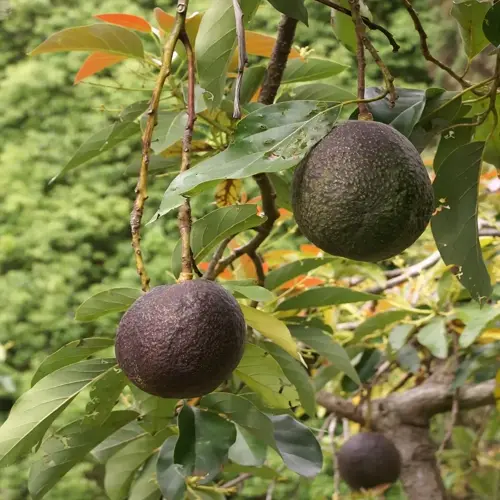

Introduction
Few things beat walking out your back door and picking a ripe apple or peach you grew yourself. Fruit trees turn a plain yard into a small orchard that feeds your family for decades. The catch is that most beginners plant first and read later, then wonder why their tree sits there for years with no fruit.
Healthy backyard fruit trees ask for two basic things before anything else. They need 6 to 8 hours of direct sun each day, or they grow leggy and set few flowers. They also need well-drained soil near pH 6.0 to 6.5, since soggy roots and the wrong acidity stunt growth fast. Test your soil and check the sun before you dig a single hole. Get these two things right and you have cleared the biggest hurdle most new growers trip over.
Plenty of guides name a few species but skip the real numbers. That leaves you guessing at spacing, years to fruit, and whether you need a second tree. This one is built for beginner fruit trees and gives you the figures up front. Every key number comes from university Extension programs, so you can plan with facts, not hope.
Here is the path we will walk together. You will learn how to choose the right tree for your space and climate, then pick a good site for it. Next you will make sense of rootstock and pollination, the two ideas that decide how big a tree gets and whether it sets fruit at all. After that comes planting the tree well and caring for it through the seasons. By the end you will know exactly what growing fruit trees takes, even if you have never planted one before.
Best Fruit Trees for Beginners
The best fruit trees for beginners are the ones that forgive your mistakes and still hand you fruit. You want an easy win in your first few years, not a 10-year wait or a tree that needs constant spraying to survive.
From my kitchen window I watched a dwarf Honeycrisp I had set on the gentle south slope of my Zone 6 yard. It grew on M.9 rootstock. By the third spring it pushed out a real crop of apples. The standard tree two doors down was still all wood and leaves. The dwarf rootstock bought me years of speed.
That early apple is why dwarf apple trees sit at the top of my list for new growers. A dwarf apple on M.9 stays around 8 to 10 feet, so you prune, spray, and pick from the ground. Plant a second variety nearby for pollination. Then pick disease-resistant varieties like scab-resistant apples to cut your spraying way down.
Pollination scares off a lot of first-time growers, so start with self-fruitful trees if you want one tree and one harvest. Tart cherries, most peaches, and European plums can set fruit on a single tree, no partner needed. The easiest fruit trees below all lean on this kind of low-fuss reliability.
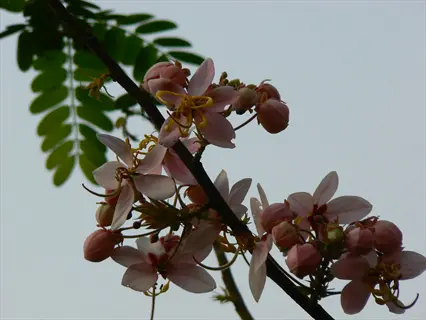
Dwarf Apple
- Why it is easy: A dwarf apple on M.9 rootstock stays around 8 to 10 feet, so pruning, spraying, and picking all happen from the ground.
- Time to fruit: Dwarf apples often bear in 2 to 3 years, far faster than a standard apple that can take 6 to 10 years.
- Pollination: Most apples are self-unfruitful, so plant a second compatible variety within 50 to 100 feet for a reliable crop.
- Disease note: Choosing scab-resistant varieties greatly reduces the need to spray and keeps a beginner's first tree healthier.
- Site: Give it full sun for 6 to 8 hours daily and well-drained soil near pH 6.0 to 6.5 for the best growth.
- Best for: Small yards and first-time growers who want quick results from a compact, manageable tree.
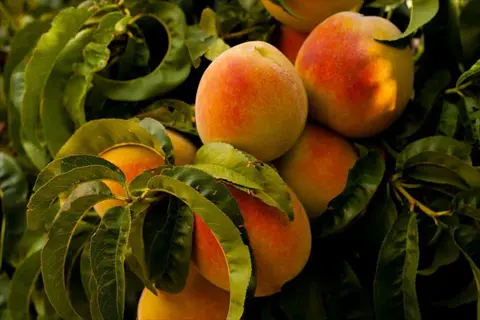
Peach
- Why it is easy: Most peaches are self-fruitful, so a single tree can set a full crop without a pollination partner nearby.
- Time to fruit: Peaches are among the fastest tree fruits, usually bearing in 3 to 4 years from a young tree.
- Site: Peaches demand full sun and excellent drainage; avoid low, wet spots and frost pockets that ruin early blooms.
- Climate: Peaches bloom early, so a late spring frost on open flowers can cost a whole season's fruit.
- Care: Thin the young fruit so each remaining peach sizes up well and the branches are not overloaded.
- Best for: Warmer gardens and growers who want a quick, generous harvest from one self-reliant tree.

European Plum
- Why it is easy: European plums are partially to fully self-fruitful, so many varieties produce well from a single tree.
- Time to fruit: Plums typically begin bearing in 4 to 5 years, a comfortable wait for a long-lived backyard tree.
- Pollination: A second compatible variety can boost the crop, but European plums will not pollinate hybrid plums.
- Site: Plant in full sun with well-drained soil and protect early blossoms from late frosts where possible.
- Care: Plums set heavily, so thin the fruit to improve size and prevent branches from breaking under the load.
- Best for: Cooler and mild gardens where a dependable, mostly self-sufficient stone fruit is wanted.
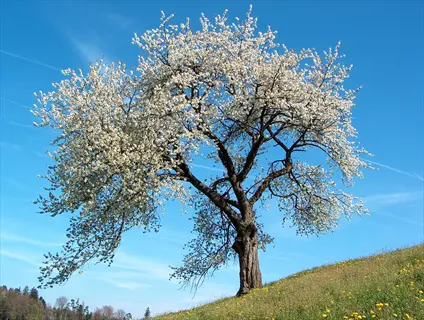
Tart Cherry
- Why it is easy: Of all stone fruits, tart cherries are the most self-fruitful, so one tree can produce a full harvest.
- Time to fruit: Sour cherries usually bear in 4 to 5 years and are hardier than fussy sweet cherries.
- Climate: Tart cherries tolerate colder zones better than sweet cherries, making them a strong pick for northern gardens.
- Use: The fruit is ideal for pies, preserves, and baking, so a single tree rewards the kitchen generously.
- Site: Give full sun and well-drained soil, and net the ripening fruit to keep birds from taking the crop.
- Best for: Cold-climate growers who want a hardy, self-reliant cherry without needing a second tree.
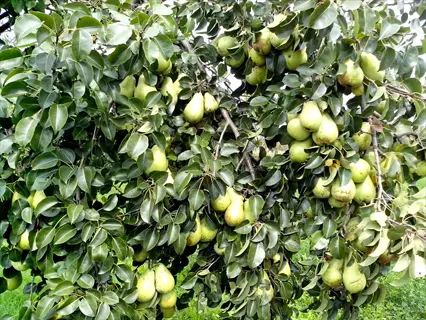
Pear
- Why it is easy: Pears are tough, long-lived, and forgiving once established, tolerating a range of soils better than many fruits.
- Time to fruit: Standard pears bear in 5 to 8 years, while dwarf pears can fruit in 3 to 4 years.
- Pollination: Most European pears need a second compatible variety nearby; some Asian pears are partially self-fruitful.
- Disease note: Fire-blight-resistant varieties sharply cut disease trouble and make pears far easier to grow.
- Site: Plant in full sun with well-drained soil near pH 6.0 to 6.5 and allow room for a tall, upright tree.
- Best for: Patient growers who want a durable tree that can produce for decades with little fuss.
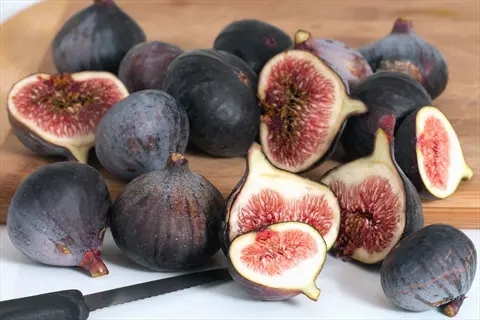
Fig
- Why it is easy: Figs are self-fruitful, grow quickly, and thrive in containers, making them flexible for small or cold-winter spaces.
- Time to fruit: Figs typically begin bearing in 2 to 4 years and often produce a crop even when young.
- Climate: In cold regions, grow figs in pots and move them to shelter for winter to protect the wood.
- Care: Figs need full sun, regular water in summer, and little pruning beyond shaping and removing dead wood.
- Use: Fresh figs are sweet straight off the tree and also dry or preserve well for later.
- Best for: Mild-climate gardens and container growers who want a fast, self-reliant fruit tree.
Any of these six trees will treat a beginner well, but the fastest first fruit comes from a dwarf apple, a peach, or a fig. Each one rewards you in 2 to 4 years instead of the long wait a standard tree demands.
Match the tree to your climate first, then to your space. A tart cherry suits a cold northern yard, a peach wants warmth and sun, and a fig in a pot can ride out a hard winter indoors. Get that one choice right and your first tree becomes a much easier ride.
Site, Soil, and Sun Basics
Deciding where to plant fruit trees matters more than the variety you pick. A perfect apple in a shady, soggy corner will sulk for years and give you almost nothing. Get the spot right and the tree does most of the work on its own.
Start with light. Fruit trees need 6 to 8 hours of direct sun every day, and that is the floor, not a nice extra. Think of sunlight as the fuel a tree burns to make fruit. Trees in too much shade grow tall and leggy with few flowers, so you get a big plant and a tiny harvest. Putting your tree in full sun is the cheapest upgrade you can give it.
Soil comes next, and one trait beats all the others. You want well-drained soil so water soaks through instead of sitting around the roots. Roots that stay wet rot, and wet, low ground also traps cold air. Skip frost pockets and any spot that stays muddy a day after rain. Deep, sandy loam is the dream, but plain decent ground that drains well will grow good trees too.
Now check your soil pH, the measure of how acidic or sweet your ground is. Most fruit trees want a reading around 6.0 to 6.5. A cheap soil test tells you where you stand and whether you need to add lime to raise acidic soil. Do this work before you dig, not after, because mixing in lime or compost is far easier when there is no tree in the way.
One more reason good drainage and sun pay off, they keep leaves dry. A tree that dries fast after rain faces far less disease pressure than one that stays damp in still, shady air. So the same spot that grows sweet fruit also helps your tree fight off the rot and blight that plague crowded, wet corners.
Adequate water drainage is the most important soil characteristic.
Rootstock and Tree Size
| Class | Mature Height | Years to Fruit | Spacing |
|---|---|---|---|
| Dwarf | About 8 to 10 ft (2.4 to 3 m) | 2 to 3 years | About 8 ft (2.4 m) |
| Semi-dwarf | About 12 to 18 ft (3.7 to 5.5 m) | 4 to 6 years | About 18 ft (5.5 m) |
| Standard | About 25 to 30 ft (7.6 to 9 m) | 6 to 10 years | About 30 ft (9 m) |
| Yield range | Dwarf 50 to 150 lb (23 to 68 kg) | Standard 300 to 400 lb (136 to 181 kg) | Varies by care |
| Figures from Virginia Tech (426-841) and Oregon State (EC 819); exact numbers vary by variety and conditions. | |||
The rootstock is the root system your tree is grafted onto, and it sets how big the tree grows and how soon it bears fruit. Think of it like the engine size of the tree. The variety grafted on top picks the fruit you eat, but the roots below decide the tree size and the wait.
This one choice matters more than most beginner guides let on. The very same apple variety reaches 16 to 18 feet on MM.111 roots but only 7 to 8 feet on M.9 roots. The fast starter fruits in 2 to 3 years, while a seedling rootstock makes you wait 7 to 8 years for the first apples.
Dwarf fruit trees trade raw size for speed, and that habit of fruiting young is called precocity. A dwarf apple gives you about 50 to 150 pounds of fruit per tree, while a big vigorous tree pushes out 300 to 400 pounds. You get less total fruit, but you pick it sooner and you can reach every branch from the ground.
For a small yard, go semi-dwarf or smaller. The dwarf apple stocks M.26 and Bud 9 settle at about 10 feet or less, so they fit a tight space and stay easy to prune and net. Save standard fruit trees for a big lot where you want a 25 foot shade tree and a long, heavy crop down the road.
Pollination Made Simple
Plant in pairs is the usual advice, and it stops short. Your pollination needs depend on the exact fruit you pick. Guess wrong and you get a tree that flowers every spring and never sets a single fruit.
The split is simple once you know it. Self-fruitful trees can set a crop with their own pollen, so one tree on its own works fine. Self-unfruitful trees cannot. They need pollen from a second, different variety nearby before the flowers will turn into fruit.
Iowa State Extension lays out which is which. Most apples, most sweet cherries, most European pears, and hybrid plums all sit in the self-unfruitful camp. Tart cherries, most peaches, and European plums are self-fruitful and will fruit alone. So before you buy, check the label and match it against the list below.
- Tart (sour) cherries, the most self-fruitful stone fruit
- Most peaches and nectarines
- European plums (partial to full)
- Apricots and Asian pears (partially self-fruitful)
- Most apple varieties
- Most sweet cherries
- Most European pears
- Hybrid plums (need a compatible hybrid or wild plum)
If a tree needs two varieties to fruit, plant a compatible second variety within 50 to 100 feet so bees can move pollen between them and set a good crop.
Distance is not the only catch. Two varieties only help each other if they flower at the same time. Think of a pollinizer as a dance partner with matching timing. Both trees have to bloom together, early, mid, or late in the season, so the bees can carry pollen from one open flower to another.
That bloom time overlap is why you cannot just grab any second tree. You want compatible varieties whose flowers open in the same window. Pick an early apple and a late apple and they may never share a bloom, so neither one sets fruit.
One more wrinkle worth knowing. Many self-fruitful trees still crop heavier with a partner, so cross-pollination pays off even when it is not required. And it does not always work in reverse. European plums will not pollinate hybrid plums, so a hybrid plum still needs a compatible hybrid or wild plum to fruit.
Planting a Fruit Tree
Learning how to plant a fruit tree comes down to a few choices you make in the first hour. The hole, the depth, and the spot you pick decide whether your tree thrives or just hangs on. The steps below cover the basics and add the depth and pruning details that actually keep a young tree alive.
First, sort out the bare-root vs container question, since the roots arrive one of two ways. A bare-root tree ships dormant with no soil, so you spread the roots out in the hole and work soil between them. A container tree comes with a packed root ball that you should tease apart at the edges so the roots stop circling. Either way, you want firm backfill with the native soil and no big air gaps left behind.
Dig a hole as deep as the roots and two to three times as wide, then loosen the sidewalls so roots can spread outward.
Place the tree so the graft union sits 2 to 3 inches above the soil line; never bury the graft, which causes long-term harm.
Fill with the native soil, firming gently to remove air pockets, and avoid heavy amendments that keep roots circling in the hole.
Use staking for support in windy sites or for top-heavy dwarf trees, leaving the trunk room to flex and thicken.
Soak the root zone thoroughly right after planting and again the following day so the soil settles around the roots.
Mulch a wide ring while keeping it off the trunk, then prune an unbranched tree to about 30 inches to start a strong frame.
My first peach sulked all spring in the wet low corner of my Zone 6 yard. The leaves came in thin, the new growth stalled, and by midsummer it was slowly fading in soggy ground. I moved my dwarf Honeycrisp to the south-facing slope the next year and set the graft high. It pushed out clean new shoots within weeks and never looked back.
Planting depth is the part beginners get wrong most. On dwarf trees, keep the graft union 2 to 3 inches above the ground so the rootstock keeps its dwarfing effect. Stone fruit graft unions sit a touch higher, around 3 to 4 inches above soil. Standard trees are the exception, since you set them about 2 to 3 inches deeper than the old nursery soil line.
Prune the tree right after you plant it, even though it feels harsh on a brand new tree. Cut an unbranched whip back to about 30 inches above the ground to force out low, strong branches. On a tree that already has good branching, keep one central leader and pick 5 to 6 side branches spaced around the trunk. That early cut sets the frame your tree carries for decades.
Care, Pruning, and Protection
Good fruit tree care comes down to a handful of jobs you repeat each year. Break the work into five clear tasks and even a first-year grower can keep a tree healthy and productive.
Start with pruning. Next comes thinning. After that you water the tree, and you feed it with a bit of fertilizing in the spring. Last, you keep deer and voles away. Each job below tells you when to do it and why it matters. That way you can act with no doubt.
Pruning
- When: Prune most fruit trees in late winter while they are dormant, before new spring growth begins.
- Why: Pruning develops a strong shape, opens the canopy for air flow, and improves fruit quality and light penetration.
- How: Keep a central leader with well-spaced side branches and remove crossing, dead, or inward-growing wood each year.
Thinning Fruit
- Why: Trees often set more fruit than they can support, which weakens the tree and invites pests if left alone.
- Benefit: Removing excess young fruit improves the size of what remains and encourages a crop again the next season.
- How: Thin while the fruit is small, spacing the remaining fruit a few inches apart along each branch.
Watering and Feeding
- Water: Water young trees deeply and regularly so the roots establish, then ease off as the tree matures.
- Feed: Use a balanced fertilizer based on a soil test rather than guessing, since too much growth can delay fruiting.
- Mulch: Keep a mulch ring to hold moisture and block weeds, but pull it back a few inches from the trunk.
Pest and Animal Protection
- Voles: Use vole guards about 18 inches tall and 6 inches wide, buried roughly 1 inch, to protect the trunk base.
- Deer: Fence vulnerable trees with deer fencing 6 to 8 feet high, since deer browse young growth heavily.
- Disease: Choose disease-resistant varieties such as scab-resistant apples to cut spraying and prevent common problems.
One August a low branch on my dwarf Honeycrisp snapped clean off, and I watched it go from the kitchen window. The tree sat on M.9 rootstock in my Zone 6 yard, and that branch had carried a dozen full-size apples it was never built to hold.
For two seasons I had let the tree keep every apple it set. The fruit came in small and crowded, the limbs sagged lower each week, and one of them finally gave out under the weight. Thinning fruit while it is still pea-sized fixed all of that the next year.
Pruning fruit trees and thinning work as a team. Together they keep a tree strong and bearing well. Add steady watering and good food too. Then put up solid deer protection. Do all that and your tree will feed you for years.
Thin heavy fruit set while the fruit is still small. Leaving every fruit on the branch can crack limbs and stress the whole tree for the next season.
5 Common Myths
Every fruit tree needs a second tree planted right beside it before it will ever set any fruit.
Self-fruitful trees like tart cherries, most peaches, and European plums can fruit alone; only self-unfruitful types need a compatible partner.
Planting a fruit tree deeper than it grew at the nursery gives it a stronger, better anchored root system.
Planting too deep buries the graft union and harms the tree; set the graft union above the soil line as the nursery did.
Dwarf fruit trees are weaker, sickly plants that produce tiny, low-quality fruit compared to full-size trees.
Dwarf trees grow full-size fruit; rootstock only controls tree height and bearing age, not the size or quality of the fruit.
If a fruit tree survives the winter in your hardiness zone, it will automatically produce a good crop.
Surviving cold is not enough; trees also need adequate winter chill hours and frost-free bloom to set fruit reliably.
Once a fruit tree is established it needs no pruning, since trees in the wild grow fine without any help.
Pruning shapes the tree, improves air flow and fruit quality, and thinning prevents over-cropping that weakens the tree.
Conclusion
Growing fruit trees comes down to a handful of choices you make before the tree ever goes in the ground. Pick a spot with 6 to 8 hours of direct sun. Get your soil pH into the 6.0 to 6.5 range. Plant a pollination partner within 50 to 100 feet. Nail those three and you have done the hard part.
Rootstock is the lever most beginner fruit trees guides skip. A dwarf apple starts giving you fruit in just 2 to 3 years and stays small enough for a tight yard. That same apple on standard roots can make you wait 6 to 10 years for the first bite. Match the rootstock to your space, and the tree works with you instead of against you.
Here is the plain truth about fruit tree care. A healthy tree and a fruiting tree are not the same thing. The early calls you make on species, rootstock, and climate are what turn one into the other. Get the site, the right roots, and a pollination plan in place, and you sidestep the letdowns that catch most new growers.
The payoff runs for decades. A standard apple can keep bearing for 35 to 45 years, long enough to feed a family through childhood and beyond. The dwarf apple I planted in my own back corner gave me its first handful of fruit by year three, and it still sets a heavier crop each season. Your backyard fruit trees are a slow, generous investment, and the work you put in this season pays back every spring for a very long time.
Glossary
- chill hours
- The total hours of cold a fruit tree needs over winter before it can bloom and set fruit properly.
- espalier
- A method of training a fruit tree to grow flat against a wall or support to save space.
- graft union
- The visible joint on a tree's lower trunk where the fruiting variety was grafted onto the rootstock.
- precocity
- How quickly a fruit tree begins bearing fruit after it is planted.
- rootstock
- The root portion a fruit variety is grafted onto, which controls the tree's mature size and how soon it fruits.
- self-fruitful
- A tree that can set fruit using its own pollen, without needing a second variety nearby.
- self-unfruitful
- A tree that cannot set fruit with its own pollen and needs a compatible second variety to cross-pollinate.
- soil pH
- A measure of how acidic or alkaline your soil is, on a scale where lower numbers mean more acidic.
External Sources
Frequently Asked Questions
What is the easiest fruit tree to grow?
The easiest fruit trees for beginners are self-fruitful, disease-resistant types that produce on a single tree, such as:
- Dwarf apples on disease-resistant rootstock
- Tart (sour) cherries
- Most peaches
- European plums
- Figs in mild climates
How long do fruit trees take to produce fruit?
It depends on species and rootstock. Typical years to bearing:
- Dwarf apple: 2 to 3 years
- Standard apple: 6 to 10 years
- Peach: 3 to 4 years
- Plum: 4 to 5 years
- Sweet cherry: 5 to 7 years
Do you need two fruit trees to get fruit?
Not always. Self-fruitful trees fruit alone; self-unfruitful trees need a compatible second variety within 50 to 100 feet.
Which fruit tree grows the fastest?
Fast-bearing choices include:
- Peaches and nectarines (3 to 4 years)
- Figs (rapid growth in mild climates)
- Dwarf apples on M.9 (2 to 3 years)
- Plums (4 to 5 years)
What is the best fruit tree for a small yard?
Dwarf trees on size-controlling rootstock are best for small yards because they stay around 8 to 10 feet and can be spaced closely.
How far apart should you plant fruit trees?
Spacing depends on rootstock and species. Minimum spacing examples:
- Dwarf apple: about 8 feet
- Semidwarf apple: about 18 feet
- Standard apple: about 30 feet
- Peach and plum: about 20 feet
What soil pH do fruit trees need?
Most fruit trees grow best in well-drained soil with a pH of roughly 6.0 to 6.5. Test the soil and lime acidic ground before planting.
What does dwarf, semi-dwarf, and standard mean?
These terms describe rootstock size classes that control how tall a tree grows and how soon it fruits:
- Dwarf: smallest, fruits earliest
- Semi-dwarf: mid-size and yield
- Standard: largest and longest-lived
Why is my fruit tree not producing fruit?
Common reasons a healthy tree sets no fruit:
- No compatible pollinator nearby
- Too little sunlight
- Spring frost killed the blossoms
- Tree is still too young
- Too few winter chill hours
When is the best time to plant a fruit tree?
The best time to plant most fruit trees is during dormancy in late winter or early spring, before new growth begins.