
Introduction
An avocado tree rewards patience, not impatience. Plant one in the right spot and it can feed your kitchen for years. It will not hand you fruit in its first season or two, though. A grafted nursery tree starts to bear in 3 to 4 years, says UF/IFAS Extension. I planted my first one and waited out three quiet seasons before a single fruit set. So the early payoff is shade and green leaves, not guacamole.
People are hungry for these trees, and the numbers show it. Global production hit about 10.5 million tonnes in 2023, per FAO/FAOSTAT. Avocado is now the fastest-growing major tropical fruit. The same data points to roughly 12 million tonnes by 2030. You are joining a crowd that keeps getting bigger.
Here is where this guide parts ways with the rest. Most popular pages on growing avocados toss out numbers with no sources. They also skip past the disease that quietly kills these trees. This one cites UC IPM, UF/IFAS, and Harvard so you can check every claim yourself. You get real avocado tree care advice, not guesses dressed up as facts.
So how to grow an avocado tree the right way? You will choose a variety that fits your yard. You will get pollination working between the right flower types. You will match your climate and your soil, and then water without drowning the roots. Finally you harvest and ripen the fruit off the tree. One more thing to plan for early: a mature tree reaches 30 to 65 feet (9 to 20 meters), so spacing it well from the house matters more than you think.
How to Grow an Avocado Tree
My young Hass dropped half its leaves in a single week and the rest hung limp and yellow. I had planted it in a low corner of my backyard in coastal Southern California. The spot was an easy USDA zone 10a patch I could see from the kitchen window. Water pooled there after every rain. I dug it up, built a raised mound on the sunny slope nearby, and set the tree back on top. Within a month it pushed new growth and never sulked again.
That tree taught me what every guide on how to plant an avocado tree should say first. Avocados hate wet feet more than almost anything else. Get the drainage right and the rest of the work feels easy.
Start with the spot. Give the tree full sun. Keep it 23 to 30 feet (7 to 9 meters) from buildings and other trees, since a mature avocado can reach 30 feet or more. It needs well-draining soil, since the feeder roots sit in just the top 6 inches (15 centimeters). Those shallow roots drown fast in standing water, so a wide planting area matters far more than a deep hole.
On heavy or flood-prone soil, lift the tree above the wet. Build a native-soil mound 2 to 4 feet (0.6 to 1.2 meters) high and 4 to 6 feet (1.2 to 1.8 meters) wide. Set the tree on top, the same fix that saved my Hass. The mound keeps those feeder roots out of soggy ground where root rot starts.
Buy a grafted avocado tree if you want fruit in your lifetime. A grafted nursery tree starts producing in 3 to 4 years and grows true to the variety you picked. A seed-grown tree can take 5 to 13 years and will not match its parent, so the fruit is a gamble. For most home growers, planting an avocado tree from a grafted nursery plant is the smart call.
Choose full sun, shelter from strong wind, and fast-draining soil. Keep the tree 23 to 30 feet (7 to 9 meters) from buildings and other trees so it has room to mature.
On heavy or flood-prone soil, plant on a native-soil mound 2 to 4 feet (0.6 to 1.2 meters) high and 4 to 6 feet (1.2 to 1.8 meters) wide to lift roots above standing water.
Dig a hole as deep as the root ball and a little wider. Place the graft union above the soil line and backfill with native soil, firming gently to remove air pockets.
Water in slowly to settle the soil, then spread 4 to 6 inches (10 to 15 centimeters) of coarse mulch under the canopy, kept several inches away from the trunk.
Shield the young trunk from sunburn and frost in the first seasons. Expect a grafted tree to start fruiting in three to four years with steady care.
Do not pile mulch against the trunk or bury the graft union. Both trap moisture at the base and invite the rot and collar disease that kill young avocado trees.
Best Avocado Tree Varieties
Two things should drive your pick among avocado tree varieties. The first is how cold your winters get. The second is the flower type each variety carries. Taste comes after both.
The three races split on cold tolerance. Mexican types are the toughest. They take cold down to about 18 to 26°F (minus 8 to minus 3°C). Guatemalan types handle about 24 to 28°F (minus 4 to minus 2°C). West Indian types are the weakest, at about 25 to 30°F (minus 4 to minus 1°C). So your cold-tolerant avocado varieties all come from the Mexican side.
Flower type sets up pollination. Every avocado is either Type A or Type B. Pair one of each and you lift fruit set when a tree stands alone in the yard. Get the label wrong and you plant two trees that bloom on the same clock. That is the trap with Bacon. One popular site lists it as Type A, but Bacon is Type B, full stop.
Most shoppers already know the taste of Hass. It makes up about 90% of California production. And California grows close to 95% of all US avocados. That makes the Hass avocado tree the benchmark flavor. It is not the hardiest pick, though. Here is how the best home varieties stack up.

Hass
- Flower type: Type A, so it pairs well with a Type B variety to lift fruit set in isolated plantings.
- Race: Largely Guatemalan, with moderate cold tolerance around 24 to 28 degrees Fahrenheit (minus 4 to minus 2 Celsius).
- Fruit: Pebbly skin that darkens as it matures, rich nutty flesh, and excellent flavor that set the market standard.
- Production note: Hass makes up roughly 90% of California avocado output, so its taste is the one most shoppers know.
- Size: A standard tree that can grow large, so give it space or prune for height control in a home yard.
- Best for: Gardeners in mild, frost-light climates who want the classic, widely loved avocado flavor.

Fuerte
- Flower type: Type B, making it a natural cross-pollination partner for a Type A variety like Hass.
- Race: A Mexican and Guatemalan cross with good cold tolerance for many home gardens.
- Fruit: Smooth green skin and creamy, mild flesh that many growers prize for its classic shape.
- Habit: A spreading tree that benefits from light pruning to keep harvest within easy reach.
- Season: Often bears in winter and spring, extending the picking window when paired with Hass.
- Best for: Growers who want a reliable Type B partner and a smoother, milder fruit alongside Hass.
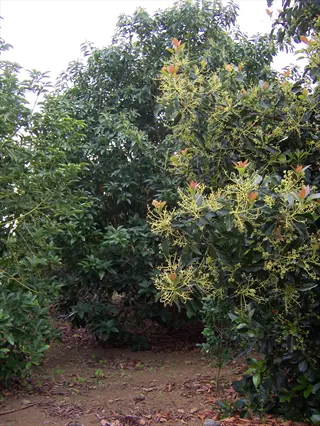
Bacon
- Flower type: Type B, correcting a common online error that lists it as Type A.
- Race: A Mexican type, so it ranks among the more cold-hardy choices at about 18 to 26 degrees Fahrenheit (minus 8 to minus 3 Celsius).
- Fruit: Thin green skin and light, mild flesh, milder than Hass but easy to grow.
- Cold edge: Its hardiness makes it a smart pick for gardeners pushing the cooler limits of avocado growing.
- Habit: An upright, fast grower that takes hold fast in the right spot.
- Best for: Cooler microclimates and as a cold-tough Type B partner for a Type A tree.

Mexicola Grande
- Flower type: Type A, pairing well with a Type B variety in isolated gardens.
- Race: A pure Mexican type and one of the most cold-hardy avocados available to home growers.
- Fruit: Small, glossy, dark fruit with thin edible skin and rich, nutty flesh.
- Cold edge: Tolerates cold near the bottom of the Mexican range, suiting gardeners in marginal zones.
- Habit: A vigorous tree that can grow tall, so plan for pruning in smaller yards.
- Best for: Cold-climate experimenters who want maximum hardiness and intense flavor.
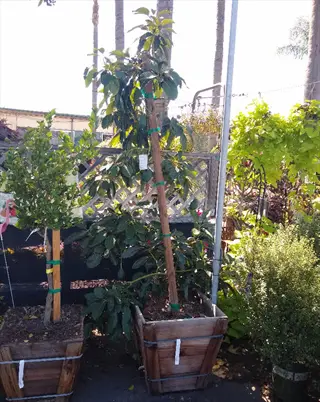
Wurtz (Little Cado)
- Flower type: Often grown as a single tree because it sets a useful crop on its own.
- Race: A Guatemalan and Mexican hybrid bred for compact growth.
- Fruit: Medium green pear-shaped fruit with creamy, pleasant flesh.
- Size: A true dwarf reaching only about 8 to 12 feet (2.4 to 3.7 meters), ideal where space is tight.
- Container fit: Its small size makes it the go-to variety for large pots and patios.
- Best for: Small yards, container gardeners, and anyone wanting fruit without a towering tree.
The Bacon out-cropped the Hass by a wide margin the year a hard cold snap hit my own backyard in coastal Southern California. I planted the two side by side on the slope under the kitchen window. I picked Bacon for that spot on purpose. It is a Mexican type, so it shrugs off cold far better than the part-Guatemalan Hass.
A frost that browns your Hass barely touches a hardy Mexican tree. The tree that lives through your winter is the one that feeds you. So let cold tolerance guide your pick before flavor or fame.
Short on space? A dwarf avocado tree like Wurtz tops out near 8 to 12 feet (2.4 to 3.7 m). It fits a large pot or a small yard with ease. Standard trees are a different story. They grow 30 to 65 feet (9 to 20 m) tall. Give them room, or plan on steady pruning to hold the height down.
Match the variety to your coldest night and your space. Do that and the tree starts off strong. Next comes the soil and drainage, the part that keeps those roots healthy for years.
Type A and Type B Pollination
Avocado pollination runs on a strange daily clock that trips up most growing guides. Each flower opens twice. It works as a female bloom one time and a male bloom the next. Botanists call this split timing dichogamy. It is the whole reason the type A vs type B avocado labels exist.
Here is how UF/IFAS lays out the schedule. A Type A flower is female in the morning, then reopens as male the following afternoon. A Type B flower flips that order, working as female in the afternoon and male the next morning. So an A tree and a B tree fall into two shifts that overlap. When one tree is handing out pollen, the other is open and ready to catch it.
That overlap is what drives cross-pollination between the two groups. The chart below sorts the common backyard varieties into their A and B camps so you can plan a pairing that lines up.
- Flowers open as female in the morning, then reopen as male the following afternoon.
- Common examples include Hass, Mexicola Grande, Reed, and Pinkerton.
- Receptive to pollen in the morning, when a nearby Type B tree is shedding it.
- Flowers open as female in the afternoon, then reopen as male the next morning.
- Common examples include Fuerte, Bacon, Zutano, and Sharwil.
- Receptive to pollen in the afternoon, when a nearby Type A tree is shedding it.
So do you need two avocado trees? Not always. New UF/IFAS evidence shows avocados can both self-pollinate and cross-pollinate, so a lone tree often sets some fruit on its own. Planting one Type A next to one Type B simply raises your odds. That pairing matters most for a lone tree with no other avocados nearby.
One detail to keep in mind. Bees do almost all the real pollen moving between flowers, so the weather during bloom carries a lot of weight. A calm, warm bloom window with busy pollinators close by helps your set as much as having both flower types in the yard.
A single avocado often sets some fruit alone, but pairing one Type A with one Type B tree noticeably improves fruit set, especially for an isolated backyard planting.
Climate, Soil and Watering Basics
Climate and soil decide whether your tree thrives or struggles, so get these right before you plant. The USDA hardiness zones avocado trees prefer run from 9 to 11. They also want a slightly acidic avocado tree soil with a pH around 6 to 6.5. Push outside those zones and you will fight frost and cold damage every winter.
Avocado cold tolerance is not one number, even though most guides treat it that way. The three races each handle cold at a different point, so the race you buy matters as much as your local low temperatures. The table below shows the UF/IFAS ranges so you can match a variety to your coldest nights.
Avocado trees do not tolerate flooding or poorly drained soils but are adapted to many types of well-drained soils.
That drainage point drives the whole approach. Your feeder roots sit in the top 6 inches (15 centimeters) of soil, and they rot fast in ground that stays wet. So well-draining soil is not a nice extra here. It is the line between a healthy tree and a slow death from root disease.
Watering avocado tree roots comes down to one simple rule. Water deeply, then let the top few inches of soil dry out before you water again. Stick a finger in the dirt and check, because constantly soggy soil is the fastest way to kill these trees. If your site floods, plant on a raised mound so water drains away from the roots.
A layer of coarse mulch, 4 to 6 inches (10 to 15 centimeters) deep, under the canopy holds moisture and feeds the soil life your tree depends on. Spread it out to the drip line but keep it pulled back a few inches from the trunk. Mulch piled against the bark traps moisture and invites rot right where it does the most harm.
Stopping Root Rot and Pests
If you have searched why is my avocado tree dying, the answer is almost always one thing. Avocado root rot kills more home trees than every pest combined. It hides below the soil, so most owners blame the leaves while the real trouble sits at the roots.
The cause is Phytophthora cinnamomi, a water mold that lives in the wet, poorly drained soil around your roots. It is not a true fungus, and it carries more than 1,000 host species. Its resting spores can sit in your soil for years, so you save the tree by stopping the rot early rather than curing it later.
Watch your tree for avocado leaves turning brown at the tips while the soil stays wet. You should also look for small pale leaves, a thin canopy, and dead twigs on the outer branches. A struggling tree may even set a heavy crop of tiny fruit right before it gives up, so do not let that late burst fool you.
Phytophthora Root Rot
- What it is: A soilborne water mold (Phytophthora cinnamomi), not a true fungus, and the most serious disease of avocado.
- Symptoms: Small pale or yellow leaves, wilting with brown necrotic tips even when soil is wet, sparse canopy, and branch dieback.
- Prevention: Plant in well-drained soil or on a mound, water by need rather than habit, and never let the root zone stay waterlogged.
- Treatment: Improve drainage, apply gypsum and coarse mulch, and use resistant rootstocks such as Dusa or Latas; established infestations are very hard to cure.
Frost And Cold Damage
- What it is: Tissue injury when temperatures fall below a variety's tolerance, worst on young trees and tender new growth.
- Symptoms: Blackened, wilted leaves and dieback on outer branches after a cold snap.
- Prevention: Choose a cold-hardy Mexican-race variety, plant in a warm microclimate, and cover or wrap young trees on frosty nights.
- Recovery: Wait until spring growth resumes before pruning dead wood, since live tissue often regrows from below the damage.
Common Insect Pests
- What they are: Avocado lace bug, thrips, and persea mite are the pests most home growers encounter.
- Symptoms: Stippled, browning, or scarred leaves and fruit, usually cosmetic rather than fatal to a healthy tree.
- Prevention: Keep the tree vigorous with proper water and mulch, and encourage natural predators rather than spraying at first sight.
- Action: Tolerate light damage, hose off mild infestations, and treat only when feeding is heavy and persistent.
Nutrient Deficiencies
- What it is: Shortfalls of nitrogen, iron, or zinc, common in avocados grown in alkaline or poor soils.
- Symptoms: Pale or yellowing leaves, yellowing between green veins, and smaller-than-normal new growth.
- Prevention: Feed lightly through the growing season and keep soil pH near 6 to 6.5 so nutrients stay available.
- Correction: Apply the missing nutrient, including foliar iron or zinc when needed, and improve soil with mulch and balanced feeding.
Most avocado tree pests look scary but do little real harm. Lace bugs, thrips, and persea mites scar a few leaves, yet a strong tree shrugs them off. Spend your worry on drainage and smart watering instead, since that is what protects the roots and keeps the whole tree alive.
Phytophthora root rot is the most serious disease of avocado.
Fruiting, Harvest and Yield
Here is the part most guides get wrong, and it is the most useful thing to know about harvesting avocados. An avocado never softens on the tree. The fruit hangs there rock hard for months while it builds up oil, and it only starts to ripen once you pick it. So the answer to when are avocados ripe is simple. They ripen on your kitchen counter, not on the branch.
That changes how you judge maturity. The fruit can be fully grown and ready to pick yet still feel like a green stone in your hand. Growers test it the easy way. You pick one fruit, leave it on the counter, and watch what happens over the next few days. If it softens evenly and tastes good, the rest of the crop is mature. If it shrivels or stays rubbery, give the tree another few weeks.
Now for the timeline. People always ask how long for avocado to fruit. Buy a grafted nursery tree and you wait 3 to 4 years for a real crop. Those first harvests stay small too. Your tree will also flower like crazy and then drop most of those blooms. That is normal. Less than 1% of the flowers on a healthy avocado tree ever turn into fruit, so do not panic when the ground fills with spent blossoms.
The first real harvest off my Hass came from the slope by the kitchen window. I hauled a basket of hard green fruit inside, lined them up on the counter, and waited. Day one, nothing. Day three, still stone hard. On the fifth day the one near the toaster gave a little under my thumb, and I cut it open that night. The rest came soft over the following week, a few at a time.
Once a tree settles in, the avocado yield per tree is worth the wait. A mature Florida tree averages 2 to 3 bushels a year, which works out to roughly 110 to 165 pounds (50 to 75 kilograms) of fruit. Plan to share, because that is a lot of guacamole from one tree in the yard.
One last thing to set your expectations. Avocados are alternate bearers, so a heavy crop one year is often followed by a light one the next. Your tree is not sick and you did not do anything wrong. The yield just swings from season to season, and it tends to even out over time.
Years 0 to 1
A grafted tree settles in and grows roots and canopy. Focus on watering and frost protection, not fruit.
Years 3 to 4
Grafted trees typically begin to produce their first real crop, though early yields are small and uneven.
Bloom To Set
Trees flower heavily, but less than 1% of those flowers ultimately become fruit, which is normal.
Harvest
Pick mature fruit while firm. Avocados do not ripen on the tree and soften 3 to 8 days after harvest.
Maturity
Established trees can yield 2 to 3 bushels (110 to 165 pounds, 50 to 75 kilograms) a year, swinging with alternate bearing.
Grafted trees begin to produce after 3 to 4 years.
5 Common Myths
A single avocado tree can never set fruit on its own, so you always must buy and plant two different trees together.
Many avocados self-pollinate and set some fruit alone; pairing a Type A with a Type B variety simply improves set in isolated plantings.
You should water an avocado tree often and keep its soil constantly moist because the tree is thirsty and tropical.
Avocados do not tolerate soggy soil. Overwatering invites Phytophthora root rot, the tree's most serious disease, so let soil dry between deep waterings.
A tree grown from a grocery store avocado seed will produce the same tasty fruit as the avocado the seed came from.
Seed-grown trees are not true to type. The fruit often differs from the parent and can take 5 to 13 years, if it appears at all.
Avocados should be left on the tree until they soften completely, just like a peach or a tomato ripening on the plant.
Avocados do not ripen on the tree. Mature fruit stays firm until picked, then softens 3 to 8 days off the tree at room temperature.
Avocado trees stay small and tidy, so you can plant one close to your house without worrying about its eventual size.
Mature trees reach 30 to 65 feet (9 to 20 meters). Plant them 23 to 30 feet from buildings and other trees to avoid crowding and damage.
Conclusion
Good avocado tree care comes down to a short chain of choices you now know how to make. You pick a variety that fits your climate, then pair a Type A and a Type B tree if you want the best fruit set. After that you match the site to the tree, give the roots fast-draining ground, and water without ever drowning them.
Get the root zone right and you sidestep the problem that kills most avocado trees. Careful watering and good drainage prevent root rot, the water-mold disease that takes down more trees than any pest or cold snap. No other care step matters more, so treat soggy soil as the one thing you never let happen.
Patience does the rest of the work for you. A grafted nursery tree starts to fruit in 3 to 4 years, and the avocados you pick will not soften on the branch. They ripen 3 to 8 days off the tree, so you harvest them firm and let them finish on the counter. Knowing these two numbers keeps your hopes in step with how the tree actually grows.
Learning how to grow an avocado tree puts you on a fast-rising trend. Avocado is the fastest-growing major tropical fruit on Earth. So growing avocados at home means you join millions of gardeners who feel the same pull. A well-sited tree pays you back for decades.
Plant it in the right spot. Guard the roots, and your avocado tree becomes a generous, long-lived part of the garden. It feeds you year after year. Still have a question on your mind? The FAQs below cover the ones home growers ask most.
Glossary
- Alternate bearing
- The habit of producing a heavy crop one year followed by a lighter one the next, common in avocado trees.
- Dichogamy
- The daily timing pattern in which an avocado flower opens once as female and once as male, driving cross-pollination.
- Feeder roots
- The fine surface roots in the top few inches of soil that absorb most of an avocado tree's water and nutrients.
- Grafted tree
- A nursery tree built from fruiting wood joined to a rootstock, so it produces true-to-type fruit years sooner than a seedling.
- Phytophthora root rot
- The most serious avocado disease, caused by a soil water mold that attacks roots in soggy, poorly drained ground.
- True to type
- Fruit that matches the parent variety; seed-grown avocado trees are not true to type, so their fruit can differ.
- Type A flower
- An avocado whose flowers open female in the morning and male the next afternoon, pairing well with a Type B tree.
- Type B flower
- An avocado whose flowers open female in the afternoon and male the next morning, complementing a Type A tree.
External Sources
Frequently Asked Questions
Can I grow an avocado tree at home?
Yes. With a grafted tree, well-drained soil, and a frost-free or protected spot, home gardeners can grow avocados in the ground or in a large container.
How many years does it take to grow an avocado tree?
A grafted nursery tree usually begins fruiting in 3 to 4 years. A seed-grown tree can take 5 to 13 years and may never match the parent fruit.
How often should you water an avocado tree?
Water deeply and let the top few inches of soil dry between waterings. Frequency depends on heat, soil, and tree age rather than a fixed daily amount.
Where is the best place to plant an avocado tree?
Choose a sunny, wind-sheltered, well-drained spot, ideally on a slope or raised mound, set 23 to 30 feet from buildings and other trees.
What are the most common avocado tree problems?
The most common problems are Phytophthora root rot, frost damage, poor fruit set, and nutrient deficiencies showing as yellowing or browning leaves.
What is the best month to plant an avocado tree?
Spring, once frost danger has passed, is best. It gives roots a full warm season to establish before winter cold or summer heat stress arrives.
Should I cut brown leaves off an avocado tree?
You can remove fully dead leaves for tidiness, but brown leaf tips usually point to a watering, salt, or root problem that matters more than trimming.
How do you tell if an avocado tree is Type A or Type B?
Flower timing tells you. Type A flowers open female in the morning; Type B flowers open female in the afternoon. The variety name usually reveals which.
Do coffee grounds help avocado trees?
Used sparingly and composted first, coffee grounds add a little organic matter, but they are not a fertilizer and can mat or acidify soil if overused.
Which country produces the most avocados in the world?
Mexico is the world's largest avocado producer, growing over 2.9 million tonnes a year, about 28 percent of the roughly 10.5 million tonnes grown globally.