Houseplant · Araceae
ZZ Plant
Zamioculcas zamiifolia
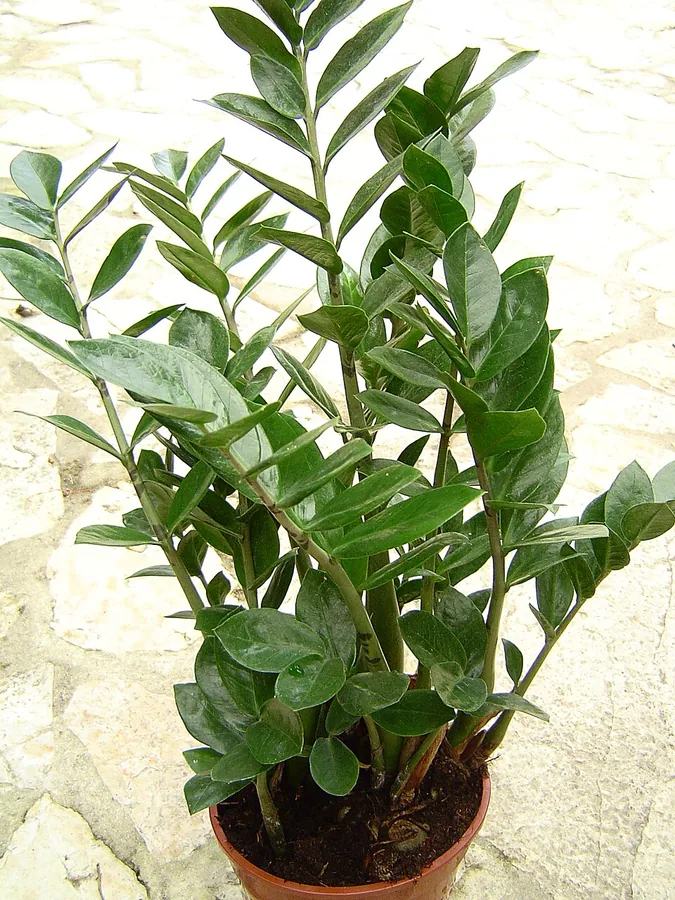
Lacquered emerald leaflets on arching stems, content in a forgotten corner, the ZZ plant asks for almost nothing and gives back for years.
Bright indirect
Every 14–30 days
59–84°F · 15–29°C
USDA 9–11
Overview
Few houseplants live up to the unkillable label like this one. A native of eastern Africa, it banks water inside fat subterranean rhizomes, the reserve that lets it ride out a skipped watering or a corner well removed from any window. Thick, waxy leaflets in a deep forest green line up in tidy ranks along stems that curve outward, each leaf gleaming as though buffed by hand.
Its charm as a houseguest lies in how few demands it makes. The plant grows slowly and evenly, keeps its sculpted form with little intervention, and seldom overstays its space at 2 to 4 feet (61 to 122 cm) tall. Weeks of neglect leave it looking just as glossy, which is precisely why it fills offices and dim hallways the world over.
The single drawback is the calcium oxalate crystals woven through every part of it, which rules it out anywhere chewing pets or small children can reach. Set it on a high shelf out of the way, wash your hands after handling it, and it returns the favor with years of still, shining foliage.
Care
The short version: set it in bright indirect light, wait until the soil is bone-dry before watering, root it in a fast-draining mix, and keep it warm and clear of direct sun.
Light
Bright indirect light brings out the best in this plant, yet it shrugs off low and medium light better than almost anything else on the shelf. Spare it direct sun, which sears the glossy leaflets. Pay for a dark corner with slower growth and longer, looser stems.
Water
Hold off until the mix has gone completely dry, which lands around once every 2 to 4 weeks. The rhizomes carry their own backup supply, so a forgotten watering troubles it far less than a sodden pot ever would. Nothing kills it faster than too much water.
Soil
Root it in a well-drained potting mix built on peat or bark, with a generous helping of perlite or sand stirred through. You want a medium that sheds water quickly and never sits sodden, since lingering moisture is exactly what rots the rhizomes.
Temperature
Hold it within an easy 59°F to 84°F (15°C to 29°C), the same warmth that suits you indoors. Cold is its weakness, and any dip below 60°F (15°C) yellows the leaves or sends them dropping.
Humidity
Everyday indoor air is plenty, so there is no humidity figure to chase. It takes the dry atmosphere of most homes in stride, no misting or fussing required.
Feeding
Offer a light meal across the spring and summer growing months using a balanced, diluted fertilizer, just once or twice through the year. Being such a slow grower, it asks for very little, and a heavy hand does more harm than good.
Pruning
There is barely any pruning to do. Just snip off yellowing or damaged leaflets as you notice them to keep the plant trim.
Repotting
Move it to a larger home every 2 to 3 years, or sooner if it outgrows the one it has. The cues are clear: thick rhizomes pressing against the walls of the pot, roots poking through the drainage holes, or growth tapering off. Step it up a single pot size into fresh, fast-draining mix.
Size & spacing
Grown indoors it reaches roughly 2 to 4 feet (61 to 122 cm) tall and fans out to about the same width. Leave the arching stems room to spread so they are not jostling the plants beside them.
Troubleshooting
This is a near-silent plant, so on the rare day it speaks up, the message is usually plain. Nearly every problem leads back to watering or light, and it writes the answer across its leaves and stems. Spot your symptom below and you can put it right before the damage creeps further.
Leaves fading to yellow over mushy, foul-smelling rhizomes
Yellow foliage paired with rhizomes that feel soft and slick to the touch points to root and rhizome rot, and the trigger is nearly always excess water, not a shortage. Those plump underground rhizomes already hold their own reserve, so waterlogged soil suffocates them until they turn to foul-smelling pulp. Halt watering, ease the plant from its pot, slice off every soft piece, and replant into a dry, quick-draining blend.
Fix:
- Stop watering
- Unpot and cut away rotted rhizomes
- Repot in dry well-draining mix
Leaflets shriveling and dropping off
Left bone-dry far too long, the plant starts jettisoning leaflets to conserve itself. The slender petioles pucker and wrinkle, and the lush rows of foliage grow sparse. Soak the rootball deeply, then resume your normal rhythm of watering only once the mix has gone dry again.
Fix:
- Water thoroughly
- Resume regular watering once soil dries
Small brown bumps stuck to the stems
Hard, waxy brown lumps clinging to the petioles and stems are armored scale, the lone pest that troubles this plant. A tacky, glistening film often coats the leaves nearby. Scrape the bumps away, follow with horticultural oil or insecticidal soap, and quarantine every newcomer until you are sure it is clean.
Fix:
- Wipe off scale
- Treat with horticultural oil or insecticidal soap
Foliage yellowing or slumping flat after a cold snap
Chill is one thing this plant will not forgive, and a stretch below 60°F (15°C) yellows the glossy leaflets or leaves the stems sagging and limp. Shift it to a warmer room at once. Steer it clear of drafty winter windows, and carry any plant that summered outside back in before the nights cool.
Fix:
- Move to a warmer spot above 60°F (15°C)
Washed-out, brown-edged blotches on the window side
Pale, washed-out blotches and brown scorching that appear only on the face turned toward the glass are the mark of leaf scorch. Unfiltered sun simply burns this plant. Pull it back from the window into bright indirect light, and the fresh leaflets that follow emerge unblemished.
Fix:
- Move to bright indirect light
Petioles stretching long and thin with few fresh leaflets
Tucked into a gloomy corner the plant hangs on, but the price shows in long, reaching petioles and hardly a fresh shoot. The shortfall is too little light. Carry it to a brighter spot that still spares it direct sun, and its growth quickens again.
Fix:
- Move to brighter indirect light
Toxicity
Keep this one well beyond a pet's reach. Sharp calcium oxalate crystals run through every part, stinging mouth and throat and bringing on drool and vomiting the moment they are chewed. The sap can redden and burn your own skin and eyes too, and nothing on the plant is fit to eat, so park it somewhere high and rinse your hands once you are done handling it.
Toxic to
Cats · Dogs · Horses · Rabbits · Livestock · Birds · People
Cats Toxic
Bite into a leaf and a cat takes in a mouthful of needle-fine crystals, which brings drooling, frantic pawing at the muzzle, and vomiting. That sharp sting tends to deter most cats from swallowing much.
Dogs Toxic
A chew sets off ropey drooling, a sore mouth, and a churning stomach. Should a dog get more down, it may also gag or turn away from its bowl for a stretch.
Horses Toxic
Those same crystals inflame a horse's mouth and gut, leaving it slobbering and uninterested in feed. Keep the plant nowhere near stalls or paddocks.
Rabbits Toxic
It should never reach a rabbit. The oxalate needles scald the mouth and belly, triggering drool and a refusal to eat.
Livestock Toxic
Goats, sheep, and cattle meet the crystals with a raw mouth, heavy drooling, and a sour gut, so wall the plant off from anything that grazes.
Birds Toxic
A curious bird that pecks at the foliage gets the same stinging crystals lodged in mouth and throat. Pet birds belong well away from the leaves.
People Caution
No part of it belongs on a plate, and the sap can leave skin or eyes flushed and burning. Rinse your hands once you have handled it, and keep curious toddlers from gnawing the leaves.
Wash hands after handling; crystals can irritate skin
Helpline numbers

United States
ASPCA Animal Poison Control: (888) 426-4435 (fee applies)
Poison Control: (800) 222-1222



Canada
Poison Centres: 1-844-764-7669
Varieties
Past the familiar glossy green form, growers have brought out a small cast of distinct ZZ cultivars worth a look.
'Raven' (Dowon)
Fresh leaflets unfurl a bright lime-green, then deepen with age into a lacquered purple so dark it reads as near-black.
'Zenzi'
A neat little dwarf reaching just 10 to 12 inches, its short stems crowded with dark leaflets bunched close along the stalk.
'Dark Zamicro'
A second compact form that holds under 2 feet, its leaflets noticeably smaller than those of the everyday plant.
Variegated
Streaks and splashes of cream and white wash across the foliage in place of an even green.
'Chameleon'
Each new shoot breaks open a sunny golden-yellow before deepening to a rich green at maturity.
'Lucky'
Broader green leaflets set it apart, each one finished with a gently rounded tip.
How to propagate
Two paths lead to more of these plants, one fast and easygoing, the other a slow trial of your patience.
DivisionEasy
Spring, at repotting · Weeks to months
Splitting an established plant is the quickest route to more. Come spring, while the plant is already lifted out for repotting, ease the chunky rhizome clumps apart so every section keeps its own roots and a shoot or two. Settle the pieces into fresh pots and they take hold over the following weeks to months.
Leaf cuttingsDemanding
Anytime; very slow · Several months to form a rhizome
Single leaflets will root as well, though this route rewards only the patient. Set a sound leaflet upright in damp mix at any season and simply wait, because forming even a pinhead rhizome can take several months, with a new shoot arriving later still.
Myths
A ZZ plant thrives in no light at all.
Few houseplants weather a shadowy corner as gracefully, and that is where the tall tale began. Yet light is still what fuels its growth, and a genuinely dark spot brings it to a standstill. Bright indirect light is where it actually does well.
One deep soak per season carries a ZZ plant through.
Those water-hoarding rhizomes do make it tough through dry spells, but a single drink per season stretches things far too thin. Water it when the mix has fully dried, roughly once or twice a month. Push it past that and the leaflets begin to fall.
The glossy leaves of a ZZ plant filter the household air.
The claim grows out of dated sealed-chamber tests that say little about a lived-in room. A peer-reviewed review concluded that potted plants don't measurably improve indoor air, and plain ventilation outperforms any houseplant by a wide margin.
A fingertip on a ZZ plant risks cancer or dire poisoning.
The calcium oxalate carried in the leaves and sap is an irritant, not a lethal toxin, and it has nothing to do with cancer. Contact can sting skin or eyes, so wash your hands afterward, and although you should never eat it, what follows is irritation rather than grave harm.
The ZZ plant is safe around pets.
Far from it. The ASPCA lists it as toxic to cats and dogs, owing to the insoluble calcium oxalate crystals throughout it, which prick the mouth and set off drooling and vomiting when chewed.
Sources
- ASPCA Animal Poison Control
- NC State Extension Gardener Plant Toolbox
- Missouri Botanical Garden Plant Finder
- Missouri Botanical Garden Plant Finder
- Clemson Cooperative Extension HGIC
- UF/IFAS Extension Santa Rosa County
- UF/IFAS Extension (ENH1375/EP639)
- Journal of Exposure Science & Environmental Epidemiology (Cummings & Waring 2020)