Tree · Sapindaceae
Silver Maple
Acer saccharinum
Turn a silver maple leaf over and its pale, silvery underside flashes, the trait that gives this fast, deeply cut tree its name.
Full sun
Every 7–14 days
USDA 3–9
50–80 ft · 15.2–24.4 m
Overview
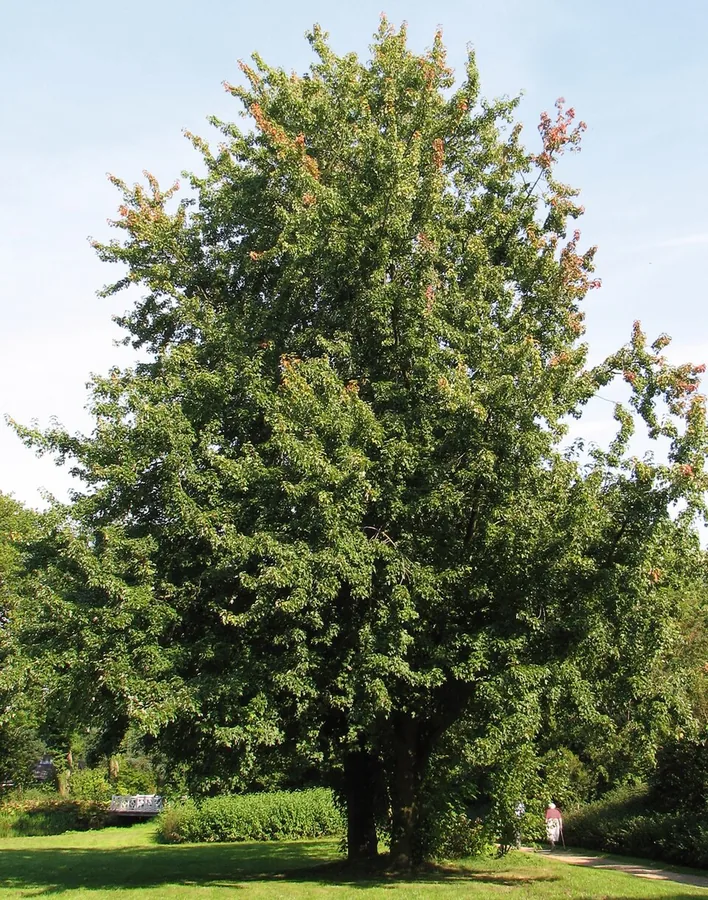
The silver maple wears its name on the backs of its leaves. Each leaf is deeply cut into narrow lobes, green above and pale, silvery gray beneath, and when a breeze lifts and turns them the whole tree seems to flicker and shimmer. It is a large native of riverbanks and floodplains, known just as well as river, swamp, or water maple. Few shade trees put on size as fast.
That fast growth shows in the wood, which comes in weak and brittle. Branches meet the trunk at tight, V-shaped forks, and where the bark folds down inside the union, pinched between two stems, the join stays weak and splits in ice and wind. Below ground the story repeats: shallow, vigorous roots run near the surface, thick enough to heave sidewalks, crowd drains, and press into sewer lines.
In late winter the bare branches flower first, opening from February to April, well ahead of any leaf. As spring goes on, the tree lets down its seeds, the winged samaras that spin loose in late spring to early summer. Green through the season, the deeply lobed canopy keeps that silver flash underneath from the first unfurling leaves to the last.
Care
The short version: silver maple takes full sun and moist to wet, slightly acidic soil, wants next to no feeding, and needs one real job done, structural pruning while the tree is young, so the brittle wood and its narrow forks hold together in a storm.
Light
In full sun the crown fills out thick and even, the strongest, fullest version of the tree, though it holds a good shape in partial shade as well. The more light reaches the deeply lobed leaves, the denser the canopy they build.
Water
This is a floodplain tree, at ease in moist to wet ground and content even where the soil drains poorly and stays damp underfoot. Water young trees regularly until they establish, after which the deep, spreading roots carry them through some drought.
Soil
Silver maple is very adaptable underground, rooting in anything from average to wet and from crisp and well-drained to heavy and soggy. It prefers the slightly acidic side, a pH of 5.5 to 7.0, and on alkaline ground the new leaves lose their green and pale to a washed-out yellow.
Temperature
The tree is built for cold, holding through winters down to -29°F (-34°C) and summers up to 100°F (38°C). That wide tolerance is what carries it across so much of the country.
Humidity
Plain outdoor air is all its leaves ask for, so there is no humidity figure to chase. What the tree draws on is the water at its roots, far more than the moisture around its canopy.
Feeding
A silver maple rarely needs feeding, and a soil test should come first. Use a balanced slow-release tree fertilizer in early spring only where the soil shows a shortfall, and on alkaline ground answer the pale, chlorotic leaves with iron or manganese instead.
Pruning
Pruning is the one job that shapes the tree for life. Work in summer or while it is dormant, cutting out dead, weak, crossing, or co-dominant stems and any included bark wedged in the forks, and train young trees to a single strong leader so the brittle wood is far harder to snap in a storm.
Repotting
As a landscape tree it rarely needs repotting. A young one held in a nursery container should go in the ground before its roots coil around the inside or thread out through the drainage holes.
Size & spacing
This tree fills a lot of sky. A mature silver maple stands 50 to 80 feet (15 to 24 m) tall and reaches 35 to 70 feet (11 to 21 m) across, so it needs open ground well clear of buildings, walks, and pipes.
When to plant
Silver maple is hardy across zones 3 to 9 and goes into the ground in spring or fall, while the branches are bare and dormant or barely breaking. Its flowers come early, from February to April, opening on the still-bare branches before a single leaf shows. A young tree set out early roots in before its first hard season.
Northern hemisphere
Southern hemisphere
Typical months for a temperate climate: start earlier in warm zones, later where spring frosts linger.
- Plant: Spring or fall
- Harvest: February to April (flowers before leaves)
Hardiness
USDA hardiness zones: 3–9
Temperature: down to -40°C
Troubleshooting
Most of what troubles a silver maple you can read straight off the tree: the brittle limbs and the color of the leaves tell the story. A close look at the forks, the foliage, and the undersides of the branches catches trouble early. Match what you see below, then act while it still helps.
Split limbs and torn forks after a storm
Grown fast, the wood is weak and brittle, and the tight V-shaped forks with bark pinched inside are the first to tear open under ice, snow, or a hard wind. Train a young tree to one strong leader with wide, open branch angles to build a sounder frame. Cut away any cracked or hanging limbs at once, and leave the large ones overhead to a certified arborist.
Fix:
- Remove broken and hanging limbs promptly
- Make clean cuts back to the branch collar
- Have large or hazardous limbs assessed by a certified arborist
Wilting shoots and streaked sapwood
Shoots that wilt suddenly on one side, with a greenish to olive streak running through the sapwood beneath the bark, mark verticillium wilt, a soil fungus that plugs the tree's vessels from inside. In a cool, wet spring anthracnose blotches the leaves along their veins. No spray cures the wilt, so cut dead wood well below the streaking, keep the tree watered and vigorous, and avoid replanting a susceptible tree where wilt has shown before.
Fix:
- Prune out dead wood well below symptoms
- Water during drought and maintain tree vigor
- Do not replant susceptible species in known Verticillium sites
New leaves paling between still-green veins
When the newest leaves turn pale and washed-out while a fine net of veins stays green, that is chlorosis, brought on by alkaline soil that locks up the manganese and iron the tree needs. Test the soil pH and lower it where you can. Work chelated iron or manganese into the ground, and keep lime away from the root zone so fresh leaves come in green.
Fix:
- Test and lower soil pH where feasible
- Apply chelated manganese or iron amendments
- Mulch and avoid lime near the root zone
Cottony white tufts under the branches
The soft white tufts stuck to the undersides of the branches are the egg sacs of cottony maple scale, each a little mass of fluff, and the clear honeydew they drip dries into a black film of sooty mold below. On a healthy tree the damage is mostly a matter of looks. Watch the branches through late spring and early summer, wet the crawlers with horticultural oil, and let the predator insects work them over.
Fix:
- Apply horticultural oil during dormancy
- Spot-treat crawlers with horticultural oil
- Conserve natural predators and parasitoids
Toxicity
For most homes the news is easy: silver maple, like every maple, is non-toxic to cats and dogs and harmless to people, whose spring tapping of its sap yields a light syrup. Horses are the exception. Wilted or dried maple leaves damage a horse's red blood cells, so keep fallen and storm-broken foliage well away from any paddock.
Toxic to
Horses
Safe for
People · Cats · Dogs · Rabbits · Livestock · Birds
Horses Caution
Green leaves on the tree are safe, but wilted or dried ones are the true hazard. A horse that eats them may grow dull and weak, turn away from feed, and pass urine stained dark red to brown as its red blood cells break apart. Gather storm-downed branches and fallen leaves before they reach a paddock, and call a vet at once if a horse has gotten into them.
Cats Safe
Maples sit on the ASPCA non-toxic list, so a cat that bites into a leaf comes to no harm.
Dogs Safe
A dog can chew the foliage or trot off with a fallen twig, with no poisoning risk in the leaf or wood.
Rabbits Safe
Silver maple holds no toxic principle that troubles rabbits.
Livestock Safe
Cattle, goats, and sheep can graze near a silver maple unharmed, though the wilted-leaf risk that strikes horses is worth keeping in mind for grazing animals.
Birds Safe
Birds build nests in the canopy and pick over the winged seeds with no ill effect.
People Safe
The tree carries nothing poisonous to people, and its spring sap has long been tapped for a light syrup.
Keep wilted, fallen, or storm-downed silver maple leaves and branches away from horses; wilted leaves can cause red blood cell damage (hemolytic anemia) in horses.
Helpline numbers

United States
ASPCA Animal Poison Control: (888) 426-4435 (fee applies)

United Kingdom
Animal PoisonLine: 01202 509000 (fee applies)

Australia
Animal Poisons Helpline: 1300 869 738
Varieties
The species is usually grown from seed, but two named selections stand apart by look and habit. These are the two most often found.
Silver Queen
It carries a tidier, oval crown, sets little or no seed to drop and clean up, and turns a clear yellow in fall.
Skinneri (Skinner's Cutleaf)
Its leaves are cut even deeper into a fine, lacy outline, and its branches hang in a soft, weeping sweep.
How to propagate
Silver maple starts easily, thanks mostly to seed that sprouts almost at once. It grows from the fresh winged samaras it drops or, with more effort, from soft summer cuttings.
SeedEasy
Sow fresh seed in late spring to early summer as soon as samaras ripen · 2 to 4 weeks to germinate; fresh seed germinates readily without stratification
Seed is the easy road, and it starts with the winged samaras the tree scatters in late spring to early summer. They barely go dormant, so they belong in the soil fresh, the moment they spin down. Sown at once, they push up seedlings in 2 to 4 weeks with no cold treatment.
Stem cuttingsModerate
Early summer from softwood · Several weeks to root under mist
Softwood cuttings, taken in early summer while the shoots are still green and bending, root under mist over several weeks as the humid air keeps them from drying. The strike rate trails seed, so most growers reach for the samaras first.
Myths
All maples are toxic to dogs and cats.
The ASPCA lists silver maple and its relatives as non-toxic to both dogs and cats, so a leaf chewed by a curious pet does no harm. The real hazard is to horses, and only from wilted or dried leaves, not the green foliage on the living tree. Clear fallen and storm-broken leaves out of any paddock and the danger is gone.