Houseplant · Araceae
Glorious Philodendron
Philodendron gloriosum
Given warmth, humidity, and bright indirect light, this velvet-leaf crawler unrolls one deep green, heart-shaped leaf after another.
Bright indirect
65–85°F · 18–29°C
USDA 10–12
Overview
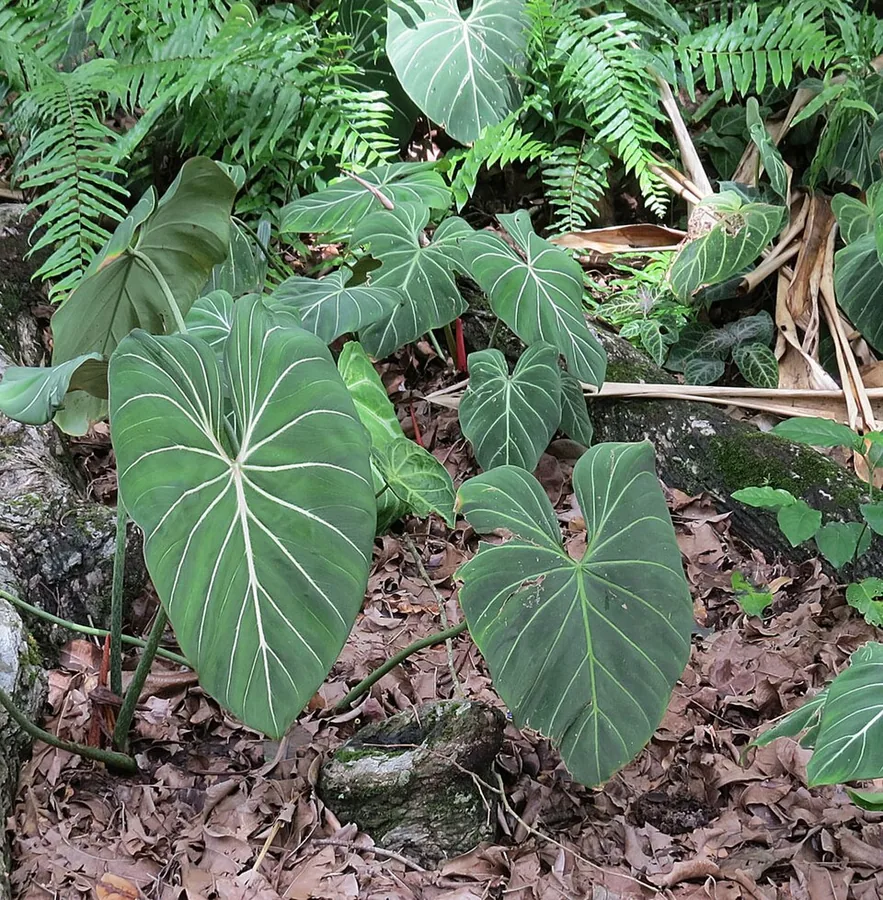
Philodendron gloriosum earns its name with broad, heart-shaped leaves surfaced in deep green velvet, each blade traced by pale, silvery veins that fan out from the center. Rather than a climber, it grows as a crawler: a thick, fleshy stem creeps sideways across the soil surface, pressing forward instead of reaching up a pole. It comes from the rainforests of Colombia, where it took on its taste for warmth, steady moisture, and humid air.
Run a hand near a leaf and the matte, light-drinking velvet of its surface is the first thing you notice, and up close the raised silver veins stand out against the dark green. The plant advances slowly along its stem, unfurling one new heart-shaped leaf every few weeks through the growing season. What holds it back most is drainage, since the fleshy roots rot quickly in a mix that stays soggy.
Every part of this plant is packed with calcium oxalate crystals, which makes the whole thing an irritant to people and pets. It is grown for the look and feel of its foliage, never to be eaten. Keep it where curious cats, dogs, and small children cannot reach the velvet leaves.
Care
The short version: bright indirect light, a loose free-draining mix, and water only when the top of the soil dries. Keep it warm and humid, feed it lightly through the growing season, and never let it sit in water.
Light
Set it in bright indirect light, close to a window but clear of the sun's direct beam. It carries on in medium light or dappled shade, only more slowly. Direct summer sun bleaches the deep green and scorches the delicate velvet surface of the leaves.
Water
Water only once the top of the soil has dried, then soak it through and let the surplus drain. The thick, fleshy roots turn soft and rot in a mix that stays wet, so keep it on the dry side and never leave the pot standing in a saucer of water.
Soil
Give it a loose, free-draining aroid mix of peat or coir studded with chunks of bark and gritty perlite or sand. It leans acidic, around a pH of 5.0 to 6.0, with open pockets of air among the roots.
Temperature
Hold it in the warm band of 65°F to 85°F (18°C to 29°C) it grew up in. It has no tolerance for cold, so keep it clear of drafty doors and the chill of winter windowpanes.
Humidity
This is a high-humidity plant of the rainforest floor, and damp air brings out its fullest, most velvety growth. It gets by in ordinary room humidity, though a huddle of plants or a pebble tray thickens the moisture around the leaves.
Feeding
Feed it monthly through the growing season, from spring into early autumn, with a balanced houseplant fertilizer at a weak dilution. Ease off in winter as growth slows, and rinse the mix through now and then to clear the salts that crust the surface.
Pruning
There is little to trim beyond tidying. Take off dead, damaged, or yellowing leaves as they appear, and if a stem stretches out bare, cut just after a leaf node in spring. Wear gloves, since the clear sap can irritate skin.
Repotting
Repot every 2 to 3 years, or once the roots crowd the pot, in spring. Because the thick stem crawls sideways along the surface, a wide, shallow container fits its habit far better than a deep one.
Troubleshooting
Most of what goes wrong with this plant shows up on the velvet leaves and traces back to water and light. Yellowing blades, softened roots, and bleached patches each tell a clear story. Match what you see below and correct it before it spreads across the foliage.
A slumping plant with soft stems and sour-smelling soil
A plant gone limp over soil that smells sour is showing root rot, brought on by a mix that stays wet too long. Tip it out and read the roots by touch: the sound ones feel firm and look pale, while the rotten ones turn brown and squash between the fingers. Cut the soft roots away, repot into a fresh free-draining mix, and water less from then on.
Fix:
- Remove from the soggy medium and cut away rotten roots
- Repot into fresh free-draining mix
- Reduce watering frequency and empty saucers
The oldest, lowest leaves turning yellow
When the oldest leaves at the base fade from deep green to yellow, the plant is signaling too much water or too little light. A sodden mix or a dim position is usually behind the color change. Let the soil dry between waterings and set the plant in bright indirect light, and the fresh leaves come back a rich, even green.
Fix:
- Allow the medium to dry appropriately between waterings
- Move to a brighter spot with bright indirect light
Bleached, scorched patches across the exposed leaves
Pale, washed-out patches where the deep green should be mean the velvety leaves are taking too much direct sun, often through a bright summer window. The bleaching settles on whichever leaves stand full in the light. Move the plant into bright indirect light, and the next leaves unfurl in clean, unmarked green.
Fix:
- Move out of direct sun into bright indirect light
Sticky film, fine webbing, or tiny insects on the foliage
A glistening sticky film, threads of fine webbing, or minute specks creeping over the leaves reveal sap-sucking pests such as mealybugs, spider mites, scale, or aphids. They tuck into the shaded undersides and the crook where each leaf joins the stem. Wipe or rinse them off the velvet surface, treat with insecticidal soap or horticultural oil, and repeat until the foliage is clean.
Fix:
- Wipe off or wash off pests
- Treat with insecticidal soap or horticultural oil and repeat as needed
Brown, crisp tips and edges rimming the leaves
Brown that dries in along the tips and edges of the velvet leaves usually marks fertilizer salt build-up after heavy feeding. A pale, chalky crust on the soil surface or pot rim gives it away. Stop feeding, pour plenty of plain water through the mix to rinse the salts out, and feed again only at a weak dilution.
Fix:
- Stop fertilizing and flush the medium thoroughly with water
- Resume feeding only at dilute rates during the growing season
Toxicity
This is a plant to look at closely, not to taste. Every part is filled with insoluble calcium oxalate crystals, sharp and needle-like, that burn the mouth and throat when chewed, and the clear sap can redden bare skin. It is toxic to cats, dogs, and horses, and unsafe for people too, so keep it out of reach of pets and small children and wear gloves when you prune.
Toxic to
Cats · Dogs · Horses · Rabbits · Livestock · Birds · People
Cats Moderate
A cat that chews any part meets a burning mouth, a rush of drool, and a tongue and lips that swell. It will paw at its face, turn from its food, and may vomit or fight to swallow.
Dogs Moderate
A dog that bites into a leaf feels the sting the instant the crystals release, pawing at its mouth, drooling, and swelling around the lips and tongue. Vomiting and difficulty swallowing can follow.
Horses Moderate
The same needle-like crystals rake a horse's mouth and throat, leaving it drooling, its tissues swollen and sore, and swallowing hard. Horses cannot vomit, so the irritation stays in the mouth and gut.
Rabbits Caution
The oxalate crystals sting a rabbit's mouth and gut as sharply as they do other animals, so the plant belongs out of reach. A single chewed leaf is reason enough to call the vet.
Livestock Caution
Grazing animals that mouth the leaves meet the same burning irritation and streaming drool. It is an unlikely meal indoors, but worth fencing off if the plant ever goes outside.
Birds Caution
A curious bird that nibbles a leaf risks the same raw oral irritation and swelling. Keep pet birds away from the foliage entirely.
People Caution
No part of this plant is food. A chewed leaf burns the mouth and lips, and the clear sap can leave bare skin red and itchy, so wear gloves when you prune and keep it away from small children.
Plant sap can cause skin irritation / contact dermatitis; wear gloves when cutting stems and wash hands afterward (genus-level)
Helpline numbers

United States
ASPCA Animal Poison Control: (888) 426-4435 (fee applies)
Poison Control: (800) 222-1222



Canada
Poison Centres: 1-844-764-7669
How to propagate
This philodendron is easy to multiply from its creeping stem, whether you divide the fleshy rhizome, root a cutting in water, or layer a stem before you cut it free.
DivisionModerate
Spring to summer, during active growth · Roots in a few weeks
This plant travels on a thick, fleshy surface stem, and that creeping rhizome makes division the natural way to split it. In spring or summer, while it is in active growth, cut the rhizome into pieces so each holds at least one node. Pot the sections up and pale new roots push out within a few weeks.
Stem cuttingsEasy
Spring to late summer · Roots in about 2 weeks in water
A stem cutting is the simplest way in. Between spring and late summer, take a piece about 4 inches (10 cm) long, cutting just below one of the swollen leaf nodes. Stand it in a glass of water and thin white roots thread out in about two weeks.
Air layeringModerate
Any season · Several weeks
Air layering coaxes roots from a stem while it is still attached. In any season, nick a node, pack it in damp moss, and keep the moss moist as roots knit through it over several weeks. Once they have, sever the rooted section and pot it on.
Myths
Philodendrons are harmless houseplants that are safe around pets.
The ASPCA lists philodendron as toxic to cats, dogs, and horses, and every part of it is loaded with insoluble calcium oxalate crystals. Those tiny sharp crystals turn a chewed leaf into a burning, swollen mouth and a flood of drool, so keep this plant out of reach of pets and children.
Philodendrons need bright, direct sunlight to thrive.
The plant is at its best in bright indirect light, not full sun. Direct rays, above all through a summer window, scorch the velvety surface and bleach pale, burnt patches into the deep green.