Houseplant · Araceae
Swiss Cheese Vine
Monstera adansonii
Give it bright indirect light and something to climb, and the Swiss cheese vine unfurls leaf after leaf, each blade cut through with clean oval holes.
Bright indirect
60–85°F · 16–29°C
USDA 10–12
3–8 ft · 0.9–2.4 m
Overview
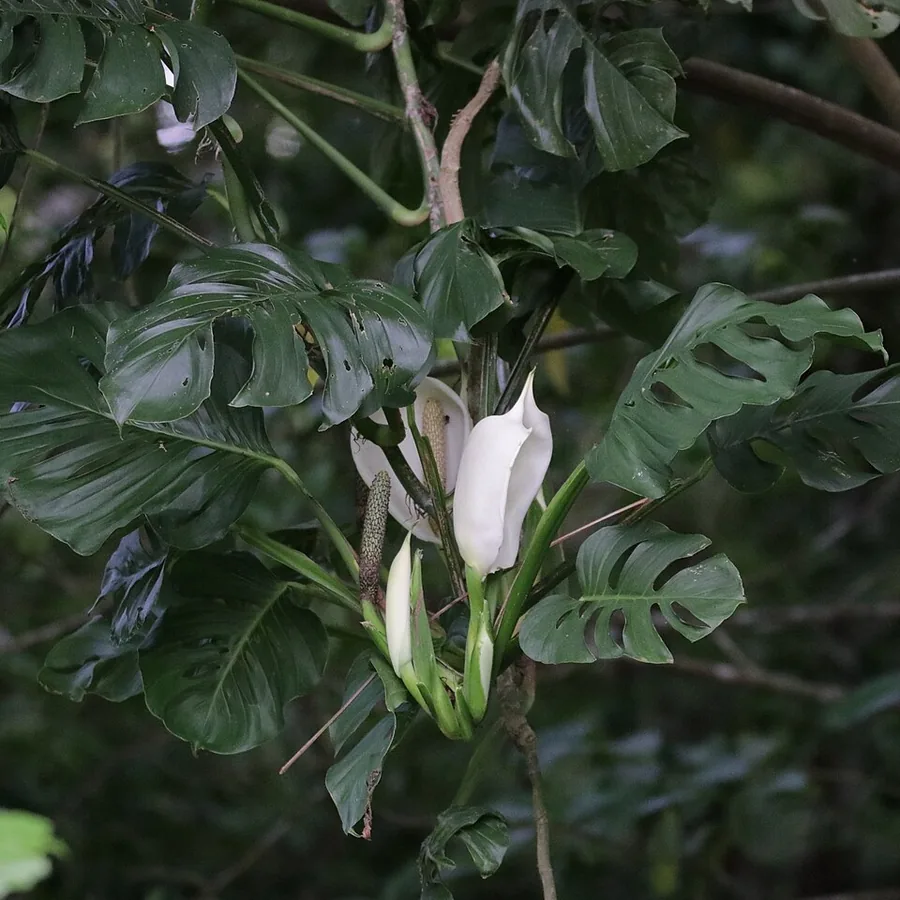
The Swiss cheese vine earns its name from the rows of oval holes cut clean through each green leaf as the blade matures. It is a climbing aroid from the tropical forests of Central and South America, where it hauls itself up rough tree trunks toward the light. That climbing habit stays with it indoors, where the vining stems reach and grip, running up a moss pole or spilling down off a high shelf.
It sits in the arum family beside philodendrons and pothos, and the family look shows in its glossy, deep green blades. The stems throw out short aerial roots at each node, stubby anchors that grab whatever they climb. Those pierced holes, known as fenestrations, start small and widen into open ovals as each leaf grows up.
It gets confused with the larger Monstera deliciosa, but its leaves are smaller and finer, thinner in the hand and quicker to unfurl. The vine grows fast in warmth and humidity, pushing new leaves in a steady line. One thing set apart from its looks: every part of it is toxic if a pet or child chews on it.
Care
The short version: bright indirect light, a well-draining mix, and water only once the top inch or two has dried. Keep it warm and humid, give it something to climb, and it grows fast, opening one holed leaf after another.
Light
Give it bright indirect light and the blades grow broad and deep green, cut with the most holes. In medium light or partial shade it hangs on, but growth slows and the leaves stay smaller and more solid, with fewer holes. Harsh direct sun scorches the green and leaves crisp brown patches.
Water
Water once the top 1 to 2 inches (2.5 to 5 cm) of soil has dried, then soak the mix through and let it drain from the base. Soggy soil is the fastest way to soften and rot the roots, so err on the dry side. The leaves droop and dull before the soil ever sits wet too long.
Soil
Use a well-draining, organic-rich potting mix shot through with chunks of bark or gritty perlite so water slips past the roots. It shrugs at pH and takes anything from 6.0 to 8.0. What the roots want is air and drainage, not a precise recipe.
Temperature
Keep it between 60°F to 85°F (15.6°C to 29.4°C), the warmth of most heated rooms. It has no frost tolerance and the leaves droop and pale in a cold draft, so keep it clear of chilly windows and air conditioning vents in winter.
Humidity
This tropical vine wants moist air above 50% humidity, the kind that keeps the blades supple and glossy. It survives in dry room air, but the leaves come out bigger and greener with more moisture around them. A pebble tray, a humidifier, or a bright bathroom lifts the level.
Feeding
Through spring and summer, feed it every two weeks with a balanced houseplant fertilizer at the usual strength to keep the new leaves broad and deep green. Ease off in fall and winter as growth slows. Steady feeding through the warm months drives the run of fresh, holed leaves.
Pruning
Trim leggy, bare-stemmed vines back to keep the plant dense, and cut away any yellowed or damaged leaves at the base. Pruning in the growing season also leaves you sections of stem to root. Pinching the growing tips pushes out side shoots rather than one long, sparse trailing stem.
Repotting
Repot every 1 to 2 years in spring, one pot size up, when pale roots snake through the drainage holes, coil around inside the pot, or growth stalls. Fresh mix and a little more room keep this fast grower pushing new leaves. Sinking a stake or moss pole at the same time gives the aerial roots something to grip.
Size & spacing
Trained up a support indoors the stems climb to about 3 to 8 feet (91 to 244 cm) tall, fanning out to a spread of roughly 1 to 3 feet (30 to 91 cm). Given something to climb or trail from, the leafy stems fill the space quickly.
Troubleshooting
Most of what shows up on this vine, whether on the green blades or the pale roots, traces back to watering and the air around it. The leaves and stems flash the early signs, so read them and you can act before the damage spreads. Match the look below to your plant and step in while it still helps.
Mushy roots and a wilting plant
Root rot creeps in when the roots sit wet and suffocate, and lifting the plant reveals them gone brown, slick, and soft instead of pale and firm. Slide it from the pot, cut back every mushy root to clean tissue, and settle it into fresh draining mix. A lighter touch with water afterward is what lets firm new roots take their place.
Fix:
- Unpot plant
- Cut away rotten roots
- Repot in fresh draining mix
Leaves turning yellow
When a green leaf fades to a soft yellow, the cause is nearly always overwatering and a pot that clings to water. The tell is soil that stays dark and wet and a stem base gone soft and squashy at the touch. Cut back the water, let the pot drain clear, and hold off until the soil dries, and the color firms up again.
Fix:
- Reduce watering
- Ensure pot drains freely
- Let soil dry before next watering
Dark spots on the leaves
Brown to near-black leaf spots bloom on the green blade wherever water beads and lingers in still air. Pick off the spotted leaves, water at the soil so the blades stay dry, and open a path for air to move past them. Dry foliage and moving air keep fresh marks from breaking out across the leaves.
Fix:
- Remove affected leaves
- Avoid wetting foliage
- Improve air circulation
Fine webbing and speckled leaves
Spider mites settle in when the air dries out, strewing fine silk webbing across the leaves and stippling the green with tiny pale dots until it looks dull and dusty. Rinse the blades, wipe them clean, and reach for insecticidal soap if the specks persist. A regular look at the leaf undersides and steady humidity keep the foliage clear.
Fix:
- Rinse foliage
- Wipe leaves
- Apply insecticidal soap
Brown bumps stuck to the stems
Scale insects stud the stems and leaves as small, hard brown bumps that sit flat and cling tight when you try to brush them off. Touch each one with alcohol, work the rest off by hand, and coat what remains with horticultural oil. A close look at every new plant and a spell of isolation keep the bumps from creeping onto the rest.
Fix:
- Wipe with alcohol
- Remove scale by hand
- Apply horticultural oil
New leaves come in solid with no holes
A smooth, unbroken green blade with no holes marks a young plant or one starved of light, not a fault in the leaf. The signature oval holes cut into the blade only as the plant matures and climbs. Give it bright light out of direct sun and a support to rise on, and later leaves open with those clean punched holes.
Fix:
- Provide bright indirect light
- Allow plant to mature
- Add climbing support
Toxicity
This is a toxic plant from the tip of each leaf down to the stem. Every part is packed with insoluble calcium oxalate crystals, tiny needle-like shards that burn the mouth and throat the instant they are chewed, setting off drooling, pain, and swelling. Keep it out of reach of pets and children, and pull on gloves when you prune, since the clear sap can irritate bare skin.
Toxic to
Cats · Dogs · Horses · Rabbits · Livestock · Birds · People
Cats Moderate
A cat that sinks its teeth into a leaf releases sharp calcium oxalate crystals into its mouth. Look for drooling, pawing at the mouth, vomiting, and trouble swallowing.
Dogs Moderate
A dog that chews the green foliage meets a sharp burning in the mouth, streams of drool, and a churning stomach. That immediate sting tends to stop it before much goes down.
Horses Toxic
The same needle-like crystals inflame a horse's mouth and gut, bringing drooling, raw mouth pain, and colicky discomfort. The plant belongs well out of reach.
Rabbits Toxic
This green vine is not safe browse for a rabbit. A single nibble stings the mouth, starts the drooling, and unsettles the gut, so keep it where a rabbit cannot reach it.
Livestock Toxic
Grazers such as goats and sheep take painful mouth and gut irritation from the oxalate crystals in the leaves and stems. There is no reason to let them near it.
Birds Toxic
A pet bird that tears at a leaf gets the same burning sting in the beak and throat. Keep cages and perches clear of the foliage.
People Caution
No part of this plant is meant for eating. Chewing it burns the mouth and swells the lips and throat, and the clear sap can leave bare skin itchy or raw, so wear gloves when you prune.
Wear gloves; sap can cause contact dermatitis
Helpline numbers

United States
ASPCA Animal Poison Control: (888) 426-4435 (fee applies)
Poison Control: (800) 222-1222



Canada
Poison Centres: 1-844-764-7669
Varieties
Only a couple of named forms of this vine turn up in cultivation, each with its own cast to the leaves. These are the two worth knowing.
subsp. laniata
An accepted subspecies that takes in the older name Monstera friedrichsthalii, now held as a synonym of it.
'Mint' (variegated)
A variegated cultivar recognized by the RHS, its green blades marbled and streaked with pale mint.
How to propagate
This is one of the easier houseplants to grow more of, and a single healthy length of stem is enough to raise a whole new plant.
Stem cuttingsEasy
Spring to summer · Several weeks to root
Stem cuttings are the simplest way to grow more of this vine. In spring or summer, cut just below a node that already carries a stubby aerial root, then stand the cutting in water or moist mix. Over a few weeks, fine white roots push out and the cutting becomes a plant of its own.
Air layeringModerate
Growing season · Few weeks to form roots
Air layering grows roots on a stem while it stays joined to the parent, the surer route on a tricky vine. Pack a node in damp moss through the growing season and give it the few weeks it takes for roots to push into the moss. Once they have, cut the rooted stem free and pot it.
Myths
The holes appear because the plant is underfed.
Feeding does nothing to open the holes. The holes, called fenestrations, open as each leaf matures, so a young or shaded plant simply has not grown a blade old enough to carry them.
Adansonii is just a baby Monstera deliciosa.
The two look alike enough to confuse, yet they are not one plant. Monstera adansonii Schott is its own accepted species, not a young stage that grows up into deliciosa.