Ornamental · Ranunculaceae
Monkshood
Aconitum napellus
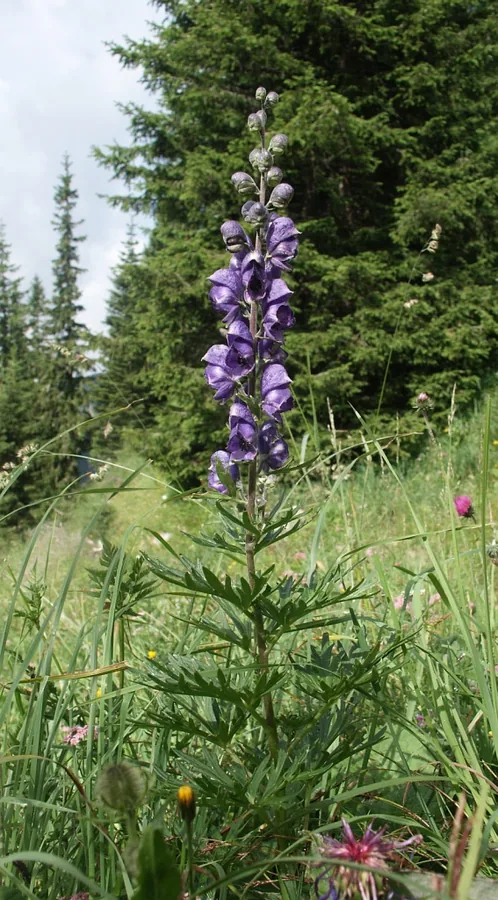
Tall blue hooded spikes that earned the name queen of poisons, each flower a deep purplish-blue cowl on a towering stem.
Full sun
Every 3–7 days
USDA 3–7
3–4 ft · 0.9–1.2 m
Overview
Monkshood raises tall, upright stems that top out in dense spikes of hooded flowers, each one a deep purplish-blue. The upper part of every bloom arches forward into a rounded hood, like a cowl drawn over a face, and that curved shape is exactly what named the plant. It is a member of the buttercup family and colours the garden most in the cool, moist ground of the colder USDA zones.
For all its close-up beauty, this is one of the most poisonous plants in the border. Every part of it holds aconitine, a fast-acting toxin that fixed old names like wolfsbane and queen of poisons to the plant long ago. That toxicity is serious wherever children, pets, or grazing animals share the ground.
It grows as a slow, long-lived perennial that dislikes being moved and asks little once its roots take hold. Set it in rich, damp, well-drained soil, give the tall stems a little shelter, and wear gloves any time you touch it. Handled with that care, a clump stands and reflowers year after year.
Care
The short version: full sun to part shade in cool climates, soil kept evenly moist but never waterlogged, rich ground worked with compost, and gloves worn every single time the plant is touched.
Light
Monkshood colours up best in full sun in cool climates, though it takes some afternoon shade where summers run hot. In too much shade the stems thin out weak and floppy, so it wants strong light along with a little shelter.
Water
The soil stays evenly moist and never dries out, which in a dry spell means watering roughly every 3 to 7 days. It resents standing water just as much, so the ground must drain. Through a hot summer, steady moisture and a little afternoon shade keep the foliage firm.
Soil
Monkshood roots into rich, moist, well-drained ground dark with organic matter. It takes a broad pH span from 5.5 to 7.5, so most garden soil serves once plenty of compost is dug through it.
Temperature
This is a plant of cold ground, hardy down to about -35°F (-37°C) and reaching only near 84°F (29°C). Real heat wilts it, which is why a little afternoon shade helps where summers bake.
Humidity
Ordinary outdoor air suits it, so there is no level to meet. Air movement matters more, since still, humid conditions dust powdery mildew across the leaves.
Feeding
Monkshood is fed in spring as growth begins, with a balanced fertilizer or a layer of compost worked into the soil. One seasonal feed carries so slow a grower through the year.
Pruning
The spent flower stalks are cut once the blue fades, to tidy the clump and sometimes draw a second flush, and the foliage is cut back after it dies down in fall. Gloves are always worn, and the cut stems and their sap stay off the skin.
Repotting
A settled clump is best left undisturbed, divided only every 4 to 5 years and only when overcrowded. Sparser flowering, smaller crowded leaves, or a hollow, dying center mark the point at which it needs splitting.
Size & spacing
The stems rise 3 to 4 feet (91 to 122 cm) tall from narrow clumps that spread just 12 to 18 inches (30 to 46 cm) across, a tall, slim column of a plant. A little room around each keeps air moving through the foliage and mildew off the leaves.
When to plant
Monkshood keeps a cool-season rhythm. The cold-treated seed is sown in late winter, settled clumps are split in early spring or fall, and the tall spikes of blue hoods open through the heat of July and August.
Northern hemisphere
Southern hemisphere
Typical months for a temperate climate: start earlier in warm zones, later where spring frosts linger.
- Sow: Late winter; seed needs cold stratification and germination is slow and erratic
- Plant: Spring after frost, or divide established clumps in early spring or fall
- Harvest: July to August
Hardiness
USDA hardiness zones: 3–7
Temperature: down to -40°C
Troubleshooting
Most monkshood trouble starts hidden at the roots in soggy soil, or up among stems packed too close for air. The early signs give you time to step in before a clump is lost. Match what you see below, and pull on gloves before you touch an ailing plant.
Crown blackened to brown pulp, slumping down at the stem base
When the base turns soft and blackens where stem meets soil, that is crown rot, brought on by ground that stays sodden or a clump grown too tight to breathe. The rotted tissue goes slick and dark, and those plants come out in gloves. Sound divisions return only once the drainage is fixed and the soil loosened.
Fix:
- Remove and discard affected plants (wear gloves)
- Improve drainage and avoid overhead watering
- Replant healthy divisions in better-drained, amended soil
Limp, drooping leaves hanging slack even after the soil is soaked
Leaves that go limp and yellow and never firm up after watering signal verticillium wilt, a soil fungus that plugs the stem from within and stains the inner tissue. No watering revives it and no cure follows. The affected plants are dug out and destroyed, and susceptible plants stay clear of that ground.
Fix:
- Remove and destroy affected plants
- Avoid replanting susceptible plants in the same soil
- Maintain plant vigor with proper moisture and nutrition
Dusty white film coating the leaves
A chalky white bloom dusted over the upper leaf surfaces is powdery mildew, a fungus that settles in late in the season when the air turns humid and still. It spreads as a flat, floury film across the green. More space and drier foliage clear it, and beneath the coating the leaves usually take little real harm.
Fix:
- Improve air circulation by thinning or spacing plants
- Remove and discard badly affected foliage
- Avoid wetting foliage when watering
Tall, top-heavy flower spikes sagging and folding after a downpour or gust
The flower spikes climb high and grow top-heavy, so a soaking rain or a gust bows them low and lays them across the bed. A shaded or overfed site makes the stems softer and quicker to fold. Supports set early hold that vertical line, and a sheltered spot spares them the worst of the wind.
Fix:
- Stake or support taller stems
- Site in a spot with some shelter from strong wind
Toxicity
This plant is genuinely dangerous. All parts hold aconitine, a poison that can kill cats, dogs, horses, livestock, and people, sometimes within hours of swallowing only a little. The sap crosses skin as well, so it is handled only in gloves and kept well clear of animals and children.
Toxic to
Cats · Dogs · Horses · Rabbits · Livestock · Birds · People
Cats Severe
In a cat, a few mouthfuls can prove fatal. Heavy drooling comes first, then vomiting, a stumbling weakness, and laboured breathing, while the heart races or stutters toward sudden collapse. Any contact is an emergency.
Dogs Severe
A dog that chews any part drools, bloats, and vomits quickly, then weakens and struggles to breathe. The gravest harm is to the heart, where the toxin throws the rhythm into disarray and can stop it entirely.
Horses Severe
A grazing horse salivates, colics, and trembles through the muscles within a short window. Its breathing turns hard and the heartbeat slips out of rhythm, and fatal cardiopulmonary failure can follow.
Rabbits Severe
The aconitine that fells larger animals is just as lethal inside a rabbit. Even a nibble can bring on drooling, weakness, and a failing heartbeat, so every part is kept well out of reach.
Livestock Severe
Cattle, sheep, and goats are poisoned by the foliage and roots, and losses in grazing stock are well documented. Staggering, a slowed heartbeat, and breathing trouble set in, and death can come before help arrives.
Birds Severe
Aconitine acts on the whole body with no dose that is safe, and birds are not spared. Any pecking at leaves, seeds, or roots risks rapid weakness and a fatal disruption of the heart.
People Caution
No part of this plant is food. Swallowing even a small amount brings tingling, numbness, vomiting, and dangerous heart rhythms, and the sap crosses the skin, so it is handled only in gloves and never bare-handed.
Wear gloves whenever handling this plant, avoid skin or oral contact with plant juices and cut stems, cover any open cuts or abrasions, and wash hands thoroughly afterward. Keep away from pets, livestock, and children.
Helpline numbers

United States
ASPCA Animal Poison Control: (888) 426-4435 (fee applies)
Poison Control: (800) 222-1222



Canada
Poison Centres: 1-844-764-7669
Varieties
Most monkshood grown is the wild deep-blue species, but a few named forms recolour the hooded flowers. These are the ones you are most likely to meet.
Album
Album opens clean white hooded spikes where the wild plant shows deep purplish-blue.
Carneum
Carneum tints its flowers a pale pink to pinkish shade, softer and paler than the wild species.
Bicolor
Bicolor splits each bloom between blue and white on the one flower and is often sold under Aconitum x cammarum.
How to propagate
Monkshood is increased by splitting a clump or by sowing seed, and both routes call for patience and a pair of gloves from beginning to end.
DivisionModerate
Early spring or fall · Often slow to establish; may take a year or more to settle and bloom well
An established clump is lifted and split in early spring or fall, with gloves kept on throughout, since the sap is dangerous against bare skin. The divisions resent the disturbance and tend to sulk, taking a year or more to settle in and bloom well again.
SeedDemanding
Sow in late winter; seed benefits from cold stratification · Slow and erratic germination over many weeks
Seed is sown in late winter after a cold spell breaks its dormancy, and even then it surfaces slowly and unevenly over many weeks. The seed and the young seedlings are handled in gloves, since every part already carries the toxin.
Myths
Monkshood threatens only those who eat it, so brushing its stems with bare fingers does no harm.
The aconitine held in the sap seeps straight through skin, so brushing against cut stems or their juices is a hazard on its own. Garden and poison authorities are firm on the point: wear gloves and avoid all contact, and take extra care over any open cut.
The poison hides in roots and seeds alone, so the green leaves and hooded flowers stay harmless.
Every part of the plant is toxic, from the bark and leaves to the flowers, fruit, seeds, roots, and stems. The roots, seeds, and young shoots simply hold the densest load of poison, which leaves nothing else safe to touch or taste.