Houseplant · Araceae
Mini Monstera
Rhaphidophora tetrasperma
Give it bright indirect light, a moss pole, and humid air, and the mini monstera climbs fast all year.
Bright indirect
65–80°F · 18–27°C
USDA 9–12
2–15 ft · 0.6–4.6 m
Overview
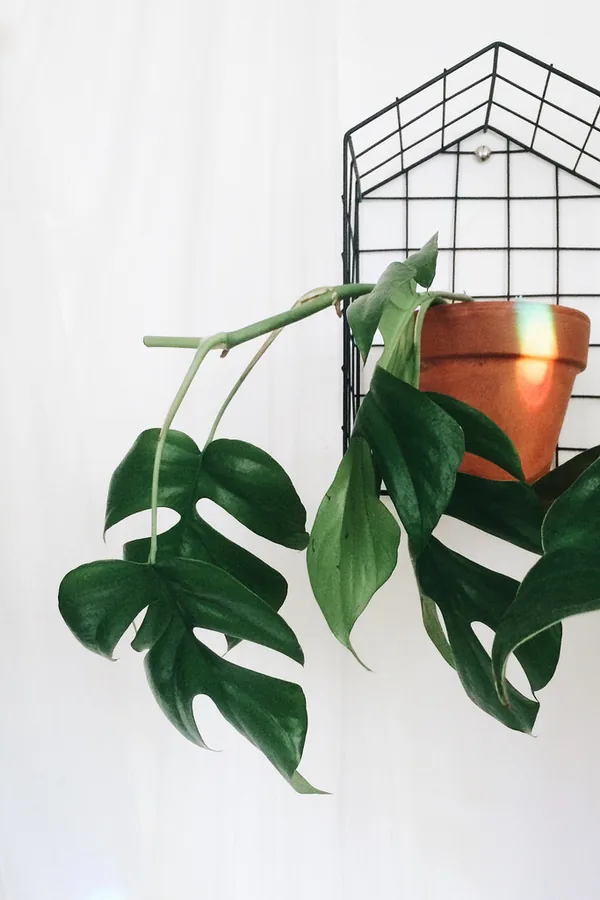
The mini monstera looks like a scaled-down, quicker version of the big Swiss cheese plant, its glossy green leaves carved with the same deep splits and running up a slim climbing vine rather than sprawling out. The leaves rise in a clean line along the stem, each one cut and fenestrated where light passes between the lobes. Despite the nickname, this is not a Monstera and not a Philodendron, but a plant in its own genus, Rhaphidophora, native to the forests of Thailand and Malaysia.
Indoors it grows fast and reaches for a support to climb. Given a moss pole or trellis, the vine stacks its cut leaves into a tall, leafy column, each blade held out on a slender stalk; left loose, it trails, and the leaves come in smaller with shallower, fewer splits. Along the stem sit swollen nodes and short, wiry aerial roots that grip whatever the plant climbs. The leaves widen and their splits deepen as the plant matures and climbs higher.
It carries an easy nature behind that dramatic, split-leaf look, wanting little more than steady warmth, moist air, and a measured hand with water. The main misstep is overwatering, which turns the firm white roots soft and brown. Keep the mix on the drier side of moist, and the vine keeps pushing out crisp, deeply cut new leaves.
Care
The short version: bright indirect light, a pole to climb, and warm, humid air around 60% or more. Water only when the top inch of mix dries, plant it in a loose, fast-draining potting mix, and feed it monthly through spring and summer.
Light
Give it bright indirect light at a window that misses the harsh midday sun. A few hours of soft direct sun sit fine on the leaves, but strong rays scorch and bleach the green surface, while deep shade leaves the new leaves small, pale, and barely split.
Water
Water once the top inch (2.5 cm) of mix has dried, then pour thoroughly until it streams from the drainage holes. This plant rots far sooner than it dries, its roots turning soft and dark in soggy soil, so wait a day whenever you are unsure. Ease off in winter as growth slows.
Soil
Plant it in a loose, well-drained potting mix rich in dark organic matter, studded with chunky bark and gritty perlite to keep pockets of air around the roots. It takes a fairly wide range up to a pH of 8.0, so most quality houseplant mixes suit it without fuss.
Temperature
Hold it in the 65°F to 80°F (18°C to 27°C) range, the warmth of an ordinary heated room. Cold drafts and sudden chills mark and stall the leaves, so keep it clear of doors and air conditioning vents in winter.
Humidity
This is a humidity lover, at its glossy best above 60%. Average room air keeps it alive, but the dry air of a heated winter crisps the leaf edges to brown, so a humidifier or a steamy bathroom keeps the foliage supple.
Feeding
Feed monthly through spring and summer with a balanced liquid fertilizer diluted to half strength, when the vine is pushing out its largest, most deeply cut leaves. Stop in fall and winter as growth slows, since unused fertilizer builds up as salts in the mix.
Pruning
Trim the vine back to the length you want and snip off any yellowed or torn leaves at the base, where the stalk meets the stem. Pruning doubles as propagation, since every healthy cutting with a node can root into a new plant.
Repotting
Repot every 1 to 2 years once the roots fill the pot, moving up one size into fresh mix. Pale roots pushing out through the drainage holes and growth that has stalled are the two clear signs it is time.
Size & spacing
With support the vine climbs from 2 to 15 feet (61 cm to 4.5 m) tall and spreads 1 to 4 feet (30 to 122 cm) wide, its cut leaves stacking up the pole. Give it a trellis and headroom, since the higher it climbs, the larger the leaves grow and the deeper their splits cut.
Troubleshooting
Nearly every mini monstera problem shows up first in the look of the leaves and soil, and traces back to water and air rather than pests or disease. Read the color of the foliage against the feel of the mix, since a yellow leaf over wet soil means the opposite of a limp one over dry soil. Match what you see below, then adjust before it spreads.
Brown, soft roots and a sour-smelling pot
Roots gone brown and slippery, paired with a sour smell rising off the soil, mark root rot that takes hold when the mix stays wet too long. Ease the plant free, cut away every softened brown root until only firm, pale tissue remains, and press it into fresh, quick-draining mix. Water again only once the top inch has dried out.
Fix:
- Unpot plant
- Cut away rotten roots
- Repot in fresh well-drained mix
- Reduce watering
Green leaves washing out to yellow
Leaves that drain from deep green to a soft, pale yellow usually sit over roots left in water, with dim light deepening the fade. Press a finger into the mix before anything else, then hold back the water and shift the plant into brighter light. Bright indirect light dries the soil at a pace the plant can keep up with.
Fix:
- Check soil moisture
- Reduce watering
- Increase bright indirect light
Thin webbing and a dusty, speckled leaf surface
Threads of fine webbing strung between leaves and a scatter of tiny pale dots across the green surface reveal spider mites, which settle in when the air runs dry. Rinse every leaf until the webbing lifts away, coat them in insecticidal soap, and repeat until no new strands appear. Damp air afterward leaves the foliage a far less tempting surface for them.
Fix:
- Rinse foliage
- Apply insecticidal soap
- Raise humidity
Leaves gone soft and hanging over dry soil
Firm leaves that have gone slack and folded downward over crumbly, dry mix are simply thirsty. Pour a slow, thorough drink through until water beads from the drainage holes, then settle back into a steady rhythm. The limp leaves stiffen and lift again, usually within a day.
Fix:
- Water thoroughly
- Resume regular watering
Brittle brown rims along the leaf edges
When the leaf rims turn thin, brown, and papery to the touch, the surrounding air is too dry for a plant that wants moisture on its foliage. Lift the humidity toward 60% and hold the soil evenly damp so it never crackles dry between waterings. The crisped edges stay brown for good, but each fresh leaf unfurls whole and green.
Fix:
- Raise humidity toward 60%
- Keep soil evenly moist
Toxicity
Behind the handsome, split-leaf foliage sits a plant to keep away from mouths. Every part holds insoluble calcium oxalate crystals, tiny needle-like shards that sting and swell the mouth and throat when chewed, while the sap can leave bare skin red and raw. No part of it is edible, so treat it as toxic to pets and people alike and set it where curious cats, dogs, and children cannot reach.
Toxic to
Cats · Dogs · Horses · Rabbits · Livestock · Birds · People
Cats Toxic
A cat that bites into a leaf crushes tiny needle-like calcium oxalate crystals against its mouth, which sets off heavy drooling, pawing at the muzzle, and a swollen, painful tongue.
Dogs Toxic
Dogs meet the same sharp crystals, drooling and retching over a raw, sore mouth that usually turns them away before a second bite.
Horses Caution
Those same crystals would prick and sting a horse's mouth and gut, though a horse indoors almost never comes nose to leaf with this plant.
Rabbits Toxic
A rabbit that nibbles a leaf can be left with a stinging, burning mouth and no wish to eat, so the pot belongs well out of its reach.
Livestock Caution
Goats, sheep, and cattle would feel the same raw irritation through the mouth and stomach, though a houseplant seldom lands within their reach.
Birds Caution
A bird that pecks and chews at the foliage risks a sore, irritated mouth, so keep every reachable leaf away from it.
People Caution
No part of this plant is edible. Chewing it sets the mouth burning, and the milky sap can leave skin flushed red and itchy, so wear gloves when cutting it and keep it from small children.
Wear gloves; sap can cause contact dermatitis
Helpline numbers

United States
ASPCA Animal Poison Control: (888) 426-4435 (fee applies)
Poison Control: (800) 222-1222



Canada
Poison Centres: 1-844-764-7669
How to propagate
Mini monstera is one of the simplest plants to copy, since a single cutting bearing one swollen node will root and grow into a whole new leafy vine.
Stem cuttingsEasy
Spring to summer · Several weeks to root
Mini monstera roots readily from cuttings taken through the spring and summer growing season. Cut a length of vine that carries a swollen node and a stubby aerial root, then rest it in a glass of water or bed it into moist mix. Over several weeks pale new roots creep out from the node, and the cutting is ready to pot up as its own plant.
Myths
Mini monstera is a baby Monstera deliciosa.
The likeness is only skin deep. Mini monstera is Rhaphidophora tetrasperma, a genus of its own, so a small plant stays small rather than swelling into a true Monstera. The cut, split leaves mark a family resemblance, not a young age.
It is a Philodendron.
The tags Philodendron Ginny and Philodendron Piccolo have clung to this plant for years, yet they are wrong. This plant is not a Philodendron at all, and the names are nothing but leftover nursery shorthand.