Bulb · Asparagaceae
Glory-of-the-snow
Chionodoxa forbesii
One of the first bulbs to bloom, glory-of-the-snow spreads a carpet of blue before winter has fully let go.
Full sun
Every 5–10 days
USDA 3–8
6–12 in · 15–30 cm
Overview
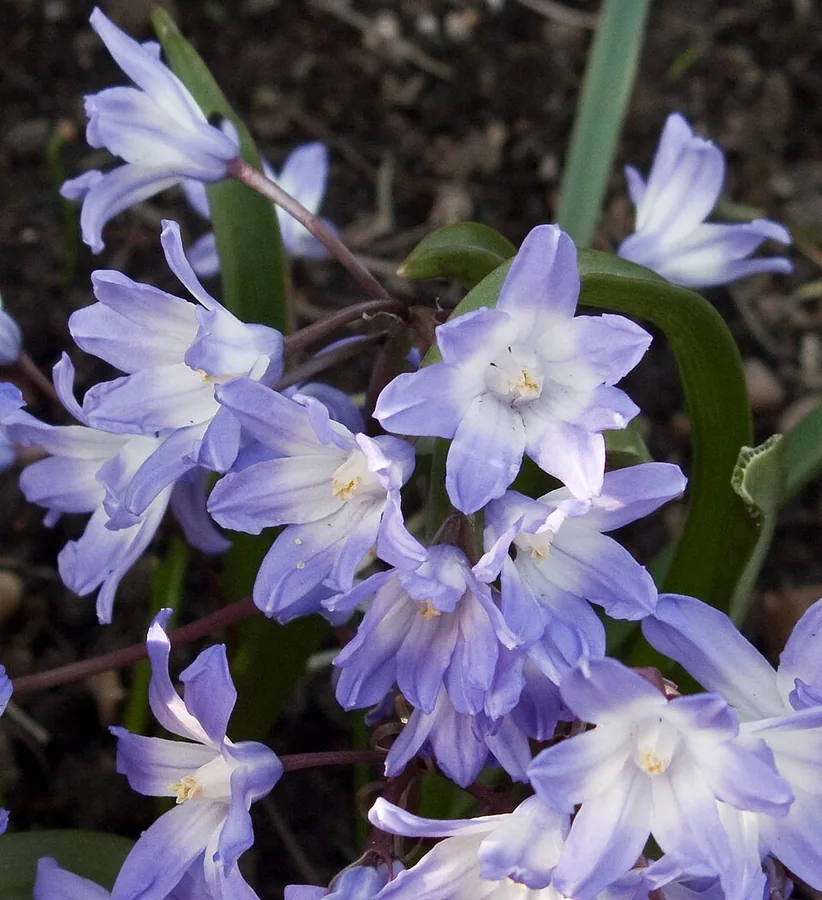
Glory-of-the-snow opens some of the earliest flowers of the year, and they arrive as small, upward-facing stars: six pointed blue petals set around a bright white center that seems to catch the low spring light. Each bloom rides a short stem above a low tuft of narrow, strap-like leaves, and the flowers often press up through a thin crust of late snow. It is a small spring bulb in the asparagus family, native to the mountains of Turkey, where it flowers just as the snowmelt begins.
Up close the whole plant is built low and slight. The leaves stay narrow and green, the stems slender, and the flowers hold near the ground rather than towering over it. What the plant lacks in height it makes up for in number, since the bulbs multiply by offsets and the plant self-seeds, so a scatter of single stars thickens into a broad, low sheet of blue across a few years.
That spreading habit makes it at home in lawns, rock gardens, and the open ground under deciduous trees, where it flowers before the canopy leafs out and shades it. Hardy from zone 3 to zone 8, it shrugs off hard cold, tolerates deer and black walnut, and returns a little fuller each spring from bulbs left undisturbed in the ground.
Care
The short version: set the bulbs into well-drained ground in fall, in a spot with full sun or in the thin bright shade beneath bare deciduous trees. Water steadily while the strappy leaves and starry flowers stand in spring, then let the ground go dry as the foliage yellows and the bulb settles into its summer rest.
Light
Glory-of-the-snow flowers best in full sun, where the blue stars open widest, but it takes partial shade nearly as well. The light shade under deciduous trees suits it, since it blooms in early spring before the leaves come out and cast real shade.
Water
Keep the soil evenly moist through spring growth and bloom, watering every 5 to 10 days if rain falls short. Ease off once the flowers fade and the narrow leaves start to yellow, and keep the bulbs dry through their summer dormancy.
Soil
Give it average, well-drained soil of medium moisture and it asks for little else. Drainage matters most, since the fleshy bulbs left in soggy ground rot.
Temperature
This is a tough, cold-hardy bulb that handles winter lows down to -29°F (-34°C) and grows on up to about 75°F (24°C). Hard cold is no threat; the bulbs need a winter chill to flower well.
Humidity
Ordinary outdoor humidity is all it needs, so there is no level to manage. Soil moisture and drainage matter far more to this bulb than anything in the air.
Feeding
Work a balanced bulb fertilizer, or some compost and aged manure, into the soil in fall and again in early spring. A seasonal feed is plenty, and the bulbs draw on it as they grow and recharge.
Pruning
There is no pruning to do. Let the narrow leaves die back on their own after bloom and leave them until they yellow fully, since the foliage is feeding the bulb for next year.
Repotting
These bulbs are rarely disturbed and prefer to be left alone for years. Lift and divide only when the clumps grow crowded and flowering drops off, or when offset bulbs start pushing up through the surface.
Size & spacing
The plants stay small and low, reaching just 6 to 12 inches (15 to 30 cm) tall with a 3 to 6 inch (8 to 15 cm) spread. Set the bulbs about 2 to 3 inches apart so the low tufts knit into drifts over time.
When to plant
Glory-of-the-snow runs on a tight spring schedule. Plant the dormant bulbs in fall, about 3 inches deep, and the narrow leaves and starry flowers break ground in early spring, anywhere from February to April depending on your climate. After bloom the foliage yellows and dies back, and the bulb rests through summer.
Northern hemisphere
Southern hemisphere
Typical months for a temperate climate: start earlier in warm zones, later where spring frosts linger.
- Plant: Plant bulbs in fall, about 3 inches deep and 2-3 inches apart.
- Harvest: Early spring, typically February to April (mid-March to mid-April in the St. Louis area).
Hardiness
USDA hardiness zones: 3–8
Temperature: down to -40°C
Troubleshooting
Glory-of-the-snow is an easy bulb with few troubles, and most of what goes wrong shows first below ground in wet soil. Lift a bulb or two when a clump looks off, since the plump, papery bulb tells its own story the moment you turn it up. Match what you see below, then act before the rot spreads.
Sagging, contorted leaves atop stunted, gappy clumps
When the leaves slump, curl, and twist out of true and a whole clump stays small and thin, a nematode infestation in the soil is the usual cause, though sodden, waterlogged ground leaves the same limp, distorted look. Ease a few bulbs up and study them, and if they feel soft and pulpy with rot, lift them out with the soil clinging around them. Open up the drainage and set the next bulbs into fresh, clean ground rather than the same patch.
Fix:
- Lift and discard affected bulbs and surrounding soil
- Improve drainage and avoid replanting bulbs in the same infested spot
Soft, mushy bulbs that never come up
A bulb that turns soft and pulpy and never breaks the surface has given way to bulb rot, and wet ground is nearly always behind it. Lift one and the sign is unmistakable: the flesh caves in mushy under a thumb, and it either reeks or wears a fuzz of fungus. Clear out the collapsed bulbs and settle only firm, solid ones into well-drained soil or a raised bed.
Fix:
- Discard rotted bulbs
- Replant healthy bulbs in well-drained soil or raised beds
Toxicity
Treat this one with care around pets and children. As a Scilla relative, every part of the plant, leaf, stem, flower, and bulb, holds cardiac glycosides, and the plump bulb is the most dangerous piece. Eating it tends to bring on drooling, vomiting, and diarrhea, so keep stored bulbs out of reach and wash your hands after planting.
Toxic to
Cats · Dogs · Horses · Rabbits · Livestock · Birds · People
Cats Mild
A cat that bites into a leaf or, worse, the plump bulb tends to drool, bring the mouthful back up, and pass some diarrhea. The bulb carries the most toxin, so those stored bulbs are the ones to shelve well out of reach.
Dogs Mild
A dog that noses up a bulb and crunches it usually drools, vomits, and passes loose stools within a few hours. Most cases stay mild, but a dog that gulps several bulbs can slip into more serious heart effects from the glycosides.
Horses Caution
Horses rarely nose out these small spring bulbs, yet the cardiac glycosides make them a poor mouthful. Look for drooling and digestive upset if a horse crops the strappy foliage or paws up the bulbs.
Rabbits Caution
The same glycosides run through every part of the plant, so it is no safe browse for a rabbit. One nibble can start drooling and a runny gut, and the bulb is the part to guard most closely.
Livestock Caution
Cattle, goats, and sheep can be poisoned where they graze a patch, with stomach upset and, after larger amounts, a slowed and irregular heartbeat. Fence them off from any naturalized drifts.
Birds Caution
The glycosides reach birds as well, so poultry and pet birds should stay off the bulbs and the narrow leaves. Treat it as off-limits rather than forage.
People Caution
No part of this plant is food, and eating the bulb can bring mouth pain, nausea, stomach cramps, vomiting, and diarrhea, with a slowed heartbeat after a large dose. Keep curious children away and wash your hands after planting.
Keep bulbs and plants away from pets and children; wash hands after handling and store bulbs out of reach.
Helpline numbers

United States
ASPCA Animal Poison Control: (888) 426-4435 (fee applies)
Poison Control: (800) 222-1222



Canada
Poison Centres: 1-844-764-7669
Varieties
The species, with its blue-and-white stars, is the one most gardeners grow, but a few named selections shift the color and swell the flower size. These are the ones worth looking for.
Blue Giant
A vigorous selection whose enlarged blue, white-centered flowers ride 6 to 12 inch (15 to 30 cm) stems, each stem loaded with as many as 10 blooms.
Pink Giant
Colors its petals a soft pink instead of blue, still lit by the same bright white eye at the center.
Alba
Shows pure white flowers throughout, an early drift stripped of every trace of blue.
Companions
Glory-of-the-snow pairs best with other early bulbs that bloom alongside it and with the deciduous trees it naturalizes beneath.
Plant near
Daffodils (Narcissus): Both are early-spring bulbs that naturalize together and bloom in overlapping seasons for layered color.
Crocus: Another very early small bulb that combines well in drifts, lawns, and rock gardens.
Deciduous trees and shrubs: Glory-of-the-snow thrives and naturalizes in the partial shade beneath deciduous trees, blooming before the canopy leafs out.
How to propagate
Watch a patch across a few springs and the increase is plain to see: each bulb produces small round offsets at its base while ripened seed drops around the clump. Most gardeners let that spread run on its own, though lifting the offsets, splitting congested clumps, or setting out fresh bulbs hurries it along.
Offsets & pupsEasy
After foliage dies back in late spring/summer, or lift and separate in fall. · 1 to 2 seasons
The bulbs handle most of the increase themselves, budding off small offsets that swell into spreading colonies. To move them, lift a clump once the leaves have withered to nothing in late spring or summer, or in fall, tease the little offset bulbs apart, and tuck them back into the ground. A season or two on, they take hold and flower.
Bulbs & cormsEasy
Fall · 1 season
Starting from bought bulbs is the plainest route of all. Press the papery dormant bulbs about 3 inches into the fall soil and they push up into flower the very next spring, a single season from planting to bloom.
SeedModerate
Self-sows in spring/early summer; can be direct sown outdoors in fall. · 2 to 3 years to flowering
Left undisturbed, the plant scatters its own seed freely across spring and early summer, and you can press seed straight into the ground outdoors in fall as well. The catch is the wait, since seedlings need 2 to 3 years to build a bulb large enough to flower.
DivisionEasy
When clumps become crowded, lift and divide after foliage dies back. · 1 to 2 seasons
Once a clump packs together too tightly and the flowers thin, prying it apart puts it right. Lift the crowded clump after the foliage has withered away, break it into pieces, and spread them out, and they knit back in over the next one to two seasons.
Myths
The ASPCA leaves glory-of-the-snow off its toxic plant list, which proves the plant carries no poison at all.
That gap in the ASPCA list says nothing about the plant itself. Glory-of-the-snow belongs with Scilla, a genus recorded as poisonous, and cardiac glycosides run through leaf, stem, flower, and bulb alike, enough to set off real digestive misery if any part is swallowed. Store bulbs and plants where pets and children cannot reach them.