Ornamental · Convolvulaceae
Cardinal Climber
Ipomoea × multifida
Set it in full sun and lean soil, and this fast twining vine hangs out small scarlet trumpets that pull hummingbirds in all summer.
Full sun
Every 3–7 days
50–95°F · 10–35°C
60–75 days
Overview
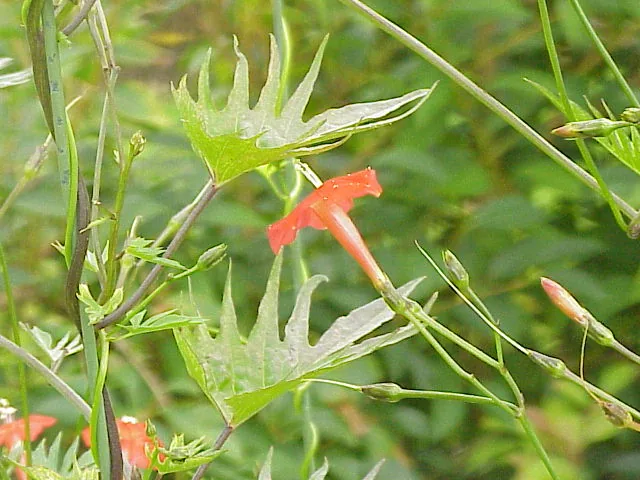
Cardinal climber is a fast, twining annual that wraps a trellis or fence in green within one season. A member of the morning-glory family, it springs from a cross of cypress vine and red morning glory, and that parentage shows in its deeply cut, palmate green leaves and small, bright red trumpet flowers. Hummingbirds work the blooms steadily.
Its stems twine and pull upward fast, reaching 6 to 15 feet (1.8 to 4.5 m) across a warm summer, so the vine wants something to grip from the day it sprouts. Only the warmest zones let it run as a perennial; nearly everywhere else it lives as an annual, sown fresh each spring after the last frost lifts.
The plant asks for almost nothing. Full sun and plain, well-drained soil carry it, and coddling backfires by handing you leaves instead of flowers. The one trait to keep an eye on is how freely the seed scatters, which can sprout volunteers the next year.
Care
The short version: full sun, average to lean well-drained soil, and about an inch of water a week. Skip the fertilizer, give the twining stems a support to grip, and clip the green seed pods if you'd rather it didn't spread.
Light
Plant cardinal climber in full sun for the heaviest run of red trumpets. It will still grow in partial sun or light shade, but each hour of shade swaps blooms for more leaf, so a bright, open site rewards you.
Water
Give it about 1 inch of water a week and keep the soil evenly moist while the vine is finding its feet. Established plants brush off short dry spells, though steady moisture draws out the most flowers.
Soil
Set it in average to lean, well-drained loam or sandy soil at anywhere from pH 6.0 to 8.0. Rich ground turns against you here, fueling leafy stems and stingy bloom, so go easy on the compost.
Temperature
This warm-season vine performs between 50°F and 95°F (10°C to 35°C). It needs warm soil to wake up and frost finishes it, so setting it out early gains nothing.
Humidity
Plain outdoor air suits it, so there's no humidity figure to chase. What counts is good airflow, which keeps the dense, cut foliage from sheltering pests.
Feeding
It hardly needs feeding. Skip fertilizer in reasonable soil, and in truly poor ground offer only a light balanced feed, since high nitrogen trades flowers for leaves.
Pruning
Pinch the young growing tips to push the vine into fuller branching, and train or trim the stems onto their support as they climb. Snip off the green seed pods to keep it from self-seeding.
Repotting
Grown as an annual, the vine runs a single season and isn't held over, so there's no true repotting. In a container, start fresh each spring in new soil instead of reusing a rootbound pot.
Size & spacing
Look for a vine 6 to 15 feet (1.8 to 4.5 m) tall but only 6 to 12 inches (15 to 30 cm) across. Give it a tall, sturdy support and a little breathing room so air can move through the foliage.
When to plant
Cardinal climber lives on warmth and dies at frost. Sow the seeds indoors a few weeks ahead of your last frost, move the plants out once the soil has warmed through, and the vine flowers from summer straight to the first frost.
Northern hemisphere
Southern hemisphere
Typical months for a temperate climate: start earlier in warm zones, later where spring frosts linger.
- Sow: 4-6 weeks before last frost; nick and soak hard seeds first
- Plant: After last frost when soil is warm
- Harvest: Summer to frost
Hardiness
USDA hardiness zones: 10–12
Temperature: down to -1°C
Troubleshooting
Cardinal climber seldom causes much grief, and the few problems it has turn up in the flowers, the leaves, or as stray seedlings. Catch the early signs and you can steer it back on course before it sulks or spreads. Find the match below, then act.
Speckled, ragged foliage coated in a tacky sheen
Tiny aphids and spider mites pierce the deeply cut leaves and leave them stippled and sticky, while Japanese beetles and leaf miners chew ragged holes and snaking trails. Turn the leaves over and study the new growth to spot the offender, then blast it off with a hard spray of water or coat it with insecticidal soap or horticultural oil. Pick the beetles off by hand and strip away any mined or heavily eaten leaves.
Fix:
- Spray off aphids and mites with a strong jet of water
- Apply insecticidal soap or horticultural oil
- Hand-pick Japanese beetles
- Remove and destroy mined or heavily infested leaves
All green growth and hardly a red trumpet in sight
When the green palmate leaves multiply but the scarlet trumpets never appear, the vine is hoarding its energy in foliage. Rich ground and too much nitrogen drive that lopsided growth, and so does shade, so cut off the feeding and steer the stems into open sun. Lean, fast-draining soil and strong light coax the red flowers back out.
Fix:
- Stop high-nitrogen feeding
- Move or train the vine into full sun
- Grow in leaner, well-drained soil
Stray seedlings twining up the following spring
Fresh little vines twining up where last year's plant stood mean the seed has scattered and sprouted, a habit that runs strong in warm climates. Tug out the volunteers you didn't plant. To stop the cycle for good, clip the green seed pods off the twining stems before they harden and split open.
Fix:
- Pull unwanted seedlings
- Remove developing seed pods before they mature and drop
Toxicity
This is a toxic plant, and the danger is concentrated in the seeds. They carry indole alkaloids of the LSA type that can cause stomach upset and, in larger doses, agitation and hallucinogenic effects in pets, livestock, and people. The cut foliage is a milder caution, but keep the seeds and seed pods well clear of animals and children.
Toxic to
Cats · Dogs · Horses · Rabbits · Livestock · Birds · People
Cats Mild
Nibbling on the cut leaves usually leaves a cat with nothing worse than a sour stomach and some vomiting. The seeds carry the real punch, and a mouthful can set off agitation, tremors, and a dazed, disoriented look.
Dogs Mild
A few chewed leaves typically bring on drooling and a round of vomiting. Swallow the seeds, however, and a dog may grow restless, shaky, and visibly unwell.
Horses Mild
Horses are listed among the animals this plant can harm, with the seeds holding the alkaloids that churn the gut and, in quantity, hit the nervous system. Keep grazing horses clear of the vine and its seed pods.
Rabbits Caution
The seed alkaloids that bother cats and dogs would land far harder on a small grazer, so treat this twining vine as off-limits to rabbits rather than safe nibbling.
Livestock Caution
Goats, sheep, and cattle can take in the LSA-type alkaloids by grazing the seeds or seed pods, which risks stomach and nervous-system trouble. Fence the vine well away from pasture.
Birds Caution
The hazardous compounds sit in the seeds, so keep poultry and pet birds from pecking the pods, even though the foliage poses a smaller worry.
People Caution
Nothing on this vine is grown to be eaten. Its seeds hold indole alkaloids that can trigger stomach upset and hallucinogenic effects, so keep them well out of reach of children.
Keep seeds and seed pods away from pets and children; the seeds are the hazardous part.
Helpline numbers

United States
ASPCA Animal Poison Control: (888) 426-4435 (fee applies)
Poison Control: (800) 222-1222



Canada
Poison Centres: 1-844-764-7669
Varieties
Because cardinal climber is a hybrid, the names worth knowing belong to its two parents. Both grow in gardens in their own right and show where the vine's foliage and flowers come from.
Ipomoea quamoclit (cypress vine)
One parent of the hybrid, carrying very fine thread-like leaves sliced into needle-thin segments that read more fern-like than the cardinal climber's broader cut foliage.
Ipomoea coccinea (red morning glory)
The other parent, a red-flowered morning glory whose broad, heart-shaped leaves stay whole and uncut rather than being divided into segments.
How to propagate
Cardinal climber starts easily from seed, and seed is the only route. The single hurdle is the hard coat wrapping each one.
SeedEasy
Start indoors 4-6 weeks before last frost or sow outdoors after frost in warm soil · 5-10 days to germinate; weeks to begin climbing
Seed is the only way to start cardinal climber, sown indoors 4 to 6 weeks before your last frost or set outside once the soil has warmed. The seed coat is hard and waxy, so nick it and soak the seeds overnight to draw out even germination. Sprouts push up in 5 to 10 days, then spend a few more weeks putting out twining stems before they reach for a support.
Myths
Cypress vine, cardinal flower, and cardinal climber are just three names for one and the same plant.
Cardinal climber is a cross of cypress vine and red morning glory, and its deeply lobed, palmate leaves fall right between the two parents in shape. Cypress vine wears finer, thread-like foliage, while red morning glory spreads broad heart-shaped leaves. Cardinal flower (Lobelia cardinalis) is a wholly different plant, an unrelated perennial in another family rather than a climbing annual vine.