Houseplant · Pteridaceae
Button Fern
Pellaea rotundifolia
Strung with round, glossy leaflets on near-black stems, the button fern wants bright shade and a light hand with watering.
Bright indirect
Every 5–10 days
50–77°F · 10–25°C
USDA 9–11
Overview
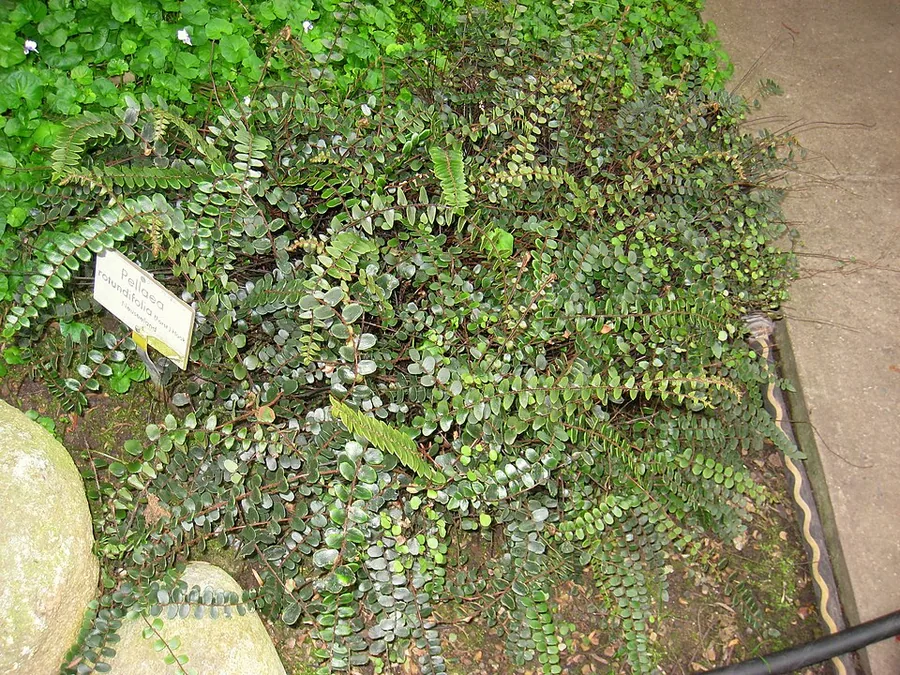
The button fern earns its name on sight: each arching frond is lined with rows of small, round, glossy leaflets that sit like little buttons along a slim midrib, every one a smooth, deep green disc. Those leaflets ride on dark, almost black stems so thin and stiff they look like wire. The whole plant stays low, rarely past a foot, a dense little fountain of curving fronds.
Run a finger along a frond and the leaflets feel firm and leathery, not the soft, papery texture of most ferns. That tougher build traces to its home on rocky, well-drained ground, where it learned to hold its moisture through dry stretches that would shrivel a thinner-leaved fern. The same sturdiness lets it stay crisp and green in plain room conditions.
New fronds uncurl from the center as tight, dark coils, then open to reveal fresh rows of round leaflets in a paler green that deepens with age. Two extremes spoil that even, glossy look: a rootball baked bone dry, or roots left standing in water. Held between them, the plant keeps unfurling firm new fronds slowly but steadily for years.
Care
The short version: give it bright indirect light, soil that drains well, and water once the top of the mix has dried slightly. Average room warmth and humidity suit it, and a half-strength feed through spring and summer keeps the round leaflets firm and deep green.
Light
Give it bright but indirect light, the soft glow near an east window or a few feet back from a brighter one, which keeps the leaflets a rich, even green. In medium light or a fairly dim corner it holds on, just adding fronds more slowly. Harsh direct sun bleaches the round leaflets pale and scorches dry patches into them.
Water
Let the top of the soil dry slightly before watering again, roughly every 5 to 10 days with the seasons. This fern stands a missed drink better than most, but let the whole rootball go bone dry and the leaflet tips crisp brown along the frond. Tip out any water left standing in the saucer.
Soil
Root it in a well-drained, peat- or humus-based mix with perlite or sand worked through for air. It sits comfortably across a wide pH band of 6.0 to 7.5, so most general potting soils suit it as long as water drains straight through.
Temperature
Ordinary room warmth keeps the fronds firm, anywhere from 50°F to 77°F (10°C to 25°C). Cold drafts and the hot, dry stream off a radiator or heating vent both leave the slim leaflets stressed and dull.
Humidity
Aim for 40% to 60% humidity, close to what most homes already hold, which keeps the leaflets supple. It takes average air better than fussier ferns, though a kitchen or bathroom spot, or a pebble tray beneath, keeps the foliage at its glossiest in a dry house.
Feeding
Feed monthly through spring and summer with a balanced water-soluble fertilizer cut to half strength. That light touch is plenty for such a slow grower, and the dim, dormant months call for no feeding while the fronds rest.
Pruning
No real pruning is needed. Just snip off faded, browned, or damaged fronds right at the wiry base to keep the leaf mound clean and let fresh coils push up through the center.
Repotting
Repot every 2 to 3 years in spring, or sooner when roots thread out the drainage holes, the soil dries unusually fast, or the fronds crowd the pot rim. Move up just one pot size and refresh with free-draining mix.
Size & spacing
It is a compact plant, reaching only 6 to 12 inches (15 to 30 cm) tall with a matching spread of arching fronds. That small, rounded footprint is what makes it so easy to set on a shelf or table.
Troubleshooting
Almost every change you see in a button fern starts with water, going either too dry or too wet, and the leaflets and frond tips register it first. Match the look below, from crisped edges to soft, blackening bases, and correct it before the marks spread across the plant.
Soft, collapsing stem bases beneath yellowed fronds
Leaflets fading to yellow above soft, collapsing stem bases point to overwatering and root rot, the one fault this fern will not forgive. Soggy, poorly drained soil smothers the roots until they turn black and slick. Let the soil dry further, empty any water pooled in the saucer, and if the roots already feel mushy, repot into a fresh well-draining mix and cut away the rotted strands.
Fix:
- Allow the soil to dry further before the next watering
- Repot into fresh well-draining mix and trim away rotted roots
- Ensure the pot has functioning drainage holes
Fronds turning brown and crispy
Round leaflets that crisp and brown along the frond almost always mean the plant ran too dry. The button fern stands a missed watering better than most ferns, but let the rootball dry out completely and the leaflets pay for it, curling stiff and brittle. Dry air off a nearby radiator or vent crisps them the same way, so move it off the heat and water before the soil parches.
Fix:
- Rehydrate thoroughly, including bottom-watering if the rootball has dried out
- Move away from radiators, vents, and direct sun
- Maintain a more consistent watering schedule
Pale, bleached, or scorched fronds
Round leaflets gone pale, with dry bleached patches on the side facing the window, mean direct sun has scorched the fronds. This fern wants bright but filtered light, not the harsh midday rays that wash the green out of the foliage. Move it back from the glass into bright indirect light and trim off any leaflets too far gone to recover.
Fix:
- Relocate to a spot with bright indirect light
- Remove badly scorched fronds
Toxicity
The button fern is safe to keep around cats, dogs, and the rest of the household. The ASPCA lists it as non-toxic, and nothing in its leaflets or wiry stems carries a known poison. A nibbled frond might briefly unsettle a small stomach the way any plant can, but there is no toxin in the tissue to fear.
Safe for
People · Cats · Dogs · Horses · Rabbits · Livestock · Birds
Cats None
The ASPCA lists the button fern as non-toxic to cats, so a curious bite of those round leaflets will not poison them. A cat that gorges on any plant may still bring up a hairball or a little undigested greenery, but that is a full stomach, not a toxin.
Dogs None
Dogs are clear here too, with no toxic compounds in the glossy fronds. A dog that chews a frond is safe, though a big mouthful of any houseplant can leave the stomach briefly unsettled.
Horses None
Nothing in this fern is known to harm horses. It is not a forage plant, but a stray taste of its leaflets poses no real risk.
Rabbits None
Rabbits can browse the round leaflets without any poisoning concern. As with any new green, offer only a small amount so their gut adjusts at its own pace.
Livestock None
Those glossy round leaflets hold nothing that could hurt goats, sheep, or other grazing animals. This fern also spends its whole life as a small potted plant indoors, well away from any field or pasture.
Birds None
Pet birds can perch on or peck at the wiry fronds safely, since nothing in the plant is toxic to them.
People None
The button fern is harmless to people and safe to keep around children. It is not grown to eat, so there is no reason to taste its leaflets, but an accidental nibble does no harm.
No special handling precautions are required.
Varieties
This is a fern grown almost entirely as the straight species, so there is no long list of named cultivars with differing leaf shapes to sort through. The round-leafleted plant on the shelf is the one described here.
Pellaea rotundifolia (species)
The true species shows arching fronds threaded with small, glossy, round leaflets like little buttons, each spaced along dark, wiry, near-black stems.
How to propagate
The button fern is easy to multiply by splitting an established clump into smaller crowns of fronds and roots, which take hold in weeks, far faster than coaxing new plants from the dust-fine spores on the frond undersides.
DivisionModerate
Spring, ideally at repotting · 4 to 8 weeks
The simplest way to make more is to split the plant in spring, ideally while it is out of the pot for repotting and you can see the tangle of fine roots. Tease the rootball into clumps, each keeping a good share of roots and several fronds, and the divisions push firm new growth over the next 4 to 8 weeks. New plants can also be raised from the dust-fine spores on a mature frond, but that route is slow and fiddly for most home growers.
Myths
The soil under a button fern should stay saturated around the clock, just as with any other fern.
Its firm, leathery leaflets give it away as no ordinary fern. It stands drought far better than its soft-leaved relatives and prefers the soil surface to dry a little between drinks. Keep it permanently wet and the roots rot beneath those glossy fronds.
A cat or dog that nibbles any fern is in danger.
Plenty of common ferns are perfectly safe, and this round-leafleted one is among them. The ASPCA lists Pellaea rotundifolia as non-toxic to both cats and dogs, so it earns a place in a pet home.