Ornamental · Apocynaceae
Blue Star
Amsonia tabernaemontana
Given full sun and a shear after bloom, Blue Star turns from steel-blue spring stars to clear golden foliage in fall.
Full sun
Every 7–14 days
USDA 3–9
2–3 ft · 0.6–0.9 m
Overview
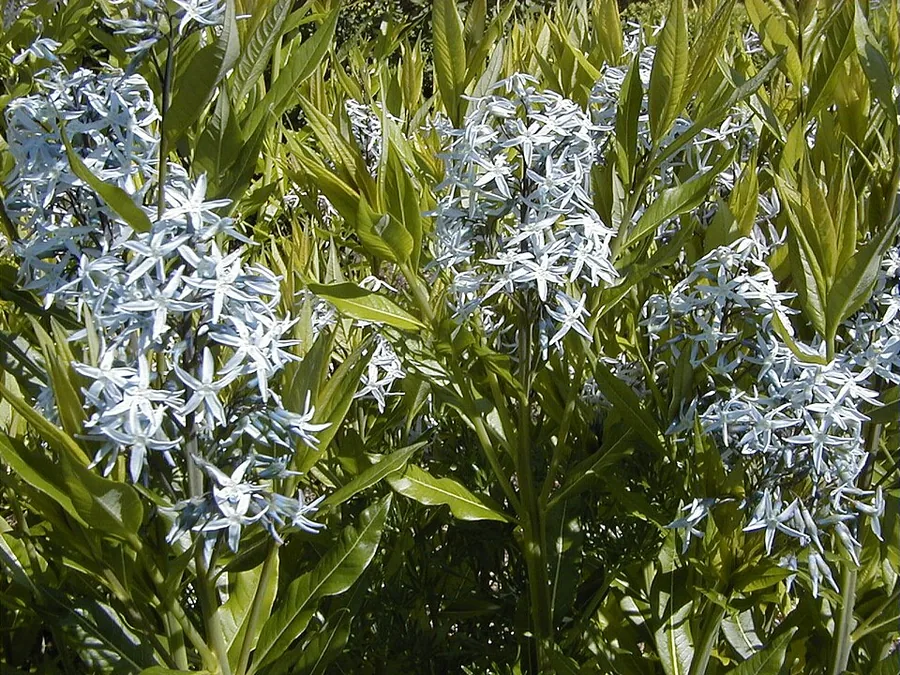
Blue Star opens in late spring with loose clusters of small, five-pointed blooms in a soft, steel-blue that sits between sky and slate. Each flower is a slim-petaled star, and they gather at the stem tips above a clump of fine, feathery green leaves that ripple in the lightest breeze. The plant is a slow-growing native perennial in the dogbane family, building a rounded, shrubby mound of upright stems that keeps its shape through the season. It is hardy from zone 3 to zone 9 and shrugs off cold, heat, clay, and drought once rooted.
The flowers give way to a second display written across the leaves. By autumn the narrow, willow-fine foliage shifts to a clear golden yellow that glows from the inside out, lighting up the whole clump. Snap a stem and it bleeds a bitter, milky white sap, the latex that keeps deer and rabbits from browsing. In full sun the stems hold themselves bolt upright with no need for staking.
Care
The short version: full sun, average well-drained soil, and a hard shear once the steel-blue flowers fade. It takes little water after it roots in and almost no feeding, so the main task is cutting the stems back to keep the feathery mound upright instead of splayed.
Light
Blue Star grows densest in full sun, where the stems pack in tight and stand bolt upright without staking. It tolerates partial shade or partial sun, but the less light it gets, the more those stems stretch thin, lean, and flop.
Water
Keep the soil evenly moist while the roots take hold, watering every 7 to 14 days. Once it is established the plant handles drought well and shrugs off the odd wet spell, so the watering can ease off.
Soil
It is not fussy about soil and roots into loam, clay, or sand as long as it drains. A pH anywhere from 6.0 to 8.0 suits it, which covers most garden ground.
Temperature
This is one of the hardiest perennials going, taking winters down to -40°F (-40°C) and summer heat up to 100°F (38°C). That range is what makes it dependable from zone 3 all the way to zone 9.
Humidity
Ordinary outdoor air is all it asks, so there is no number to watch. Good airflow through the fine foliage matters more, since crowded, still conditions are what let rust settle on the leaves.
Feeding
Blue Star barely needs feeding. A light topdressing of compost in spring is plenty, and rich soil or heavy fertilizer only makes the stems soft and likely to splay.
Pruning
The one task that counts is cutting the stems back by one-third to one-half right after the flowers fade. That keeps the leafy clump rounded and self-supporting, and deadheading at the same time stops it from seeding around the garden.
Repotting
A settled clump sulks when disturbed and seldom needs lifting from the ground. Hold off on division until the middle of the mound thins and dies out or the show of flowers dwindles, a point that can sit many years away.
Size & spacing
A mature clump reaches 2 to 3 feet (61 to 91 cm) tall and spreads about the same into a rounded mound. Give each one roughly 2 to 3 feet (61 to 91 cm) of room so air moves through the foliage and rust stays away.
When to plant
Blue Star is a hardy perennial that pushes up fresh from the crown each year. Set new plants out in spring after frost or in fall, watch the steel-blue flowers open in late spring, then cut the whole clump of stems back hard once the bloom has finished.
Northern hemisphere
Southern hemisphere
Typical months for a temperate climate: start earlier in warm zones, later where spring frosts linger.
- Sow: Late winter to early spring; seed germinates readily but plants typically flower in their second year.
- Plant: Spring after frost, or fall.
- Harvest: Late spring (April to May), into early summer.
Hardiness
USDA hardiness zones: 3–9
Temperature: down to -40°C
Troubleshooting
Blue Star carries almost no serious problems, which is part of its appeal. Only two show up on the plant itself: stems that splay and lean, and the occasional rust-flecked leaf. Match what you see below and the fix is usually quick.
Stems that splay open and flop outward
When the upright stems splay and lean outward, flopping usually traces to too much shade or soil that is too rich, and it worsens without the post-bloom cut. Shear the stems by a third to a half once the flowers fade and the clump rebuilds tighter and self-supporting. A clump set in shade firms up and stands on its own once it is moved somewhere sunnier.
Fix:
- Cut stems back by one-third to one-half after flowering to encourage a denser, self-supporting habit
- Relocate to a sunnier position if grown in shade
Orange, rusty bumps on the leaves
Powdery orange-to-brown pustules dotting the undersides of the leaves point to rust, the one disease this plant tends to pick up. Pick off the marked leaves and bin them. Open the clump for more room and keep water off the foliage, since rust spreads in still, damp air.
Fix:
- Remove and dispose of affected foliage
- Improve air circulation and avoid overhead watering
Toxicity
Blue Star is a low-risk plant in the garden. The bitter, milky white sap inside its stems puts off deer, rabbits, and most curious pets, and it is not on the ASPCA toxic list. The one thing to know is that the latex from cut stems can irritate skin and eyes, so wash your hands after pruning.
Toxic to
Cats · Dogs · Horses · Livestock · Birds · People
Safe for
Rabbits
Cats Caution
There is no specific report for cats, but the bitter milky sap runs through the same family as other irritant plants. A curious cat that chews a leaf might drool or have a brief stomach upset, though the taste usually puts it off after one bite.
Dogs Mild
That white latex beading from a snapped stem is what one extension source flags as slightly toxic for dogs. A dog that mouths a stem can end up with a tender mouth or a mildly upset stomach, though the sap's sharp bitterness usually cuts the chewing short.
Horses Caution
The record holds nothing written for horses, yet the bitter white sap in the stems and the plant's dogbane lineage argue for keeping grazing muzzles away from it. Most horses walk past it untempted.
Livestock Caution
Grazing stock find the leaves bitter and move along, so trouble seldom follows. All the same, stems full of milky latex do not belong in a pasture where hungry animals find little else to graze.
Birds Caution
There is no record of harm to birds, and they are not drawn to the foliage. Keep an eye out only if a pet bird has a habit of nibbling houseplants and cut greenery.
People Caution
Every bit of this plant, from the narrow leaves to the milky-cored stems, stays off the menu. The white latex that wells up where a stem is cut can sting skin and eyes, so give your hands a wash once pruning is done and keep chewing-age children clear of the foliage.
Rabbits Safe
Rabbits want nothing to do with the feathery foliage. One taste of the bitter sap sends them off, so gardeners tuck this plant into beds that rabbits raid, and gnawed leaves are a rare sight.
The milky latex released when stems or leaves are cut or torn can be a mild skin or eye irritant; wash hands after pruning.
Helpline numbers

United States
ASPCA Animal Poison Control: (888) 426-4435 (fee applies)
Poison Control: (800) 222-1222



Canada
Poison Centres: 1-844-764-7669
Varieties
A few named selections sharpen the look of the wild plant, mostly through deeper flower color or more striking foliage and stems. These are the ones most nurseries carry.
Storm Cloud
On Storm Cloud the stems push up nearly black in spring, set against dark green leaves laced with bright silver veins.
Blue Ice
Blue Ice is a compact selection whose flowers come in a deeper, more violet-blue than the species.
var. salicifolia
The form var. salicifolia carries narrow, willow-like leaves only about a quarter inch wide.
How to propagate
Blue Star spreads slowly on its own, so most gardeners speed it along by splitting the clump, saving seed, or rooting cuttings.
DivisionEasy
Spring or fall while dormant · One growing season
Lift and split the clump while it is dormant in spring or fall, keeping at least one eye, the small growth bud, on each piece. The divisions settle in over a single growing season.
SeedEasy
Late winter to spring · Flowers usually in the second year
Seed sown from late winter into spring sprouts without fuss, though the young plants usually wait until their second year to bloom. Snip off the slim seedpods you do not want, or the plant sows itself around.
Stem cuttingsModerate
Late spring to early summer · Several weeks to root
Cut root or stem sections from shoots that carry no flowers, working from late spring into the earliest weeks of summer. Several weeks pass before new roots form, which leaves this the slower, fussier path next to splitting a clump.
Myths
The milky sap running through Blue Star makes the whole plant a dangerous poison, one no family or pet household should risk in the garden.
Only one extension source flags the milky white sap as slightly toxic to dogs, and the bitter taste keeps most animals from eating it at all. It is widely grown as a safe, low-maintenance native ornamental, and it does not appear on the ASPCA toxic plant list.