Houseplant · Araceae
Velvet Cardboard Anthurium
Anthurium clarinervium
Run a finger across the velvety, white-veined leaves and you understand the name, though those dark blades hold their look only with warmth, humidity, and careful watering.
Bright indirect
65–85°F · 18–29°C
USDA 11–12
1–4 ft · 0.3–1.1 m
Overview
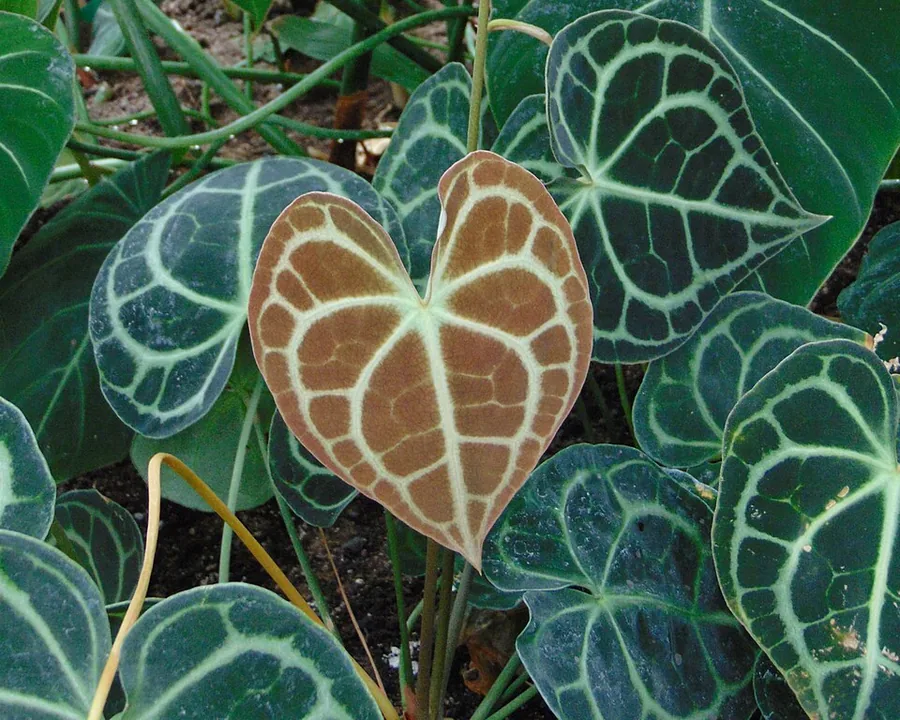
The velvet cardboard anthurium is all about the leaf. Each one is heart-shaped and surprisingly thick, stiff enough to feel like a sheet of cardboard between the fingers, with a matte, velvety green surface so dark it nears black in low light. Pale, almost white veins branch across that surface in a clean network, standing out sharply against the deep ground, and the plant carries this same look from the limestone hills of Chiapas in southern Mexico, where it grows as an epiphyte on rock and bark.
Up close the plant stays small and dense. Mature specimens reach only 1 to 3.5 feet (30 to 107 cm) tall with a tight spread, the firm blades held on stiff stalks rather than trailing or climbing. It grows at a slow, deliberate pace and is demanding to keep, with little tolerance for dry air, soggy roots, or harsh sun, each of which marks those handsome leaves before long.
Keep its needs met and it unfurls one new blade after another, each opening slightly larger than the last and firming up into the same dark velvet. Beyond the foliage it can set small orange berries, a flush of warm color against all that deep green. Treat it as the epiphyte it is, give it bright indirect light and humid air, and it carries on as a long-lived plant.
Care
The short version: bright indirect light, a coarse and fast-draining mix, humidity above 50%, and steady warmth keep the velvet dark and firm. A thorough watering, then a dry-down of the top half of the pot before the next, suits the roots.
Light
It wants bright, indirect light through most of the day to keep the velvet rich and the veins crisp. It holds on in medium indirect light at a slower pace, but direct sun scorches the dark surface and bleaches pale patches into it that never recover.
Water
A thorough watering, then a dry-down of the top half of the pot before the next, keeps the thick roots sound. They need air as much as moisture, so a mix kept constantly wet is the danger. Soggy soil is the fastest way to rot the roots and soften those firm blades into limp ones.
Soil
A coarse, fast-draining mix made for epiphytes suits it, with peat moss, pine bark, and perlite leaving air pockets around the roots. The plant leans acidic, near pH 6.0 or a touch lower, and a heavy, dense soil packs tight and smothers the roots.
Temperature
It holds its color and firmness in a warm, steady range of 65°F and 85°F (18°C to 29°C). Frost and cold drafts damage the tissue, so chilly windows and doorways in winter are best avoided.
Humidity
Humidity is what keeps the leaf edges whole. The plant wants it above 50%, and dry indoor air frays the tips brown and crisp where the velvet thins. A tray of moist gravel under the pot, a cluster of plants, or a humidifier nearby holds the air moist.
Feeding
It feeds lightly. A dilute, balanced houseplant fertilizer through the spring and summer growth is enough to push fresh blades, and a heavier hand does more harm than good.
Pruning
There is little to cut. Any leaf that yellows, browns, or gets damaged comes off at the base, which clears the spent blades and sends energy into the firm, dark new ones.
Repotting
Repotting waits until the roots have filled the pot, rare for so slow a grower. A single pot size up into fresh, coarse mix keeps the roots from sitting in a large, slow-draining body of wet soil.
Size & spacing
Indoors it reaches 1 to 3.5 feet (30 to 107 cm) tall with a compact spread of 9 to 12 inches (23 to 30 cm), the stiff blades held close rather than sprawling. That tight footprint fits a bright tabletop or shelf rather than the floor.
Troubleshooting
Most of what troubles this anthurium traces back to water, air, or light, and the leaves are where it shows. A close look catches a browning edge or a fading blade early, before the damage spreads across the velvet. Match what the foliage shows below and adjust before a small mark becomes a lost plant.
Stiff blades gone limp over wet soil
When those firm, cardboard-stiff blades sag over a sodden pot, root rot from overwatering or a slow-draining mix is the cause. Less water, a careful lift from the pot, and the removal of any root that has turned brown, soft, or mushy set it right. A coarse, fast-draining epiphytic mix and a slight dry-down between waterings let the surviving roots firm up again.
Fix:
- Reduce watering frequency
- Repot into a coarse, very well-drained epiphytic/soilless mix
- Remove rotted roots
Bleached, washed-out blotches on the velvet
Direct sun burns the velvety surface, draining the deep green to pale, bleached blotches where the light struck hardest. A move into bright but indirect light, shielded from the harsh midday sun, stops the burning. The marred blades keep their faded marks, but the next leaves unfurl with their dark velvet intact once the light is gentler.
Fix:
- Move to bright, indirect light
- Shield from direct midday sun
Sticky sheen, fine webbing, or pinprick specks
Mealybugs, spider mites, scale, whiteflies, aphids, and thrips all settle on anthuriums, dotting the velvet with sticky honeydew, threading it with fine webbing, or pocking the new leaves with stippling and distortion. The plant set apart from the rest, a wash to dislodge the pests, and a treatment of insecticidal soap or horticultural oil clear them, repeated as the label directs. A close look over new plants and foliage spots them while they are still few.
Fix:
- Isolate the plant
- Wash off pests and treat with insecticidal soap or horticultural oil
- Repeat treatments per product label
Brown, crisp edges fraying the leaf margins
When the velvet gives way to brown, brittle tissue at the rim, dry air is behind it, and the plant wants humidity above 50%. A tray of moist gravel beneath the pot, a huddle of plants, or a humidifier lifts the moisture around the foliage. A spot away from heating and cooling vents spares the leaf edges, since that moving air pulls them dry.
Fix:
- Raise humidity (humidity tray of moist gravel, grouping plants, or a humid enclosure)
- Avoid placement near heating/cooling vents
Toxicity
For all its beauty up close, every part of this plant is poisonous if chewed or swallowed. Like its arum-family kin, the tissue holds insoluble calcium oxalate crystals, tiny needle-like structures that sting the mouth and throat on contact. Keep it out of reach of pets and children, and wash your hands after handling it, since the sap can irritate skin.
Toxic to
Cats · Dogs · Horses · Rabbits · Livestock · Birds · People
Cats Moderate
A cat that bites into a leaf meets an immediate burning in the mouth, then swelling of the lips, tongue, and throat, heavy drooling, vomiting, and trouble swallowing.
Dogs Moderate
The crystals sting a dog's mouth on the first chew, bringing drooling, pawing at the face, vomiting, and a sore, swollen tongue and lips.
Horses Moderate
Horses meet the same painful mouth and throat irritation, with swelling and drooling that makes swallowing hard, though they do not vomit.
Rabbits Toxic
The same calcium oxalate crystals make this plant unsafe for rabbits, so it belongs well out of reach of any rabbit that roams the house.
Livestock Toxic
Grazing animals such as goats and sheep are harmed by the crystals as well, which inflame the mouth and gut, so it is no plant for them to reach.
Birds Toxic
Pet birds are at risk too, since a single curious nibble brings the same caustic irritation to a small, sensitive mouth.
People Caution
No part of this plant is meant to be eaten, and chewing it burns the mouth and throat, while the sap can leave skin red and itchy, so wash your hands after handling it and keep it away from young children.
Sap may cause contact dermatitis; wash hands after handling and keep out of reach of pets and children
Helpline numbers

United States
ASPCA Animal Poison Control: (888) 426-4435 (fee applies)
Poison Control: (800) 222-1222



Canada
Poison Centres: 1-844-764-7669
How to propagate
More of this anthurium comes from seed or from dividing an established clump, and watching a new plant slowly build its first velvet blades is part of the appeal. Neither route is quick, and approved sources give little species-specific detail.
SeedModerate
Not specified in approved sources · Unknown
Growing this anthurium from seed is slow work that rewards patience and a steady hand, with each tiny seedling pushing out its first small, plain leaves long before the velvet sets in. Approved sources name seed as a method for the genus but give no species-specific timing, so the schedule is found by doing.
DivisionModerate
Unknown · Unknown
Division is the usual way to multiply foliage anthuriums like this one, splitting a mature, well-rooted clump into pieces. A mature plant is lifted, a section carrying its own roots is eased apart, and that section is potted on, treated as provisional since the approved sources lay out no detailed protocol.
Myths
Anthuriums need to be kept constantly wet because they are tropical.
Tropical does not mean swampy. These are epiphytes that cling to rock and bark in the wild, so their roots want air and a coarse, fast-draining mix. A thorough watering and then a slight dry-down before the next suits them, because constant wetness rots the roots faster than anything else.