

Introduction
The tulip poplar tree is one of the great fakers of the eastern forest. The name tells you it is a tulip and a poplar, but it is neither. This tree is part of the magnolia family. Its closest cousins are the showy magnolias you already know. So the common names are wrong on both counts. That small twist trips up almost everyone who meets the tree.
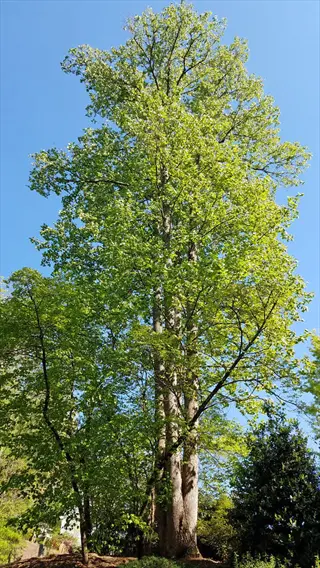
You may also hear it called the tulip tree or the yellow poplar. Botanists know it as Liriodendron tulipifera, but the simple names work fine. The USDA Forest Service calls it one of the most attractive and tallest of eastern hardwoods. The numbers back that up. In yards and parks it commonly reaches 70 to 120 feet (21 to 37 meters). In old-growth forests it can climb to about 200 feet (61 meters), which puts it among the tallest native trees in the East.
Here is where most guides let you down. They hand you a tidy list of care tips but never tell you the hard truth about size, weak wood, and where this tree fits. A 100-foot tree with brittle branches and shallow roots is a very different neighbor than a tidy ornamental. This page puts the real mature size, the wood, and the siting tradeoffs into one honest picture so you can decide before you dig the hole.
You will get the full story in plain order. First the identification marks that confirm what you are looking at, then size and growth rate, then planting and care that respects the brittle wood. After that comes the wildlife value that turns this tree into a magnet for pollinators. Last comes the wood and history behind it. This is no minor tree. It is the state tree of Kentucky, Tennessee, and Indiana. That fact alone says a lot about how much the eastern United States prizes it.
Tulip Poplar At A Glance
Here is the 30-second version before you go deeper. The tulip poplar tree is not a poplar at all. It sits in the magnolia family. The two common names come from its tulip-shaped flowers and its greenish-yellow heartwood.
On a plant tag you will see Liriodendron tulipifera. But plenty of folks just say yellow poplar, tulip tree, or tuliptree for the same plant. It grows fast and grows tall. Your yard tree will reach 70 to 120 feet (21 to 37 meters) and spread 30 to 60 feet wide. It is hardy across USDA zones 4 to 9, and you can expect cup-shaped blooms from May into early June.
This is a true native of the eastern woods. Its range runs from Vermont and southern Ontario all the way south to Louisiana and northern Florida. You will find it from sea level up to about 4,500 feet (1,372 meters) in the Appalachians. It also wears the crown as the state tree of Kentucky, Tennessee, and Indiana.
How To Identify A Tulip Poplar
Tulip tree identification comes down to one shape most people get wrong at first glance. The four-lobed leaf looks like a maple leaf with the top snipped off flat, or a cat's face staring back at you from the twig.
Here is the fastest field test. A tulip poplar leaf sits alternate along the twig, while maple leaves grow opposite each other. Spot that one difference and you can rule out a maple in seconds, even from across the yard.
Four clues stack up to confirm the tree for sure. Run through the leaf, the tulip tree flower, the tulip poplar bark, and the seed cone below, and you will know what you are looking at.
Leaves
- Shape: The leaf is simple and four-lobed with a distinctive flat or shallow notch at the tip, unlike the pointed lobes of a maple.
- Size: Each leaf is about 5 to 6 inches (13 to 15 centimeters) long and wide, giving the canopy a bright, full look.
- Arrangement: Leaves are alternate along the twig, which separates the tulip poplar from the opposite leaves of maples.
- Fall color: Foliage turns a clear, brilliant golden yellow in autumn, one of the easiest seasonal clues to the species.
Flowers
- Form: Blooms are cup-shaped and tulip-like, with six greenish-yellow petals banded with bright orange near the base.
- Timing: Flowers open in May to early June, after the leaves are fully out, which can hide them from view.
- Position: Blooms sit high in the crown, so many people never see them closely until a flower drops to the ground.
- Scent: The flowers carry only a light, faintly sweet fragrance rather than a strong perfume.
Bark and buds
- Young bark: Smooth and gray-green on young trees, often with shallow white grooves in the early years.
- Mature bark: Becomes thick, furrowed, and braided in an interlacing pattern near the base of old trunks.
- Winter buds: Flattened and shaped like a duck's bill, a reliable winter identification clue when leaves are gone.
- Trunk: The bole grows tall, straight, and clear of branches, with roughly two-thirds free of limbs in forest stands.
Seeds and fruit
- Fruit type: The fruit is an upright, cone-shaped cluster of dry winged seeds called samaras.
- Timing: Seed cones are ready in September and October and often persist on the tree into winter.
- Dispersal: The winged samaras spin away on the wind, traveling four to five times the height of the tree.
- Wildlife use: Finches, squirrels, and other small animals eat the seeds through the colder months.
Put those four clues together and the tree gives itself away. Foresters trust the leaf most of all. No other native tree has that squared, notched shape.
No other tree in Minnesota have leaves like the tulip poplar.
Size, Growth Rate And Lifespan
I stuck a pencil-thin whip in the back corner of a Tennessee lot, right where the lawn runs into the fence line. Within a handful of summers it had cleared the roof of the deck and kept climbing. Friends asked what I had done to it. The honest answer was almost nothing. I gave it sun and water, and it took off on its own.
That sprint is normal for this tree. A young tulip poplar tree can put on up to 24 inches (60 centimeters) a year in full sun and rich, moist soil. The tulip poplar growth rate makes it one of the best picks if you want a fast growing tree that throws shade in years rather than decades. Stack a few of those seasons together and a small whip becomes a real canopy.
The speed comes from how this tree lives in the wild. It is a shade-intolerant pioneer that races for sunlight, so it shoots straight up on open ground. That habit explains the tulip tree height you see in older plantings. In most yards and parks the mature size is 70 to 120 feet (21 to 37 meters) tall. The crown spreads 30 to 60 feet (9 to 18 meters) wide. Leave it plenty of room from the start.
Forest trees are a different story. On the best deep, rich sites the tallest ones once reached close to 200 feet (61 meters). That puts this among the tallest hardwoods in the eastern woods. Think of these as two growing situations, not a contradiction. A wide-open cove pushes a tree far past what your lawn ever will.
One trade-off comes with all that speed. The tree will not bloom for you right away. A tulip poplar holds its first flowers until it is 15 to 20 years old, then keeps flowering for roughly 200 years after that. The tulip tree lifespan runs 200 to 250 years on good ground, and up to 300 years on the richest sites. You plant this one for your grandkids as much as for yourself.
It is fast growing and may reach 300 years of age on deep, rich, well-drained soils of forest coves and lower mountain slopes.
How To Plant And Care For It
Planting a tulip poplar starts with the right spot, not the right shovel. This tree wants full sun, which means at least 6 hours of direct light a day, so skip the shady corner near the house. Give it moist, well-drained soil that drains fast but never dries out, and it will reward you with quick growth.
The soil should be loose and a little acidic. Aim for a soil pH of 6.0 to 6.5, which suits most yards across USDA zones 4 to 9. Heavy clay that holds water or sandy ground that drains too fast will both hold the tree back. Loose, rich dirt lets the young roots spread and settle in fast.
Here is the plan for planting tulip poplar the right way.
Pick a large, open, sunny spot with deep, moist, well-drained soil, well away from buildings, walks, and power lines.
Dig a hole as deep as the root ball and two to three times as wide, loosening the surrounding soil so young roots can spread.
Place the tree so the top of the root ball sits level with the surrounding ground, then backfill with the native soil.
Soak the area thoroughly after planting and keep the soil evenly moist through the first two or three growing seasons.
Spread a few inches of coarse wood mulch in a ring, keeping it pulled back from the trunk to protect the bark.
Tulip tree care comes down to water more than anything else. This tree is drought-sensitive, and it hates very wet ground just as much as very dry ground. Keep the soil steady and damp through the first two or three years while the roots set in. Steady moisture matters far more than any bag of fertilizer you might be tempted to buy.
The leaves on my tulip poplar curled and yellowed one dry August in Tennessee. They started dropping early, weeks before fall. The tree sat at my back fence line, and the ground under it had gone hard and pale. I ran a slow soaker hose at its base for an hour each week and let the water sink deep. By the next spring it pushed out a full flush of green and grew 2 feet of new height.
If you garden in a colder or windier northern spot, give young trees a ring of coarse wood mulch in late fall to guard the roots through winter. Air quality matters too. The tree is very sensitive to high ozone and will struggle near heavy traffic or dirty city air. Pick a clean, open site and your tree should climb fast for decades.
Do not plant a tulip poplar in a small yard or narrow street strip. Its brittle wood, shallow roots, and 70 to 120 foot (21 to 37 meter) size make tight spots a poor and risky fit.
Wildlife And Pollinator Value
The tulip poplar wildlife value is hard to beat among native shade trees. Your one tree works like a layered buffet from the ground to the crown. Butterflies feed on the leaves down low. Bees and hummingbirds work the flowers up high. Seed-eating birds and squirrels pick at the dry cones in fall. So your yard feeds something in almost every season.
What sets this tree apart is its role as a larval host, not just a snack stop. A nectar plant feeds adult insects. A host plant feeds the caterpillars that grow into the next batch. As a tulip tree host plant, it raises three butterflies. You get the Eastern Tiger Swallowtail, the Spicebush Swallowtail, and the Viceroy. Ruby-throated hummingbirds also sip from the spring flowers, and honeybees turn the same blooms into honey. The list below shows who shows up and why.
Butterflies
- Host role: The tree is a larval host plant, meaning caterpillars feed directly on its leaves before becoming adults.
- Species: It supports the Eastern Tiger Swallowtail, the Spicebush Swallowtail, and the Viceroy butterfly.
- Why it matters: Host plants are far rarer and more valuable than simple nectar plants for building butterfly populations.
- Season: Caterpillars use the foliage through the warm growing months when the canopy is in full leaf.
Bees and honey
- Nectar source: Honeybees work the spring flowers heavily, making the tulip poplar an important early-season honey tree.
- Honey yield: A tree under 20 years old can produce about 8 pounds (3.6 kilograms) of nectar in a season.
- Honey amount: That nectar converts to roughly 4 pounds (1.8 kilograms) of dark, robust honey per tree.
- Bonus: The blooms also feed native bees and other pollinators alongside managed honeybee hives.
Hummingbirds
- Nectar feeding: Ruby-throated hummingbirds drink nectar straight from the cup-shaped spring flowers high in the crown.
- Timing: This nectar arrives in late spring, a useful food source as the birds finish their northward migration.
- Access: The deep, cupped flower shape suits the long bills and hovering feeding style of hummingbirds.
- Color cue: The orange band inside each greenish-yellow flower helps signal the nectar reward to visitors.
Birds and mammals
- Seed eaters: Finches, bobwhites, squirrels, and mice eat the dry winged samaras through fall and winter.
- Browse: White-tailed deer browse the foliage and twigs across all seasons of the year.
- Habitat: The tall trunks and cavities provide habitat used by the endangered red-cockaded woodpecker.
- Shelter: The dense, high canopy offers nesting cover and perches for many songbirds.
The numbers back up the hype. A young tree can give about 8 pounds (3.6 kilograms) of nectar in a season. Beekeepers turn that into roughly 4 pounds of dark honey. So you get a real early-season honey tree. The same flowers also supply the hummingbird nectar that feeds birds on their spring trip north.
The help runs past bugs and birds too. Finches and bobwhites eat the winged samaras. White-tailed deer browse the leaves in every season. The tall trunks even give a home to the rare red-cockaded woodpecker. Plant one tree and you feed a long guest list for the next 200 years.
Wood, Uses And History
There is more to this tree than shade. The traits that make it grow fast, a tall straight trunk and light even wood, are the same ones that made it prized for centuries. Woodworkers loved it. So did boat builders.
The pale, soft timber has a second name at the lumber yard. Sellers call tulip poplar wood whitewood, and the greenish-yellow color is where that name comes from. It cuts and sands clean. So you find it in furniture, plywood, veneer, paper pulp, and parts of musical instruments. Back in the 1970s the Appalachian region held about 75% of all yellow-poplar growing stock. That shows how much the timber trade leaned on this lumber.
The oldest use is the best one. Native Americans carved dugout canoes from the long, branch-free trunks. That craft is where the old name canoewood comes from. One clean log could run the full length of a boat. The inner bark also went into folk remedies, so the tree fed both the workshop and the medicine kit.

Furniture and cabinetry
- Workability: The soft, even-grained wood cuts, sands, and paints cleanly, making it a favorite for painted furniture.
- Strength: It is light and stable rather than heavy, suiting interior pieces more than load-bearing structures.
- Appearance: The greenish-yellow heartwood and pale sapwood give it the common trade name whitewood.
- Use case: It often appears as drawer sides, frames, and the hidden parts of quality cabinetry.
- Finish: Because it lacks strong grain figure, it takes paint and stain evenly across a surface.
- Value: Its abundance and easy machining keep it affordable for everyday furniture making.

Plywood, veneer and pulp
- Veneer: The clear, knot-free trunk peels into wide, smooth veneer sheets for plywood cores and panels.
- Plywood: Its light weight and even texture make it a common core layer in manufactured wood panels.
- Paper pulp: The fast-growing fiber is also processed into paper pulp on a large commercial scale.
- Supply: The Appalachian region historically held about 75% of yellow-poplar growing stock.
- Straight bole: Roughly two-thirds of the forest trunk is free of branches, yielding long clear sections.
- Industry role: It remains a staple species of the eastern hardwood timber industry today.

Canoes and instruments
- Dugout canoes: Native Americans carved canoes from the long, straight trunks, giving the tree the name canoewood.
- Why it worked: A tall, branch-free bole provided a single clean log long enough for a full canoe.
- Instruments: The stable, resonant wood is used in parts of musical instruments and organ pipes.
- Carving: Its softness and even grain make it forgiving to shape with hand tools.
- Heritage: These uses tie the tree to centuries of craft across eastern North America.
- Legacy name: Old names like whitewood and canoewood still reflect these traditional uses.
Timber and shade
- Growing stock: The Appalachian region long held the bulk of the nation's yellow-poplar timber supply.
- Fast harvest: Quick growth lets stands reach usable size faster than many slower hardwoods.
- Shade value: In landscapes the same fast growth gives homeowners broad shade within a decade or two.
- Straight logs: The tall, clear trunk yields long, knot-free logs prized at the sawmill.
- Restoration: It is planted for forest restoration and wildlife habitat on cleared or old-field land.
- Modern use: It remains a workhorse of the eastern hardwood industry for both lumber and pulp.
Knowing the tulip poplar uses changes how you look at the tree in your own yard. That fast growth is not just shade. It is the same trait that gave woodworkers clear lumber, fed the paper mills, and carried people across rivers in hand-cut boats.
5 Common Myths
The tulip poplar is a kind of poplar tree closely related to aspens, cottonwoods, and other true poplars in the willow family.
It is not a poplar at all. The tulip poplar belongs to the magnolia family, Magnoliaceae, and only shares the common name with true poplars.
Because the tree is so tall and top-heavy, a healthy tulip poplar will easily uproot and topple over in a normal storm.
Whole healthy trees rarely uproot. The real issue is brittle wood that can shed branches in high wind or ice, so storm cleanup is the main concern.
Tulip poplars produce showy, strongly perfumed flowers at eye level that fill the yard with fragrance every spring.
The cup-shaped flowers are only lightly scented and bloom high in the crown after the leaves, so many people never notice them up close.
A tulip poplar will thrive almost anywhere, including small city lots, narrow street strips, and dry or soggy ground.
It needs space, full sun, and moist well-drained soil. It performs poorly on small lots, in dry or wet sites, and as a street tree.
You can keep a tulip poplar small and tidy by cutting off the top of the tree whenever it grows too tall for your space.
Topping causes weak, crowded regrowth and decay. The tree is genetically large, so the right move is to plant it only where its full size fits.
Conclusion
The tulip poplar tree is one of the few plants that ties everything together at once. It is a true native tree of eastern North America. It is a fast growing shade tree that races skyward. And it is a magnolia in disguise that hands you flowers most people never expect. Get the site right and it rewards you for generations. Get it wrong on a small lot and it will fight you the whole way.
Keep the canonical numbers in mind before you dig. A mature tree stands 70 to 120 feet (21 to 37 meters) tall and spreads 30 to 60 feet (9 to 18 meters) wide. In good conditions it can add up to 24 inches (60 centimeters) of height a year. And it can live 200 to 300 years on rich ground, far longer than the person who plants it.
Here is the honest bottom line. Plant it on a big open lot with deep, moist, well-drained soil and full sun, where its mature size has room to stretch out. Skip it in tight yards, dry sites, or narrow street strips. The wood is brittle, the roots run shallow, and a falling limb near a car or roof is a real hazard you should not invite.
Where it fits, few trees give back more. It is the state tree of Kentucky, Tennessee, and Indiana. It feeds bees, butterflies, and hummingbirds. And a warming climate is slowly pushing its range into the upper Midwest. Set one out now and you plant for people you will never meet. A seedling you water this spring can shade your grandchildren and feed wildlife for two centuries.
Glossary
- bole
- The main trunk of a tree, from the ground up to the lowest branches.
- canoewood
- An old name for the tulip poplar, from the dugout canoes carved from its trunks.
- larval host plant
- A plant whose leaves caterpillars feed on before they become adult butterflies.
- Magnoliaceae
- The magnolia plant family, which the tulip poplar belongs to despite its common name.
- samaras
- Dry, winged seeds that spin away on the wind, like the seeds of a maple.
- shade-intolerant pioneer
- A tree that needs full sun and is among the first to colonize open or cleared land.
- topping
- Cutting off the top of a tree's crown, which causes weak regrowth and decay.
- veneer
- A thin sheet of wood peeled from a log and used to face plywood or panels.
External Sources
Frequently Asked Questions
Is tulip poplar good for anything?
Yes. The tulip poplar provides fast shade, valuable timber, food for wildlife, nectar for bees and hummingbirds, and golden fall color. Its uses include:
- Fast-growing shade and a tall landscape focal point
- Lumber for furniture, plywood, veneer, and instruments
- Larval food for swallowtail butterflies
- Nectar for honeybees and hummingbirds
How fast does a tulip poplar tree grow?
It is a fast grower, adding up to 24 inches (60 centimeters) of height per year in full sun and rich, moist, well-drained soil.
Where is the best place to plant a tulip poplar tree?
Plant it in a large, open, sunny site with deep, moist, well-drained, slightly acidic soil, well away from buildings, walks, and power lines.
How long do tulip poplar trees live?
Tulip poplars usually live 200 to 250 years, and on deep, rich, well-drained soils some reach about 300 years of age.
How much space does a tulip poplar need?
Give it room for a 30 to 60 foot (9 to 18 meter) wide crown plus a tall, deep root zone, so plan for a large open area.
Do tulip poplars fall easily?
Healthy trees rarely fall over, but the wood is soft and brittle, so limbs can break in wind, ice, and heavy storms.
What are the pros and cons of tulip poplar?
Pros include fast shade, beauty, and wildlife value; cons include brittle wood, messy litter, large size, and drought sensitivity.
Do tulip poplars smell good?
The cup-shaped spring flowers have a light, faintly sweet fragrance, but the blooms sit high in the crown so the scent is subtle.
Can you cut the top off a tulip poplar tree?
No. Topping ruins the form and invites weak regrowth and decay; instead, prune lightly while the tree is young and dormant.
Do tulip poplars have invasive roots?
The roots are shallow and spreading rather than deeply invasive, but give the large tree plenty of room away from foundations and pipes.

