

Introduction
You can spot birch trees from across a yard by that bright bark peeling away in papery sheets. It is the trait that sells the tree, and the reason birch ranks among the most planted ornamentals for white bark and fall color. But the bark is only one chapter of a much bigger story, and that story starts with the whole family, not a single species.
Birch belongs to the genus Betula, and it is bigger than most people guess. Oregon State University counts about 50 species in the world. Only 8 grow to tree size in North America. Every one is a deciduous tree, so the leaves drop each fall. The peeling bark then carries the look through winter. So the birch in a city park and the shrubby birch on a cold hillside can be cousins that look nothing alike.
Most birch guides stop at a photo list of species and call it done. This one goes further. You will get the lifespan numbers, the real growth rate, and the pest that kills weak trees. You will also learn where to plant so the tree thrives instead of struggling. The names still matter, and you will learn them. But honest expectations matter too, before you spend money.
Here is the part that surprises new buyers. Birch is a fast starter and an early finisher. It is a pioneer species that races up open, sunny ground after a fire or a storm, not a slow oak that shades your grandkids. That speed comes with a cost in years, and the rest of this guide walks you through the types of birch trees worth planting and how to keep yours healthy.
Main Birch Tree Species
Five birch trees cover almost every yard, park, and forest edge you will walk past. Learn these and you can name most of the birches you meet, then match each one to the spot where it will thrive.
Each species earns its place for a reason beyond looks. Paper birch, or Betula papyrifera, is the classic white-bark tree, also called white birch. River birch shrugs off heat and the borer that kills the rest, while yellow birch is the most valuable native birch for timber. Silver birch brings a weeping shape, and gray birch fills tough, broken ground fast.
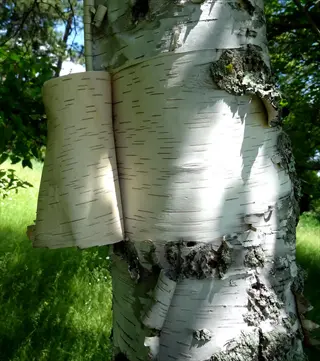
Paper Birch (Betula papyrifera)
- Bark: Chalky white bark peels in large papery sheets, while the base of old trunks turns blackish and furrowed.
- Size: Reaches about 40 to 70 ft (12 to 21 m) tall and 35 to 60 ft (11 to 18 m) wide at maturity.
- Zones: Suited to USDA hardiness zones 3 to 9 in full sun and moist, well-drained soils.
- Range: Native across northern North America and used mainly as an ornamental in milder regions.
- Use: The classic white-bark birch for landscapes, plus traditional bark crafts and canoes.
- Caution: Vulnerable to bronze birch borer, especially when stressed by heat or drought.
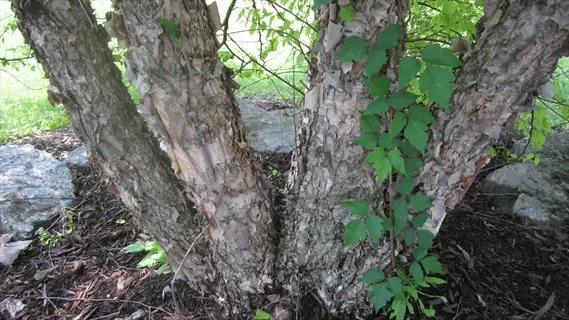
River Birch (Betula nigra)
- Bark: Salmon to cinnamon bark curls and exfoliates in ragged, shaggy sheets on younger trunks.
- Size: Listed at 40 to 70 ft (12 to 21 m) tall and 40 to 60 ft (12 to 18 m) wide, often multi-stemmed.
- Zones: Grows in USDA zones 4a to 9b and is the most heat-tolerant native birch.
- Habitat: A streambank pioneer that wants high soil moisture and full sun to establish.
- Use: The best birch for warm and wet sites, since it resists the bronze birch borer.
- Caution: Tends to shed interior leaves in drought and drop twigs, so site it in less manicured areas.
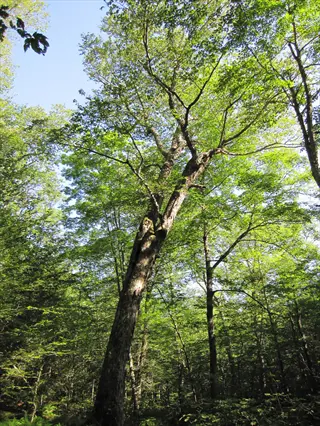
Yellow Birch (Betula alleghaniensis)
- Bark: Shiny bronze to yellow-gray bark peels in thin curls, and twigs taste of wintergreen.
- Size: A large forest birch and the most important native birch as a quality hardwood.
- Range: Found from Newfoundland south to Georgia in cool, moist northern forests.
- Wildlife: Feeds deer, moose, snowshoe hare, beaver, porcupine, and many seed-eating birds.
- Use: Heavy, strong, close-grained wood prized for furniture, flooring, and veneer.
- Caution: Yellow-bellied sapsucker feeding can reduce growth, lower wood quality, or kill trees.
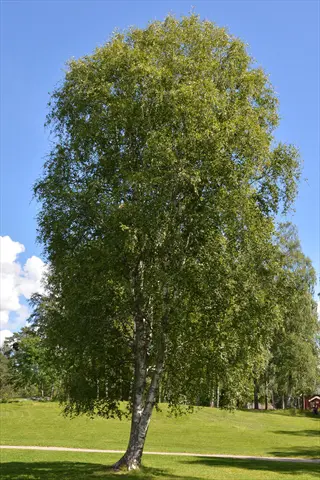
Silver Birch (Betula pendula)
- Bark: Bright white bark with dark diamond-shaped fissures near the base of older trunks.
- Form: Often grown as a graceful weeping ornamental with slender, drooping branch tips.
- Range: A widespread European birch and a classic pioneer of cool northern landscapes.
- Leaves: Small, triangular, doubly serrated leaves that turn clear yellow in autumn.
- Use: A popular ornamental valued for its slender silhouette and brilliant white bark.
- Caution: Like other white-bark birches, it can be stressed by heat and targeted by borers.
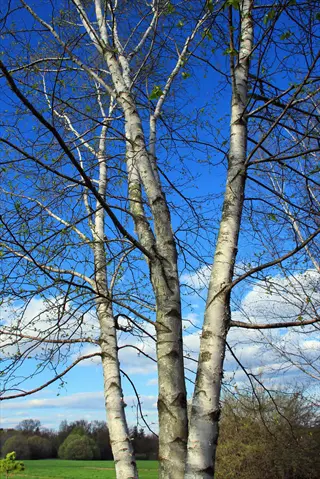
Gray Birch (Betula populifolia)
- Bark: Grayish-white bark that does not peel as freely as paper birch, with dark chevron marks.
- Size: A small tree commonly reaching only about 20 to 30 ft (6 to 9 m) tall.
- Range: Native from Nova Scotia south to the mid-Atlantic, thriving on poor, disturbed ground.
- Habit: A fast-growing, short-lived early pioneer of old fields and cleared land.
- Use: Useful for quick cover on tough sites rather than for timber or showpiece planting.
- Seed: A prolific seeder from age 8 that builds a lasting soil seed bank.
I pushed a multi-stemmed Heritage river birch into the damp low corner of the back yard about twelve years ago. Water sat in that spot for days after every storm. From the kitchen window I watched it take the wet ground and run with it. The trunks now arch over the fence and peel back in cinnamon and salmon sheets while the lawn around them still sulks.
If you garden in the warm or wet South, river birch is the safe pick. Its Latin name is Betula nigra, and it grows in zones 4a to 9b where the heat would cook a white-bark tree. It also resists the bronze birch borer that hammers the other birches, so you get the peeling bark without the early death.
Match the tree to your conditions and you skip most birch trouble. Want bark for a cool yard? Pick paper birch or silver birch. Need a small tree for poor soil? Gray birch. Live somewhere hot and damp? River birch wins every time.
How to Identify a Birch
Learning how to identify birch trees comes down to a handful of clues you can read in seconds. The bark gives you away first. It looks thin and paper-like, it sheds in horizontal strips, and it carries short dark dashes that run sideways across the trunk.
Those dark dashes are called lenticels, and they let the trunk breathe. No other common tree wears them the same way. Once you spot that peeling bark with its sideways markings, you are almost certainly looking at a birch.
Check the leaves next to confirm your guess. Birch leaves are small, they sit alternate along the twig, and they tend toward a triangle shape. The real tell is the serrated edges, which are doubly toothed, so each big tooth carries smaller teeth of its own.
Use this simple two-step method and you will not get stuck. First you confirm the genus by the lenticels and the doubly serrated leaves. Then narrow down the species by bark color and tree size. A tall chalk-white trunk and a low shrubby one point to very different birches.
Spring and winter add their own clues. In spring you will see long slim catkins that dangle like little tails and shed pollen. By late summer the female catkins ripen into a soft papery cone about 1 inch (2.5 cm) long. The cone crumbles apart in your fingers and scatters tiny winged seeds.
Birches are easily recognized by their paper-like bark and distinctive horizontal markings called lenticels.
Bare winter twigs still talk if you scratch and sniff. Snap a young twig of yellow or sweet birch and you get a sharp wintergreen scent, a quick check no other local tree passes. People most often mix up birch and aspen. Look close to tell them apart. Birch shows the lenticels and doubly toothed leaves. Aspen leaves flutter on flat stalks and have a much smoother edge.
Where Birch Trees Grow
| Species | USDA Zones | Typical Size | Best Conditions |
|---|---|---|---|
| Paper birch | 3 to 9 | 40 to 70 ft (12 to 21 m) | Cool climates, full sun, moist soil |
| River birch | 4a to 9b | 40 to 70 ft (12 to 21 m) | Heat and wet sites, full sun |
| Gray birch | 3 to 7 | 20 to 30 ft (6 to 9 m) | Poor, disturbed, open ground |
| Yellow birch | 3 to 7 | Large forest tree | Cool, moist northern forests |
| Silver birch | 2 to 7 | Medium ornamental | Cool northern landscapes, full sun |
| Zone and size ranges follow USFS, USDA Silvics, and university extension sources; river birch is the most heat-tolerant native birch. | |||
So where do birch trees grow best? Most of them want cool climates, full sun, and moist well-drained soil. They crowd the cooler parts of the Northern Hemisphere. That is why you find them across the northern states and up into Canada, not down in the Deep South.
Pick a birch by climate first, then by how wet your site stays. Bark color comes last. The table above lines up the main species by their USDA zones and best conditions. Now you can match one to your region in a single glance, not by hunting through scattered notes.
Most birches share the same comfort zone. Paper birch runs from zones 3 to 9 and covers a huge native range across northern North America. Gray birch grows from Nova Scotia down to the mid-Atlantic, while yellow birch stretches from Newfoundland all the way to Georgia in cool, moist forests.
River birch is the odd one out, and that works in your favor. It handles zones 4a to 9b and is the only native birch that truly thrives in the low-elevation South. It takes heat and wet ground that would sink the others, so it is your pick for hot, soggy sites where a paper birch would struggle.
The pattern holds in Europe too. Silver and downy birch fill the same cool, upland pioneer role there that paper and gray birch fill here. Match the hardiness zones to your yard, check the soil moisture, and the right birch almost picks itself.
Lifespan and Growth Rate
The crown of my old paper birch went thin and patchy after three hot dry summers in a row. It dropped twigs across the lawn all season, then half the upper branches gave out. I planted it years before the Heritage river birch in the same yard. Yet the river birch in the damp corner kept pushing out fresh growth, while the paper birch slipped away.
So how long do birch trees live? In the wild, paper birch matures in 60 to 70 years, and few trees push past 140 to 200 years. That sounds long, but most birch you plant in a yard tells a shorter story.
Birch is a classic pioneer species. It is fast-growing and short-lived by design, built to grab open ground fast and then hand it off. Because birch needs full sun and cannot stand shade, it races up after a fire or a clearing, then loses its spot once taller, shade-loving trees move in.
You can see the growth rate in raw numbers. A burned-over Alaska stand can hold 3,000 to 6,000 trees per acre at age 20. By 60 to 90 years that same ground carries only 500 to 800 trees per acre. The weaker stems die off, and conifers and hardwoods take over through normal forest succession.
In your yard the clock runs faster. Landscape birches often last only 40 to 70 years, since lawns bring drought, heat, and stress that a cool forest floor does not. Treat your birch as a medium-term tree, not an heirloom you pass down. Plant the right species in the right spot, and you stretch those years as far as they will go.
Pests, Disease and Siting
Most birch tree diseases and pest problems trace back to one root cause: a stressed tree. A healthy birch shrugs off bugs that would kill a struggling one. So the smart play is to keep the tree vigorous and to plant it somewhere it can stay that way.
The bronze birch borer is the worst of the bunch. It is the most serious insect pest of paper birch, and it goes after overmature, drought-hit, or weakened trees. River birch resists it, which is one more reason that species is the safer pick for hot or tricky spots.
One of my own birches looked done for. Then it leafed back out full and green the next spring after a summer of deep weekly soaking and a wide mulch ring around its base. The two seasons before that were dry and scorching, and I had let it coast on whatever rain fell. The crown thinned, the inner leaves yellowed and dropped, and a few upper twigs went bare. By August the tree was clearly slipping toward birch dieback. That fall I built the mulch ring out past the drip line and ran a slow hose on it once a week through the heat, keeping the shallow roots cool and damp.
Birches do not warn you in a slow, polite way. They have shallow roots that sit near the surface, so a dry spell hits them fast. They answer drought by shedding interior leaves and dropping small twigs across the lawn. That litter is the tree telling you the shallow roots are too hot and too dry.
Here are the common birch problems, paired with the prevention that actually works for each one.
Bronze Birch Borer
- What it is: A wood-boring beetle whose larvae tunnel under the bark and cut off the flow of water and nutrients.
- Risk: It is the most serious insect pest of paper birch and usually attacks overmature, drought-stressed, or weakened trees.
- Defense: Choosing resistant species like river birch and keeping roots cool and moist are the most reliable protections.
Birch Leafminer and Aphids
- What they are: Leafmining larvae blotch and brown the foliage, while aphids cluster on new growth and coat leaves with sticky honeydew.
- Risk: Damage is mostly cosmetic on healthy trees but adds stress that can invite the borer over time.
- Defense: Maintaining tree vigor with mulch and steady water keeps these secondary pests from compounding the problem.
Drought Stress and Twig Drop
- What it is: Birches have shallow roots and respond to dry spells by shedding interior leaves and dropping twigs.
- Risk: Repeated drought stress weakens the tree and makes it far more attractive to the bronze birch borer.
- Defense: Deep weekly watering in dry weather and a wide mulch ring keep the shallow root zone cool and moist.
Poor Siting Near Structures
- What it is: Shallow roots, leaf shedding, and twig drop make birch a messy, root-competitive choice close to a house, walks, or drives.
- Risk: Planting too close brings root competition and constant cleanup, and stresses the tree near hot, reflective surfaces.
- Defense: Site birch in less manicured areas with room for the roots, away from foundations and paving.
Where you plant a birch matters as much as how you water it. Those shallow roots compete with lawn and paving for moisture, and the tree sheds leaves and twigs all season. Set it close to the house or a walk and you get root competition, constant cleanup, and heat bouncing off hard surfaces onto the trunk.
Give birch a less manicured spot with room for the roots, well back from foundations, walks, and the drive. Cosmetic pests like the birch leafminer and aphids will still show up, but they rarely do real harm to a strong tree. The same drought stress that drops twigs is what opens the door to the borer, so a cool, moist root zone is your best defense against all of it.
Keep the shallow root zone cool and moist with a wide mulch ring and deep weekly watering in dry spells, since a vigorous birch is far less likely to be killed by the bronze birch borer.
Uses of Birch Wood and Bark
Birch wood uses run far past the white bark you notice in the yard. The tree gives you strong timber, sweet sap, papery bark for crafts, and food for a long list of animals.
Yellow birch is the most valuable native birch for wood. The wood is heavy, strong, and close-grained. So woodworkers turn it into furniture, flooring, and cabinets. They also slice it thin for veneer that shows clean grain.
The list below sorts birch into 4 plain jobs. You get the wood, the sap, the bark, and the wildlife value, and each one shows what the tree really gives back.
Quality Hardwood Timber
- Source: Yellow birch is the most important and valuable native birch as a quality hardwood.
- Properties: Its heavy, strong, close-grained wood works and finishes cleanly for fine work.
- Products: Used for furniture, flooring, cabinetry, and high-quality veneer in everyday and premium goods.
Birch Sap and Syrup
- Source: Birch trees can be tapped in early spring for their watery, mineral-rich sap.
- Process: The sap is boiled down into syrup, but it takes far more sap per finished gallon than maple.
- Flavor: Birch syrup carries a distinct savory, molasses-like flavor unlike sweeter maple syrup.
Bark Crafts and Canoes
- Source: Paper birch supplies the thin, papery, water-resistant bark prized for traditional crafts.
- History: The bark was used for birch bark canoes, containers, and writing surfaces for centuries.
- Today: It still appears in decorative crafts, though stripping bark from living trees harms them.
Wildlife Food and Habitat
- Browse: Birch is heavily preferred browse, feeding deer, moose, and snowshoe hare in young stands.
- Seed: Slowly disintegrating cones give a sustained seed source for many seed-eating birds.
- Shelter: Birch also supports beaver, porcupine, and other wildlife through food and cover.
There is a clear split in value here. Common birch is a cheap, handy hardwood. You find it in plywood and budget furniture. But figured grades and the best yellow birch cost more. The best wood is getting harder to find.
Birch syrup rewards your effort too, but it asks for a lot. You boil down far more sap per finished gallon than maple, and the result is a dark, savory syrup with a molasses edge. The birch bark itself once built canoes, and it still shows up in crafts today.
Yellow birch is the most important and valuable of the native birches as a quality hardwood.
5 Common Myths
All birch trees have bright chalky white bark, so any tree with white peeling bark must be a birch.
Bark color varies widely. Yellow birch is bronze-gray, river birch is salmon to cinnamon, and aspens also have pale bark, so leaves and lenticels matter.
Birch trees live for hundreds of years like oaks, so they are a permanent fixture once planted in a yard.
Most birches are short-lived pioneers. Paper birch matures in 60 to 70 years, and few trees live beyond 140 to 200 years even in the wild.
Birch is a soft, weak wood because the trees grow so fast and the bark peels off in flimsy papery sheets.
Birch is a true hardwood. Yellow birch in particular has heavy, strong, close-grained wood prized for furniture, flooring, and veneer.
Only maple trees can be tapped for syrup, so birch sap has no real food or culinary value at all.
Birch sap can be tapped and boiled into syrup, though it takes far more sap per finished gallon and has a distinct savory flavor.
Birch trees are tough and pest-free, so you can plant any species anywhere and ignore problems entirely.
Bronze birch borer is a serious threat to stressed birches. River birch resists it and tolerates heat, while paper birch is far more vulnerable.
Conclusion
Birch trees give you fast beauty, bright fall color, and real wildlife value. The catch is that most of them are pioneer species built to grow quick and bow out, not to stand for centuries. Plant one knowing that, and you will love it for what it is.
The genus holds about 50 species. Only 8 reach tree size in North America. You can tell almost any of them apart by peeling bark, those small horizontal lenticels, and the toothed leaves. The best types of birch trees for a yard each suit a place. Paper birch matures in 60 to 70 years. River birch is the heat-tolerant, borer-resistant pick for the South.
Here is the one rule that prevents most birch regret. Match the species to your climate and site, then keep the shallow roots cool and moist with mulch and a bit of shade at the base. Do that, and you sidestep the stress that invites the bronze birch borer in the first place. I planted a river birch in a hot, soggy corner where two paper birches had failed, and it shrugged off both the heat and the borer. A thirsty, sun-baked birch is a borer magnet, and a happy one rarely is.
So pick your spot and plant with confidence. Want fast white bark in a cool zone? Go paper or gray birch. Fighting heat or wet ground? River birch wins. Choose the right tree for the right place, and a birch will pay you back in bark, shade, and birdsong for years to come.
Glossary
- Bronze birch borer
- A wood-boring beetle whose larvae tunnel under birch bark and are the most serious pest of stressed birches.
- Catkin
- A slender, drooping cluster of tiny flowers, the spring bloom form of birch trees.
- Doubly serrated
- A leaf edge with small teeth that themselves carry even smaller teeth, typical of birch leaves.
- Hardwood
- Wood from a broadleaf deciduous tree such as birch, as opposed to softwood from conifers.
- Lenticel
- A small raised pore in tree bark, seen as the horizontal dash-like markings that help identify birch.
- Pioneer species
- A fast-growing, sun-loving plant that is among the first to colonize open or disturbed ground.
- Shade-intolerant
- Needing full sun to grow well and unable to thrive in the shade of taller trees.
- Veneer
- A thin sheet of high-quality wood glued over a cheaper core, a common premium use for birch.
External Sources
Frequently Asked Questions
What are birch trees?
Birch trees are deciduous trees and shrubs in the genus Betula, known for thin peeling bark, horizontal lenticels, and doubly serrated leaves.
What is another name for a birch tree?
Common birches go by many names:
- White birch for paper birch
- Silver or weeping birch for Betula pendula
- Black, red, or water birch for river birch
Is birch a hardwood or a softwood?
Birch is a hardwood because it comes from a broadleaf deciduous tree, not a needle-bearing conifer.
How long do birch trees live?
Most birches are short-lived. Paper birch matures in 60 to 70 years and few trees live beyond 140 to 200 years.
What is a birch tree good for?
Birch is useful in many ways:
- Quality hardwood for furniture, flooring, and veneer
- Birch sap boiled into syrup
- Wildlife food and habitat
- Fast ornamental and screening trees
What are the downsides of birch trees?
Birch downsides include a short lifespan, vulnerability to bronze birch borer, shallow roots, and interior leaf and twig drop in drought.
Where do birch trees grow in Europe?
In Europe, silver birch and downy birch grow widely across cool northern and upland regions where they act as pioneer trees.
Why is birch wood expensive?
Premium birch such as yellow birch and figured grades is expensive because the best quality hardwood is increasingly rare and slow to replace.
What does a birch tree symbolize?
In folklore, the birch commonly symbolizes renewal, new beginnings, and purification, partly because it is a pioneer that recolonizes bare ground.
Do birch trees grow fast?
Yes, most birches are fast-growing pioneer species that quickly colonize open ground, which is partly why they are also short-lived.

