
Introduction
Almost anyone can grow strong, healthy plants from garden seeds with a handful of proven rules. You do not need a greenhouse, a green thumb, or years of practice. A seed is a tiny package of stored potential, and your job is mostly to give it the right warmth, moisture, light, and timing. Get those four things close enough, and the plant does the hard work for you. Starting seeds at home is far simpler than most people fear.
Here is the number that anchors the whole process. Most plants sprout well in warm soil. The sweet spot is 65 to 75 degrees Fahrenheit (18 to 24 degrees Celsius). The team at Utah State University Extension shared that range, and we will lean on their work and other land grant schools all the way through this guide. That one range tells you why some seeds pop up fast and others just sit and rot. This guide leans on university extension research the whole way through. So the advice holds up in a real garden, not just on paper.
Home seed starting took off again with the new wave of folks growing their own food. The appeal is easy to see. Seeds are the cheapest way to grow more plants and more kinds of plants than you could ever buy as transplants. A single packet costs a few dollars and can fill a whole bed. You also get hundreds of varieties that no garden center ever stocks.
Most popular seed guides walk you through the basic how-to and then stop. They skip seed viability. They skip real seedling fixes. And they skip the science behind why seed germination even happens. This guide fills all three gaps with extension-backed detail. That makes it a true resource for seed starting for beginners, not just another quick checklist.
You will move through the whole journey here, from picking the easiest crops to transplanting seedlings outdoors. You will learn how germination works and when to start your seeds. You will learn how much light young plants need and how to harden them off. You will learn how long old seeds stay good and how to fix the problems that trip up new gardeners. By the end you will feel ready to fill a tray and watch it come to life.
Best Garden Seeds for Beginners
My first tray of leaf lettuce sprouted in days on a south-facing kitchen windowsill, and that little row never looked back. For weeks before that I had put off planting at all, sure that seeds were some fussy thing I would mess up. One forgiving crop fixed that. The fastest way past the fear is to start with seeds that want to grow no matter what you do.
The best beginner garden seeds share one trait: they sprout quickly and shrug off the uneven light and watering that trip up new gardeners. Pick crops that forgive your mistakes and you build confidence with every sprout. These five are the easiest vegetables to grow from seed, plus one flower that earns its spot.
For each crop below you get the real numbers that thin guides skip: how deep to plant, whether to direct sow or start indoors, and how soon you can harvest. The sowing depth rule holds across all of them. Cover a seed at about 2 to 3 times its own diameter, so tiny seeds barely get buried and fat ones go an inch down.
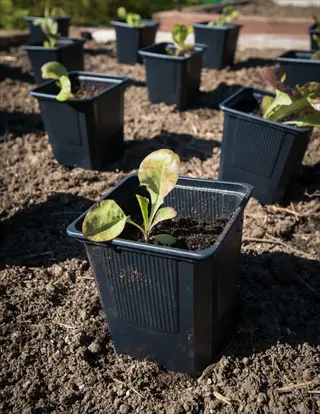
Lettuce
- Why it is easy: Lettuce sprouts quickly in cool conditions and tolerates the imperfect light and watering that trip up new gardeners.
- Sowing depth: Sow seeds shallowly at about two to three times their diameter, which for lettuce means barely covering them with fine mix.
- Where to sow: Lettuce can be direct sown in the garden or started indoors, giving beginners flexibility to grow it in beds or containers.
- Soil temperature: It germinates at one of the lowest soil temperatures of any crop, with an optimum near 75 degrees Fahrenheit (24 degrees Celsius).
- Days to harvest: Loose-leaf types are ready to pick in roughly three to four weeks, so the reward arrives fast and keeps motivation high.
- Pro habit: Cut outer leaves and let the center keep growing for repeated harvests from a single sowing across several weeks.
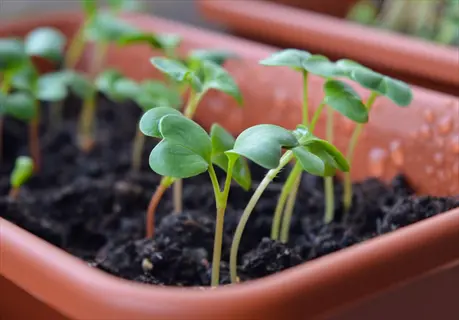
Radishes
- Why it is easy: Radishes are among the fastest crops from seed, giving beginners a visible payoff in about three weeks.
- Sowing depth: Plant the round seeds about two to three times their diameter deep, roughly half an inch (just over one centimeter) into loose soil.
- Where to sow: Radishes are direct sown because the root forms quickly and dislikes transplanting, so seed them right where they will grow.
- Soil temperature: They germinate well in cool soil, making them a reliable choice for early spring and fall sowings.
- Days to harvest: Many varieties mature in roughly twenty-one to thirty days, which is part of why they are a classic first crop.
- Pro habit: Sow a short new row every two weeks so you get a steady supply instead of one large crop that bolts at once.
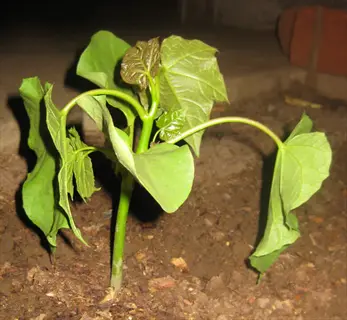
Bush Beans
- Why it is easy: Bush beans have large seeds that are simple to handle and push up strong, vigorous sprouts in warm soil.
- Sowing depth: Plant the large seeds about one inch (two and a half centimeters) deep, following the two to three times diameter rule.
- Where to sow: Beans are direct sown because they handle transplanting poorly; Rutgers notes warm-season crops like beans do best sown in place or in peat pots.
- Soil temperature: They need warm soil to germinate, with a minimum around 60 degrees Fahrenheit (16 degrees Celsius), so wait until frost danger passes.
- Days to harvest: Most bush types produce pods in roughly fifty to sixty days, then keep producing if you pick regularly.
- Pro habit: Harvest pods young and often to encourage the plant to keep setting new beans rather than slowing down.
Peas
- Why it is easy: Peas are cool-season seeds that sprout reliably in spring soil and reward early planting with sweet pods.
- Sowing depth: Sow the large round seeds about one inch (two and a half centimeters) deep using the two to three times diameter guideline.
- Where to sow: Peas are direct sown into cool spring soil; they dislike heat, so sow them as early as the ground can be worked.
- Soil temperature: They germinate in cool conditions, which lets you plant them weeks before warm-season crops are safe outdoors.
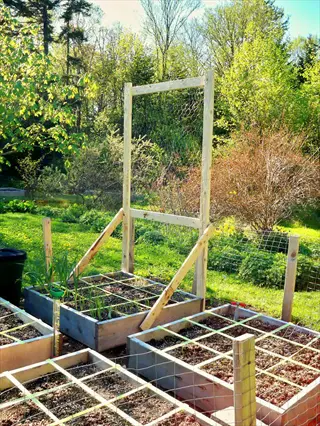
- Days to harvest: Many varieties are ready in roughly sixty days, and a simple trellis keeps vines tidy and easy to pick.
- Pro habit: Provide support early so vines climb cleanly, and pick pods promptly to keep the plants productive.
Zinnias
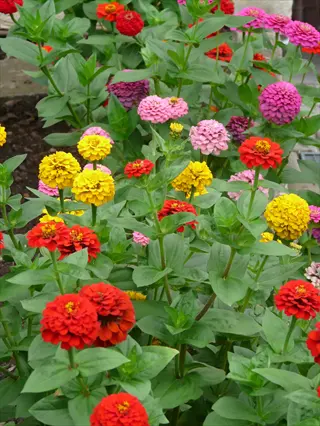
- Why it is easy: Zinnias are a beginner-friendly flower from seed that germinate fast and bloom heavily through summer with little fuss.
- Sowing depth: Cover the flat seeds lightly at about two to three times their diameter, keeping them shallow in fine mix.
- Where to sow: Zinnias can be direct sown after frost or started indoors, making them flexible for beds, borders, and cutting gardens.
- Soil temperature: They germinate in warm soil, so sow them once spring has settled and the soil has warmed up.
- Days to bloom: Many varieties flower in roughly sixty to seventy days from sowing and keep blooming until frost.
- Pro habit: Cut blooms regularly for the vase, which prompts the plant to push out even more flowers all season.
Notice how these picks lean on fast growing seeds that reward you in weeks, not months. Radishes hand you a crop in about 3 weeks, and leaf lettuce is not far behind. That quick payoff keeps you coming back to the garden, and that habit matters more than any single plant you grow.
Start with two or three of these, not all five at once. Get a couple of easy wins under your belt, then branch out to crops that ask a little more of you. Confidence grows the same way a seed does, one small step at a time.
Germination and Soil Temperature
Most failed sowings come down to one thing, and it is not the seed. The soil was simply too cold. A buried seed reads the warmth around it like a signal, and until that warmth arrives the embryo just waits. Get the temperature right and seed germination happens fast. Get it wrong and even fresh, healthy seed sits and rots.
Think of it this way. Soil temperature is the engine, and moisture is the fuel. Warmth starts the whole process inside the seed, and water keeps it running. You need both at once. Auburn's extension service says water gets most of the attention. But soil temperature germination is just as key to getting things started.
Warmth does more than flip the switch. It sets the pace. The right germination temperature wakes the seed and speeds up each step. So your days to germination drop sharply. A pepper in 60°F (16°C) soil may sulk for two or three weeks. Move that same seed into 85°F (29°C) soil and it can break the surface in under a week.
Research backs this up beyond the vegetable patch. A 2020 study in the journal Plants looked at 102 wild species. It found that night temperature was the strongest single driver of how fast seeds woke up. That is wild flora, not a garden rule. But the idea still holds. Steady warmth, day and night, beats a warm afternoon and then a cold snap.
Numbers make this easier to plan. Most crops sprout well between 65 and 75°F (18 to 24°C), per Utah State University Extension. Cool-season crops like lettuce and spinach push lower, while warm-season crops like tomatoes and peppers want it hotter. The table below shows the safe minimums and the sweet spots for common vegetables.
Warmth alone will not finish the job. Once a seed starts to swell, a single dry spell can kill the embryo before it ever shows a root. The folks at the University of Maryland warn about this. So pair your heat with steady moisture. Keep the surface damp, never soggy, the whole time you wait.
Here is the practical payoff. Before you blame a slow seed packet, check your soil with a cheap thermometer. If the soil sits below the crop's minimum, a heat mat or a few more weeks of patience fixes the problem. Most gardeners toss good seed when the real culprit was cold dirt all along.
Most plants you sow will readily germinate at soil temperatures between 65 °F - 75 °F.
When to Start Your Seeds
My pepper seedlings on the south-facing kitchen windowsill stood pale and floppy by early April, stems stretched thin and reaching for the glass. I had sown them in late winter, and they sat there for weeks waiting on a mid-May last frost that felt like it would never come. By the time the ground was warm enough to plant, they were leggy and worn out from the long indoor wait.
The next year I started that same tray in early March instead, and the difference was night and day. Knowing when to start seeds comes down to one date you have to nail down first.
Find your local average last frost date before you sow a single seed. Most regions list it through a county extension office or a quick zip code lookup. That date marks the point when nights stop turning cold enough to kill tender plants. Once you have it, you count weeks before last frost to learn when each crop goes into a tray.
Each vegetable needs its own head start indoors. Tomatoes want 6 to 8 weeks before your last frost. The University of Maryland Extension lands on 6 to 7 weeks for stocky 8 to 10 inch plants. Peppers and eggplant need the longest lead at 8 to 10 weeks because they sprout slowly and grow at a calm pace early on.
Onions, leeks, and celery sit at the front of the line at 10 to 12 weeks, while broccoli, cabbage, and cauliflower need only 6 to 7. Lettuce is quick at 5 to 6 weeks, and you can start it inside or sow it straight in the ground once soil thaws. The table below lays out the full seed starting calendar so you can count backward from your own frost date.
Here is the rule that decides where each crop starts. Long-season warm crops like tomatoes, peppers, and eggplant get a head start indoors because they need months of warmth to ripen a real harvest. Root crops and large-seed crops do not transplant well, so beans, peas, and radishes go straight into the garden after your last frost passes.
Resist the urge to start seeds extra early. Per Rutgers Extension, plants started too soon become elongated, pale green, and weak while they wait indoors for safe outdoor weather.
Light and Seed Starting Gear
You don't need a fancy setup to start strong seedlings from your garden seeds. A few clean containers with drainage, a bag of fresh mix, a light source, and a way to hold moisture cover everything you need.
The biggest mistake new growers make is trusting a sunny windowsill to do the job. Natural window light is seldom enough for stocky seedlings, so they stretch and flop. A simple shop light or LED fixture makes a real difference, and these grow lights for seedlings cost less than you might think.
How close you hang that light matters more than the type. Keep it no more than 4 inches (10 centimeters) above the seedling tops. About 2 inches (5 centimeters) is the sweet spot as plants grow. University of Minnesota Extension warns that too little light is the top cause of skinny, leggy stems.
Daily hours count too. Give your seedlings 12 to 16 hours of light every day, then turn the lights off at night. Don't leave them running around the clock, because young plants still need a dark rest period. Getting these hours of light for seedlings right is the single biggest fix for weak growth.
Now think about what you plant those seeds in. A good seed starting mix is a clean, fluffy nursery rather than dense garden dirt. Fresh sterile mix drains well and holds air around tender roots, and it skips the pathogens that garden soil and compost carry into your trays.
Your seed starting containers can be almost anything with drainage holes. Recycled pots, plug trays, and rinsed food tubs all work. The list below breaks down the four essentials and the exact numbers that keep your seedlings stocky and healthy.
Grow Lights
- What to use: A simple fluorescent shop light or LED fixture provides far stronger, more even light than a windowsill, producing stocky rather than stretched seedlings.
- Distance: Keep the lights no more than 4 inches (10 centimeters) above the seedling tops, with about 2 inches (5 centimeters) being ideal as the plants grow.
- Daily hours: Give seedlings 12 to 16 hours of light every day and turn the lights off at night; do not leave them on continuously.
- Why it matters: Lack of light is the major cause of elongated, skinny stems, so positioning the light close is the single biggest fix for leggy seedlings.
Seed Starting Mix
- What it is: A light, sterile, soilless mix designed to hold moisture and air around delicate young roots without compacting.
- Why not garden soil: Garden soil and compost carry pathogens that cause damping off, so always use fresh mix for starting seeds indoors.
- Watering trick: Soilless mixes water well from the bottom, wicking moisture up through drainage holes while you mist the top layer to settle seeds.
- Reuse caution: If you reuse trays from a previous season, clean them first so old debris does not introduce disease into the fresh mix.
Containers and Trays
- Drainage first: Any container works as long as it has drainage holes; recycled pots, plug trays, and upcycled food containers all do the job.
- Size matters: Start small to save space and mix, then move strong seedlings up to larger pots once they have several true leaves.
- Transplant-sensitive crops: Beans and corn dislike root disturbance, so Rutgers recommends peat pots or pellets that go straight into the ground.
- Labeling: Label every tray at sowing time, because seedlings of different crops look surprisingly alike before they form true leaves.
Moisture and Warmth
- Humidity dome: A clear cover or plastic wrap holds humidity around seeds while they germinate, then comes off once sprouts appear to prevent mold.
- Heat for warm crops: A seedling heat mat helps warm-soil crops like tomatoes and peppers reach their optimum germination temperatures faster.
- Continuous moisture: Once germination begins, the mix must never dry out, because a dry period after the process starts kills the embryo.
- Water temperature: Use clean, warm water around 68 to 77 degrees Fahrenheit (20 to 25 degrees Celsius); cold water slows growth and invites disease.
Keep lights no more than 4 inches above the tops of your seedlings: as close as 2 inches is ideal. Lack of light is the major cause of elongated, skinny stems.
Transplanting and Hardening Off
I carried a flat of tomato seedlings from the kitchen windowsill out to the raised beds on a bright June morning. By afternoon the top leaves had scorched white. They were thin and papery at the edges, curled like burnt paper. After that, I built a slow two-week routine into every spring, and the seedlings stopped frying the day they went out.
Hardening off seedlings is the bridge between the soft life indoors and the wind and sun of the garden. Plants raised inside grow tender stems and thin leaves that have never felt a breeze. Throw them into full sun and they wilt or scorch within hours, and that sudden collapse is the most common reason new transplants fail.
The fix is a slow handoff. The folks at University of Minnesota Extension say to give it about two weeks. So you harden off your seedlings for two weeks before you plant out. Then move them on a cloudy day or in the late afternoon. Each step eases the shift, so the plant toughens up instead of getting hit by midday heat all at once.
Wait until your seedlings have several sets of true leaves before you start the move. The true leaves are the second set that look like the mature plant, not the rounded seed leaves that came up first. They tell you the plant is sturdy enough to handle the trip outside.
Let seedlings grow several sets of true leaves beyond the first seed leaves so they are sturdy enough to handle a move.
About two weeks before planting out, set seedlings outside in a sheltered spot for a few hours, then bring them back in.
Each day add more time outdoors and more direct sun and wind, so the plants gradually toughen up instead of being shocked.
Transplant on a cloudy day or in the late afternoon so seedlings settle in without the stress of intense midday sun.
Set most seedlings at the same depth they grew indoors; tomatoes are the exception and can be planted deeper to root along the stem.
Water thoroughly right after planting to settle the soil around the roots and ease the plant through transplant shock.
When you set the plants in, depth matters more than people think. Rutgers FS787 notes you plant most seedlings at the same depth they grew indoors. Tomatoes are the one exception you can plant deeper, since they grow new roots along the buried stem and anchor stronger.
Transplanting seedlings still jolts the roots a little, even when you do everything right. A good soak right after planting settles the soil and cuts down on transplant shock, which shows up as droopy leaves for a day or two. Give it that calm two-week buildup and a gentle landing, and your seedlings shrug off the move instead of stalling out.
Seed Viability and Troubleshooting
Most failed trays come down to three problems, and almost all of them start with prevention rather than a cure. Clean gear, fresh mix, warm water, and enough light stop the top beginner failures before they ever show up. Once you know what each problem looks like, you can fix the cause and turn a dead tray into a strong one next time.
Damping off is the worst of the three. It can wipe out a whole tray in a night. The cause is soil fungi, and the main ones are Rhizoctonia and Fusarium, plus a water mold called Pythium. The University of Minnesota Extension notes that all three thrive in cool, wet, dark trays. Leggy seedlings and weak germination hurt less, but they still cost you weeks and a tray of frail plants.
Damping Off
- What it looks like: Healthy seedlings suddenly topple at the soil line and collapse, often killing a large section or an entire tray.
- What causes it: Soilborne fungi and the water mold Pythium thrive in cool, wet, low-light conditions and on dirty, reused trays.
- How to prevent it: Use fresh sterile mix, clean reused trays in a 10% bleach solution for 30 minutes, and avoid overwatering.
- Water habit: Water with warm 68 to 77 degrees Fahrenheit (20 to 25 degrees Celsius) water, since cold water slows growth and raises infection risk.
Leggy Seedlings
- What it looks like: Stems stretch tall, thin, and pale as seedlings reach toward a weak light source instead of staying stocky.
- What causes it: Lack of light is the major cause, often made worse by temperatures that run too warm while the plant waits.
- How to fix it: Move the light closer (2 to 4 inches, 5 to 10 centimeters, above the tops) and run it 12 to 16 hours daily.
- Prevention: Avoid starting seeds too early, because seedlings held back under poor light and warmth stretch while they wait to go outdoors.
Poor or Patchy Germination
- What it looks like: Only a few seeds sprout, or sprouting is slow and uneven across the tray despite careful sowing.
- What causes it: Soil that is too cold is a common culprit, along with a dry period after germination begins that kills the embryo.
- How to fix it: Keep soil in the crop's germination range, keep the mix continuously moist, and consider a heat mat for warm-soil crops.
- Seed age: Old or poorly stored seed germinates less reliably, so test questionable seed before relying on it for a full sowing.
Seed Viability and Storage
- Typical shelf life: Most vegetable seeds stay viable for about two to three years when stored cool and dry, though this varies by crop.
- Short-lived seed: Onion seed is notably short-lived, often lasting only about one year, so buy it fresh each season.
- Storage tip: Keep seeds in a cool, dry, dark place; a common rule of thumb is to keep temperature in Fahrenheit plus humidity percent under 100.
- Test before sowing: Sprout ten seeds on a damp paper towel to estimate germination percentage before committing a whole tray to old seed.
Seed age sits behind a lot of patchy germination, so it pays to know how long do seeds last before you sow. Most vegetable seeds stay viable about two to three years when stored cool and dry, while onion seed often lasts only about a year. Treat those numbers as general guidance and not a strict rule, since storage and crop both shift the odds.
When you doubt a packet, run a quick paper-towel germination test instead of gambling a whole tray on it. Sprout 10 seeds on a damp paper towel, keep it warm, and count how many pop after a week or so. If 7 of 10 sprout, you have roughly 70% germination, and you can sow a little thicker to make up the difference.
Per University of Minnesota Extension, seedlings infected by damping off rarely survive to produce a vigorous plant, and an entire tray can be lost, so prevention with clean gear and fresh mix matters far more than any cure.
5 Common Myths
A sunny windowsill gives seedlings all the light they need to grow into strong, stocky transplants.
Window light is seldom enough on its own and usually produces pale, stretched seedlings; grow lights kept close deliver the 12 to 16 hours seedlings need.
Starting seeds extra early gives you a head start and bigger, healthier plants by the time spring arrives.
Plants started too early become elongated, pale, and weak while they wait; follow the weeks-before-frost guidance for each crop instead.
Old seed packets from past seasons are dead, so you should throw them out and buy fresh every year.
Most vegetable seeds stay viable for about two to three years when stored cool and dry; a simple paper-towel test confirms it.
Any garden soil scooped from the yard works fine for filling seed trays and starting seeds indoors.
Garden soil carries pathogens that cause damping off; a fresh, sterile seed starting mix gives roots a clean, well-draining home.
Watering seedlings with cold water straight from the tap is harmless and keeps the trays nice and cool.
Cold water slows growth and raises infection risk; warm water around 68 to 77 degrees Fahrenheit keeps seedlings healthy and growing steadily.
Conclusion
Growing garden seeds comes down to four things you now know how to handle. You pick forgiving crops, give them warmth and light, time the start around your frost date, and move them outside with care. Get those right and the seedlings mostly take care of themselves.
Keep the load-bearing numbers close while you work. Most seeds wake up at 65 to 75°F, and you bury them about 2 to 3 times their diameter deep. Seedlings want 12 to 16 hours of light with the bulbs 2 to 4 inches above their tops. And tomatoes go in the tray 6 to 8 weeks before your last frost, not a day sooner.
The failures that scare off beginners are the easy ones to dodge. I killed a whole tray of seedlings to damping off my first spring, all from a reused pot I never cleaned. The next round used clean pots and fresh mix, and not one collapsed. Leggy stems straighten out once the light sits close enough, and starting too early just means you wait a week or two longer to sow. Clean gear, enough light, and patient timing handle all three.
Here is the payoff. Starting seeds from seed is the cheapest way to grow far more plants and far stranger varieties than any rack of transplants will ever sell you. Your first tray of seed starting will feel fiddly, and that is normal. But each season the routine gets easier, so pick two or three easy crops, look up your last frost date, and fill a tray. Growing from seed only gets better from here.
Glossary
- Damping off
- A fungal disease that causes young seedlings to suddenly collapse and die at the soil line.
- Direct sowing
- Planting seeds straight into the garden bed where they will grow rather than starting them indoors.
- Germination
- The process by which a seed sprouts and begins to grow into a seedling.
- Hardening off
- Gradually exposing indoor-grown seedlings to outdoor wind and sun before transplanting so they adjust without shock.
- Last frost date
- The average date of the final spring frost in your area, used as the reference point for timing seed starting.
- Leggy seedlings
- Seedlings with tall, thin, pale stems caused by too little light as they stretch toward a weak light source.
- Seed viability
- Whether a seed is still alive and able to sprout, which slowly declines as the seed ages.
- True leaves
- The leaves a seedling grows after its first seed leaves, which look like the mature plant's foliage.
External Sources
Frequently Asked Questions
What are the easiest garden seeds to grow for beginners?
The most forgiving choices include lettuce, radishes, beans, peas, and zinnias.
- Lettuce
- Radishes
- Bush beans
- Peas
- Zinnias
What seeds can grow in 3 weeks?
Radishes, leaf lettuce, arugula, and many microgreens are ready within roughly three weeks.
What temperature do garden seeds need to germinate?
Most seeds germinate readily at soil temperatures between 65 and 75 degrees Fahrenheit.
How deep should you plant garden seeds?
Plant each seed about two to three times as deep as its own diameter.
Which garden seeds should be started indoors versus direct sown?
Long-season warm crops start indoors, while root crops and large seeds are usually direct sown.
How long do garden seeds last in storage?
Most vegetable seeds stay viable for about two to three years when stored cool and dry.
Why are my seedlings tall, thin, and leggy?
Leggy seedlings are almost always caused by too little light or temperatures that run too warm.
What is damping off and how do you prevent it?
Damping off is a fungal disease that collapses young seedlings at the soil line.
Is October too late to plant garden seeds?
October still works for cool-season crops, garlic, and many spring-blooming flower seeds.
How much light do seed starting setups need?
Seedlings need 12 to 16 hours of light daily with the bulbs kept close to the tops.