
Introduction
The desert rose plant looks like a tiny baobab tree that someone topped with bright trumpet flowers. Its swollen, sculptural trunk and pink or red blooms make it one of the most striking plants you can grow at home. People reach for it on the bench at the garden center because nothing else on the shelf looks like it.
The plant is Adenium obesum, part of the dogbane family. It grows wild in Africa and the Arabian Peninsula. In a pot it reaches 3 to 9 ft (0.9 to 2.7 m) tall and 3 to 5 ft wide, but it takes its time. This is a slow grower, so the chunky trunk you want builds over years, not weeks.
That swollen trunk has a name. It is the caudex, the fat base that stores water and gives this succulent its bonsai look. There are two things you really need to understand here. The first is how to fatten that caudex and trigger the summer blooms. The second is that every part of the plant is poisonous, so you will also learn to handle the toxic sap with care.
Here is the good news. The desert rose looks fussy but it is genuinely easy once you get three things right: full sun, gritty soil, and a light hand with water. Overwatering kills more of these plants than anything else, so watering discipline runs through this whole guide. Get it right and your desert rose care turns into a simple weekly habit.
Desert Rose Care for Beginners
A desert rose plant asks for less than most flowering plants you have grown before. Think of it as a succulent shrub that wants sun, grit, and long dry spells between drinks. Get those three things right and the rest is easy.
The grid above gives you the whole care routine at a glance. Below I expand each pillar so you can scan the numbers or read the full reason behind them. Every figure here comes from university plant guides, not a guess.
Start with light. This plant needs full sun for 6 or more hours a day to keep its summer flowers coming, per UF/IFAS and NC State Extension. A south-facing window or an open patio spot works well. Skimp on light and you trade blooms for bare, leggy stems.
Soil is the next pillar of good desert rose care. Use a gritty cactus or succulent mix with well-draining soil at a pH of about 6.0 to 7.0. The roots and the swollen trunk hate sitting wet, so sharp drainage is not optional. Add coarse sand or perlite if your mix feels too dense.
Here is the rule that ties it all together. Overwatering is the number one killer, because soggy soil rots the caudex and roots fast. Water deep, then let the mix dry out all the way before the next drink. When in doubt, wait a few more days.
Caring for a desert rose feels more like raising a cactus than tending a typical flower. It wants a feast-then-drought watering rhythm, a sun-soaked spot, and gritty footing instead of rich, moist soil. Treat it that way and you avoid the trap that catches new growers.
Plan for slow growth and a long-term plant. In cultivation it reaches 3 to 9 ft (0.9 to 2.7 m) tall and 3 to 5 ft (0.9 to 1.5 m) wide, per NC State Extension. It is hardy outdoors in roughly USDA zones 11 to 12, so most growers keep it in a pot and bring it inside for winter.
Your reward for all this is the bloom. In summer the plant pushes out trumpet-shaped flowers about 2 to 3 in (5 to 8 cm) across in pink, red, or white. Hit the light, soil, and water marks above and those flowers show up on their own.
Overwatering is the top killer of desert roses. Soggy soil rots the caudex and roots fast, so always let the mix dry out completely before you water again.
Light, Heat, and Hardiness
The desert rose light requirements are simple to state and easy to get wrong. UF/IFAS and NC State Extension both call for 6 or more hours of direct or bright light each day. Hit that mark and the plant pumps out flowers all summer. Fall short and it limps along with leaves but few blooms.
Light is what feeds the blooms, not just what keeps the plant breathing. A desert rose in a dim corner will survive for months and still refuse to flower. Strong light builds the energy a plant needs to set buds, so full sun is the difference between a green shrub and a covered-in-trumpets show.
Heat is the other half of the deal. This is a tropical plant, and it gets touchy when the air turns cold. UF/IFAS warns that anything below 40°F (4°C) can harm it. The Missouri Botanical Garden goes further and sets a winter minimum near 50°F (10°C). Treat the warmer number as your safe floor and move the pot indoors before nights get chilly.
Outdoors, the desert rose is hardy only in USDA hardiness zones 11 to 12, per NC State Extension. That covers very little of the country. So unless you live in the warmest tip of Florida or Hawaii, you grow this plant in a container and bring it inside for the cold months. Light and temperature are the pair of factors that decide where the pot lives, season by season.
Indoors, your benchmark is a bright south or west-facing window. That spot gives the strongest light most homes can offer. A plant parked there in winter keeps its energy up and bounces back fast once spring returns. Bright indirect light from an east window will keep the plant healthy, but it rarely pushes enough power for heavy summer blooms.
If your windows just cannot deliver, a grow light fills the gap. Set one a few inches above the plant and run it about 12 hours a day through the dark months. It is the cheapest way to keep buds coming when the sun sits low and weak.
One last warning when you move a plant outside in spring. Do not drop it straight into harsh sun after a winter indoors. Start it in partial shade for a few days, then shift it into brighter spots over a week or two. Rush this and the leaves scorch and burn, which sets the plant back right when you want it growing.
Watering and Soil Without Rot
My Pink Picotee firmed back up about ten days after I saved it. I had torn it out of its pot, sliced off the soft brown roots, and let the cuts scab over on the kitchen counter. Before that, it had gone soft and wrinkled right at the base of the swollen caudex. I almost wrote it off.
The trouble started with a wet week. Rain kept filling the saucer under the pot, and I never tipped it out, so the roots sat in standing water for days. By the weekend the trunk that used to feel firm had turned spongy. I switched it to a grittier mix, ditched the saucer for good, and it pulled through. Drainage saved that plant, not any watering schedule.
Watering desert rose well comes down to one rhythm: a deep soak, then a full dry-down. Water until it pours out the drainage holes, then leave the plant alone until the soil is bone dry all the way through. In active summer growth that lands at roughly every 7 to 14 days. In winter you stretch it out much further, sometimes to once a month or less while the plant rests.
The trunk itself tells you when to water. A firm, swollen caudex means the plant is hydrated and happy. A soft or wrinkled one means trouble, either too little water or, far more often, too much. Better Homes & Gardens leans on this same firmness check, and it beats any calendar.
Soil is the other half of the fight. Desert rose wants a loose, sandy or gravelly cactus mix at a pH of about 6.0 to 7.0. UF/IFAS, the Missouri Botanical Garden, and NC State Extension all agree on the cause. Root rot comes from overwatering and soggy roots. A plain cactus or succulent mix is the easy start. You can open it up even more with perlite, pumice, or coarse sand. Those bits let water race through fast instead of pooling. Get the well-draining soil right and overwatering is much harder to do by accident.
Wait until the mix is dry all the way through and the swollen caudex still feels firm before you reach for the watering can.
Water thoroughly until it runs from the drainage holes, so the whole root zone gets a complete drink rather than a shallow splash.
Tip out any water that collects in the saucer so the roots never sit in standing moisture, which is what triggers rot.
Hold off on the next watering until the soil is fully dry again, stretching the gap in cool or low-light periods.
If you do catch root rot, act fast and you can still save the plant. The early signs are a mushy caudex or stem and a base that gives when you press it. Pull the plant out of its pot and rinse the roots so you can see what is dead. Cut away every soft, brown, slimy bit until you reach firm, pale tissue. Let those cuts dry and scab over for a day or two, then replant in fresh gritty mix and hold off on water for a week so the wounds seal. The fix is simple once you stop the soggy soil that caused it.
Take care not to overwater, since too much can lead to root rot.
Toxicity and Safe Handling
So is desert rose toxic? Yes, and not in a minor way. Every part of the plant carries poison, from the roots up to the petals. Here is the full picture before you bring one home.
The danger lives in the milky white sap and the tissue around it. That poisonous sap holds cardiac glycosides, a group of compounds that act straight on the heart. The plant sits in the dogbane family next to oleander, so treat it with the same respect you would give that famous garden killer.
This matters most if you have a busy household. The plant is toxic to pets like cats, dogs, and horses, and it is no safer for small children who put things in their mouths. The fix is simple though. Wear gloves every time you prune or repot, wash your hands and tools after, and keep the plant up high where curious paws and fingers can't reach.
All plant parts are poisonous
- Where the toxin sits: Leaves, stems, roots, flowers, and sap all carry the toxic compounds, so no part of the plant is safe to chew or swallow.
- Toxic principle: The active poisons are cardiac glycosides, the same class of heart-acting compounds found in several other dangerous ornamental plants.
- Symptoms if eaten: Ingestion can bring on vomiting, diarrhea, loss of appetite, an irregular heartbeat, and in severe cases death (NC State Extension).
The milky sap irritates skin
- Contact reaction: The white latex sap can cause contact dermatitis, leaving skin red, itchy, or inflamed after handling cut stems.
- When it leaks: Sap flows most when you prune, cut, or break the plant, which is exactly when bare-handed gardeners get exposed.
- Simple protection: Wear gloves while pruning or repotting and wash your hands, tools, and any splashed surfaces afterward.
It is dangerous to pets and children
- At-risk household members: The plant is toxic to cats, dogs, horses, and humans, so curious pets and small children are most at risk.
- Safe placement: Keep it well out of reach on a high shelf or in a room pets cannot access, and pick up any dropped leaves or flowers.
- Family context: It belongs to the dogbane family alongside oleander, another plant known for serious toxicity, which signals how seriously to treat it.
The chemistry is genuinely potent
- Documented compounds: A peer-reviewed study isolated 42 compounds from the fruit, including cardiac glycosides honghelin, obeside B, and obeside C (Ahmed et al., 2017).
- Measured strength: Those three glycosides showed cytotoxic activity against cancer cell lines comparable to the chemotherapy drug doxorubicin in laboratory testing.
- Historical use: The sap is potent enough that African hunters have traditionally coated arrow tips with it to kill large game quickly (Kapi'olani Community College).
How potent are those cardiac glycosides? Hunters in Africa coat their arrow tips with the sap to drop large game, per Kapi'olani Community College. A lab study even found three of the compounds matched the cancer drug doxorubicin in strength. That history is a vivid reminder, not a tip. Keep the plant on a high shelf, glove up before you cut it, and the desert rose stays a joy rather than a hazard.
Toxic latex causes contact dermatitis. All parts of the plant are poisonous if ingested. Vomiting, diarrhea, anorexia, depression, irregular heartbeat, and possibly death.
Caudex, Bonsai, and Cultivars
The swollen base at the bottom of the trunk is the caudex. It is the real reason people fall for this plant. The caudex stores water like a built-in canteen. It widens and swells over the years into the squat, tree-like shape that makes your desert rose look like a piece of living art.
The grafted Pink Picotee I bought several years ago started with a base no thicker than a pencil. Each season the trunk pushed out a little more, swelling at the soil line into a fat bottle shape while the slim graft above kept throwing soft pink flowers. I now have a squat little trunk that looks decades older than the plant really is.
That fat trunk is what turns your plant into a desert rose bonsai. The plant grows slow, so the caudex builds up over many seasons. Pot size and light pruning shape the rest. You are not training branches like a juniper bonsai. You just let the base thicken and keep the top tidy.
You can grow more plants three ways, and each one gives you a different result. Seed-grown plants tend to build a fatter, more dramatic caudex, but the flower color is a surprise and may not match the parent. Stem cuttings root fast and bloom true to the plant they came from, yet they stay slimmer at the base. Grafting joins a flower you want onto a sturdy rootstock, which locks in the exact bloom.
Grafted plants are how growers guarantee a specific hybrid flower. The flowers themselves come in single, double, or triple forms in shades of pink, rose, red, and white. Below are a few named cultivars worth knowing before you shop.
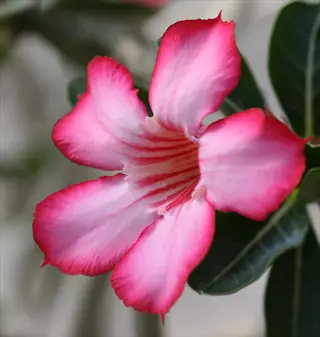
Pink Picotee
- Flower look: Soft pink petals edged with a deeper rose margin give this cultivar its signature picotee outline.
- Bloom form: It typically carries classic single trumpet flowers that show off the contrasting petal edges clearly.
- Why growers like it: The two-tone blooms read well from a distance and pair nicely with the plant's pale, swollen trunk.
- Care fit: Like all desert roses it wants full sun, gritty soil, and the deep-then-dry watering rhythm to flower well.
- Display: Its tidy habit suits a sunny windowsill or patio where the caudex and flowers are both on view.
- Source note: Pink Picotee is among the named cultivars documented by Better Homes & Gardens.
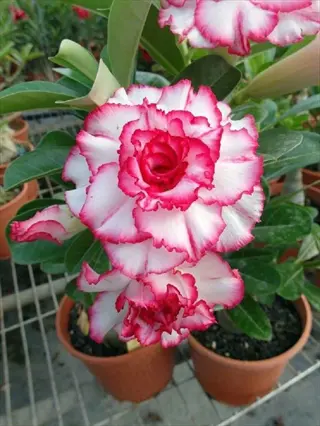
Double Noble
- Flower look: Rich, layered petals give this cultivar a fuller, more ruffled bloom than the simple single-flower types.
- Bloom form: Its double-flower structure stacks extra petals for a denser, showier display through summer.
- Why growers like it: The lush blooms make it a standout for collectors who want maximum flower impact.
- Care fit: It needs the same strong light and restrained watering, with spring feeding to support the heavier flowering.
- Display: Best placed where its dense blooms can be admired up close, such as a bright tabletop spot.
- Source note: Double Noble is listed among named desert rose cultivars by Better Homes & Gardens.
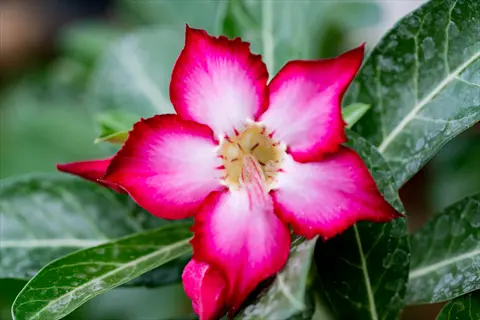
Ballerina
- Flower look: Delicate, graceful petals give this cultivar a light, dancing appearance that suits its name.
- Bloom form: It carries refined trumpet flowers that emphasize elegant shape over heavy mass.
- Why growers like it: Its softer, airier blooms appeal to growers who prefer a subtler flower than the doubles.
- Care fit: Standard desert rose care applies, with full sun and a fast-draining mix keeping it healthy and blooming.
- Display: A sunny, sheltered patio or bright indoor window shows off its slender flowers best.
- Source note: Ballerina appears in the named cultivar list from Better Homes & Gardens.

Seed-grown desert roses
- Caudex advantage: Seed-grown plants tend to develop a fatter, more characterful caudex, which is why caudex collectors favor them.
- Flower surprise: Bloom color from seed can vary and is not guaranteed to match the parent, so flowers are a bit of a surprise.
- Growth pace: They grow slowly but build the swollen base that gives the plant its prized bottle-tree form.
- Versus cuttings: Stem cuttings root faster and flower true to type but usually stay slimmer at the base than seedlings.
- Care fit: All forms share the same full-sun, gritty-soil, deep-then-dry care once established.
- Source note: Propagation by seed, cutting, and grafting is documented by NC State Extension.
If you want guaranteed flower color, choose a grafted or cutting-grown plant; if you want a dramatic fat caudex, start from seed and be patient with the slow growth.
Getting More Blooms
One summer my Pink Picotee threw out leaf after leaf and not a single bud. I moved it from a half-shaded corner into the brightest, full-afternoon-sun spot I had and started a spring phosphorus feed. Within weeks the leafy run stopped and fat buds swelled along the tips.
That swap is the whole answer to how to get desert rose to bloom. The plant trades leaves for flowers once it gets enough light and the right food. Too much shade is the most common reason a healthy plant refuses to set buds.
Your desert rose flowers are 2 to 3 in (5 to 8 cm) trumpet shapes in pink, red, and white. To keep them coming through summer, the plant needs six or more hours of direct light each day. Park it in the sunniest window or patio you own and give it nothing less than full sun.
Feed matters as much as light. A phosphorus fertilizer in spring pushes the plant toward flowers instead of soft green growth. Skip heavy nitrogen feeds, since they bulk up leaves and stall the trumpet-shaped flowers you actually want.
- Maximize sun: Give the plant the sunniest spot you have, since six or more hours of direct light per day sustains flowering through summer.
- Feed in spring: Apply a phosphorus-rich or bloom-boosting fertilizer in spring to promote flower production as growth resumes.
- Keep it warm: Hold temperatures in the warm range the plant prefers, because cold stalls both growth and flowering.
- Ease off water: Avoid overwatering, which encourages soft leafy growth at the expense of blooms and risks root rot.
- Let the plant rest through a cooler, drier winter so it sets more buds for a stronger spring flush.
- Move any shy bloomer out of shade, since too little light is the most common reason a healthy desert rose will not flower.
Experienced growers lean on one more trick. Let the plant rest through a cooler, drier winter with less water and lower temperatures. That forced pause acts like a reset, and the plant answers with a stronger flush of buds when warmth and spring feeding return.
Winter Care and Dormancy
Good desert rose winter care starts with one fact about this plant. It comes from the deserts of Africa and the Arabian Peninsula, and it hates the cold. The plant gets stressed once temperatures drop below 40°F (4°C). That is why most growers keep it in a pot they can carry indoors.
Your plant is winter hardy only in USDA zones 11 to 12. If you live anywhere colder, treat it as a houseplant from fall through spring. The good news is that overwintering a desert rose is simple once you stop fighting its natural rhythm. The plant wants to rest, so let it.
Winter dormancy is not a sign that your plant is dying. It is a normal yearly cycle. As days get shorter and cooler, growth stalls and the plant pulls back to save energy. Expect some leaf drop during this stretch, since the plant sheds foliage it can no longer feed in low light. New leaves return once warmth and light come back in spring.
Spring
As light and warmth return, resume regular watering, begin spring feeding, and watch for fresh leaves and the first buds.
Summer
Peak growth and bloom season: give full sun, water deeply then let it dry, and enjoy the trumpet flowers.
Fall
Begin tapering water and feeding as days shorten, and plan to move container plants indoors before the first frost.
Winter
Keep it above about 50°F (10°C), water sparingly, and accept leaf drop and stalled growth as normal dormancy until spring.
In dormancy a desert rose needs very little water. Overwatering a cold, resting plant is an easy way to rot the roots, so wait until the soil has been dry for a while before giving a small drink.
In a cold climate, move your plant inside before the first frost hits. Set it by a bright south-facing window where it gets the strongest light your home has. Keep it above its safe minimum of about 50°F (10°C), away from cold drafts and heating vents that dry the air too fast.
Once the plant is indoors, cut back on water hard. A resting desert rose drinks far less than a growing one, so a small drink every few weeks is plenty. Frost protection like a frost cloth only helps as a quick stopgap for a plant caught outside during a surprise cold snap. It is not a real winter plan.
Stick with this light routine until spring, then resume normal care as warmth returns. That enforced rest does more than keep your plant alive through the cold. It sets the stage for stronger flowering next season. A well-rested desert rose puts its stored energy into a bigger flush of summer blooms.
5 Common Myths
A desert rose is a true rose, so it needs the same rich soil, heavy watering, and feeding that garden roses demand.
It is a succulent in the dogbane family, not a rose, and it wants gritty fast-draining soil and far less water than a garden rose.
Because it is a desert plant, a desert rose barely needs any water at all and you can simply ignore it for months.
It is drought tolerant but still needs deep watering during active growth; the real rule is to let soil dry between thorough soakings.
Desert roses are tough survivors, so a little frost or a cold night outdoors will not really hurt an established plant.
It is cold sensitive below about 40F (4C) and can be killed by frost, so most growers bring it indoors before winter.
The desert rose is just a pretty flowering succulent and is perfectly safe to keep around curious pets and small children.
All parts contain toxic cardiac glycosides and the sap irritates skin, so wear gloves and keep it out of reach of pets and kids.
If a desert rose drops its leaves in winter and stops growing, the plant is dying and should be thrown out.
Leaf drop and stalled growth are normal winter dormancy; the plant usually re-leafs and resumes growth once warmth returns in spring.
Conclusion
A desert rose plant rewards you once you get three things right. Give it strong light, gritty soil, and water with a careful hand. Match those basics and the rest of desert rose care falls into place. This is a tough succulent at heart, so you can relax and enjoy it.
Keep the load-bearing facts close and you will not go wrong. Aim for 6 or more hours of direct sun every day to keep the flowers coming. Plant it in a fast-draining cactus or succulent mix so the roots never sit in mud. Then water deep and let the soil dry out fully before the next drink. That deep-then-dry habit is what stops root rot, the number one killer of this plant. Keep in mind it is hardy only to roughly USDA zones 11 and 12. Every part is toxic because of cardiac glycosides, so keep it away from kids and pets.
The real payoff takes patience. Over the years the swollen caudex at the base thickens into that bold, bonsai-like trunk that makes this plant special. Strong light plus a spring feeding is the combo that unlocks heavy summer blooming. Feed it as growth picks up and you set the stage for those trumpet flowers.
Do not panic when your plant drops leaves and rests in winter. Overwintering is a normal part of the cycle, not a sign of trouble, and fresh growth returns with warmth and light. If you carry one habit forward, make it restraint at the watering can. That single bit of patience is what keeps a desert rose thriving for the decades it can live.
Glossary
- Adenium obesum
- The botanical name for the desert rose, a succulent shrub in the dogbane family rather than a true rose.
- Apocynaceae
- The dogbane plant family, which includes the desert rose and its relative oleander.
- cardiac glycosides
- Natural toxic compounds in all parts of the plant that can affect the heart, making the desert rose poisonous to pets and people.
- caudex
- The swollen, water-storing base of the trunk that gives the desert rose its signature bottle-tree shape.
- dormancy
- A natural winter rest period when the plant slows growth and may drop leaves, then re-leafs when warmth returns.
- grafting
- Joining a desirable flowering top onto a separate rootstock to lock in a specific bloom color or hybrid.
- root rot
- Decay of a plant's roots caused by sitting in soggy soil, which turns the base soft and mushy.
- USDA hardiness zones
- A regional system showing the lowest winter temperatures a plant can survive; the desert rose is hardy only in zones 11 to 12.
External Sources
Frequently Asked Questions
Is a desert rose plant hard to care for?
Not really. A desert rose is low-maintenance once you give it full sun and avoid overwatering.
How often should I water a desert rose?
Water deeply, then let the soil dry out before watering again, which is roughly every week or two in active growth.
How do I get a desert rose to bloom?
Give it full sun, feed with a phosphorus-rich fertilizer in spring, and keep it warm.
Is a desert rose toxic to pets and people?
Yes. All parts contain cardiac glycosides, and the milky sap can irritate skin.
Can a desert rose be kept indoors?
Yes, in a very bright south or west window, though blooming needs strong light.
How do I care for a desert rose in winter?
Keep it above 50F (10C), reduce watering sharply, and let it rest until spring.
Does a desert rose come back every year?
Yes, it is a perennial that returns each year as long as it is protected from cold.
What is the lifespan of a desert rose?
With good care a desert rose can live for decades, and some are reported to live for hundreds of years.
What are common desert rose problems?
The big ones are root rot from overwatering, cold damage, and pests like mealybugs, aphids, and scale.
Do desert roses do better in pots or in the ground?
Most growers do better with pots so the plant can move indoors, unless you live in zone 11 or warmer.