
Introduction
An orange tree asks you to wait. Plant a grafted one today and you'll wait about 5 years before it gives you a real crop, according to Clemson Extension. That feels like a long time. But few backyard trees pay you back the way this one does once it finally settles in and starts to fruit.
That patience plays out on a huge scale too. The USDA forecast the 2024-25 U.S. all-orange crop at close to 62.0 million boxes, with California alone bringing in about 49.0 million boxes. So the same tree you might tuck into a sunny corner of your yard also anchors a multi-billion dollar harvest each season. Good orange tree care scales from one pot on a patio all the way up to a working grove.
Here's what sets this guide apart. Most care pages hand you tips with no source behind them, and the numbers shift from one site to the next. This one backs every number with Extension and USDA data. So you can trust the spacing, the soil pH, and the watering tips instead of guessing. You get real numbers and named sources. No filler.
The sweet orange itself has a backstory worth knowing. It started as a natural hybrid. People in southern China grew it roughly 4,000 years ago, long before it reached an American grove. We'll dig into that origin in a moment.
From there this guide walks you through the whole journey, from where the orange came from to the day you twist ripe fruit off the branch. You'll learn which varieties suit your climate. You'll see how to plant and feed your tree. And you'll find out what growing orange trees really takes, in the ground or in a pot. Let's start at the beginning.
Orange Tree Care Basics
The leaves on my young grafted Washington navel went pale and yellow, and the tree just sulked for a whole season. I had planted it in the sunny south-facing spot by the patio I watch from my kitchen window here in coastal California zone 9b. The sun was fine. The soil was the problem. Once I corrected the soil pH and gave the roots room to breathe, it greened up and pushed new growth.
Good orange tree care comes down to a few basics you get right at planting, not a shelf of fancy products. An orange tree stays in one spot for decades, so the site and soil you pick now shape every season that follows. Get those two things wrong and you fight the tree for years.
If you want to know how to grow an orange tree that actually fruits, start with light. These trees want 6 to 8 or more hours of direct sun each day. They tolerate light shade, but you pay for it in fruit. UF/IFAS Extension says it plainly. "Citrus trees tolerate light shade but will be more productive if grown in full sunlight."
Next comes the ground itself. Orange trees need well-drained soil so the roots never sit in water. They do best when the soil pH lands between 5.5 and 6.5. If your soil reads more acidic than that, work in dolomitic limestone before you plant. Give each tree at least 15 feet of space so every canopy catches light and air.
Pick a spot with six to eight or more hours of direct sun and good drainage, allowing at least 15 feet between trees so each canopy gets light and air.
Aim for well-drained soil at pH 5.5 to 6.5; if the soil is too acidic, work in dolomitic limestone before planting so roots establish in a balanced bed.
Dig a hole as deep as the root ball and twice as wide, then set the tree so the graft union sits well above the soil line to avoid rot.
Soak the root zone right after planting, then for the first month fill a 5 to 10 gallon basin twice a week so roots settle into even moisture.
Spread mulch over the root zone but keep it at least one foot (30 cm) from the trunk, since weeds and mulch against the bark invite foot rot.
Never pile mulch or let weeds touch the trunk. UF/IFAS warns this promotes foot rot, a soil-borne fungus that can kill an otherwise healthy orange tree.
Nail these basics and the rest of growing oranges gets easy. Full sun, well-drained soil, the right soil pH, and honest spacing prevent most of the trouble people blame on bugs or weather later. My navel proved it. Once the foundation was right, the tree took care of itself.
Where Orange Trees Grow
So where do orange trees grow best in the ground? Sweet oranges are a subtropical climate crop. They want warm bands that rarely see a hard freeze. In the United States that means USDA hardiness zones 9 to 11. This is the warm stretch that runs across Florida, the Gulf Coast, Texas, Arizona, and much of California.
Think of these zones like a comfort thermostat for your tree. Inside the warm subtropical band the tree stays relaxed and fruits well. But once regular freezes show up each winter, the tree gets stressed and starts to suffer. That single line between warm and cold decides whether your tree thrives or struggles.
Orange tree cold tolerance is the number that matters most here. Most citrus shrug off a brief dip to about 50°F (10°C) with no trouble at all. The damage starts when cold lingers. Sustained temperatures below 25°F (-4°C) harm the wood, the leaves, and the fruit. A freeze that bad can set the tree back a full season.
There is one big exception to the warm-zone rule. The trifoliate orange, also called the hardy orange, takes the cold far better. It survives USDA zones 5a to 9b. The tree drops its leaves each winter and the fruit turns out sour. So growers use it as a tough rootstock or a thorny hedge, not a snack. The table below lays out how the two trees compare side by side.
Citrus is a subtropical fruit tree and is limited to areas that do not regularly experience freezing temperatures.
Live in zone 7 or colder? You are not shut out of fresh oranges. Plenty of gardeners grow a sweet orange in a large pot, leave it outside through the warm months, and wheel it indoors before the first frost. This trick lets you cheat your local climate, and I cover the full container setup in a later section.
Popular Orange Tree Varieties
Picking from the many orange tree varieties sounds harder than it is. Most home growers only need to sort them into a few groups. You have the sweet orange for fresh eating, the sour orange for the kitchen, and the trifoliate type for cold yards. Get the group right and the rest falls into place fast.
Heavy oranges hung at eye level outside my window the year my grafted Washington navel first set fruit. I had planted it in a sunny spot by the patio in coastal California, zone 9b. The fruit peeled clean in one piece, no knife and no mess. I would grab one on the way to the car and eat it before the engine warmed up.
That hand-peeling ease is why the navel orange suits beginners so well. The fruit is seedless and sweet, and a grafted tree stays compact enough for a backyard in USDA zones 9 to 11. Buy a named grafted tree and it stays true to type. It also fruits in about 5 years, far sooner than a seed-grown tree that may never match the parent.
Timing is the other half of the choice. Pick early, midseason, and late types and you can pull fresh oranges from early November into July. A navel covers the cool months, and a late Valencia orange carries you through spring and summer. Plant one of each and your harvest stretches across most of the year.
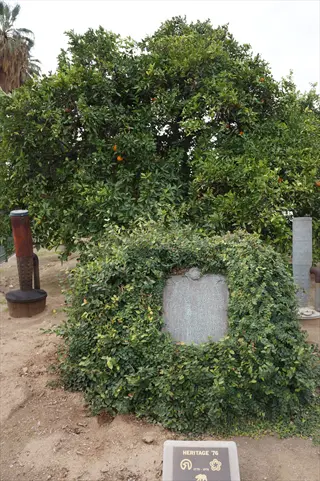
Navel Orange
- Best for: Home growers who want easy fresh eating, since the fruit is seedless, sweet, and peels by hand without much effort.
- Season: Navels are an early to midseason orange, ripening through the cooler months for fresh winter fruit.
- Habit: A grafted navel forms a compact, productive evergreen tree well suited to backyards in USDA zones 9 to 11.
- Fruit: Each orange carries the small secondary fruit at its blossom end that gives the navel its name.
- Care note: Like all sweet orange, it needs full sun and well-drained soil at pH 5.5 to 6.5 to thrive.
- Why choose it: It is the classic dessert orange and the most beginner-friendly variety to start with.
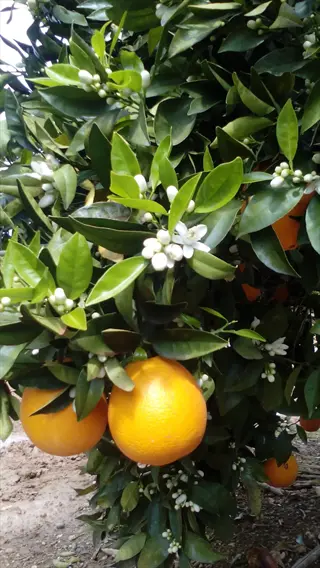
Valencia Orange
- Best for: Juice lovers, since Valencia is prized for sweet, abundant juice rather than easy hand peeling.
- Season: Valencia is a late-season orange, ripening into spring and summer when navels are finished.
- Production: Valencia made up the larger share of Florida's 2024-25 crop, about 7.55 million boxes, per USDA NASS.
- Habit: It forms a vigorous evergreen tree that holds fruit well, extending the harvest window for the season.
- Care note: Give it the same full sun, deep watering, and light feeding as other sweet oranges.
- Why choose it: Plant it alongside a navel to enjoy fresh oranges across a much longer stretch of the year.
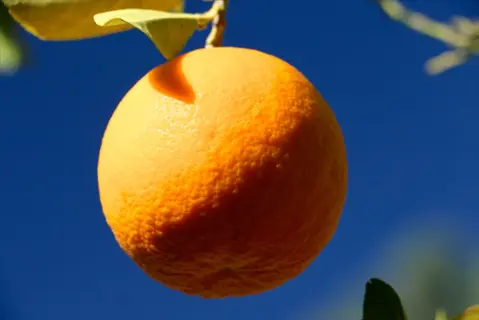
Sour (Seville) Orange
- Best for: Cooks who want fruit for marmalade and cooking rather than fresh eating, since the fruit is bitter.
- Botany: Sour orange is a wild-mandarin and pummelo hybrid and is the maternal parent of the sweet orange.
- Use: Its peel, juice, and blossoms flavor marmalades, sauces, and traditional dishes around the world.
- Habit: It is a hardy, vigorous tree often used as a rootstock for grafting sweet orange varieties.
- Care note: It grows in the same warm subtropical zones as sweet orange and shares its sun and soil needs.
- Why choose it: Pick it when flavor for the kitchen matters more than sweet fruit straight off the tree.
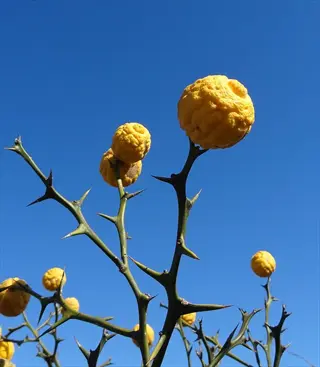
Trifoliate (Hardy) Orange
- Best for: Cold-climate gardeners and grafters, since it survives USDA zones 5a to 9b far below sweet orange.
- Habit: It grows 8 to 20 feet tall and 6 to 15 feet wide, is deciduous, and drops its leaves in fall.
- Fruit: The fruit is exceedingly sour and full of seeds but works for marmalade and adds winter color.
- Defense: Sharp, numerous thorns make it a useful security hedge, though it is considered invasive in some states.
- Care note: It prefers well-drained, acidic soil in full sun and is intolerant of shady sites.
- Why choose it: Most growers use it as cold-hardy rootstock rather than for its edible fruit.
These types share more history than you might think. The sweet orange you eat is Citrus sinensis, a hybrid of the sour orange and a Ponkan-like mandarin. The hardy trifoliate orange sits at the cold-tough end of that family. It grows 8 to 20 feet tall and 6 to 15 feet wide and shrugs off winters that would kill your navel.
Match the variety to your climate first, then to how you plan to use the fruit. For most home growers, a grafted navel for fresh eating and a Valencia for juice is the easiest pair to start with.
Watering and Feeding
Most care guides hand you vague watering orange tree tips with no source behind them. The numbers here come straight from UF/IFAS Extension, so you can trust them and skip the guesswork. Deep watering and steady feeding are the two habits that keep a young tree growing strong.
For the first month after planting, fill a 5 to 10 gallon basin around the tree twice a week. That soaks the roots evenly and pushes them down deep. Once the tree settles in, switch to a longer, less frequent soak that wets the whole root zone.
Your watering needs shift with the weather and the age of the tree. A mature orange tree likes a deep drink now and then, while a container tree dries out fast and needs a closer eye. Pour more during hot, dry spells and ease off when it turns cool or wet.
Think of fertilizing orange tree roots like seasoning a meal. Light and frequent beats one big dose, since too much feed at once burns roots and drops your fruit quality. In year one, use a balanced 8-8-8 citrus fertilizer. Spread it across about six feedings from February through October.
Yellow leaves usually mean a shortage of micronutrients, not the main ones. Orange trees often run low on zinc, manganese, or magnesium. Use a citrus feed with micronutrients. Add a yearly zinc and manganese spray, and you head off the problem before it shows up on the leaves.
Deep Watering After Planting
- First month: Fill a 5 to 10 gallon basin around the tree twice a week so roots settle into even, deep moisture.
- Established trees: Switch to deep, less frequent soaking that wets the whole root zone instead of daily shallow sprinkles.
- Why deep: Deep watering encourages strong, far-reaching roots, while constant shallow watering leaves the tree weak and rot-prone.
- Watch the weather: Increase watering during hot, dry spells and ease off during cool or rainy stretches to avoid waterlogging.
Light, Frequent Feeding
- Year one: Apply a balanced 8-8-8 fertilizer about every six weeks from February through October, roughly six feedings.
- Little and often: Spread feeding into several light doses rather than one heavy dose, which can burn roots and lower fruit quality.
- Follow the label: Adjust the amount to the tree's size and age, since a young tree needs far less than a mature one.
- Timing: Concentrate feeding in the active growing season and ease off as growth slows heading into winter.
Preventing Yellow Leaves
- Micronutrients matter: Orange trees often yellow from zinc, manganese, or magnesium shortfalls rather than a lack of major nutrients.
- Annual spray: A yearly zinc and manganese foliar spray guards against the common micronutrient deficiencies UF/IFAS describes.
- Read the pattern: The color and location of yellowing point to which nutrient is short, guiding the correct fix.
- Soil pH link: Keeping soil at pH 5.5 to 6.5 helps roots take up nutrients, so correct pH before adding more feed.
Mulch And Soil Care
- Conserve moisture: A layer of mulch over the root zone holds moisture and steadies soil temperature between waterings.
- Keep it back: Hold mulch at least one foot (30 cm) from the trunk, since material against the bark invites foot rot.
- Feed the soil: Organic mulch breaks down slowly and adds gentle organic matter that supports healthy root activity.
- Weed control: Clear weeds near the trunk, because they compete for water and trap the moisture that triggers rot.
Water deeply but less often once the tree is established. Daily shallow watering builds weak roots and raises the risk of root and foot rot.
Orange Tree Pests and Diseases
Most orange tree pests and diseases show up first on the leaves and fruit. Your tree talks to you through those signs. Catching them early is like spotting a small leak before it floods the whole room, so a quick walk around the tree each week pays off more than any spray you buy.
The good news is that most backyard trouble stays manageable. Clean tools, good airflow, and certified clean nursery stock stop the bulk of problems before they start. A few issues do need a harder call, and I will flag those so you know when to act fast or remove a tree.
Two threats sit at the top of the list. Foot rot is a soil-borne fungus that UF/IFAS warns can kill an otherwise healthy tree. Citrus greening, also called HLB, is a bacterial disease spread by the Asian citrus psyllid, and it has no cure. Greening helped drive Florida's 2024-25 orange crop down about 32% from the year before, per USDA NASS.
Foot Rot And Root Rot
- Symptom: Bark near the soil line darkens, oozes, or splits, and the tree slowly declines despite good feeding.
- Cause: A soil-borne fungus thrives where mulch, weeds, or constant moisture sit against the trunk.
- Fix: Keep mulch at least one foot from the trunk, improve drainage, and avoid wounding the lower bark.
- Stakes: UF/IFAS warns this disease can kill an otherwise healthy orange tree, so prevention is critical.
Citrus Greening (HLB)
- Symptom: Blotchy yellow leaves, lopsided bitter fruit, and overall decline signal this serious bacterial disease.
- Spread: The Asian citrus psyllid carries the bacteria from tree to tree, and there is currently no cure.
- Impact: Greening helped cut Florida's 2024-25 orange crop about 32% from the prior season, per USDA NASS.
- Fix: Buy certified clean nursery stock, control psyllids, and remove confirmed infected trees promptly.
Yellowing And Leaf Curl
- Symptom: Pale or yellow leaves and curling can point to nutrient shortfalls, overwatering, or sap-sucking pests.
- Cause: Zinc, manganese, or magnesium deficiency is common, as are aphids and scale clustering on new growth.
- Fix: Correct soil pH and feed with micronutrients, then treat pests with horticultural or neem oil as needed.
- Check roots: Persistent yellowing with soggy soil often means overwatering rather than a feeding problem.
Fruit And Flower Drop
- Symptom: Young fruit or blossoms fall before maturing, which alarms growers but is often partly natural.
- Cause: Some drop is normal self-thinning, but stress from drought, cold, or erratic watering worsens it.
- Fix: Keep watering steady and deep, protect from cold snaps, and avoid sudden swings in care.
- Patience: A young grafted tree may drop early fruit for a year or two before it settles into steady cropping.
Read the leaves before you reach for a treatment. Yellow leaves with soggy soil often mean too much water, not a missing nutrient. Yellowing with leaf curl on fresh growth usually points to aphids, scale, or a zinc shortfall instead. Match the fix to the real cause and you save both money and a stressed tree.
Citrus greening has no cure and is spread by the Asian citrus psyllid. Start with certified disease-free nursery trees and remove confirmed infected ones quickly.
Growing Oranges in Containers
Live in a zone below 9 and the ground is no place for a sweet orange. A pot changes that. Container citrus lets you grow your own fruit on a patio, a balcony, or a sunroom, then carry the tree inside when the cold rolls in. You trade garden space for a bit of seasonal labor, and you get oranges in places they could never survive outdoors.
Start with the right plant and the right home for its roots. A dwarf orange tree grafted onto a size-controlling rootstock stays small enough to manage and to move. Clemson Extension calls for a potting mix of 4 parts aged pine bark to 1 part peat or coir, kept at a soil pH of 5.5 to 6.5. Your final pot should land between 18 and 36 inches (45 to 90 cm) across, and you repot into fresh mix every 3 to 5 years.
Light is where most indoor trees fail. Clemson sets the bar at 8 hours of sun a day with humidity near 30 to 60%. So a south-facing window earns its keep, and a grow light covers the dark months. Pots also burn through food fast. Feed a slow-release 12-6-6 or 12-4-6 fertilizer two to three times each season. Watch for magnesium and calcium too, since they drain out of a pot far faster than they would from open soil.
Here is the full container routine, from picking a tree to nursing it through winter.
Choose a grafted dwarf orange on a size-controlling rootstock so the tree stays manageable in a pot and indoors over winter.
Fill the pot with 4 parts aged pine bark to 1 part peat or coir at pH 5.5 to 6.5, in a final container 18 to 36 inches (45 to 90 cm) across.
Give at least 8 hours of sun at a south-facing window, adding a grow light in winter, and keep humidity around 30 to 60%.
Water when the top 2 to 3 inches (5 to 8 cm) of mix dry out, and feed a slow-release 12-6-6 or 12-4-6 two to three times each growing season.
Hand-pollinate indoor blossoms with a small brush, and move the pot inside before temperatures fall below the tree's cold limit.
Each fall I wheel my potted navel off its sunny patio spot. It sits by the fence in my coastal California zone 9b yard. I lug it through the back door to a bright south window before the first cold snap. The blossoms open inside where no bee can reach them. So I dab each one with a small brush, flower to flower, every few days until they set. By spring the pot goes back out, a bit heavier and a bit greener than it left.
That seasonal shuffle is the deal with an indoor orange tree. Get your mix, your light, and your overwintering move right. Then a single pot turns a cold porch into a spot where homegrown oranges ripen.
Repot a container orange tree every 3 to 5 years into fresh mix. Pots flush nutrients quickly, so add extra magnesium and calcium between feedings.
5 Common Myths
Orange trees grow easily anywhere as long as you water them, so any backyard in any climate can support a healthy fruiting tree.
Sweet orange is subtropical and limited to USDA zones 9 to 11; regular freezes damage or kill it, so cold-climate growers must use containers and winter shelter.
Planting an orange seed from a grocery store fruit is the fastest and most reliable way to get a tree that bears the same sweet oranges.
Seed-grown trees take far longer to fruit and may not match the parent; grafted trees fruit in about five years and stay true to variety.
More fertilizer always means more and sweeter oranges, so feeding heavily through the year is the best route to a heavy, high-quality crop.
Heavy feeding can harm roots and reduce quality; orange trees do best with light, frequent feeding plus micronutrients like zinc and manganese.
Orange trees should be watered a little every single day, the same way you would water a thirsty houseplant on a fixed daily schedule.
Established orange trees prefer deep, less frequent watering; constant shallow watering encourages weak roots and raises the risk of root and foot rot.
Piling mulch right against the trunk protects the orange tree, keeps roots warm, and locks in all the moisture the tree could ever need.
Mulch and weeds against the trunk trap moisture and invite foot rot, a soil fungus that can kill the tree; keep mulch at least one foot away.
Conclusion
Good orange tree care comes down to a short list you can keep in your head. Pick the right zone, give the tree full sun, and plant it in well-drained soil sitting around pH 5.5 to 6.5. After that, water deeply, feed with a light hand, and guard the tree from hard freezes. Nail those six basics and you have done the hard part.
Patience is the last piece, and it matters more than you might think. A grafted orange tree takes about 5 years before it flowers and fruits, so the early seasons are about steady habits, not quick wins. Stick with it. That same tree can stay productive for decades, paying you back many times over for the care you put in early.
The payoff is the same whether you plant in the ground across zones 9 to 11 or keep a sweet orange in a pot you move indoors for winter. A healthy orange tree gives you fragrant white blossoms in spring and fresh fruit you picked yourself. Few things in the garden feel as good as that first ripe orange off your own branch.
You now know where the orange came from, which varieties fit your space, and what each season asks of you. The real secret to growing orange trees is simple. Ground your choices in Extension and USDA guidance instead of guesswork, and your tree will thank you year after year. Start with one tree, stay steady, and enjoy the harvest.
Glossary
- Citrus greening
- An incurable bacterial disease, also called HLB, spread by the Asian citrus psyllid that causes blotchy leaves, bitter fruit, and tree decline.
- Foot rot
- A soil-borne fungal disease that attacks the lower trunk of citrus and can kill the tree, often triggered by moisture held against the bark.
- Grafted tree
- A tree made by joining a chosen fruiting variety onto a separate hardy rootstock so it fruits faster and stays true to type.
- Micronutrients
- Minerals like zinc, manganese, and magnesium that plants need in small amounts and whose shortage often causes yellowing leaves.
- Rootstock
- The lower root portion of a grafted plant that controls hardiness, size, and disease resistance for the fruiting variety grafted onto it.
- Soil pH
- A scale measuring how acidic or alkaline soil is, which affects how easily a plant's roots can take up nutrients.
- Trifoliate orange
- A cold-hardy orange relative with thorny stems and sour fruit, often used as rootstock and able to survive far colder winters than sweet orange.
- USDA hardiness zone
- A region rating based on average lowest winter temperature that tells you which plants can survive the cold there.
External Sources
Frequently Asked Questions
Is it hard to take care of an orange tree?
Orange trees are moderate effort: once established they mainly need full sun, deep watering, light feeding, and freeze protection in cold areas.
Can orange trees survive in the UK?
Yes, but only as a container plant moved indoors over winter, since UK winters are too cold for sweet orange to grow outdoors year round.
Do orange trees lose their leaves in winter?
Sweet orange is evergreen and keeps its leaves all year; trifoliate (hardy) orange is deciduous and drops its leaves in fall.
Can I have an orange tree indoors?
Yes. A dwarf orange tree grows indoors with a bright south-facing window, extra humidity, hand pollination, and steady feeding.
What is the lifespan of an orange tree?
A well-cared-for orange tree commonly stays productive for about 30 to 40 years, and some live much longer with good care.
Are coffee grounds good for orange trees?
Used coffee grounds add mild nitrogen and organic matter when composted first, but they are not a complete citrus fertilizer on their own.
What not to plant next to citrus trees?
Avoid thirsty, heavy-feeding, or shading plants near the trunk, including turfgrass, large shrubs, and anything that traps moisture against the bark.
Is it better to pick oranges all at once or leave on the tree?
Most oranges hold well on the tree and keep ripening flavor, so you can pick gradually rather than all at once in many varieties.
How long does an orange tree take to fruit?
Grafted orange trees usually take about five years to flower and fruit; seed-grown trees can take much longer.
Which country has the best oranges?
Quality is subjective, but Brazil and the United States lead global production, and California and Florida dominate the US orange crop.