
Introduction
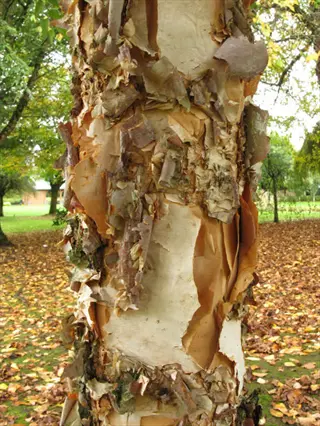
I planted my first river birch tree for the bark, and I have never once regretted it. The bark peels and curls on its own into papery sheets of cinnamon and salmon. That is the moment most people fall for this tree. It keeps that show through winter, when every other tree in the yard stands bare. That exfoliating bark is the hook, and it is reason enough to want one.
But the bark is only part of the story. River birch goes by the name Betula nigra. It is a tough native shade tree of the eastern and central United States, hardy across USDA zones 4 to 9. It grows fast and often adds 1.5 to 2 feet (0.5 to 0.6 m) each year. A mature tree reaches roughly 40 to 70 feet (12 to 21 m) tall and 25 to 50 feet (8 to 15 m) wide. Few trees give you height, shade, and looks this quickly.
Here is what makes this tree special. River birch shrugs off heat and humidity better than any other common birch. That is why it is the go-to birch across the hot South and a favorite street tree everywhere else. As a fast growing shade tree, it also resists the bronze birch borer. That is the pest that turns showy white-barked birches into firewood. The one trait alone saves a lot of heartbreak.
This guide goes past the bark and size basics. You will get clear, sourced answers on iron chlorosis and the yellow leaves it brings. You will learn why this birch outlives the borer-prone ones. And you will learn how long the tree honestly lives. The tree is loved for its bark and its grit, yet it lives by one firm rule. It needs acidic soil, or it slowly yellows and fades. Get that one thing right and the rest is simple.
Best River Birch Varieties
The soggy back corner of my yard is now the most-watched view from the kitchen window. It took a multi-trunk Heritage clump to get there about 8 years ago. Before that the spot grew nothing but thin, yellow turf that died off in patches every wet spring. I lost one azalea there too. It drowned its first season because the ground stayed soaked for weeks. The birch took that same wet, acidic ground and ran with it. The whiter barked cultivars I almost ordered for show would have struggled in that exact spot.
That is the real lesson of choosing a variety. Match the cultivar to your soil and climate first, then chase the bark color you want. The four selections below cover the situations most gardeners face, from hot southern yards to tight urban lots with no room for a 70-foot tree. Each one keeps the borer resistance that makes river birch worth planting in the first place.
One buying note shapes how all of these look in the ground. The nursery trade sells river birch mostly as a multi-trunk clump of three young trees in one hole. That spreads the showy bark across several stems for a fuller winter display. A single-trunk specimen takes up less width and reads more like a classic shade tree. So pick the form before you pick the cultivar.
Heritage ('Cully')
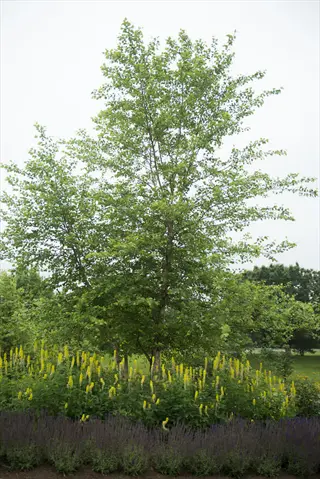
- Bark: Lighter cream-to-salmon exfoliating bark that peels in papery curls, giving the closest river birch match to a white paper birch look.
- Strength: Widely considered the superior ornamental selection and is reported resistant to both bronze birch borer and leaf spot.
- Size: Reaches the full landscape range of roughly 40 to 70 feet (12 to 21 m) tall with a broad, multi-trunk habit.
- Best use: A specimen tree where the bark can be seen up close in winter, ideally limbed up to expose the trunks.
- Form: Most often sold as a multi-trunk clump of three, which spreads the showy bark across several stems.
- Care note: Still needs acidic, consistently moist soil to keep its color and avoid yellowing from iron chlorosis.
Dura Heat ('BNMTF')
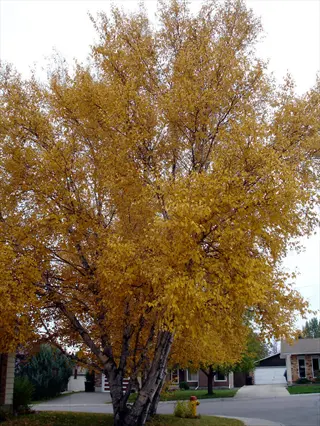
- Bark: Creamy, exfoliating bark with strong winter interest and good resistance to peeling damage in hot climates.
- Strength: Bred for heat tolerance, making it a dependable pick for the hot, humid South where other birches struggle.
- Foliage: Denser, smaller leaves that hold up better through summer heat than the species form.
- Size: Vigorous and fast, settling into the typical 40 to 70 foot (12 to 21 m) landscape range over time.
- Best use: Shade and screening in regions with long, hot summers and reliable summer moisture.
- Care note: Like all river birch, it demands acidic soil near pH 4.0 to 6.5 to stay deep green.

Fox Valley ('Little King')
- Habit: A compact, dwarf selection that stays far smaller than the species, fitting yards with limited room.
- Bark: Keeps the signature peeling river birch bark on a shrubby, densely branched frame.
- Strength: Lets gardeners enjoy river birch character without a 40 to 70 foot (12 to 21 m) full-size tree.
- Best use: Smaller landscapes, foundation-distance plantings, and tight urban lots where canopy spread is a concern.
- Size: Typically tops out around 10 to 12 feet (3 to 3.7 m), a fraction of the standard tree.
- Care note: Shares the same acidic, moist-soil needs and the same fast establishment as its full-size relatives.
City Slicker ('Whit XXV')
- Bark: Notably creamy to nearly white exfoliating bark that brings paper-birch brightness to warmer regions.
- Strength: Combines showy pale bark with river birch toughness, including resistance to bronze birch borer.
- Foliage: Glossy green leaves that resist scorch better than many white-barked alternatives.
- Size: Grows into the standard river birch range of about 40 to 70 feet (12 to 21 m) tall.
- Best use: A bright bark feature tree for gardeners who want the white-birch look without the borer risk.
- Care note: Needs the same acidic, consistently moist soil to keep both color and vigor.
For most yards the choice comes down to two picks. A Heritage river birch gives you the closest thing to white paper birch bark. It also fights off borer and leaf spot well. Dura Heat is the safer bet if your summers run long and brutal. Got a small lot? Fox Valley keeps the same peeling bark on a shrub-sized frame that never crowds the house.
Growing Conditions That Matter
Get the river birch growing conditions right and this tree almost raises itself. It is the most widely distributed birch in the United States. It is also the only native birch that does well at low elevations in the South. That wide native range is why it shrugs off heat and adapts from USDA hardiness zones 4 to 9.
Plant it in full sun for the best bark color and the deepest leaf color, though it will take part shade without much fuss. The soil is the one thing you cannot fudge. River birch needs acidic soil, ideally a pH between 4.0 and 6.5, or the leaves turn pale and sickly. Give it the wrong pH and you will fight yellowing for years.
Moisture is the other half of the story. This tree grew up on floodplains and stream banks, so it wants moist soil kept near field capacity all year. That is why it shines in low, damp spots and rain gardens where most trees would rot. A mature river birch reaches 40 to 70 feet (12 to 21 m) tall and 25 to 50 feet (8 to 15 m) wide, so give it room.
Here is the nuance casual guides get wrong. River birch loves moist ground, but it is not a tree for water that never drains. The USDA Forest Service caps its flood tolerance at about three months during the growing season. Past that, even this swamp-loving tree drowns. Skip the spots that hold standing water all summer.
The flip side matters too. Because this tree evolved with roots near constant water, it has shallow roots and little stored drought defense. In a dry spell it sheds leaves early and stresses fast, so plan to water it during droughts even once it is established. Keep the soil damp and steady, and you get a fast, tough shade tree that earns its keep.
River birch is perhaps the most culturally adaptable and heat-tolerant of the birches.
Yellow Leaves And Iron Chlorosis
Is your river birch pushing out pale yellow leaves in summer? Look at the soil first. This fading almost always means iron chlorosis. It is the top reason a healthy young tree slowly fades over a few seasons.
Chlorosis has a look you can learn to spot fast. The leaves turn a sickly chartreuse green while the veins stay a darker green, so each leaf shows a clear network of lines against a washed-out background. River birch needs acidic soil, and on alkaline soil it goes chlorotic and the new growth fades worst of all.
Here is the part that trips people up. The iron your tree needs is usually already in the ground, but high soil pH locks it into a form the roots cannot pull up. Think of food sitting on a shelf the tree cannot reach. The iron exists, yet the leaves still starve and pale because none of it makes it into the plant.
Left alone, a chlorotic river birch does not just look bad. The fading gets worse each year and the tree can eventually die if you never lower the pH or add iron. The good news is that the fix is straightforward once you know the cause, so work through the steps below.
Use a soil test before treating anything. River birch wants an acidic range near pH 4.0 to 6.5, and a reading above that points straight to chlorosis as the cause of yellowing.
On alkaline soil, work in elemental sulfur or a labeled soil acidifier to bring the pH down gradually. This is the lasting fix, though it works over months rather than days.
For faster green-up while pH adjusts, apply a chelated iron product to the soil or as directed. This treats the symptom and buys the tree time during the slower pH correction.
Re-test pH over following seasons and reapply as needed, since soil tends to drift back toward its natural pH. Steady monitoring keeps the foliage green long term.
Match your fix to your timeline. Chelated iron greens the tree up within weeks, but it wears off, so it is a patch and not a cure. Lowering the pH with sulfur is slow, yet it is the only change that keeps the yellow leaves from coming back season after season.
Do not assume yellow leaves mean the tree is thirsty. Adding more water to a chlorotic river birch on alkaline soil will not green it up, because the real problem is locked-up iron, not drought.
Borer Resistant Birch Choice
If you want a birch for a warm yard, the bronze birch borer decides almost everything. This beetle, named Agrilus anxius, bores into the trunk and slowly kills the tree from the inside. It is the main reason the pretty white-barked birches you see in catalogs die young across much of the country.
Wisconsin Extension calls river birch the most resistant of the commonly grown birches to this pest. That single trait is why it became the standard, lasting stand-in for the classic white birch. You still get the peeling, showy bark, but the borer leaves the tree alone. Pick a paper birch for the same warm spot and you are buying a short-lived tree.
- Most borer-resistant of the commonly grown birches, shrugging off the bronze birch borer.
- Thrives in heat and humidity, making it the go-to birch for the South.
- Keeps showy exfoliating bark in cinnamon, salmon, and cream tones.
- Tolerates wet, low ground and floodplain conditions other birches dislike.
- Highly vulnerable to the bronze birch borer, which often kills them young.
- Struggle in hot, humid climates and tend to be short-lived there.
- Offer the classic white bark but at a real pest-risk cost.
- Prefer cooler northern sites and decline under heat stress.
River birch is resistant to the bronze birch borer which can convert showy white-barked trees to attractive logs for fireplaces.
That line sums up the stakes. A white-barked birch in a hot, humid yard can turn into firewood in a few years. So if you live in a warm region and you want birch bark, the answer is a borer resistant birch, and river birch is that tree. It is the reason river birch took over yards and streets across the South while paper and white birch faded out.
Planting And Watering Care
The leaves on my new 'Heritage' clump curled and dropped all through its first dry August. I had planted it in the damp back corner of the yard. The wet site had fooled me into thinking the tree could fend for itself. I ran a soaker hose to the base and let it trickle for an hour twice a week. Within ten days the new growth firmed back up and the leaf drop stopped.
That recovery shows you something about planting river birch the right way. The tree loves moisture, which is why people use it for rain gardens and soggy spots. But a young root ball can dry out fast in the heat before the roots spread into the surrounding soil. Deep water during those first seasons is what carries it through.
Start with the site. Pick a sunny, low spot with acidic soil, and set the tree about 15 to 20 feet (4.5 to 6 m) from your house or driveway. A full-size river birch throws a 25 to 50 foot (8 to 15 m) canopy at maturity. It needs that room to spread without crowding your roof or cracking a path. Space several trees about the same distance apart.
Dig the hole so the root collar sits at or just above grade, never buried. The root collar is the flare where the trunk widens into the roots, and planting it too deep invites rot. Before you backfill, run your fingers around the root ball and tease out any roots that circle the trunk. Those girdling roots can choke the tree years down the line.
Finish with a ring of mulch about 2 to 4 inches (5 to 10 cm) deep over the root zone. Keep it pulled back a few inches from the bark so the trunk stays dry. Mulch holds soil moisture, smothers weeds, and keeps the ground temperature steady while the roots settle in. Use the checklist below to get every step in the right order.
- Site: Choose a sunny, low, moist spot with acidic soil, set about 15 to 20 feet (4.5 to 6 m) from the house so the mature canopy has room.
- Depth: Plant so the root collar sits at or just above grade, and check that no roots circle the trunk, which can girdle it later.
- Mulch: Spread a 2 to 4 inch (5 to 10 cm) ring of mulch over the root zone, kept back from the trunk to hold moisture and suppress weeds.
- Water: Soak slowly and deeply with a soaker hose through the first two growing seasons, then add supplemental water during droughts.
- Space multiple trees about 15 to 20 feet (4.5 to 6 m) apart so each canopy can develop its full peeling-bark display.
Watering river birch is the part most people get wrong. Soak the soil slowly and deeply with a soaker hose through the first two growing seasons, aiming to wet the whole root zone rather than splash the surface. After that the tree handles itself in normal weather, but it is only somewhat drought tolerant. Give it supplemental water during dry spells, since deep watering is what keeps even a moisture-loving tree alive when the rain stops.
When And How To Prune
Most advice gets the timing on pruning river birch backwards. You'll see blogs tell you to grab the saw in early spring, right as the tree wakes up. Skip that advice. Spring is the single worst time to cut this tree, and the reason is simple.
River birch is what arborists call a bleeder. When sap rises in spring, every cut you make weeps a steady stream of liquid for weeks. This river birch bleeding sap rarely kills the tree, but it stresses it and leaves dripping, weepy wounds all through the growing season. So the real question of when to prune has a clear answer, and it is not spring.
Aim for the seasons when the tree is settling down or fully asleep. Late summer pruning works well because sap flow has slowed and cuts close cleanly. Dormant pruning in winter is even better, since a bare tree bleeds little and you can see the whole frame at a glance. The chart below breaks down each window.
Spring
Avoid pruning now. Rising sap makes river birch bleed heavily from every cut, stressing the tree and leaving unsightly weeping wounds.
Early Summer
Generally hold off. Fresh cuts in warm weather can attract borers and other pests, so limit pruning to clearly damaged wood only.
Late Summer To Fall
A preferred window. The tree is settling toward dormancy, sap flow is lower, and wounds close cleanly with less bleeding.
Winter
An excellent time. Fully dormant trees bleed little, and the bare frame makes it easy to spot dead, crossing, or crowded branches.
What you cut stays simple. Take out dead, diseased, or crossing branches first, then clear any suckers shooting up from the base. Keep each cut clean and small so it heals fast. If you want to show off that famous peeling trunk bark, limb up the lower branches to open the view.
Never prune a river birch in spring. It bleeds sap heavily then, so save any cutting for late summer, fall, or winter when sap flow has slowed.
One more reason to hold off in early summer: fresh cuts in warm weather can draw borers to the wound. Stick to the dormant and settling-down windows and you sidestep both problems at once. Cut at the right season, and your tree heals clean instead of weeping all summer long.
5 Common Myths
River birch must be planted right beside a river or pond, because the name says it needs constant standing water to survive.
It is native to floodplains but adapts to average garden soil with regular moisture. No river is required, only steady water and acidic soil.
Because river birch loves wet ground, it can sit in flooded soil indefinitely without any harm to its roots or long-term health.
USDA notes it is only moderately flood-resistant, tolerating flooding no more than about three months during the growing season before stress.
All birch trees, including river birch, are doomed to die young from the bronze birch borer that destroys white-barked birches.
River birch is the most borer-resistant common birch, which is exactly why it replaces pest-prone paper and white birches in warm regions.
Yellowing leaves on a river birch always mean the tree is sick with disease or is simply not getting enough water in summer.
Yellow chartreuse leaves usually signal iron chlorosis from alkaline soil. Lowering soil pH or adding iron, not just water, fixes it.
Spring is the ideal time to prune a river birch, since that is when most other trees are pruned before new growth begins.
Never prune in spring. River birch bleeds sap heavily then, so extension experts advise pruning in late summer, fall, or winter.
Conclusion
The river birch tree earns its spot in the yard by doing the hard things well. It grows fast, adding 1.5 to 2 feet of height a year, and it shrugs off the bronze birch borer that kills showy white birches. You get a tough native shade tree that matures near 40 to 70 feet tall and stays hardy across zones 4 to 9. That mix of speed, looks, and pest resistance is why it ranks among the most planted shade trees in warm regions.
Good river birch care comes down to two things the tree cannot live without. It needs acidic soil to keep its leaves green, and it needs steady moisture so the roots never dry out for long. Get those right and the famous peeling bark curls back in sheets of cinnamon and salmon. That gives you something to look at every month of the year. Neglect either one and the tree tells you fast, with yellow leaves or thin growth.
Be honest with yourself about how long the tree will last, because the site decides. On a stressed city lot with patchy water, a river birch often runs just 30 to 40 years. Give it the moist, acidic ground it wants and that number climbs to 50 to 75 years. The tree itself does not change. The dirt and the water you give it do.
So the choice is simple. If your soil is acidic and stays moist, plant the river birch and enjoy the beautiful bark and the borer-free toughness for decades. If your soil runs alkaline, either pick a different tree or commit to lowering the pH before you dig the hole. Match the tree to the ground, and a river birch will pay you back for a long time.
Glossary
- Bronze birch borer
- A wood-boring beetle (Agrilus anxius) that kills white-barked birches but rarely harms the resistant river birch.
- Chelated iron
- A form of iron packaged so plant roots can absorb it, used to quickly green up a chlorotic tree while soil pH is corrected.
- Exfoliating bark
- Bark that naturally peels away in thin, papery curls, a signature feature of river birch prized for winter interest.
- Host plant
- A plant that certain butterfly or moth caterpillars feed and develop on, such as river birch for the Mourning Cloak butterfly.
- Iron chlorosis
- A condition where leaves turn yellow because high (alkaline) soil pH locks up iron so the tree cannot absorb it.
- Multi-trunk clump
- A river birch grown with several stems instead of one, often three trees sold together to show off more peeling bark.
- Root collar
- The flared base of the trunk where it meets the roots, which should sit at or just above ground level when planting.
- Soil pH
- A scale measuring how acidic or alkaline soil is; river birch needs an acidic range of about 4.0 to 6.5.
External Sources
Frequently Asked Questions
What are the most common problems with river birch trees?
The biggest issues are iron chlorosis on alkaline soil, leaf spot, aphids, leafminers, and decline in dry urban sites.
Where is the best place to plant a river birch tree?
Plant it in full sun, in moist acidic soil, in a low or wet spot, with open room for the mature canopy to spread.
Can you plant a river birch tree close to your house?
Yes, but give it space. Site the trunk about 15 to 20 feet (4.5 to 6 m) from the house so the canopy stays clear.
Do river birch tree roots damage foundations or pipes?
The roots are shallow and water-seeking. They rarely break sound foundations but can invade old, already-leaking pipes.
How fast does a river birch tree grow?
It is fast, usually 1.5 to 2 feet (0.5 to 0.6 m) a year, making it one of the better fast-growing shade trees.
How long does a river birch tree live?
Estimates vary: about 30 to 40 years in stressed urban sites, and 50 to 75 years in good moist acidic conditions.
What causes yellow leaves on a river birch tree?
Most yellow, chartreuse leaves with darker veins are iron chlorosis caused by alkaline soil locking up iron.
Are river birch trees messy to clean up after?
Somewhat. It sheds catkins, spring seeds, fine twigs, and papery bark, which adds cleanup near patios and pools.
What is the best birch tree for hot, humid climates?
River birch. It is the most heat-tolerant common birch and resists the bronze birch borer that kills others.
Are river birch trees good for wildlife?
Yes. It hosts Mourning Cloak and Dreamy Duskywing butterflies and feeds grouse, turkey, songbirds, and squirrels.